
Organization Ideas For Small Spaces That Reset Easily
Organization ideas for small spaces have to be judged by reset speed, not by how many matching bins can fit on a shelf. A small home needs systems that survive groceries, laundry, work bags, mail, and the ordinary drift of a busy week.
The most useful ideas create boundaries. They decide what belongs in a zone, how much can live there, and what happens when the zone is full.
A small space does not need every item hidden. It needs the right items visible, the noisy items closed away, and a routine that can bring the room back without a long weekend project.
Organization Ideas For Small Spaces Begin With Zones
Organization ideas for small spaces should begin by naming zones, not buying containers. Entry, sleep, work, cooking, laundry, and relaxing all need different kinds of access.
When zones are named, belongings have a reason to live where they live. Without zones, every shelf becomes a temporary negotiation.
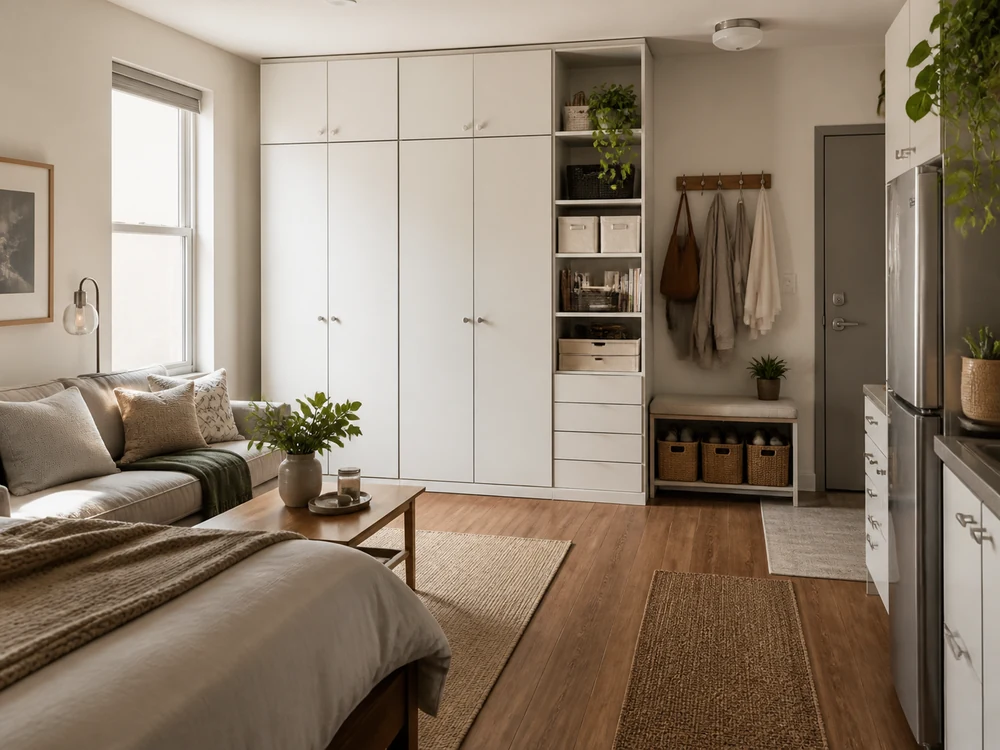
Give Every Zone A Capacity Limit
A small-space zone needs a visible limit. One hook rail, one shoe tray, one drawer, one bin, or one shelf can tell you when a category is full.
Limits prevent quiet overflow. If the container keeps expanding, it is no longer organization; it is a place where decisions go to wait.
Use Closed Storage For Mixed Categories
Closed storage is powerful because small spaces often hold mixed categories in the same room. Chargers, papers, pet items, games, and cleaning supplies rarely look calm together.
Use open storage for categories that look orderly on their own, such as books, baskets, plants, or folded textiles. Let doors handle the visual noise.
Keep Walking Routes Free Of Storage
Floor storage feels convenient until it narrows the routes people use most. Baskets, carts, and stools must not block door swings, kitchen paths, bed access, or the route to a window.
The home version of ADA accessible route guidance is simple: a route should stay predictable. Small spaces become calmer when paths are not borrowed for overflow.
Make Reset Surfaces Small And Obvious
A reset surface is the place where daily objects pause before returning home. It should be small enough to reveal clutter early.
Use a tray, shallow bowl, narrow ledge, or drawer top. If the reset surface can hold a week of mail, it will hold a week of mail.
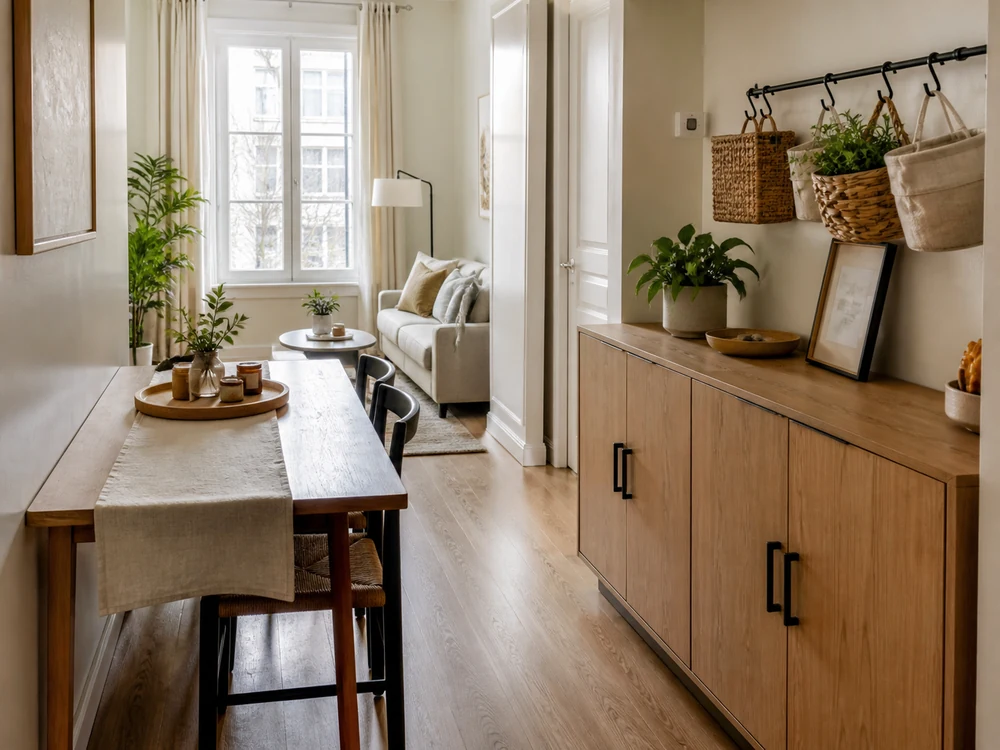
Store Duplicates Where They Are Counted
Duplicates are the hidden weight of small homes: extra tape, spare shampoo, backup candles, repeat tools, and too many tote bags. Store them together so the count is visible.
When duplicates scatter, shopping becomes guesswork. A small bin for each backup category can save more space than a larger cabinet.
Use Hooks For Active Rotation
Hooks are best for active items, not archives. Coats, bags, towels, hats, and tools can stay on hooks only if they are used often and do not crowd the path.
A hook rail with one empty hook looks more organized than a full rail carrying every possible need. The empty hook is room for life to happen.
Choose Furniture With One Strong Storage Job
Storage furniture should have one primary job. A bench for shoes, an ottoman for throws, a sideboard for papers, or a bed drawer for linens is easier to maintain than one piece holding everything.
When a piece has too many jobs, no one knows what belongs there. Clear ownership keeps furniture from becoming a mystery box.
Keep Seasonal Items Out Of Daily Reach
Daily reach is expensive in a small space. Do not spend it on holiday decor, off-season coats, guest linens, or rare tools.
Move seasonal items high, low, or outside the room. The easy shelves should support the week you are living, not the season that passed.
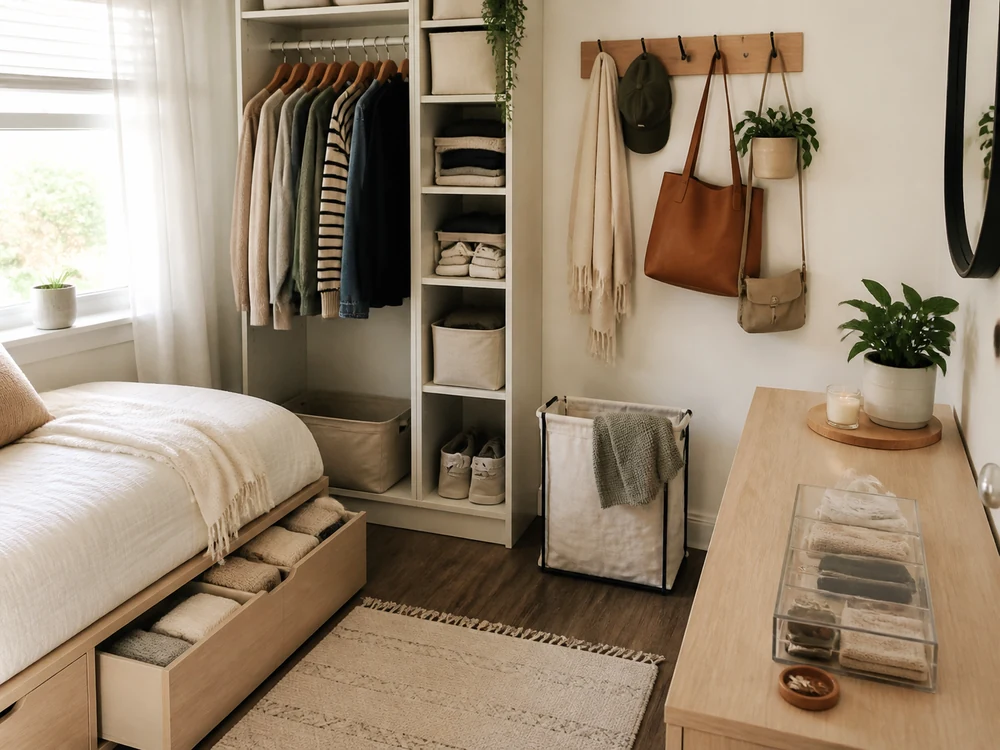
Use Clear Bins Only When Seeing Helps
Clear bins are useful for closets, pantry shelves, and under-bed storage where seeing the category helps. They are less useful in visible living areas, where they can make clutter look permanently exposed.
Use opaque or woven containers for open rooms and clear bins behind doors. Match visibility to the room’s emotional job.
Create A Laundry Flow, Not A Laundry Pile
Laundry needs a path from dirty to clean to folded to returned. If one step lacks a place, laundry becomes furniture.
Put the hamper where clothes actually change, keep folding space near storage if possible, and make returns easier than leaving stacks on a chair.
Make Paper Leave The Room Faster
Mail, receipts, school forms, and manuals can overwhelm a small home because they are thin enough to ignore. Give paper a short route: land, sort, act, file, or recycle.
A narrow paper tray is better than a deep drawer for current items. Deep paper storage hides urgency and creates future sorting work.
Audit One Category Per Week
Small spaces do not need constant overhaul. One category per week is enough: shoes, mugs, towels, bags, tools, pantry packets, or chargers.
Short audits prevent the home from needing a dramatic reset. The goal is steady pressure, not a once-a-year purge.
Let Empty Space Count As Organization
Empty space is not wasted. It is the margin that lets groceries arrive, guests visit, laundry finish, and furniture breathe.
A small home often looks more expensive when every shelf is not full. Leave visible pauses so the eye and the routine both have somewhere to rest.
Build An Exit Path For Donations
Small spaces need a way for unwanted items to leave quickly. Keep one small donation bag or box in a closet, not in the main room.
When it fills, it goes. The exit path matters because decluttering fails when rejected items stay inside the home waiting for a perfect errand.
Plan For Pets Or Children Without Losing The Room
Pet supplies and children’s items need boundaries just like adult categories. A small basket near the activity zone can work better than scattering toys, leashes, snacks, and grooming tools across several rooms.
Keep the boundary low and easy to return. If cleanup requires sorting many tiny categories, the items will stay on the floor.
Use Guest Mode As A Stress Test
Guest mode shows whether the organization can flex. A visitor may bring a coat, bag, shoes, or extra dishes, and the home needs a temporary place for those items.
Leave one shelf edge, hook, or basket with breathing room. That margin keeps the system from collapsing whenever normal life expands.
Let Night Reset Be Shorter Than Morning Reset
A small home is easier to live in when the night reset takes five minutes or less. Return dishes, clear the main table, reset the entry, and move laundry to its next step.
Morning energy is too valuable for yesterday’s clutter. A short night rhythm keeps the space ready without demanding a full cleaning session.
Use Vertical Space For Rhythm, Not Filling
Vertical space should create rhythm across a small home. A hook rail near the entry, a shelf over a desk, and a tall cabinet in the kitchen can each solve a real problem.
Do not fill every wall simply because the floor is limited. Too much vertical storage makes a small space feel watched by belongings from every side.
Name The Overflow Before It Appears
Overflow will happen: extra groceries, laundry, packages, borrowed tools, or holiday items. Decide where temporary overflow waits before it lands in the middle of the room.
The overflow place should be small and time-limited. If it becomes permanent, it needs a smaller boundary or a faster exit plan.
Decision Guide
| Problem | Better Move | Watch Point |
|---|---|---|
| Every surface collects items | Create smaller reset surfaces | Full surfaces must trigger action |
| Bins keep multiplying | Assign capacity limits by category | Containers are not decisions |
| Rooms feel visually loud | Put mixed categories behind doors | Open storage needs calm contents |
| Laundry becomes furniture | Map dirty, clean, folded, and returned steps | Missing steps create piles |
Related Her Neat Nest Guides
- Narrow Space Storage Ideas
- Storage For Small Spaces
- Small Space Furniture Ideas
- Organizing Tips For Small Spaces
Final Takeaway
Organization ideas for small spaces last when they set boundaries. Name the zones, limit the capacity, keep routes open, store duplicates together, and let small weekly audits do the work before clutter becomes a project.
FAQ
What is the best organization idea for a small space?
Name zones first, then give each zone a visible capacity limit. This makes clutter easier to see and easier to correct.
How do I organize a small apartment without buying more bins?
Start by removing duplicates, moving seasonal items out of daily reach, clearing walking routes, and assigning one reset surface per zone.
Should small spaces use open or closed storage?
Use closed storage for mixed categories and open storage for calm items such as books, folded textiles, plants, or a few baskets.