
Narrow Space Storage Ideas For Awkward Gaps At Home
Narrow space storage ideas are tempting because a gap feels like wasted real estate. The gap beside a washer, the wall between doors, the side of a fridge, or the strip behind a door can look like free storage waiting to happen.
The trap is that narrow storage can be hard to reach, hard to clean, and easy to forget. A tight gap should store items that match the motion of that gap: pull, slide, lift, hang, or open.
Use narrow spaces for small, specific categories. Do not ask them to carry the emotional weight of a full closet.
Narrow Space Storage Ideas: Match The Motion
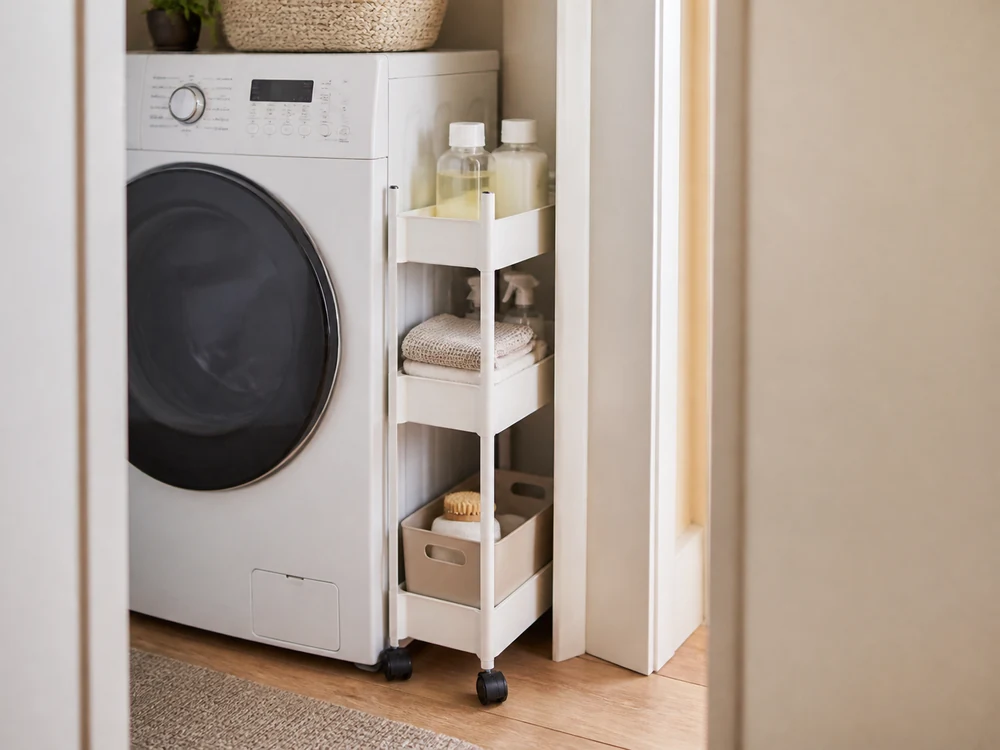
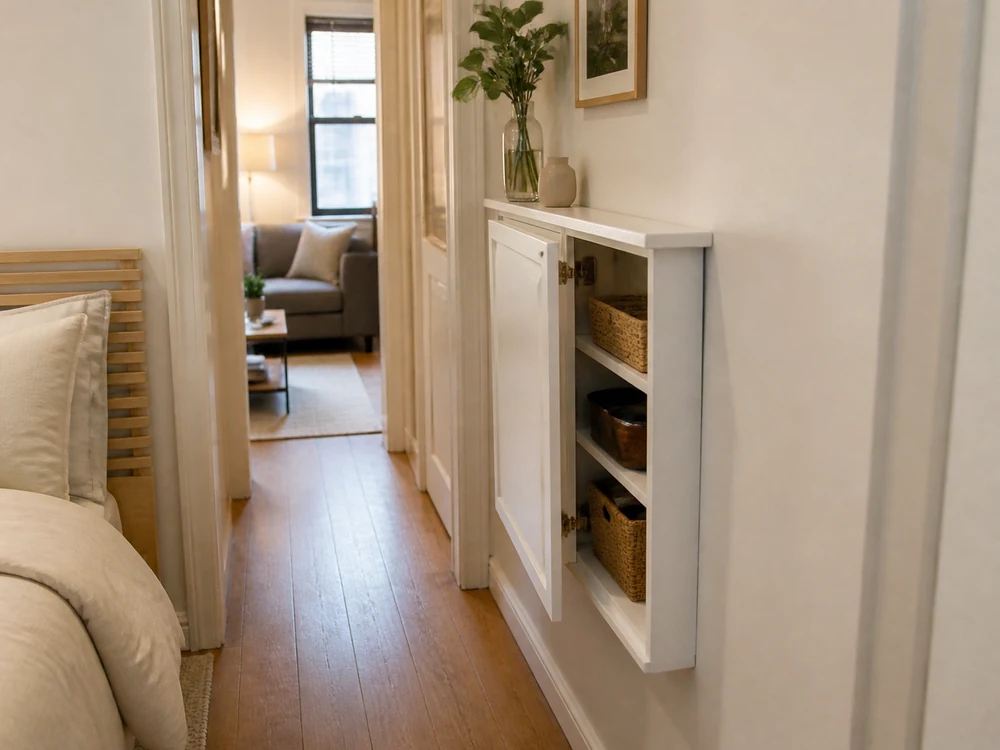
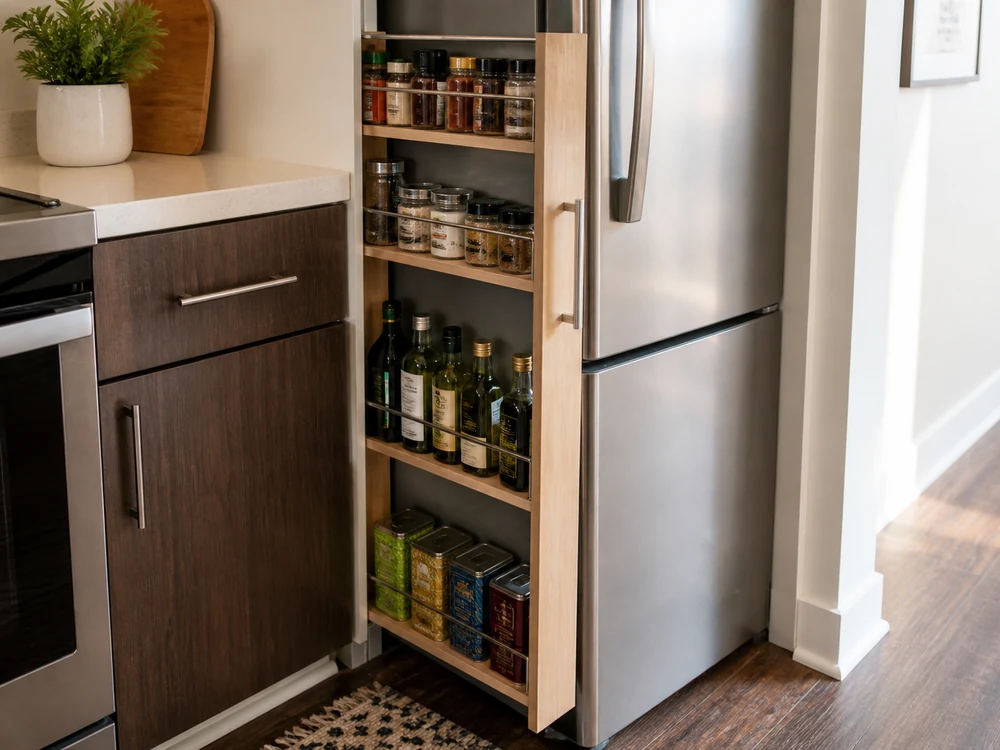
Narrow space storage ideas should begin with motion. A gap beside a fridge wants a pull-out rack. A wall between doors may want a shallow cabinet. A laundry side gap may want a rolling cart. The storage form should copy the way your hand naturally reaches into that place.
When motion and location disagree, the solution becomes annoying. A pretty shelf inside a deep gap will still hide items at the back. A rolling cart in a rough doorway will still fight the floor. The motion test prevents narrow storage from turning into narrow frustration.
Name The Gap Before Buying For It
A narrow gap needs a name: laundry refill gap, broom gap, spice gap, return gap, paper gap, or linen overflow gap. Without a name, it becomes a vertical junk drawer.
Write the category before measuring. The category tells you whether the storage should roll, slide, hang, or stay closed.
Use Rolling Carts Only Where They Can Roll
A slim rolling cart is useful beside a washer, fridge, or bathroom vanity only if it can pull out fully. If the cart hits a rug, trim, appliance foot, or door casing, it will stay half-used.
Test the floor path with cardboard first. The storage motion matters as much as the storage capacity.
Keep Tall Items On The Side That Opens
In a pull-out rack, tall bottles should sit where your hand reaches first. Short items can go higher or farther back. This sounds minor, but it prevents the rack from wobbling while you search.
Group by reach, not by how pretty the shelves look. Narrow storage is successful when the first grab is easy.
Choose Shallow Cabinets For Hallway Walls
A narrow hallway can often handle shallow closed storage better than open hooks or a deep console. The cabinet must be shallow enough that the hallway still reads as a path.
Clear movement matters in real homes too. ADA accessible route guidance gives formal route guidance, and the household version is simple: storage should not make the body dodge the wall.
Avoid Storing Heavy Things Up High
Narrow storage can feel unstable when heavy items live near the top. Keep detergents, bottles, tools, and bulk refills low, especially on rolling pieces.
Use upper shelves for light items: cloths, bags, paper goods, or spare sponges. A narrow unit should not feel like it wants to tip every time it moves.
Leave A Cleaning Channel
The smaller the gap, the more dust it hides. Hair, crumbs, lint, and sticky drips collect quickly in storage strips beside appliances or bathroom fixtures.
Leave enough room to pull the unit out and wipe the floor. Storage that cannot be cleaned will eventually look worse than the empty gap did.
Use Clear Fronts Sparingly
Clear containers can help inside a narrow cabinet, but a whole wall of visible little items can look busy. Use clear bins where seeing the contents saves time, then close the larger visual field behind a door or panel.
If the narrow storage is in a visible hallway, closed fronts usually feel calmer. If it is inside a pantry or laundry closet, visibility may matter more than visual quiet.
Make The Back Reachable
A narrow shelf can still have a deep back. If items disappear behind the front row, use trays, bins, or risers that pull forward as a group.
The back of the gap should not become a museum of old refills. If you cannot reach it in one motion, redesign the container.
Do Not Fill Every Inch
Narrow spaces look efficient when every inch is used, but they work better when a little space remains. A half-inch beside bottles helps fingers grip. An empty top shelf can hold a temporary item while you sort.
Capacity is not the same as usability. A gap that is 90 percent full and easy to use beats a gap that is 100 percent full and irritating.
Match The Gap To Frequency
Daily items should not live in a gap that requires crouching, sliding, and moving a chair. Put frequent items in the easiest narrow spaces and reserve awkward gaps for backups.
This is where many small homes go wrong. They hide the things they use every day and leave decorative storage for things they barely touch.
Use Labels Only When The Category Is Not Obvious
Labels can help in a narrow cabinet with similar bins, but they are not decoration. If a basket clearly holds towels, it does not need a label. If three identical bins hold batteries, cords, and bulbs, labels prevent rummaging.
Keep labels small and plain. The purpose is faster retrieval, not turning the gap into an office supply aisle.
Review The Gap After One Week
Narrow storage reveals problems quickly. After a week, ask what you avoided using, what fell over, and what kept landing somewhere else.
Adjust early. A narrow solution should make the home feel smoother; if it adds a fussy step, the gap needs a different job.
Set A Spill Boundary
Narrow storage often collects items from nearby zones. The kitchen rack starts accepting tools, medicine, batteries, and holiday candles because it is available. Set a spill boundary before that happens.
The boundary can be simple: only cooking refills in the fridge gap, only laundry products beside the washer, only outgoing items near the door. A narrow zone works when it refuses unrelated overflow.
Use The Side View As The Judge
Narrow storage is usually seen from the side before it is used from the front. That side view determines whether the solution looks calm or awkward as you walk past.
Check the side profile after loading the unit. If bottles lean, handles stick out, or baskets bulge beyond the frame, the gap will look messy even when everything is technically contained.
The side view is also a safety cue. Anything that protrudes into a walkway is more likely to catch clothing, bags, or hips. Trim the contents until the storage reads as one clean plane.
Keep Supplies Near The Task, But Not On Display
A narrow storage strip works best when it lives near the task it serves. Laundry refills belong near the washer, spice refills near cooking, and cleaning cloths near the room they clean.
Near does not have to mean visible. A shallow closed cabinet or pull-out rack can keep supplies close while protecting the visual quiet of the room.
Retire The Gap If It Keeps Failing
Some gaps are too awkward to deserve storage. If a rack sticks, a shelf gathers dust, or the contents keep migrating away, the best solution may be leaving that strip empty.
Empty narrow space can still be useful when it gives a door, broom, hamper, or body enough room to move. A gap does not have to hold objects to improve the home.
Decision Guide
| Problem | Better Move | Watch Point |
|---|---|---|
| Cart will not pull out | Check trim, rugs, and appliance feet | Do not buy by width only |
| Items tip or wobble | Place heavy goods low | Use containers with straight sides |
| Back of shelf is lost | Use trays that pull forward | Avoid loose rows |
| Hallway feels tighter | Switch to shallow closed storage | Keep the route visually open |
Related Her Neat Nest Guides
- Storage For Small Spaces
- Narrow Kitchen Storage Ideas
- Small Apartment Organization Ideas
- Kitchen Storage Racks
Final Takeaway
Narrow space storage ideas succeed when the gap has one job and an easy motion. Name the category, protect the path, keep weight low, and leave enough room to clean. The best narrow storage makes an awkward strip feel resolved without turning it into a hiding place.
FAQ
What can I store in a narrow gap?
Store a specific category such as laundry refills, spices, cleaning cloths, paper goods, or outgoing items. Avoid mixed overflow.
Are slim rolling carts worth it?
They are useful when the cart can roll out fully and the floor path is clear. If it cannot move smoothly, a shallow shelf or wall cabinet may work better.
How do I keep narrow storage from getting messy?
Use small categories, containers that pull forward, heavier items low, and a weekly check for items that fell behind or became hard to reach.