
Small Space Furniture Ideas That Protect The Floor
Small space furniture ideas should begin with the floor. If furniture covers every visible inch, the room feels full before anyone sits down. If the floor remains readable, even modest pieces can look intentional.
The right furniture is not always the tiniest option. It is the piece with the right depth, leg shape, storage behavior, and movement pattern for the room. A compact sofa can still be wrong if its arms are heavy; a storage bench can still fail if it blocks the closet.
Choose furniture by what it lets the room do after the delivery box is gone.
Small Space Furniture Ideas: The Floor Test
Small space furniture ideas should pass the floor test before style comes in. Stand at the doorway and look for visible floor between the main pieces. If the room reads as one continuous block of upholstery, tables, and storage, the furniture plan is too heavy.
The floor test is not about minimalism. It is about making each piece legible. A loveseat, bench, table, or cabinet looks more intentional when the eye can see where it begins and ends.
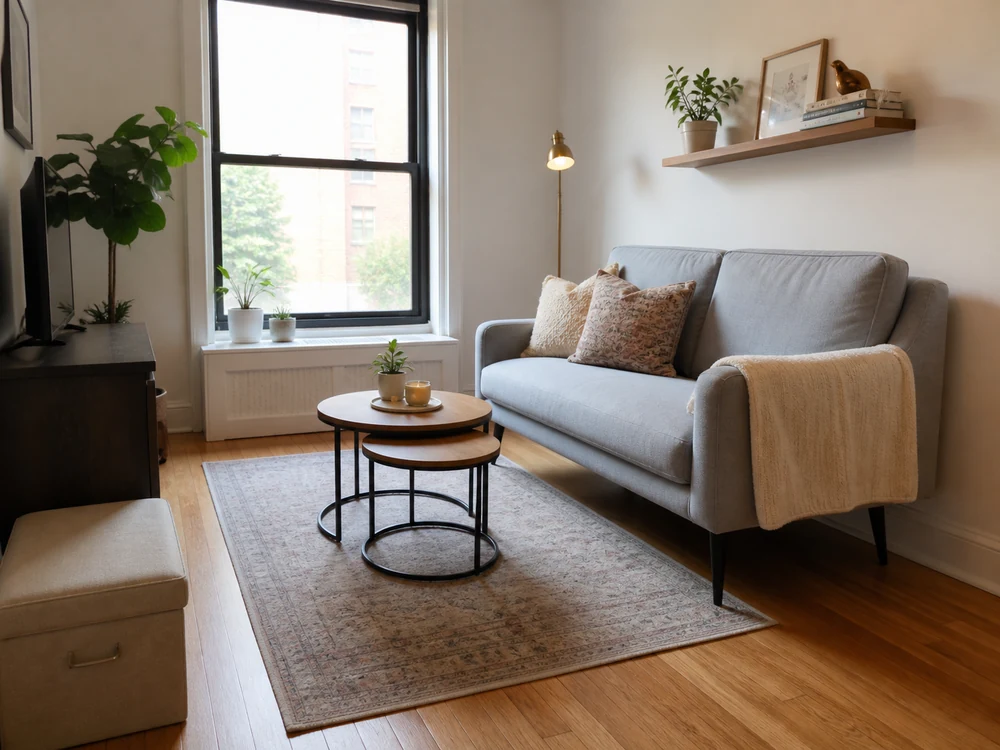
Use Visible Legs To Lighten Heavy Pieces
Raised legs let the eye see underneath a sofa, chair, cabinet, or bench. That sliver of floor can make a small room feel less blocked without changing the room’s actual square footage.
Legs also help cleaning. Dust and pet hair stop hiding under skirted bases, and the room feels easier to reset because the furniture does not sit like a wall.
Buy Depth Before Width
A piece can be narrow and still too deep. Sofa depth, table depth, and dresser depth often determine whether the path works. Width matters, but depth is what steals the walking lane.
Measure the room with the intended movement included. A chair needs room for knees, a drawer needs space to open, and a table needs a person to pass while someone sits there.
Let Folding Furniture Have A Parking Place
A folding table or chair is only practical if it has a place to live when folded. Otherwise it becomes a leaning object that migrates from wall to wall.
Plan the folded state as carefully as the open state. If the folded piece still blocks a cabinet or doorway, it is not solving the small-space problem.
Use Storage Furniture For Slow Items
Storage benches and ottomans are best for slow categories: extra blankets, guest bedding, seasonal pillow covers, board games, or occasional linens. They are less useful for things needed three times a day.
If you have to move cushions and lift a lid for a daily item, that item will stop going back. Match hidden storage to low-frequency belongings.
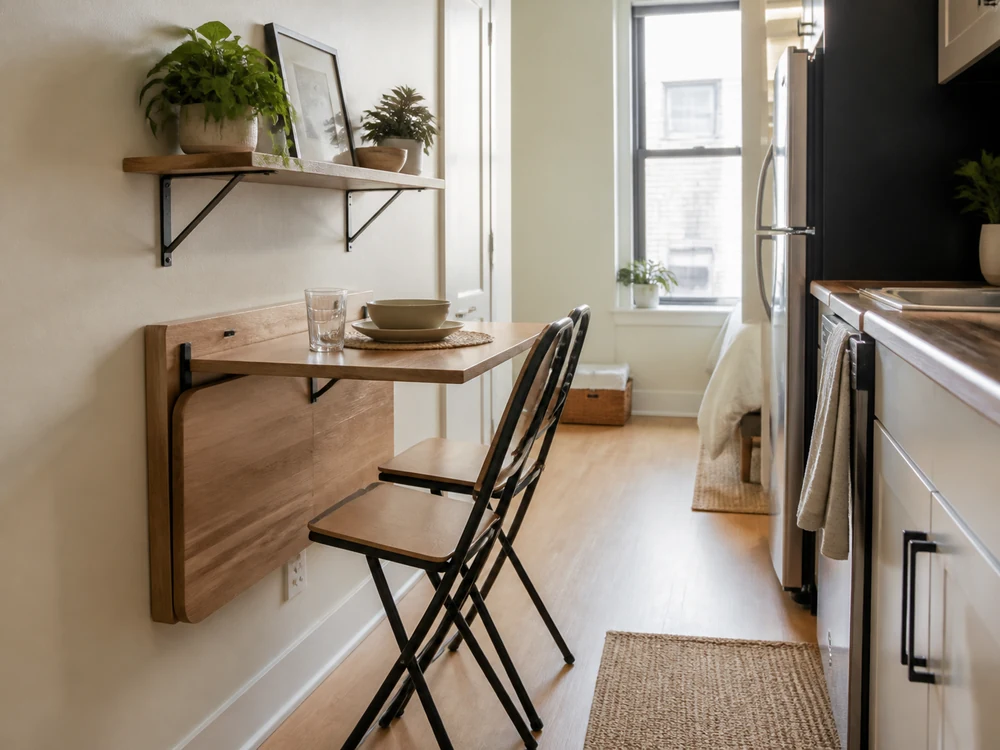
Choose Nesting Tables With Different Jobs
Nesting tables can be smart when the smaller pieces have a reason to move: guest drinks, laptop work, a reading chair, or a temporary snack surface.
Avoid nesting tables that are only decorative duplicates. In a compact room, every extra surface invites extra objects unless it has a clear assignment.
Keep The Closet Door In The Plan
Bedroom furniture often looks fine until the closet door opens. A bench, nightstand, hamper, or small dresser can quietly steal the closet path.
Test door swing and drawer pull together. The room should not require moving the bench every time laundry gets put away.
Use Round Edges Where Bodies Turn
Round or softened edges can help in tight turning points near a bed, sofa, or dining nook. They reduce bruised shins and make the room feel less confrontational.
This does not mean every piece should be round. Use curves where people pivot, then keep straighter storage pieces against walls.
Pick One Piece To Work Hard
A small room can handle one hard-working piece: a sleeper sofa, drop-leaf table, storage bench, wall desk, or media cabinet with drawers. It struggles when every piece tries to transform.
Too many multi-use pieces can make the room feel like a puzzle. Choose the piece that solves the biggest daily friction and let the rest stay simple.
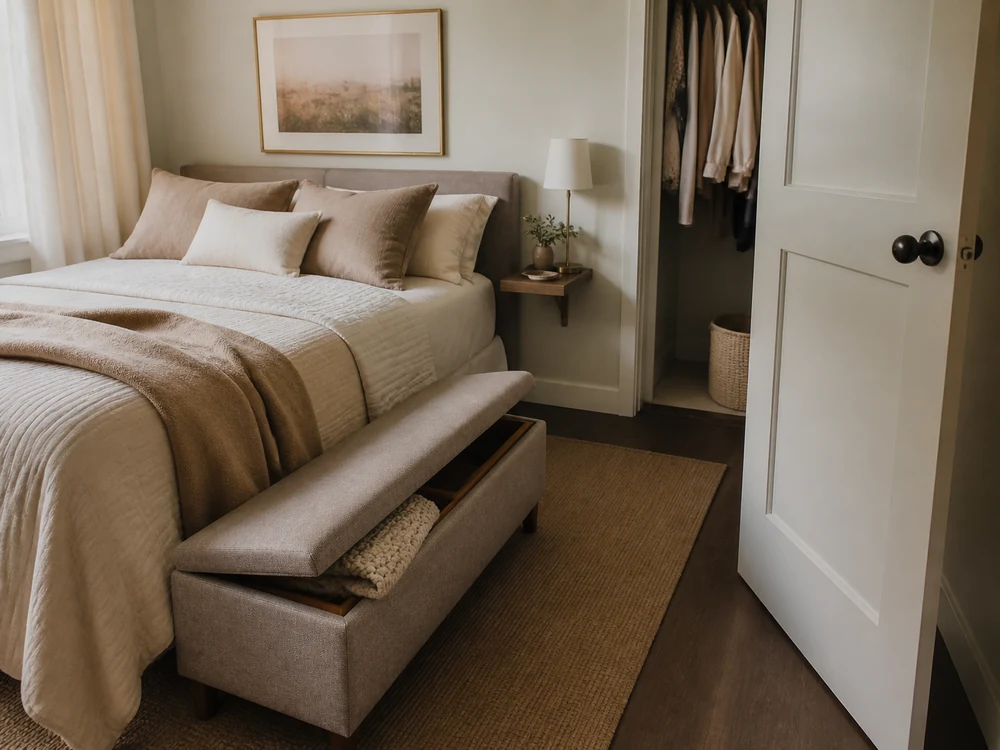
Anchor Tall Furniture Early
Small homes often use vertical storage because the floor is scarce. Bookcases, wardrobes, cabinets, and tall shelving need safe placement before they are styled.
Use appropriate anchoring hardware and review CPSC Anchor It furniture safety guidance when tall furniture enters the room. Safety belongs in the furniture plan, not as a later fix.
Watch The Space Between Pieces
Furniture can fit individually and still fail collectively. The space between a sofa and table, bed and bench, desk and chair, or dresser and closet is what decides whether the room feels livable.
Leave small margins. A room with a little air between pieces feels more expensive and is easier to clean.
Let Furniture Share A Visual Weight
Pieces do not need to match, but they should not all compete. A slim metal table, soft upholstered sofa, woven bench, and pale cabinet can work if their visual weights are balanced.
If one item feels heavy, pair it with lighter silhouettes around it. The goal is not a matching set; it is a room where no single piece seems to have landed by accident.
Refuse Furniture That Creates A New Chore
Some clever pieces require constant folding, lifting, sliding, or rearranging. That is fine for occasional use and exhausting for daily life.
Before buying, ask how many steps the piece adds on a normal Tuesday. Small-space furniture should remove friction, not turn the room into an equipment routine.
Use Furniture To Mark Zones Without Walls
A small apartment often needs zones without partitions. A narrow table can mark the dining edge, a rug can hold the seating area, and a bench can define the foot of the bed without closing the room.
Choose pieces that signal a zone while staying low enough or open enough to keep sightlines moving. The room feels organized when furniture explains what happens where.
Choose Surfaces That Can Be Cleared Fast
Small-space furniture should not create surfaces that are hard to clear. A coffee table with a tray, a desk with one shallow drawer, or a nightstand with a small top tells clutter where to stop.
Large flat surfaces invite projects to spread. If the room already struggles with paper, laundry, or hobby supplies, choose furniture that limits sprawl rather than celebrates it.
Fast-clearing surfaces make the room more flexible. The same table can host dinner, laptop work, or folding laundry because yesterday’s category does not still own it.
Let Furniture Age With The Apartment
Small homes change quickly: a roommate arrives, a hobby moves in, remote work shifts, or a pet needs floor space. Furniture that can move to another wall or serve another room is more valuable than a perfect one-purpose piece.
Before buying, imagine the piece in two other spots. If it only works in one exact position, make sure that position solves a problem you expect to keep.
Check The View From Bed Or Sofa
Furniture is experienced from where you sit or wake up, not only from the doorway. A bulky cabinet may look fine in a floor plan and feel oppressive from the sofa. A bench may look useful and still make the bed feel boxed in.
Sit in the room before deciding a piece works. The best small-space furniture protects the view as much as the measurement.
Decision Guide
| Problem | Better Move | Watch Point |
|---|---|---|
| Room feels blocked | Choose raised legs and shallower depth | Keep visible floor |
| Furniture is hard to reset | Limit transforming pieces | Give folded items a parking place |
| Closet is blocked | Test swing and drawer clearance | Move benches out of the path |
| Storage furniture fails | Use it for slow items | Avoid hiding daily essentials |
Related Her Neat Nest Guides
- Small Bedroom Furniture
- Living Room Small Design
- Storage Solutions For Small Spaces
- Small Bedroom Bed Ideas
Final Takeaway
Small space furniture ideas work when furniture protects the floor, the path, and the daily routine. Choose by depth, clearance, storage behavior, and visual weight before choosing by trend. The right piece makes a compact room feel easier without asking you to rearrange it all day.
FAQ
What furniture is best for small spaces?
Raised sofas, shallow cabinets, nesting tables, drop-leaf tables, storage benches for occasional items, and wall-mounted pieces often work well.
Should small rooms use small furniture?
Not always. The best furniture has the right depth and visual weight. One well-scaled piece can be better than several tiny pieces.
How do I make furniture fit without clutter?
Measure paths, test door and drawer swings, keep storage categories specific, and leave visible floor between pieces.