
Storage For Small Spaces: The Room-By-Room Decisions That Matter
Storage for small spaces is often sold as a single aesthetic: matching bins, narrow shelves, pale baskets, and furniture that promises hidden capacity. Real small homes are less tidy than that. They fail by behavior.
The entry fails when things land too quickly. The kitchen fails when tools cannot return while cooking. The bathroom fails when storage ignores moisture. The bedroom fails when tired routines are expected to be precise.
A better plan is room-specific. Give each room the kind of storage that matches how mess actually starts there.
Editorial thesis: Storage for small spaces works when each room gets a different storage behavior, because a studio entry, a damp bathroom, and a sleepy bedroom do not fail in the same way.
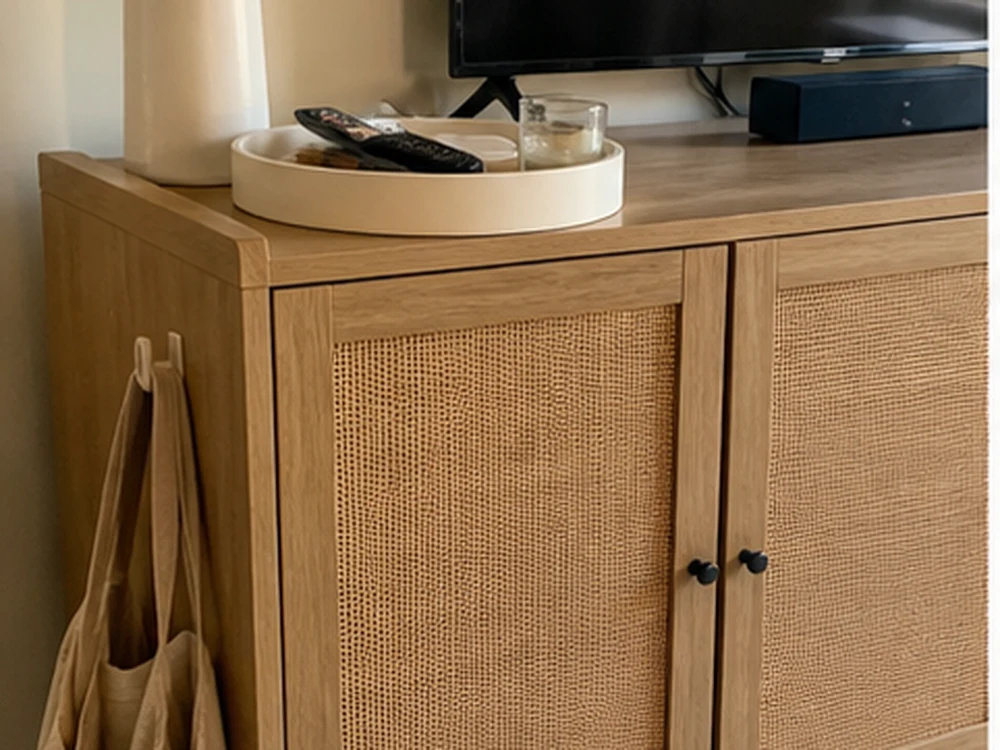
Small-Space Storage Decision Guide
| Situation | Best Fit | What To Check |
|---|---|---|
| Entry | Fast landing | One bag, current coat, shoes in use |
| Kitchen | Reach and return | Daily tools before rare appliances |
| Bathroom | Moisture control | Dry backstock away from splash |
| Bedroom | Tired routine | Current rotation within easy reach |
Use The Entry For Landing, Not Long-Term Storage
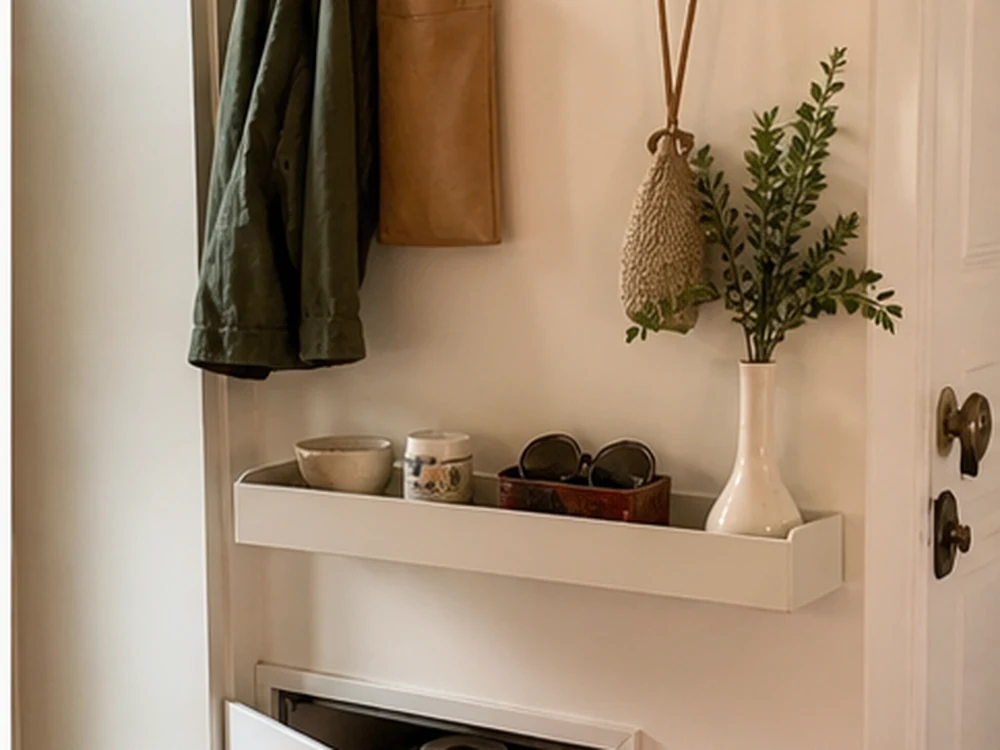
The entry should catch motion, not inventory. Shoes, keys, one bag, and the current coat deserve immediate landing places. The extra tote collection, off-season jackets, and unopened packages need somewhere else to go before the doorway becomes a hallway closet.
If the entry is tiny, use the wall for hooks and the floor for one contained shoe decision. A tray or slim bench can help, but only if it leaves a clear path when the door is half open. Entry storage is successful when leaving the house takes fewer corrections.
A small entry works better when it has a closing time. At the end of the day, the landing zone should hold tomorrow's items, not every object that passed through the door. That nightly reset prevents the smallest public spot in the home from carrying the whole week's backlog.
Give The Kitchen Access Before Capacity
Small kitchens can hold surprising amounts of stuff and still feel impossible to cook in. That is because capacity is not access. A cabinet packed to the ceiling fails if the pan you use twice a week lives behind a slow excavation.
Use storage for small spaces in the kitchen to shorten hand movement. Daily dishes should come out cleanly, oils should return without crowding the stove, and under-sink cleaners should be visible enough that leaks or spills are not hidden for months.
Access also changes how often you cook. When the pan, oil, and towel return without negotiation, a small kitchen feels ready again after dinner. When those basics require digging, the room starts to train you to leave things out on the counter.
Let The Bathroom Stay Dry And Inspectable
Bathroom storage is different because moisture edits the room. Backstock paper, cotton, towels, and cleaners do not belong in the same basket. The categories may look compatible when dry, but steam and splash reveal the mistake.
Use wall height for light dry items, closed bins for protected backstock, and open or wipeable surfaces for wet-hand products. Leave under-sink plumbing visible enough to inspect. Hidden capacity is not helpful if it hides a damp problem.
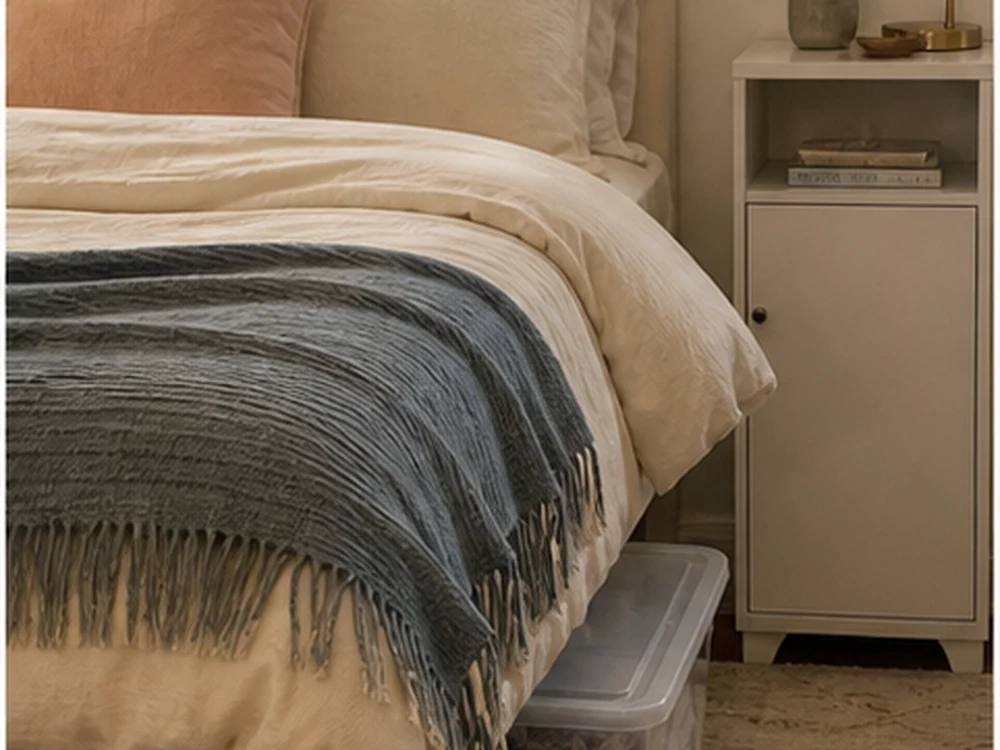
Moisture makes hidden storage less forgiving than it looks. A closed bin can be useful for protected paper, but damp bottles and everyday products need air and wipeable contact points. The right bathroom storage lets you see trouble before it becomes smell, swelling, or stains.
Design Bedroom Storage For Tired Hands
Bedroom storage fails at night and early morning, not during a weekend reset. If a drawer requires folding perfection, if under-bed bins are too heavy, or if the closet needs a stool for daily clothes, the room will collect soft piles.
Make the easiest locations serve the current rotation. Pajamas, active layers, bedside items, and laundry decisions should not require a full organizing mood. Long-term or seasonal storage can be slower, but the daily path needs to be almost automatic.
Bedroom systems need a low-effort landing place that still looks adult. A chair becomes a clothing pile because it accepts everything. A narrow valet hook, one open basket, or a defined drawer gives tired hands a target without asking for perfect folding at midnight.
Use Closed Storage Where Visual Noise Builds Fast
Open shelves can be beautiful in small homes, but they are expensive in attention. If every object is visible, the room asks to be styled every day. Closed cabinets, fabric bins, and lidded baskets are useful when the category is visually busy.
Reserve open storage for things with simple shapes or daily use: a few dishes, a coat rail, a tray, a neat towel stack. Put cords, spare products, paperwork, and mixed household tools behind a door whenever possible.
Avoid Buying One Solution For Every Room
A rolling cart may help in a kitchen and look awkward in a bedroom. Clear bins may help under a bed and look messy on a living room shelf. The point is not to repeat the same container everywhere; it is to choose the right behavior for each zone.
Before buying, name the failure: landing, seeing, reaching, drying, lifting, separating, or hiding. Then choose storage that fixes that verb. This keeps storage for small spaces from becoming a shopping category instead of a living system.
Protect Safety And Stability In Vertical Storage
Small homes often push storage upward, which makes stability more important. Tall bookcases, stacked cabinets, and heavy items on high shelves need careful placement, especially near children, pets, or narrow walking paths.
Review CPSC childproofing home hazard guidance and anchoring guidance when storage furniture becomes tall, heavy, or tempting to climb. A small-space plan should make a room easier to live in, not more fragile.
Create One Overflow Rule Before You Need It
Overflow is not a moral failure; it is a design input. A small home needs a rule for returns, packages, laundry delay, and seasonal swaps. Without that rule, overflow chooses the floor.
Use one temporary basket, one weekly reset shelf, or one outbox near the exit. The container should be small enough to demand a decision. If the overflow place can hold a month of avoidance, it is no longer temporary.
Overflow needs a destination before the room is full. Choose one temporary bin, shelf, or closed box for items waiting on a decision, then empty it on a set day. Without that rule, every small-space storage piece slowly becomes permanent holding for unfinished choices.
The Hidden Cost Of Too Much Hidden Storage
Hidden storage is useful, but it can also make a small home dishonest. When every bench, ottoman, cabinet, and basket has a secret compartment, the room may look calm while decisions keep accumulating behind doors. The home feels tidy until one ordinary reset requires opening five different hiding places.
Use hidden storage for categories with a clear return rhythm: guest linens, seasonal accessories, spare paper, or tools used for a defined task. Avoid using it for vague categories such as things to sort later. Later needs a small outbox, not a larger hiding place.
The best storage for small spaces leaves a few decisions visible on purpose. Keys, the current book, tomorrow’s bag, or the laundry basket should be easy to see because they are active. A small home works better when hidden storage supports life instead of pretending life is not happening.
This balance is what makes a compact home feel adult rather than over-managed. Some categories need concealment, some need speed, and some need a visible limit that asks for a decision before the weekend disappears.
When a product promises to solve every room, be suspicious. A small home usually improves through five or six exact choices, not through one matching set multiplied across every surface.
Connect The Small-Space System
For a fuller small-home system, connect this plan with Small Apartment Organization Ideas, Small Spaces, Bedroom Storage Without A Closet, and Renter Friendly Storage Ideas.
The Small-Space Storage Bottom Line
Storage for small spaces is not a single product style. It is a set of room-by-room decisions about how people actually move, clean, cook, dress, and arrive home. When each zone solves its own failure point, a small home can feel edited without feeling stripped bare.
Storage For Small Spaces Questions
What is the best storage for small spaces?
The best storage is room-specific: landing storage for entries, reach-friendly storage for kitchens, moisture-aware storage for bathrooms, and low-effort storage for bedrooms.
How do you add storage without making a small space look cluttered?
Use closed storage for mixed categories, keep open shelves selective, and leave clear working surfaces in each room. Visual calm matters as much as capacity.
Should small spaces use vertical storage?
Vertical storage is often useful, but tall or heavy furniture should be stable, properly installed, and kept from blocking light, doors, or walking paths.