
Small Front Room Decor That Feels Calm And Useful
Small front room decor has a harder job than ordinary living room styling because the room is often the first impression, the drop zone, the sitting area, and the place where daily clutter becomes visible.
Decor should make the room feel welcoming without turning it into a display that cannot handle bags, coats, mail, remotes, and a tired evening. The strongest choices are scaled, useful, and easy to reset.
Think of the room as a threshold with seating, not as a miniature showroom. A few confident materials and better lighting can do more than a crowded collection of accents.
Small Front Room Decor Begins With The First View
Small front room decor should begin with the view from the door. The first object should feel calm and intentional, not like the room is apologizing for storage.
A slim console, clean sofa back, single artwork, or warm lamp can set the tone. Avoid making the first view a shoe pile, crowded hooks, or a table that catches everything.
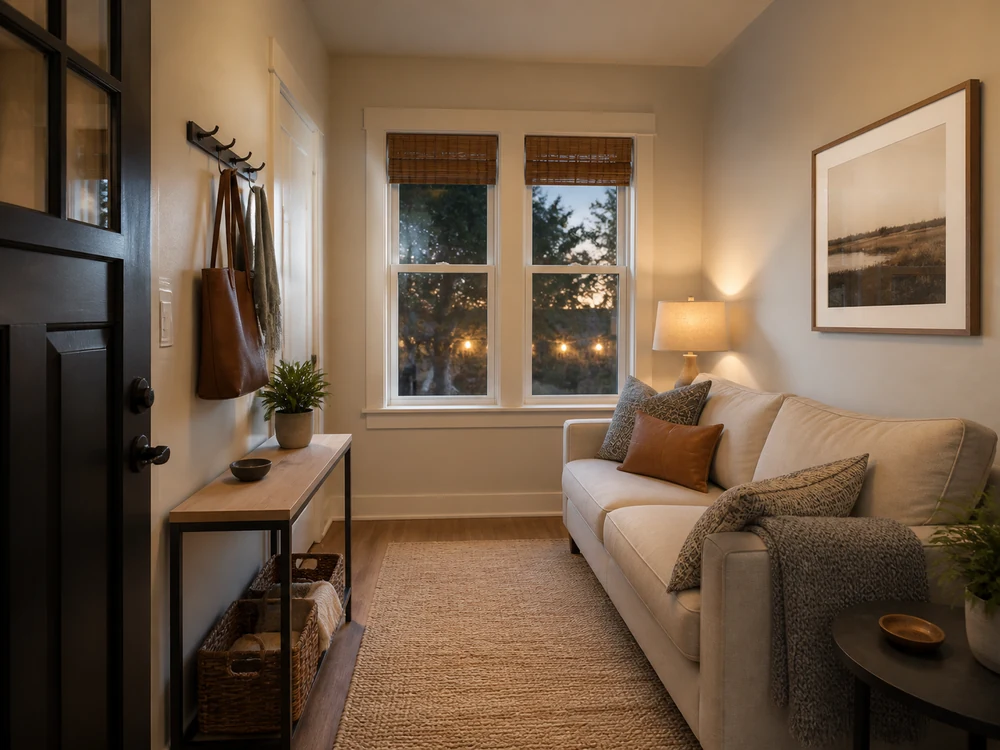
Choose Seating That Leaves Air Around It
The sofa or loveseat should fit the room with air around the arms and legs. Oversized seating can look comfortable in isolation but make the front room feel like a waiting area.
A compact sofa with better textiles often feels richer than a bulky piece with too many cushions. Let comfort come from fabric and placement, not only from depth.
Use Lighting As Decor With A Job
Lighting can decorate a small front room without adding surface clutter. A table lamp, wall sconce, or narrow floor lamp gives shape and warmth while making the entry feel softer. The Energy Saver lighting guidance can help when choosing efficient bulbs for everyday use.
Place light where the room changes function: by the entry, beside the sofa, or near a reading chair. One warm lamp can make a compact room feel more finished than several small objects.
Keep The Drop Zone Visibly Small
Front rooms often inherit entry clutter. Give keys, mail, and bags a small boundary so the living area does not become the household inbox.
The boundary should be visible enough to show when it is full. A shallow tray, slim shelf, or single basket works better than a deep container that hides postponed decisions.
Let Textiles Carry Warmth
Textiles are the friendliest decor in a small front room because they add softness without adding many hard edges. A rug, throw, curtain, and two pillows can create depth.
Keep the textile palette connected. If every fabric introduces a new color, the room starts counting objects instead of feeling layered.
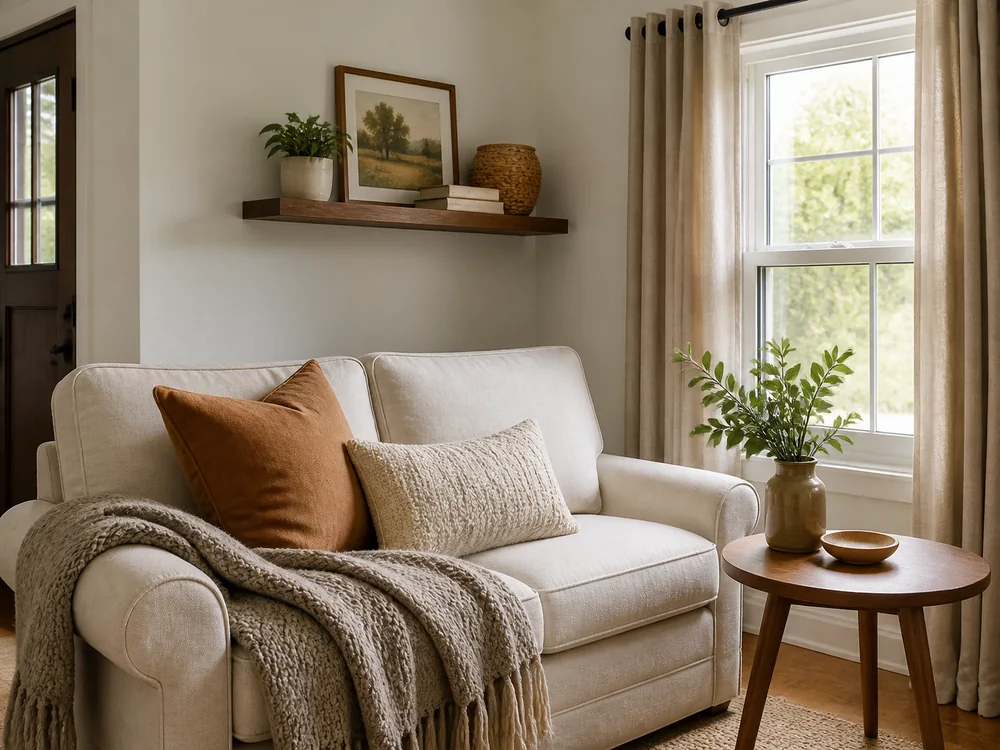
Use Art To Create One Strong Pause
One larger artwork can calm a small front room better than a cluster of tiny frames. Fewer edges make the wall feel less busy.
Choose art that relates to the room’s color or material story. It does not need to match perfectly; it needs to give the eye one place to rest.
Make The Coffee Table Easy To Clear
A front room table should reset quickly because it receives glasses, remotes, mail, and snacks. Use a tray only if it makes clearing easier.
Round or oval tables are kinder where people cross the room. Sharp corners become more noticeable when the room is also a path.
Let Closed Storage Stay Quiet
Closed storage helps small front room decor because it absorbs the mixed categories that would make open shelves look busy. Games, chargers, spare candles, and papers do not all need display.
Use the top of a cabinet sparingly. A lamp, bowl, and one stack of books may be enough to make the surface feel styled.
Repeat One Material From The Entry
If the front room sits beside the door, repeat one material from the entry: wood tone, black metal, woven texture, or a muted accent color.
This makes the room feel connected without over-decorating. Recognition is enough; the whole room does not need to match.
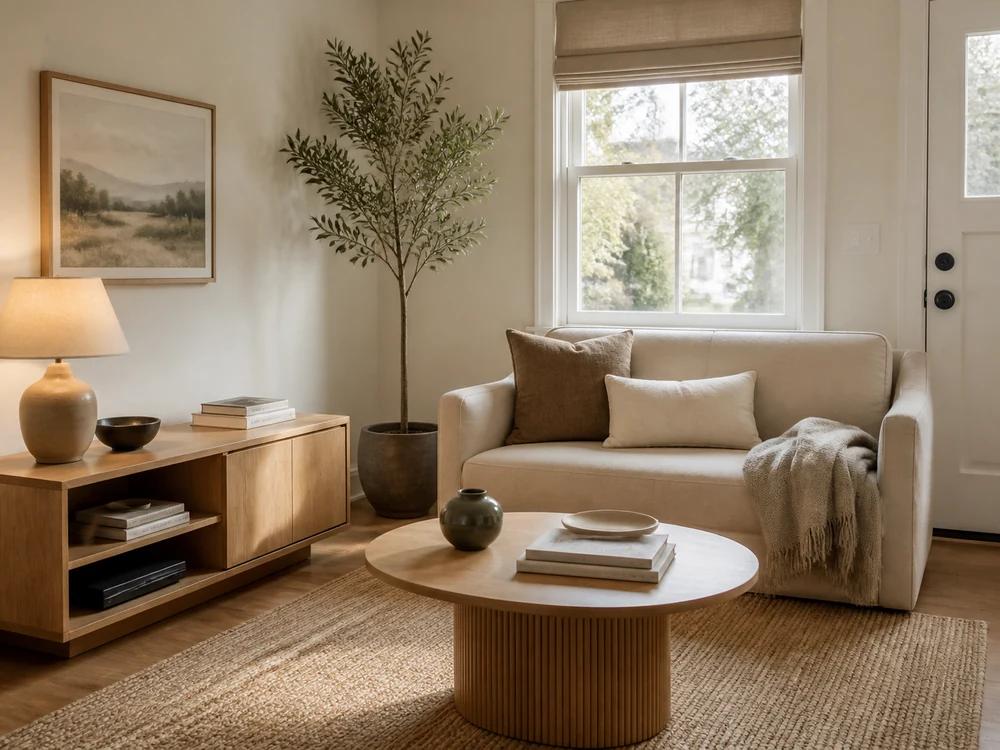
Use Plants Where Traffic Allows
Plants can soften a small front room, but only where bags, doors, and knees do not brush them daily. A plant that is constantly bumped will look tired quickly.
Use a small table plant, a narrow floor plant in a dead corner, or a hanging plant outside the walking lane. Greenery should warm the room, not create a new obstacle.
Style Shelves With Empty Space
A wall shelf can make a small front room feel personal, but it needs empty space to work. Pack it fully and it becomes storage instead of decor.
Use a few books, one vessel, one plant, or a framed piece. Vary height and texture, then stop before the shelf starts explaining itself.
Choose Curtains That Do Not Steal Width
Curtains should frame the window and soften light without making the wall feel narrower. Hang them so they can open fully and reveal as much glass as possible.
Heavy curtains can make a small front room feel closed. Lighter fabric often gives more visual comfort because daylight is one of the room’s best assets.
Give Guest Items A Temporary Place
A front room may need to hold a guest coat, bag, or shoes, but that space should be temporary. Keep one hook, bench corner, or basket available on ordinary days.
That small vacancy makes the room feel generous. It also prevents guest items from landing on the sofa the moment someone arrives.
Edit Decor By Evening Behavior
The evening version of the room tells the truth. Look for where remotes land, whether the lamp is easy to reach, and what object gets moved before anyone can sit.
Adjust those points directly. Fewer pillows, a better tray, a closer basket, or a stronger lamp can improve the room more than a new decorative theme.
Control Sound With Soft Surfaces
Front rooms near an entry can sound hollow because footsteps, doors, and hallway noise arrive first. A rug, curtains, upholstered seating, and a throw can soften the room without adding clutter.
Sound control is part of decor in a compact home. A room that sounds calmer often feels calmer before anyone notices the objects.
Keep Scent Subtle At The Threshold
A small front room can carry scent quickly through the home. Strong fragrance may feel pleasant for a minute and overwhelming for an evening.
Use scent lightly, if at all. Fresh textiles, a clean rug, and a lamp’s warmth usually create a better welcome than several competing candles or diffusers.
Give Remote Controls A Designed Home
Remote controls, chargers, and small electronics can ruin a styled front room because they land in the center of the table. Give them a drawer, tray, or low basket near the seat.
The storage should be reachable from the sofa. If people have to stand up to put the remote away, it will stay visible.
Let The Door Wall Stay Calm
The wall nearest the front door should not carry every decorative idea. Coats, bags, art, mirror, plant, and console can quickly crowd the same first impression.
Choose the one or two elements that matter most there. Move the rest deeper into the room so the entry view feels composed.
Make Books Look Intentional
Books can warm a small front room, but scattered stacks can look like unfinished sorting. Keep books in one or two places and mix them with enough empty space to feel chosen.
A short stack on a cabinet or table can be beautiful when it has a reason. Several random stacks make the room feel like it ran out of shelves.
Use Dark Accents In Small Doses
Dark accents can ground a pale front room, especially in lamp bases, picture frames, or a small side table. Too many dark pieces near the doorway can make the room feel smaller.
Repeat the accent once or twice, then let lighter textiles and wood carry the rest. Small rooms need contrast with restraint.
Decision Guide
| Problem | Better Move | Watch Point |
|---|---|---|
| Room feels like an entry dump | Create a small visible drop zone | Keep it shallower than the clutter |
| Sofa feels too large | Use scaled seating and softer textiles | Air around arms matters |
| Shelves look busy | Style with fewer objects and more empty space | Display is not storage |
| Room feels flat | Layer warm side lighting | One good lamp can carry decor |
Related Her Neat Nest Guides
- Small Living Room Decorating Ideas
- Living Room Small Design
- Small Space Furniture Ideas
- Small Entryway Design
Final Takeaway
Small front room decor works when it welcomes people and still handles real life. Use scaled seating, warm light, controlled drop zones, calm textiles, and storage that lets the room reset without drama.
FAQ
How do I decorate a small front room?
Start with the first view from the door, then add scaled seating, warm lighting, one drop zone, connected textiles, and a limited display surface.
What should I avoid in a small front room?
Avoid oversized seating, crowded hooks, too many tiny frames, deep catchall baskets, and decor that blocks the main path.
How can a small front room feel cozy but not cluttered?
Use textiles and lighting for warmth, keep hard objects fewer, choose closed storage for mixed items, and leave visible empty space on shelves.