
Small Foyer Decorating Ideas That Keep The Entry Open
Small foyer decorating ideas need to welcome you without blocking the first steps inside. The entry may be tiny, but it still has to handle keys, shoes, bags, guests, light, and the mood of the home.
Decoration helps when it gives the foyer a finished point of view. It hurts when every decorative object becomes another landing place for mail, packages, and coats.
The goal is a foyer that looks intentional from the living room and still lets the door, feet, and daily items move cleanly.
Small Foyer Decorating Ideas Start With Door Swing
Small foyer decorating ideas should start by opening the door fully and watching the swing. That arc is not available for a basket, bench, plant stand, or umbrella holder, even if the floor looks empty when the door is closed.
Once the swing is protected, the foyer feels calmer immediately. Open space at the threshold is a design choice, not wasted square footage.
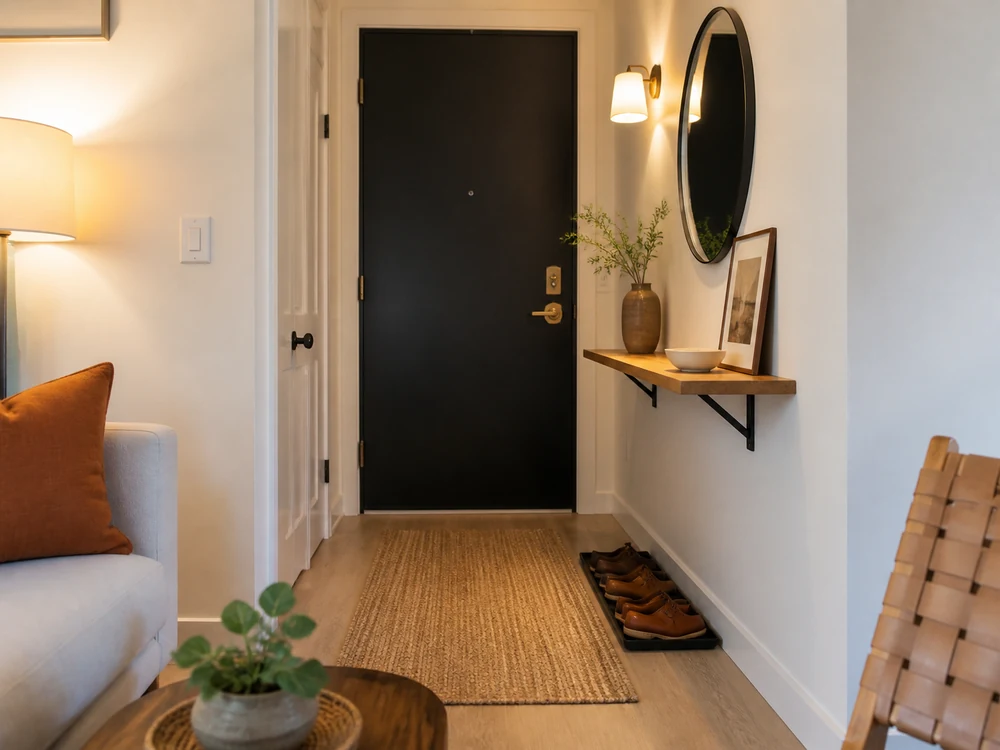
Use A Mirror As The Main Decorative Anchor
A mirror gives a small foyer function and polish at the same time. It catches light, creates a last-check moment, and gives the wall a strong shape without needing a deep piece of furniture.
Hang it where it reflects something calm: a window, art, a clean wall, or a plant. If the mirror reflects shoes and packages, it doubles the exact clutter you wanted to soften.
Choose One Narrow Landing Surface
A small foyer usually needs one landing surface, not several. A floating ledge, narrow shelf, or tiny console can hold keys and sunglasses without inviting a paper stack.
Keep the surface shallow enough that it refuses clutter. The tray should make the daily drop feel elegant while still looking full before the mess becomes permanent.
Let The Rug Define The Arrival Zone
A rug tells shoes where the foyer begins and protects the floor from grit. In a small entry, choose a low-profile runner or mat that clears the door and does not curl at the edges.
Pattern can be useful if the surrounding decor is quiet. A textured natural rug adds warmth without demanding extra objects on the wall.
Keep Hooks Decorative By Keeping Them Light
Hooks can look sculptural when they hold one tote, scarf, leash, or light jacket. They stop looking decorative when they carry the household’s entire outerwear collection.
Give hooks a visible limit. If coats need to live near the door, use a closet or larger rack elsewhere. The foyer wall should not become a vertical laundry pile.
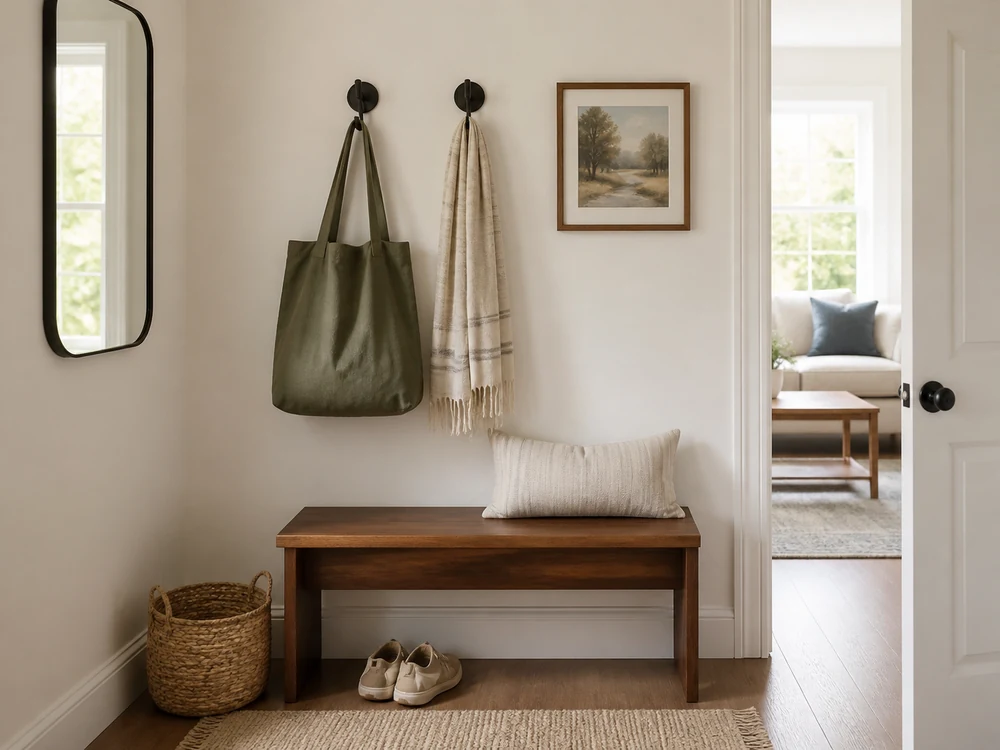
Use Lighting To Make The Entry Feel Finished
Lighting turns a small foyer from a pass-through into a room. A sconce, plug-in lamp, or warm overhead bulb can make the entry feel considered without adding furniture. The Energy Saver lighting guidance can help when choosing efficient bulbs.
Warm side light is especially helpful in narrow entries because it softens shadows around the door. Avoid harsh blue light that makes the entry feel like a hallway in a rental building.
Choose Art That Matches The Scale Of The Wall
Small art can look timid in a small foyer. A medium piece, a vertical frame, or one simple landscape may give the wall more confidence than a cluster of tiny prints.
Keep frames thin if the wall is narrow. The artwork should add personality, not make the entry feel like another storage surface.
Make Shoe Storage Visually Quiet
Shoes are often the loudest visual element in a foyer because they live low and spread sideways. A tray, low rack, or bench shelf can make the shoe limit obvious.
Keep only current shoes at the door. Seasonal pairs and rarely worn shoes should move out of the foyer so the decorated entry does not collapse under footwear.
Use A Bench Only When It Earns The Floor
A bench can be beautiful and useful, but it must earn its footprint. If it blocks the door, narrows the hall, or becomes a pile for bags, a wall shelf and hook may serve the foyer better.
Choose an open-base bench when possible. Visible floor underneath keeps the entry lighter and leaves room for one basket or shoes without creating a solid block.
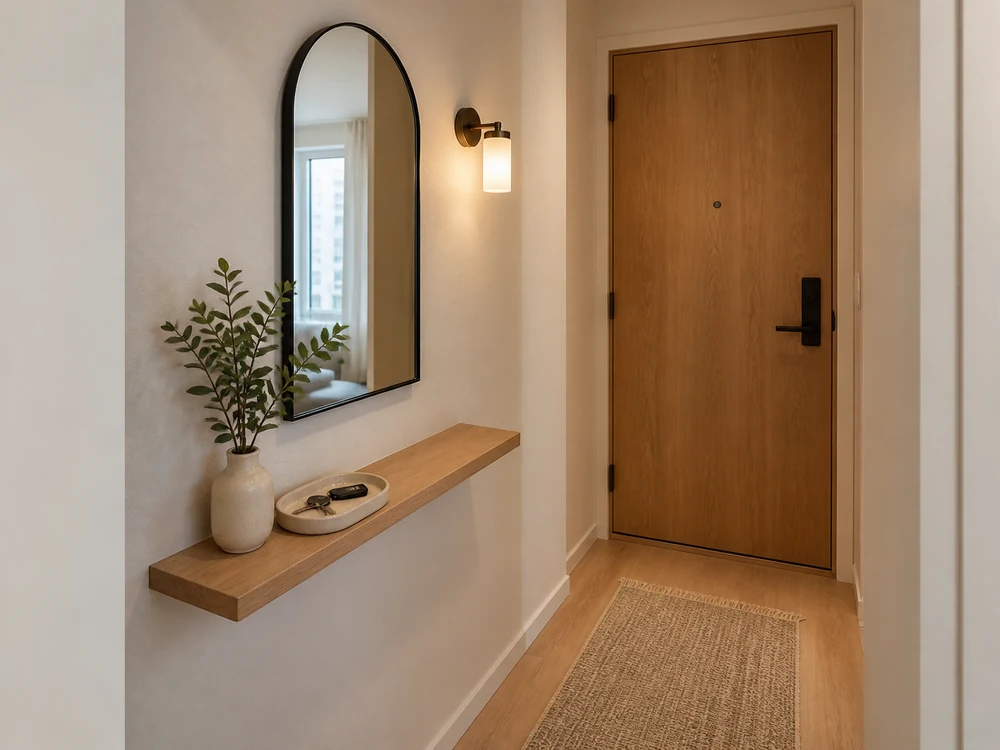
Repeat One Material From The Next Room
A foyer feels connected when it repeats one material from the room beyond it. Wood tone, black metal, linen texture, or a muted accent color can carry the eye forward.
Do not match everything. A small entry looks more natural when one or two details relate to the rest of the home and the remaining pieces stay quiet.
Keep Packages From Becoming Decor
Outgoing packages, returns, and borrowed items need a temporary place, but they should not become the foyer’s visual identity. Use one basket, tote, or lower shelf with a deadline.
If the outgoing zone is always full, it is not a decorating problem. It is a decision problem. Shrink the container and schedule the errand before adding another basket.
Check The View From Inside The Home
Stand in the living room or kitchen and look back at the foyer. That view tells you what the entry contributes to the home when no one is arriving.
If the first thing you see is a shoe pile, reduce shoes. If hooks look heavy, move coats. If the wall feels blank, add one stronger mirror or artwork. Decorate the view you actually live with.
Use Scent Carefully In A Tight Entry
A small foyer can carry scent quickly into the rest of the home. A lightly scented candle that is never lit, a small diffuser, or fresh greenery may feel welcoming, but strong fragrance can become overwhelming at the door.
Keep scent subtle and secondary to cleanliness. The best entry smell is usually dry shoes, fresh air, and a rug that gets shaken out before it looks tired.
Let The Landing Tray Stay Visible
A tray is useful only if you can see when it is getting full. If the tray is too deep, too dark, or tucked behind decor, keys and receipts disappear instead of landing neatly.
Choose a shallow tray that contrasts slightly with the shelf. It becomes a small daily boundary, not another container you have to search.
Make Guest Space Temporary By Design
Guests need a place for shoes, a coat, or a bag, but that space should not become permanent storage for the household. Keep one hook or bench corner empty on ordinary days.
That emptiness makes the foyer feel generous even when it is small. It also prevents the living room from absorbing guest items the moment someone walks in.
Use Plants Only Where The Door Allows
A plant can soften a small foyer, but the door decides whether it belongs there. If the leaves brush the door, catch on coats, or sit in a dark corner, the plant will look tired quickly.
Choose a compact pot on a ledge or a narrow floor plant outside the swing line. Greenery should warm the entry, not become another obstacle.
Keep The Color Story Visible From One Step Away
A small foyer is seen quickly, often while carrying something. Its colors need to read from one step away: rug, mirror frame, tray, hook, and art should feel related without requiring close inspection.
Use one accent color and repeat it lightly. Too many tiny color moments make the entry feel busy before anyone has even taken off their shoes.
Decision Guide
| Problem | Better Move | Watch Point |
|---|---|---|
| Door feels tight | Keep the swing arc empty | Do not decorate the threshold |
| Entry looks unfinished | Use mirror, light, and one landing shelf | Avoid many small objects |
| Shoes dominate | Use a low visual limit | Keep only current pairs |
| Hooks look messy | Assign light items only | Move bulky coats elsewhere |
Related Her Neat Nest Guides
Final Takeaway
Small foyer decorating ideas work when they honor movement first. Use a mirror, warm light, one shallow landing surface, and controlled shoe storage to make the entry feel finished without stealing the doorway.
FAQ
How do you decorate a very small foyer?
Start with clear door swing, then add a mirror, low-profile rug, shallow landing shelf, warm light, and a strict shoe limit.
What furniture works in a small foyer?
Use a floating shelf, narrow console, or open-base bench only if it does not block the walking path or door swing.
How can a small foyer look welcoming?
Use warm light, one strong wall anchor, a clean rug, a tiny tray for keys, and fewer visible coats or shoes.