
Kitchen Cabinet Shelf Organizer Ideas For Real Cabinets
A kitchen cabinet shelf organizer can make a small cabinet easier to use, but it can also create a second layer of frustration if it is chosen only for extra height. Real cabinets have hinges, pipes, handles, sagging shelves, and habits.
The best shelf organizer is not the one that adds the most tiers. It is the one that lets your hand reach the right plate, mug, pan, or jar without unloading a tiny tower.
Use organizers to separate decisions, not to cram more kitchenware into a cabinet that already needs editing.
Kitchen Cabinet Shelf Organizer Rules Start With Reach
A kitchen cabinet shelf organizer should make the cabinet easier to reach, not simply taller. Open the door, reach for the item you use most, and notice whether the organizer helps that movement or adds a new obstacle.
Clear reach matters in homes as much as public spaces. The ADA accessible route guidance is formal guidance, but the kitchen lesson is practical: storage that blocks the natural path will be ignored.
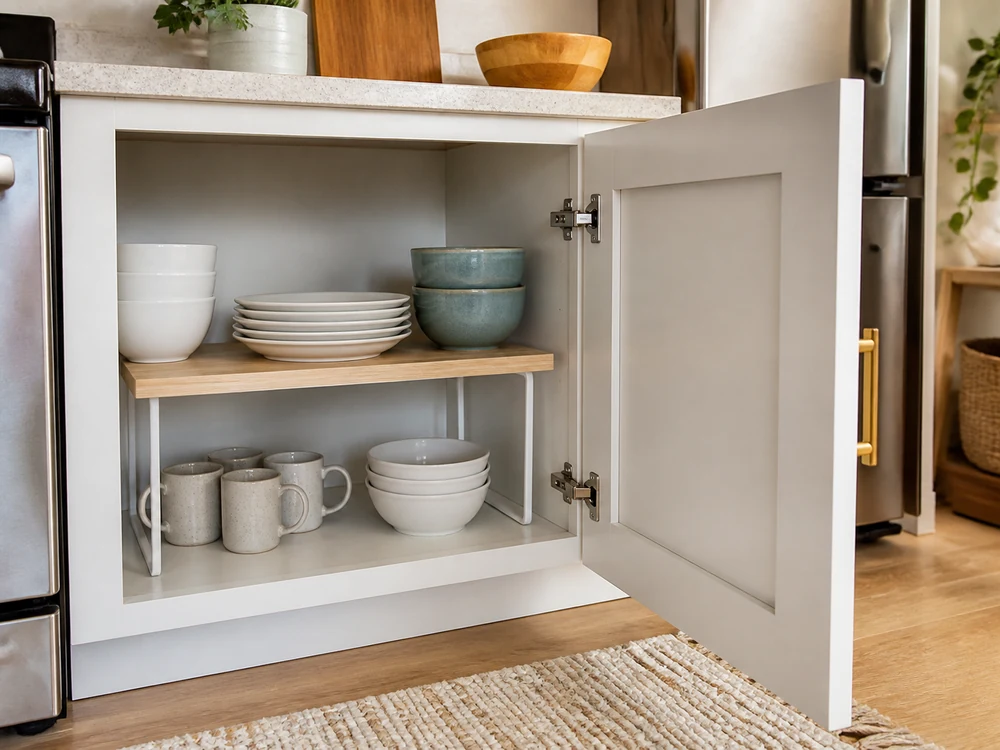
Measure Usable Height, Not Empty Height
The empty cabinet may look tall enough for a riser, but dishes, handles, door hinges, shelf pins, and your hand all need space. Measure the tallest everyday item and add room to lift it out.
If the upper tier requires tilting a bowl at a strange angle, the organizer is too tall or the category is wrong. Usable height is the height that works during dinner, not during installation.
Use Risers For Plates And Bowls
Shelf risers are excellent for plates and bowls when each stack stays short. Plates can live below while bowls sit above, or everyday bowls can stay low with serving pieces above.
Keep each stack low enough that it can be lifted with one hand. A riser should end the dangerous plate tower, not create two smaller towers that wobble.
Do Not Store Mugs In Deep Rows
Mugs often multiply because they are sentimental, gifted, or seasonal. A shelf organizer can help only after you decide how many mugs deserve daily cabinet space.
Place favorite mugs in the front row and move extras higher or elsewhere. Deep rows waste time because the mug you want is always behind the mug you tolerate.
Treat Pans And Lids As Separate Motions
Pans and lids need different handling. Pans slide or lift; lids often need vertical slots. A wire shelf can hold a pan above lids, but only if handles do not catch the cabinet door.
Test the longest handle before keeping the organizer. A lower cabinet that closes with effort will train you to leave pans on the stove.
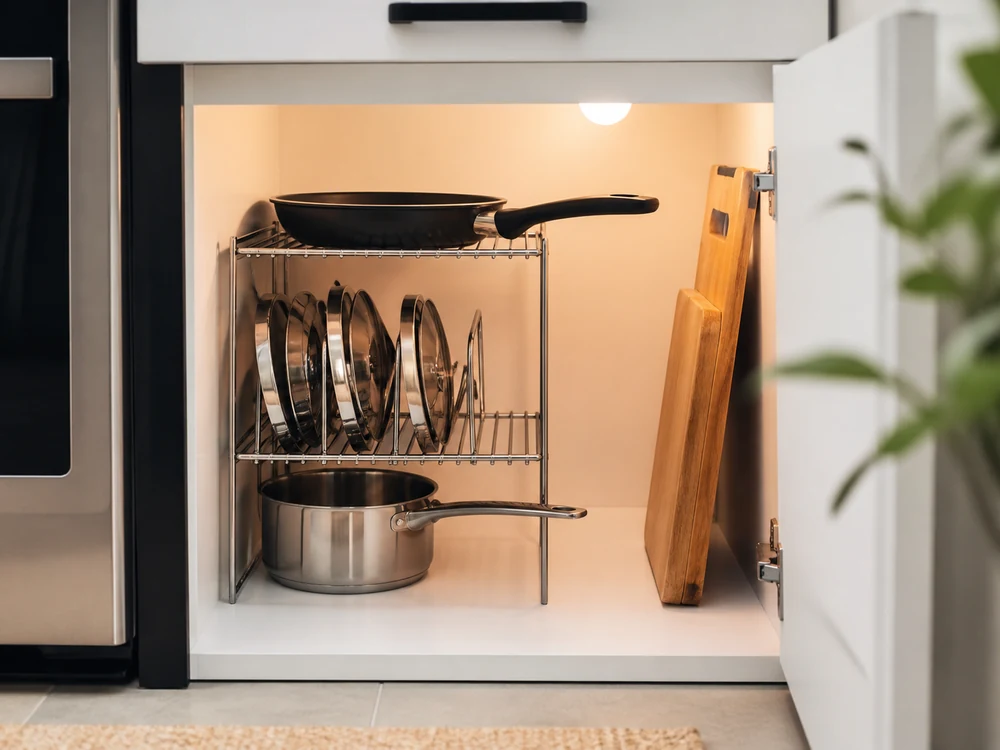
Avoid Organizers That Fight Hinges
Cabinet hinges steal side space, especially in older rental kitchens. A shelf that fits the opening may still scrape the hinge or prevent the door from closing cleanly.
Set the organizer inside the cabinet before loading it. Open and close the door several times. If the hinge grazes a leg, choose a narrower shelf or shift the category.
Use The Front Edge For Daily Items
The front edge of a cabinet is prime space. Put daily bowls, mugs, lunch containers, or pans where the hand naturally arrives. Back corners can hold slow-use pieces.
An organizer should clarify that hierarchy. If the shelf puts rare items in front and daily pieces behind, it has improved the photo and worsened the kitchen.
Keep Food Jars Light And Stable
Shelf organizers can hold plain jars, but heavy pantry items can make a weak riser bend. Flour, sugar, rice, and cans are better on sturdy shelves or pull-out drawers.
Use risers for lightweight overflow, tea, small bowls, or breakfast jars. Weight limits matter more inside cabinets because failure usually happens when the door is open and your hand is inside.
Leave A Hand Gap
Every organized cabinet needs empty air for your hand. If every tier is filled to the front edge, you will knock something over while reaching.
Leave a small hand gap at the front or side of each organizer. That negative space is what makes the storage usable rather than merely compact.
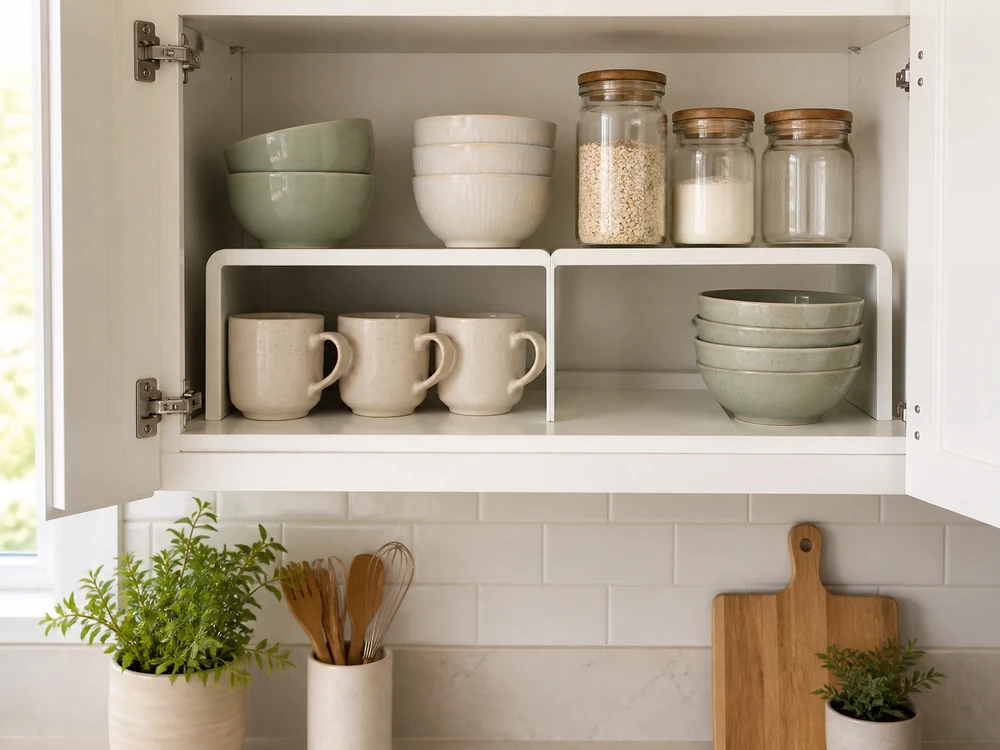
Edit Before Buying A Second Shelf
When one shelf organizer helps, it is tempting to add another. Pause before stacking solutions. The second organizer may be solving a quantity problem that should be handled by donating duplicates.
Remove chipped dishes, orphan lids, rarely used mugs, and pieces that do not fit your cooking life. Then decide whether more hardware is still necessary.
Choose Materials By Cleaning Style
Wire shelves feel light and handle pans well, but crumbs fall through them. Solid shelves look calmer for dishes, but they need wiping and may show water rings.
Choose the material you will maintain. A cabinet organizer that looks perfect for one week and grimy afterward is the wrong organizer for that kitchen.
Build One Cabinet At A Time
Do not reorganize every kitchen cabinet at once if the kitchen is small. Start with the cabinet that slows you down most often, such as dishes, pans, mugs, or breakfast items.
Live with that change for a week. The best shelf organizer plan grows from evidence: what became easier, what still gets stuck, and what you stopped reaching for entirely.
Respect Shelf Strength
A kitchen cabinet shelf organizer adds a new load pattern to an old shelf. Heavy plates, cast iron, jars, and appliances can concentrate weight in ways the cabinet was not built to handle.
Put heavier items on the original cabinet shelf whenever possible and let the organizer hold lighter categories. If the shelf bows before the organizer arrives, hardware will not fix the underlying limit.
Keep Clear Containers From Becoming A Wall
Clear containers can make upper cabinets look tidy, but too many of them create a wall of similar shapes. That can make the cabinet harder to scan than a few visible bowls or jars.
Use clear containers for categories that need containment, not for everything. A shelf organizer works better when it separates natural groups instead of turning the cabinet into a grid.
Watch For Door-Side Blind Spots
The space just behind the cabinet door can become a blind spot once a riser is loaded. Small lids, measuring cups, or spice jars slide there and disappear from daily memory.
Leave that side lighter or assign it to one visible object. A cabinet is successful when opening the door tells you what is inside without a search.
Use Temporary Tests Before Permanent Hardware
Before drilling, mounting, or buying a full matching set, test the cabinet with one movable shelf organizer. Live with it during cooking, unloading the dishwasher, and putting groceries away.
Temporary tests reveal annoying details: a mug handle that catches, a pan that needs two hands, or a shelf that blocks the jar you reach for every morning before breakfast during the busiest kitchen minutes daily.
Match Organizer Shape To The Item Shape
Round bowls, flat plates, pan lids, and mugs need different kinds of separation. One rectangular riser cannot solve every cabinet problem just because it fits the shelf.
Let the item shape choose the organizer shape. Vertical slots help lids, flat risers help dishes, and open front shelves help mugs you grab daily. The better match saves time because the item leaves the cabinet in the same position it is stored, so cleanup after cooking does not require another tiny decision.
Decision Guide
| Problem | Better Move | Watch Point |
|---|---|---|
| Plates are stacked too high | Use one riser and shorter stacks | Keep one-hand lift possible |
| Pans catch the door | Test handles before loading | Watch hinges and door swing |
| Mugs crowd the shelf | Keep daily favorites in front | Move extras out of prime space |
| Cabinet still feels hard | Leave a hand gap | Do not fill every tier |
Related Her Neat Nest Guides
- Cabinet Organizer Shelf
- Under Cabinet Organizer
- Kitchen Storage Racks
- Kitchen Storage Rack For Small Spaces
Final Takeaway
A kitchen cabinet shelf organizer is useful when it improves reach, separates motions, and respects the cabinet’s real dimensions. Measure, edit, and leave hand space before treating extra tiers as extra capacity.
FAQ
Are cabinet shelf organizers worth it?
Yes, when they reduce stacking and improve reach. They are less useful when they simply add more places to overfill.
What should I put on a kitchen shelf organizer?
Use them for short stacks of dishes, bowls, mugs, lightweight jars, lids, or pans that clear the door and hinges.
How do I measure for a cabinet shelf organizer?
Measure usable width, depth, and height, then account for hinges, handles, shelf pins, and the room your hand needs to lift items.