
Small Doorway Coat Rack: A Better Plan For Narrow Entries
A small doorway coat rack can make the first three feet of a home feel composed, but it can also become the place where every coat, tote, scarf, leash, umbrella, and mystery bag gets permission to stay.
The useful version starts with movement. Before choosing hooks or a stand, watch how the door opens, where wet shoes land, which shoulder carries the daily bag, and how often guests need a temporary place to hang something without blocking the way in.
That traffic-first view changes the decision. The best rack is not always the one with the most hooks; it is the one that lets the entry reset itself before clutter spreads into the living room.
Editorial thesis: A small doorway coat rack should be planned as a traffic tool first and a storage piece second, because the wrong rack steals the exact clearance an entryway needs to function.
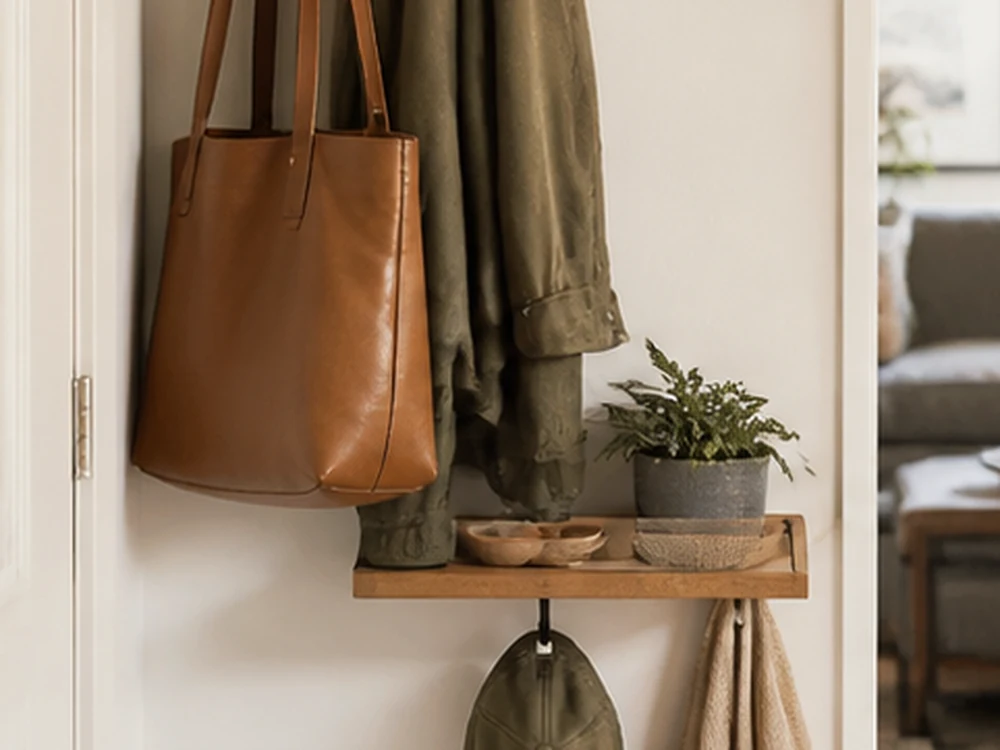
Doorway Rack Decision Guide
| Situation | Best Fit | What To Check |
|---|---|---|
| Daily coat plus bag | Three to four strong hooks | Door swing and shoulder clearance |
| Wet weather gear | Hook plus washable tray | Water reaching dry bags or wood floor |
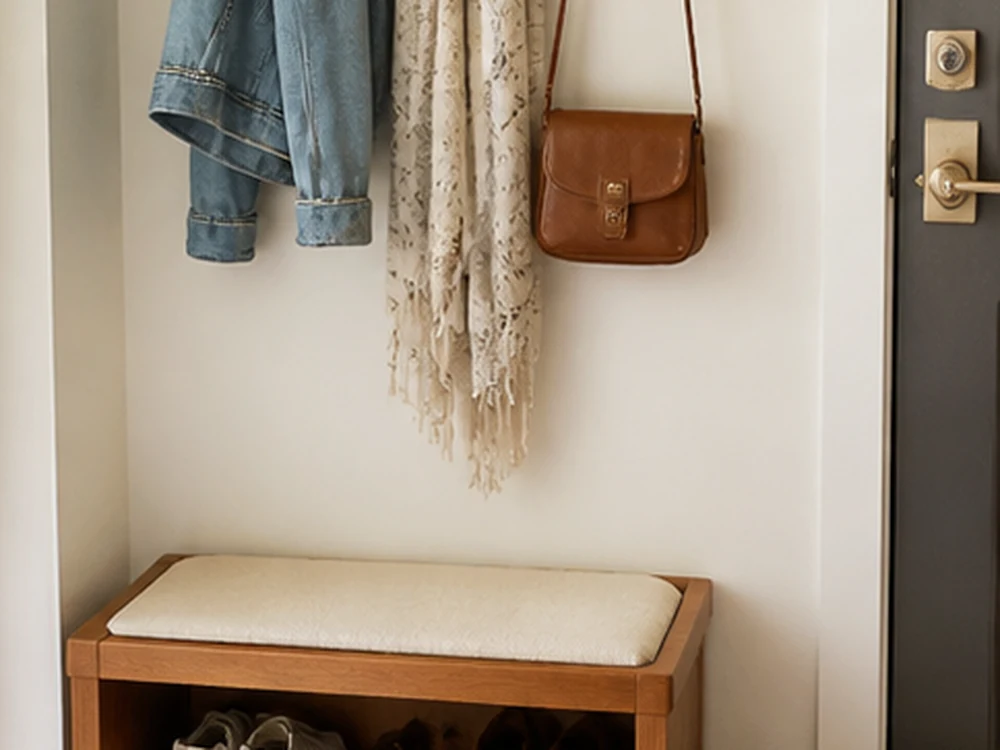
| Shoes are the real mess | Bench with short rail | Seat depth narrowing the entry |
| No-drill rental | Stable freestanding rack | Uneven loading and tipping |
Map The Door Swing Before You Measure The Wall
Open the door all the way, then open it halfway, because many narrow entries fail in the half-open position. That is when someone steps in with a grocery bag, a wet umbrella, or a child behind them. A wall rack that clears a fully open door can still catch the handle, sleeve, or bag strap during normal arrival.
Tape the proposed rack width on the wall and leave it for a day. If your shoulder naturally avoids that strip, the rack is already too proud of the wall. For a tight doorway, flat hooks, a shallow rail, or a rack mounted slightly past the swing arc will usually feel better than a decorative shelf with deep pegs.
Also watch where a guest pauses while the door is open. If the pause point and the rack compete for the same strip of floor, the entry will feel crowded even when nothing is technically blocking it. A good doorway rack gives a person, a bag, and the swinging door three separate zones.
Treat Hook Count As A Limit, Not A Feature
More hooks look generous in a product photo, but in a small doorway they often create a soft permission slip for backlog. A rack with six hooks can hold ten items badly. A rack with three strong hooks and one nearby basket often keeps the entry more disciplined.
Use one hook for the current coat, one for the daily bag, and one flexible guest or weather hook. Off-season coats, duplicate totes, and bags waiting for errands need a separate holding zone. When the doorway rack becomes long-term storage, it stops acting like an entry tool.
Give the rack a visible reset rule. When every hook is full at night, one item leaves the entry before another one arrives. That simple limit keeps the doorway from turning into a soft overflow closet and makes the remaining coats look intentional instead of abandoned.
Set Heights By What Hits The Floor
The common mistake is hanging hooks where they look centered on the wall. In a real entry, hook height should be tested by the longest coat, the lowest tote handle, and the shoe zone beneath it. A low hook makes a long coat brush dirty shoes; a very high hook turns daily use into a reach.
For mixed households, a two-level plan can work if it has boundaries. Lower hooks can hold a child’s jacket or dog-walking tote, while upper hooks carry adult coats. Do not let the lower row become a second layer of visual clutter directly over the floor.
Separate Wet Gear From Dry Bags
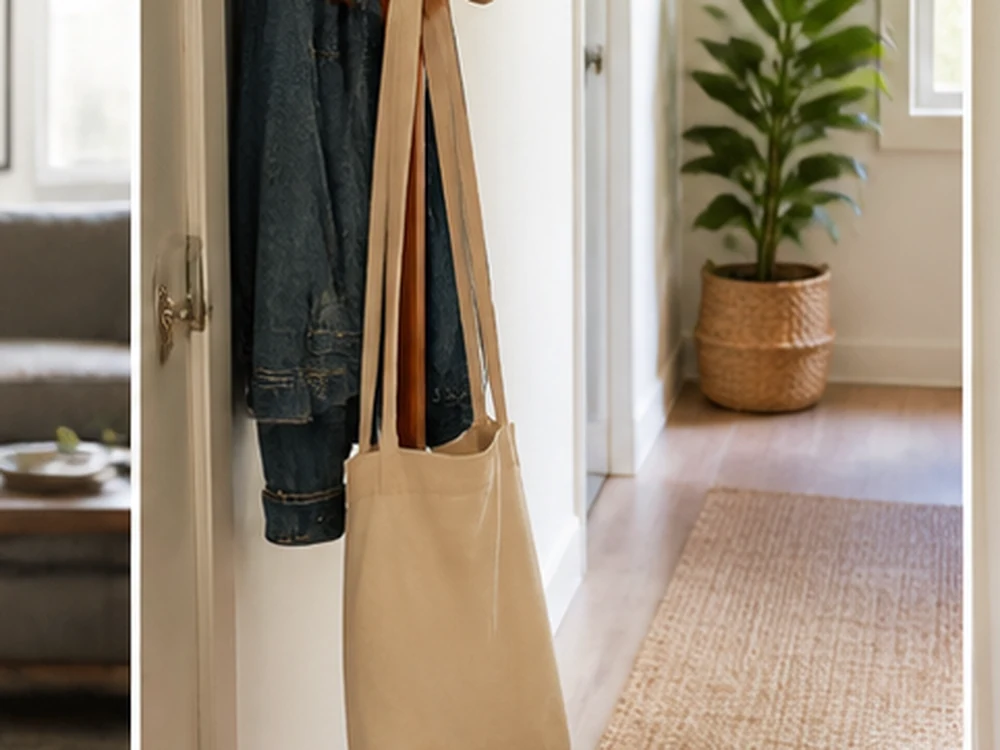
A raincoat, umbrella, or damp scarf should not lean against the same leather tote that holds a laptop. Even a beautiful small doorway coat rack needs a wet-gear rule. Add a boot tray, an umbrella stand, or a washable mat close enough that wet items have somewhere to pause.
This is where narrow entries benefit from a small ugly truth: one moisture-safe accessory can protect the whole look. A single mat or wipeable tray may matter more than another hook, because it stops damp gear from contaminating the items that need to leave dry the next morning.
Apartment entries often have no true drying zone, so the rack needs a tiny weather protocol. Keep one hook or tray assigned to damp items only, then move those pieces once dry. Without that separation, moisture spreads by contact and the whole setup starts to feel messy faster.
Choose Wall-Mounted, Freestanding, Or Bench-Based By Failure Mode
Wall-mounted racks save floor area but depend on wall material, lease rules, anchors, and weight. A freestanding rack avoids drilling but needs a base that will not tip when one side is loaded. A bench-based setup adds shoe containment but can pinch the walking lane if the seat is too deep.
Use the failure mode to choose. If coats are heavy, wall structure matters. If renters cannot drill, choose a stable stand with a real footprint rather than a spindly tree. If shoes are the bigger problem, a bench with a short hook rail may outperform a tall rack with no landing place.
Leave A Bag Landing Spot That Is Not The Floor
Doorway clutter often starts with the bag, not the coat. A tote lands on the floor for one evening, then becomes the place receipts, gloves, and mail collect. The rack should include either one strong bag hook, a narrow shelf, or a small tray close to the door.
Keep that landing spot deliberately small. It should hold the bag in use, not every reusable tote in the apartment. A doorway storage system feels grown-up when it gives the daily bag dignity without turning the entrance into a storage closet.
Audit Seasonal Overflow Monthly
A small doorway coat rack tells the truth about the season faster than a closet. When warm weather arrives, bulky coats that remain on the rack make the whole entry feel tired. When cold weather starts, too many light jackets create the same problem in reverse.
Once a month, remove everything and rebuild the rack from the weather outward. The entry should hold what the next seven days are likely to need. Longer-term outerwear can live in a closet, under-bed textile bag, or high shelf until it actually returns to rotation.
Make Safety Part Of The Style Decision
Any rack that carries real weight should be installed according to the manufacturer’s instructions and suited to the wall. Tall freestanding pieces should be stable when loaded unevenly, especially in homes with children. The most polished rack still fails if it pulls from the wall or tips when a backpack swings on one side.
For heavier wall storage, review CPSC Anchor It furniture safety guidance before treating a rack like light decor. Safety guidance is not separate from design in a narrow entry; it is what lets the entry stay useful after the photo moment.
Style can support safety when the rack looks balanced after it is loaded, not only when it is empty. Test the heaviest real coat and bag together. If the piece twists, leans, or pulls forward, choose a sturdier solution before judging the finish or color.
Build The Entry Around The Rack
For a fuller small-home system, connect this plan with Small Entryway Shoe Storage Ideas, Entryway Organization For Small Apartments, Renter Friendly Storage Ideas, and Small Apartment Organization Ideas.
The Doorway Coat Rack Bottom Line
A small doorway coat rack works best when it edits the entry, not when it tries to absorb the whole household. Give it a clear load limit, a wet-gear plan, and a walking lane that still feels natural with the door half open. Then the rack becomes a daily reset point instead of the first pile of the day.
Small Doorway Coat Rack Questions
What is the best small doorway coat rack for a narrow entry?
The best option is the one that clears the door swing, carries the actual coat and bag weight, and leaves enough walking room when loaded. In many narrow rentals, a shallow wall rail or stable slim stand works better than a deep decorative rack.
How many hooks should a small doorway coat rack have?
Use fewer hooks than you think you need. Three to five intentional hooks usually keep a small entry cleaner than a long row that invites every spare coat and tote to stay there.
Can renters install a small doorway coat rack?
Renters can use freestanding racks, over-door options, adhesive systems for light items, or wall-mounted racks only when lease rules and wall materials allow it. Heavy coats need a stronger solution than light removable hooks.