
Small Bedroom Design Ideas That Make Tight Rooms Work
Small bedroom design is not a search for miniature versions of normal furniture. It is a test of how much sleep, dressing, storage, and quiet the room can support before every inch starts arguing with another inch.
The best compact bedrooms usually look simple because the hard decisions are hidden in the plan: which side of the bed opens, where the hamper waits, how far a drawer can pull, and what the eye sees first from the doorway.
Use the room like a map before you decorate it. Once the daily path is protected, color, lamps, rugs, and storage become useful choices instead of rescue attempts.
Small Bedroom Design Starts With The Door-To-Bed Path
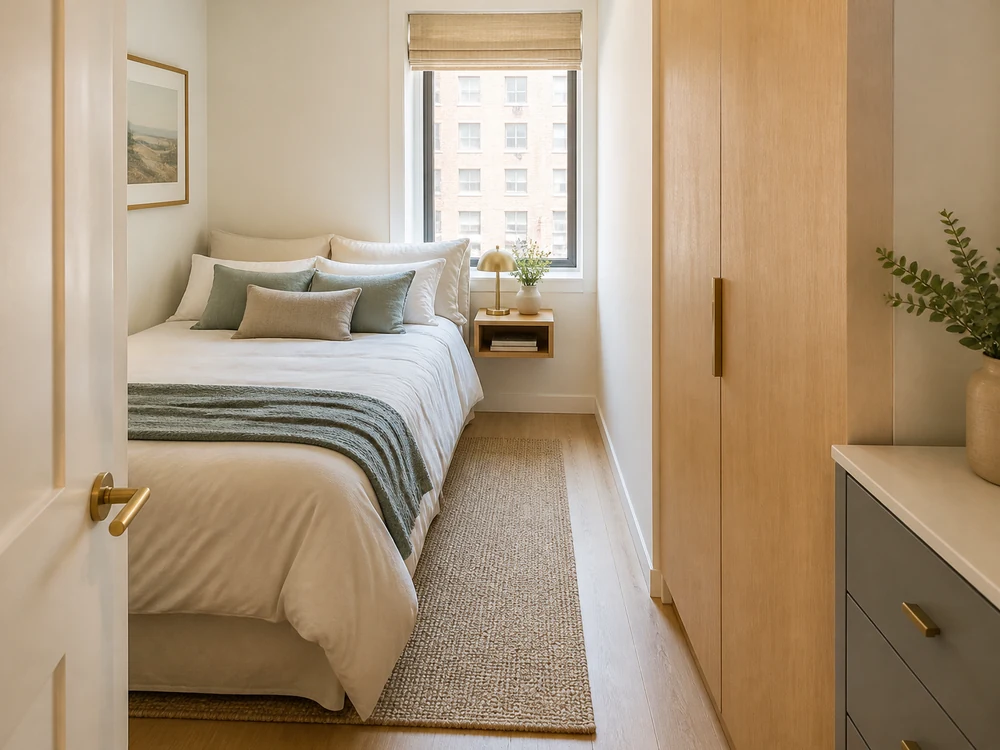
Small bedroom design should begin with the route from the door to the bed, not with the headboard wall. Stand at the doorway and trace the first three steps you take at night. If a dresser corner, bench, or laundry basket interrupts that line, the room will feel smaller every day.
A clear path does more than prevent bumps. It gives the bedroom a visual breath from the first view, which matters because compact rooms are judged in one glance. Keep the main route obvious before adding any decorative layer.
Choose The Bed Position That Solves The Most Problems
The bed is the largest decision, so let it answer several questions at once. A bed centered on a wall can feel polished, but a bed shifted slightly may free a better wardrobe opening or create a usable desk corner.
Test the bed with real movements: changing sheets, reaching a lamp, opening storage drawers, and carrying folded laundry. A layout that photographs symmetrically but makes those jobs awkward is not the strongest design.
Let One Side Work Harder Than The Other
Small bedrooms rarely need two identical nightstands. One side can hold the fuller routine while the tighter side uses a wall shelf, plug-in sconce, or narrow stool. The room looks calmer when each side earns its own treatment.
This asymmetry also helps couples or guest rooms. Give the heavier user a drawer and the lighter user a slim landing surface rather than forcing matching pieces into space that cannot support them.
Treat Closet Doors As Moving Walls
Closet doors are part of the floor plan because they need swing, slide, or pull clearance. Mark the space where the door moves, then keep that zone free from baskets, rugs that catch, and bedside pieces that block the handle.
If the closet opening is narrow, use the nearby wall for hooks or a shallow rail for the clothes currently in rotation. That keeps the closet from becoming a daily wrestling match.
Use Height Without Building A Storage Cliff
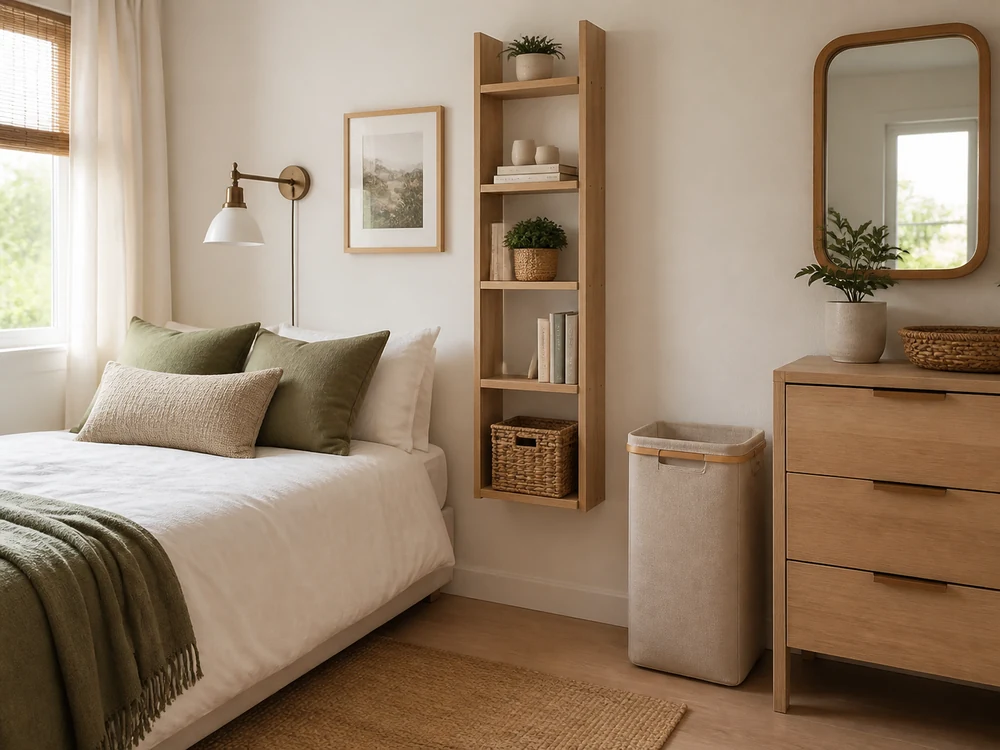
Vertical storage can rescue a tight bedroom, but it becomes heavy when every wall climbs to the ceiling. Use height where the body does not need to move: above a dresser, beside a wardrobe, or over a desk rather than over a pillow.
Anything tall or heavy deserves careful installation. Follow the manufacturer’s anchoring hardware guide and review CPSC Anchor It furniture safety guidance before relying on a tall dresser, bookcase, or wall unit near sleeping space.
Keep The Floor Visibly Continuous
A small bedroom feels larger when the eye can read one continuous floor shape. Leggy furniture, wall-mounted shelves, and a bed frame with some air below can help, but only if the under-bed area stays disciplined.
Do not turn visible floor into exposed storage. If bins live under the bed, choose low, quiet containers and keep them pulled back enough that the room still reads as open from the doorway.
Make Lighting Replace Extra Furniture
A plug-in sconce, small pendant, or narrow lamp can do work that a bulky nightstand would otherwise do. Good lighting gives the bed area structure without demanding much floor. The Energy Saver lighting guidance is useful when choosing bulbs that save energy while staying warm enough for bedrooms.
Place light where the routine happens. Reading light belongs near the pillow, mirror light belongs near dressing, and soft ambient light belongs where it can calm the whole room without flattening it.
Pick A Dresser By Drawer Clearance, Not Capacity
A large dresser can be a poor bargain if its drawers cannot open fully. Measure the drawer pull distance and the body space needed to stand there. Capacity only matters when access is comfortable.
In a narrow bedroom, a taller chest or a wardrobe with doors may outperform a wide dresser. The best storage piece is the one that lets you use every compartment without moving another object first.
Use Textiles To Soften Corners
Textiles can make a compact bedroom feel generous without adding hard objects. A calm duvet, one layered throw, curtains that reach the floor, and a rug with visible border can soften the room’s edges.
Keep textile patterns in conversation rather than competition. When bedding, rug, and curtains each try to lead, the room feels smaller because the eye has no resting point.
Give The Hamper A Real Address
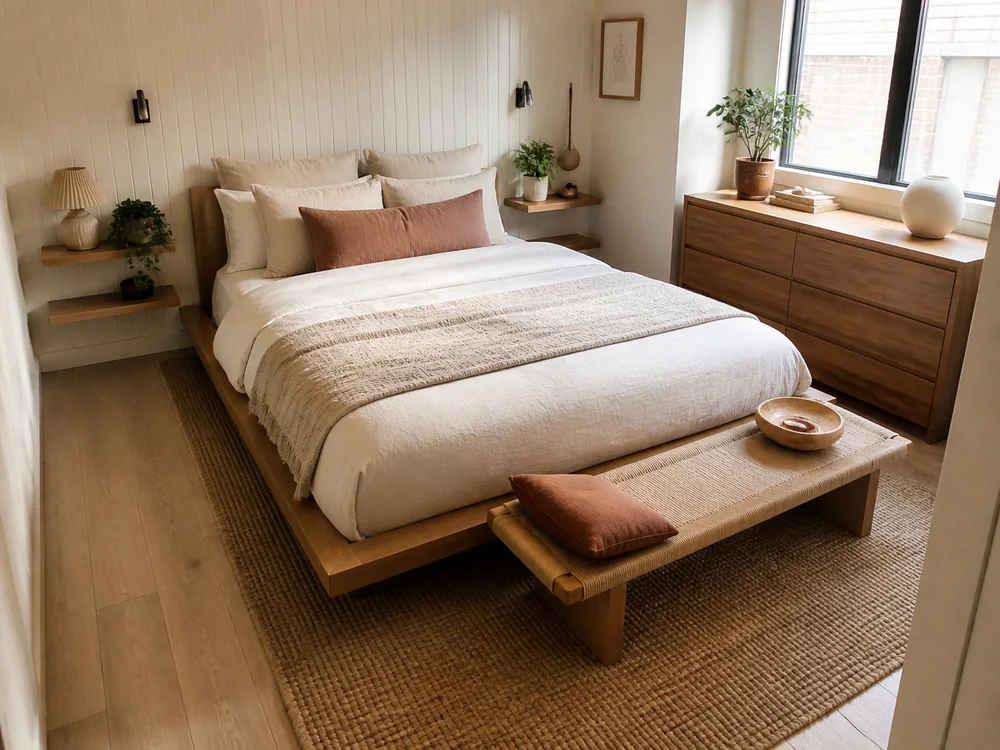
The hamper is often the most honest test of a bedroom plan. If it has no place, clothes land on the chair, floor, or bed. Choose a hamper that fits where laundry actually changes hands, not where it looks best empty.
A lidded hamper can look neat but become annoying if the lid is always open. In a small bedroom, a simple open basket in the right place beats a prettier piece that interrupts the daily routine.
Use Mirrors For Light, Not Illusion
A mirror helps when it catches light or supports dressing. It disappoints when it reflects clutter, a busy door, or the underside of a shelf. Place it where the reflection makes the room calmer.
Slim full-length mirrors often work better than wide decorative mirrors because they add function without taking a large wall. The best mirror feels like part of the route, not a trick.
Create One Reset Surface
Every bedroom needs a surface that can be reset in less than a minute. It might be the dresser top, a small shelf, or the nightstand tray. Keep that surface intentionally sparse so mess shows up early.
When a small room has one clear reset point, the rest of the design holds longer. You notice receipts, jewelry, cords, and laundry before they spread across the bed.
Let The Window Area Breathe
Window space is valuable because it gives a small room depth. Avoid stuffing it with high storage unless the room has no other option. Low pieces, narrow plants, and simple curtains keep the view from feeling boxed in.
If the bed sits near the window, check curtain movement and bedside reach. A design that makes opening the window annoying will feel less peaceful over time.
Edit By The First Five Minutes Of The Day
Watch what happens during the first five minutes after waking. Where do your feet land, where does the phone go, which drawer opens, and what object gets moved out of the way? That sequence shows where the design is weak.
Adjust the layout around those facts instead of buying more storage. A small bedroom becomes easier when furniture, light, and textiles follow behavior rather than asking behavior to dodge furniture.
Decision Guide
| Problem | Better Move | Watch Point |
|---|---|---|
| Bed feels squeezed | Shift the bed to protect the busiest route | Symmetry is optional |
| Drawers hit furniture | Measure pull clearance before keeping the piece | Capacity is useless without access |
| Room looks busy | Reduce hard objects and let textiles carry softness | Use fewer focal points |
| Closet is hard to use | Keep the door zone empty and add nearby hooks | Treat doors as moving walls |
Related Her Neat Nest Guides
Final Takeaway
Small bedroom design works when the plan protects movement before it adds charm. Start with bed clearance, door behavior, storage reach, and lighting, then let the softer details make the room feel finished.
FAQ
What is the best layout for a small bedroom?
The best layout keeps the door-to-bed path clear, lets drawers open fully, and gives at least one side of the bed a useful surface or light.
How do I make a small bedroom feel less crowded?
Use fewer hard furniture pieces, keep visible floor continuous, choose calm textiles, and move storage upward only where it does not feel heavy.
Should a bed be centered in a small room?
Only when centering supports real movement. A slightly shifted bed can be better if it improves closet access, drawer clearance, or a work corner.