
Tiny Entryway Ideas That Keep The Door Clear And Calm
Tiny entryway ideas have to be honest about the first three feet of home. That area receives shoes, keys, mail, bags, umbrellas, deliveries, returns, and whatever you were carrying when you unlocked the door.
A tiny entry cannot behave like a mudroom. It needs fewer decisions, smaller landing zones, and a strict rule about what is allowed to stay visible. The door must open cleanly before the space can look styled.
Start by protecting the threshold, then give every recurring item a landing place that is easy to use with one hand.
Tiny Entryway Ideas: The First Three Feet
Tiny entryway ideas should focus on the first three feet after the door, because that is where habits happen before intention catches up. If the space has no obvious place for keys, shoes, mail, and outgoing items, those objects will choose the floor or the nearest chair.
The first three feet also need a real walking route. ADA accessible route guidance is accessibility guidance, but the home lesson is direct: a clear route makes a small space easier to use. Treat the entry path as a feature, not leftover space.
Map The Door Swing Before Adding Storage
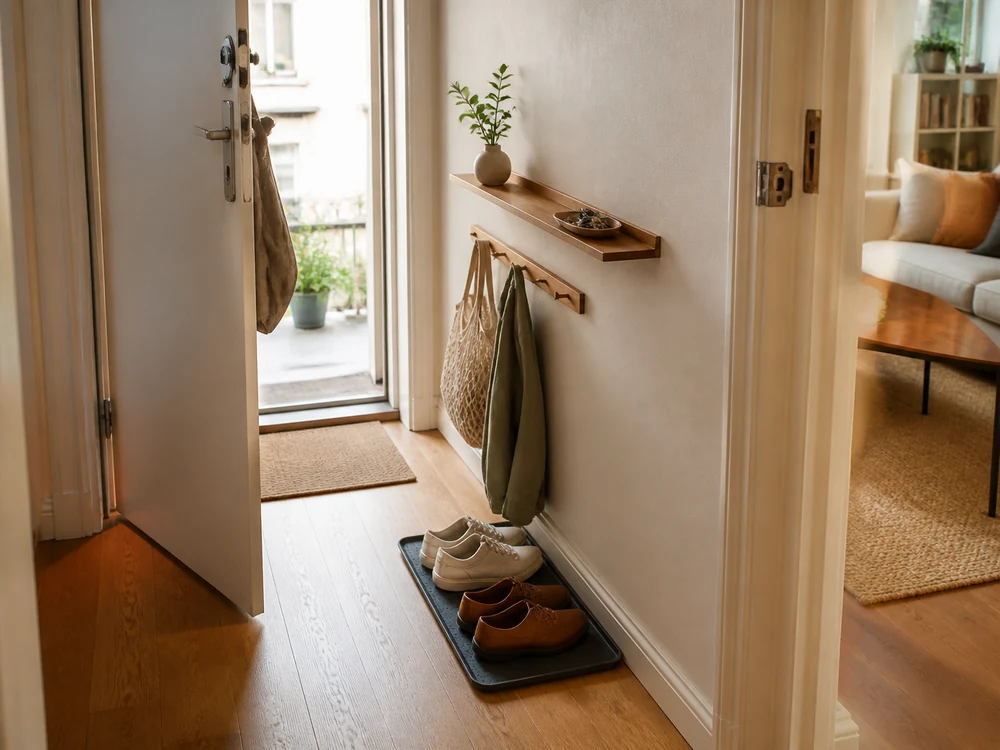
Open the door fully and watch the arc it needs. A hook, bench, shoe rack, or basket that sits inside that arc will always feel annoying, even if it technically fits.
Leave the first slice of floor empty. That negative space makes the entry feel calmer and prevents bags from catching on the door when you are leaving in a hurry.
Use One Landing Surface Only
A tiny entryway does not need a console table, a basket top, a shelf, and a tray. It needs one reliable landing surface for keys, sunglasses, and the item you always look for right before leaving.
Make the surface shallow enough that it cannot become a second desk. A narrow wall shelf or small tray works because it accepts essentials but refuses piles.
Separate Shoes From The Walking Line
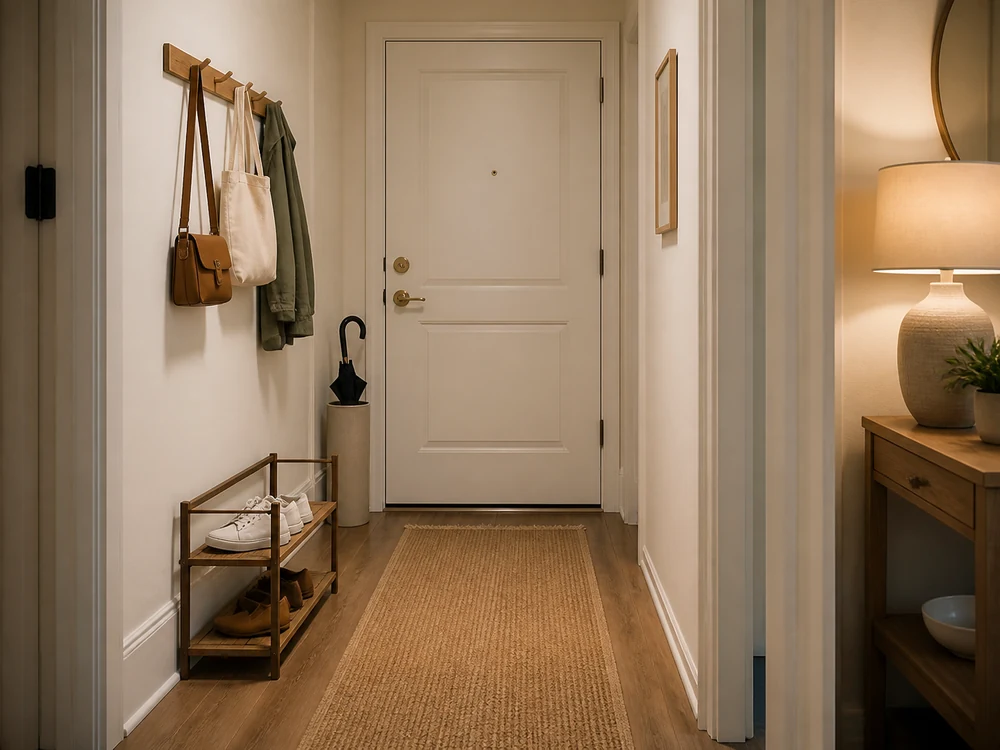
Shoes are usually the first visual problem because they spread sideways. Use a mat, two-tier rack, or low tray that defines the shoe area and makes the limit obvious.
If the shoe zone can hold every pair you own, it is too large for a tiny entry. Keep daily pairs there and move the rest to the closet, bedroom, or a seasonal bin.
Keep Hooks Light And Specific
Hooks are useful only when they have a narrow assignment. A tote, one jacket, a dog leash, or an umbrella can belong at the door. Five coats and three backpacks turn the wall into a soft obstacle.
Hang heavy outerwear somewhere else if the entry is truly tiny. The goal is not to store a wardrobe by the door; it is to prevent the floor from becoming a drop zone.
Give Mail A Vertical Deadline
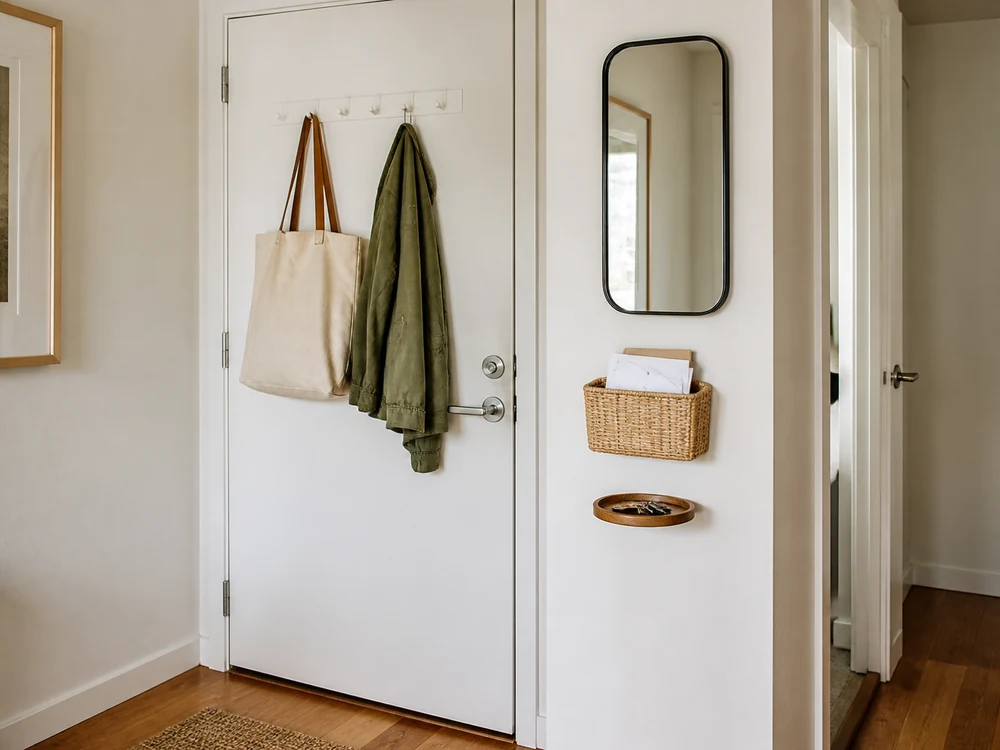
Mail should not get a deep basket. Deep mail storage becomes a paper archive at the exact spot where you need speed. Use a slim wall pocket or tray that looks full quickly.
The small capacity is the point. When the pocket fills, sort it. A tiny entryway can handle temporary paper, but it cannot carry unresolved paperwork for weeks.
Use A Mirror For Check And Light
A mirror near the door can make a tiny entry brighter and more useful. It gives you a last check before leaving and reflects light into a narrow wall.
Keep the mirror simple and hang it where it reflects a clean view. Reflecting a shoe pile or open closet only doubles the part of the entry you were trying to calm.
Make Returns Visible But Contained
Returns, library books, outgoing packages, and borrowed items need a temporary home near the door. If they are hidden too well, they miss the trip. If they sit on the floor, they become clutter.
Use one low basket or upright tote. The container should be obvious enough to trigger action but small enough to prevent long-term storage.
Choose A Rug That Does Not Fight The Door
A thick rug can catch the door and turn every entrance into a shuffle. Use a low-profile mat or flat runner that stays put and leaves the threshold easy.
The rug’s job is not just softness. It tells shoes where to stop, catches grit, and visually connects the door to the rest of the apartment.
Let The Wall Do More Than The Floor
In a tiny entryway, the floor is movement space. Use the wall for hooks, a mirror, a narrow shelf, or a shallow pocket. Avoid stacking freestanding pieces unless the hall is wide enough to spare them.
Wall storage should stay shallow. If a basket sticks out far enough to bump shoulders, it belongs somewhere else.
Build A Leaving Ritual
The best tiny entryway ideas depend on habit. Keys land in the tray, shoes stop on the mat, mail goes into the pocket, returns go into the basket, and bags move off the hook after the trip.
A ritual sounds small, but it prevents the entry from collecting the whole day’s leftovers. The space stays tidy because each object has a next action.
Edit The View From The Living Room
Many tiny entries are visible from the sofa or kitchen. Stand where you spend the evening and look back at the door. That view tells you which clutter reads loudest.
If the shoes dominate, lower the shoe count. If hooks look heavy, move coats. If the landing shelf is noisy, switch to a tray with edges. The entry should welcome you without broadcasting errands.
Keep Seasonal Gear Rotating
Tiny entries collapse when every season lives there at once. Winter scarves, summer sandals, rain gear, and tote bags should rotate like clothing, not accumulate by the door.
Set a small seasonal limit. Two current-weather items can stay handy; the rest moves to longer-term storage. The entry remains useful because it reflects today’s weather rather than the whole year.
Give Guests A Place That Does Not Become Yours
A tiny entryway needs a guest move, even if guests visit rarely. One open hook, a small clear patch of mat, or a visible lower shelf prevents visitors from placing coats and bags on the sofa.
Keep that guest space empty on ordinary days. If your own items occupy it, the entry loses flexibility and the rest of the apartment absorbs the overflow whenever someone arrives.
Choose The Item You Refuse To Store Here
A tiny entryway becomes easier when one category is deliberately banned. Maybe it is full-size coats, sports gear, reusable grocery bags, or incoming packages. The exact category matters less than the boundary.
This refusal gives the entry a personality. It tells the space what kind of clutter it will not absorb, which is often more powerful than buying another organizer.
Make the banned category’s real home close enough that the rule is believable. If grocery bags belong across the apartment, they will come back to the hook. If they live in one kitchen bin, the entry can stay clear.
Use Sound As A Practical Clue
Listen to the entry during a normal day. Do shoes scrape the wall, does the door hit a basket, or do keys clatter onto a hard shelf late at night? Those sounds reveal friction that photos miss.
A felt tray, softer rug, quieter hook, or lower shoe rack can make the entry feel calmer without adding more objects. In very small spaces, quietness is part of order.
Decision Guide
| Problem | Better Move | Watch Point |
|---|---|---|
| Door feels blocked | Clear the swing arc | Do not add furniture in the threshold |
| Shoes spread out | Use a defined tray or rack | Limit daily pairs |
| Mail piles up | Use a shallow wall pocket | Sort when it fills |
| Hooks look heavy | Assign one item type | Move long-term coats elsewhere |
Related Her Neat Nest Guides
- Small Entryway Ideas
- Small Doorway Coat Rack
- Small Apartment Entryway Organization
- Small Apartment Shoe Storage Ideas
Final Takeaway
Tiny entryway ideas work when they respect the door first. Keep the threshold open, give keys and shoes strict homes, use the wall lightly, and make outgoing items visible without letting them live there forever.
FAQ
How do you organize a tiny entryway?
Protect the door swing, create one key landing surface, define a small shoe zone, and use shallow wall storage for mail or bags.
What should not go in a tiny entryway?
Avoid bulky benches, deep baskets for mail, too many hooks, and shoe storage that holds more than daily pairs.
How can I make a tiny entryway look nicer?
Use a low-profile rug, one simple mirror, a narrow tray, and fewer visible categories so the first view feels intentional.