
Cabinet Organizer Shelf Ideas That Make Storage Easier
cabinet organizer shelf are strongest when the room is judged by movement, not by a staged photo.
A cabinet organizer shelf is one of the easiest products to add and one of the easiest to misuse. It promises a second level, but a second level is not automatically better storage. Sometimes it creates a hidden back row, an awkward lift, or a cleaning problem that did not exist before.
The good version is more specific. It separates plates from bowls, raises short pantry jars into view, creates a predictable home for mugs, or works around plumbing without hiding the shutoff valves. It does not try to rescue a cabinet that needs editing first.
Think of the shelf as a visibility tool. If you can see the category, remove one item without moving three others, and wipe the surface later, the shelf is doing real work.
Core idea: A cabinet organizer shelf is useful only when it improves visibility and retrieval for a stable category.
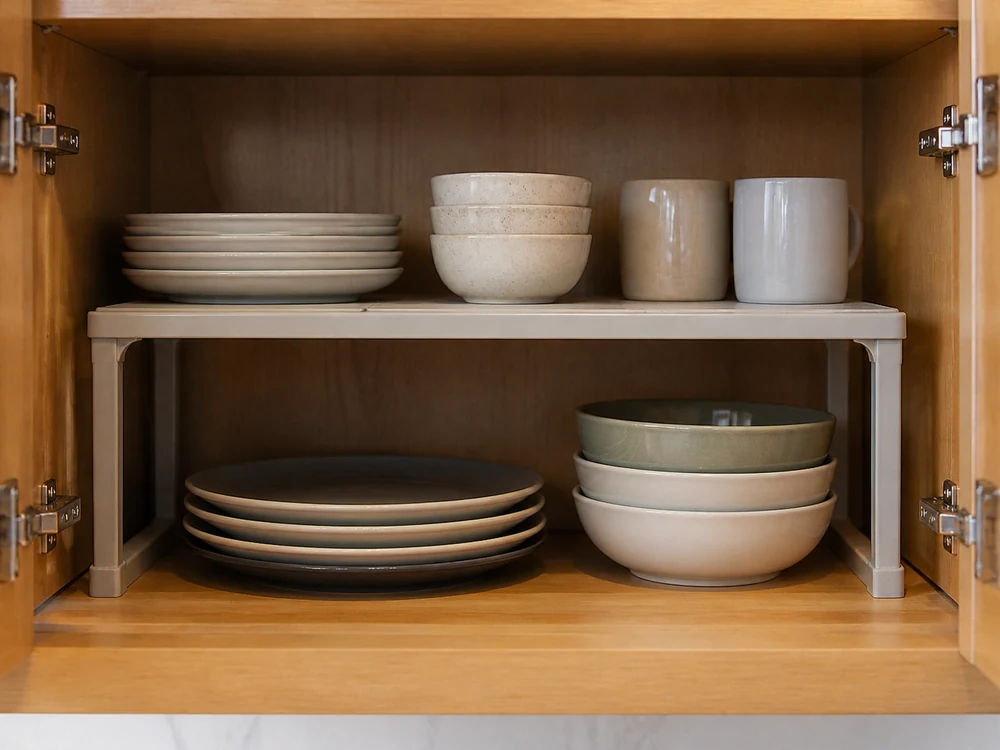
Cabinet Organizer Shelf: The Decision That Changes The Room
A cabinet organizer shelf is useful only when it improves visibility and retrieval for a stable category. The details below are written for lived-in small homes, where a good idea has to survive rushing, cleaning, guests, and the ordinary objects that return every evening.
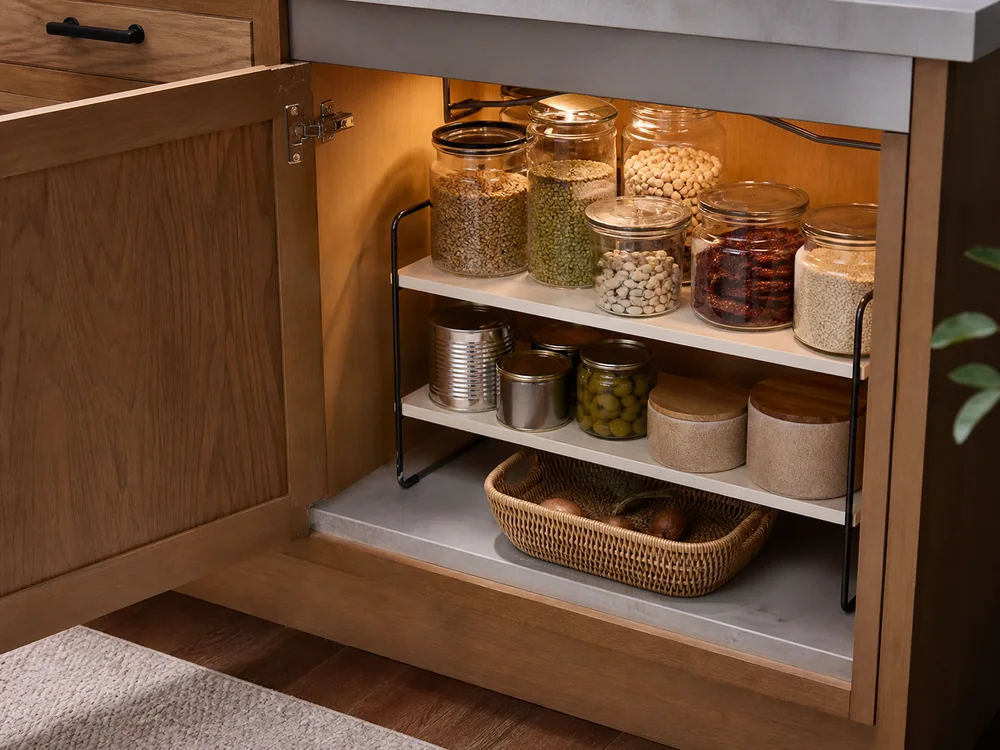
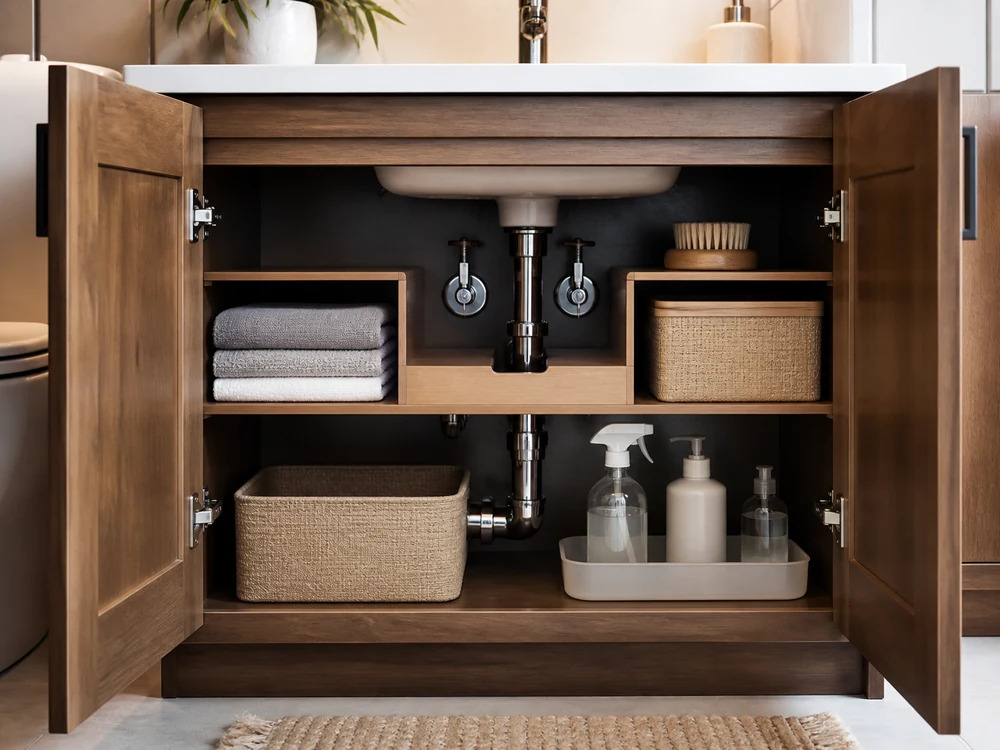
Edit Before You Add A Second Level
Pull everything from the cabinet and sort it by use. Daily dishes, weekly pantry goods, rare appliances, duplicate mugs, and mystery lids should not all compete for the same organizer. A shelf can organize a category, but it cannot make unrelated categories cooperate.
If half the items are rarely used, remove them before measuring. Adding a riser to an overfilled cabinet often makes the first week look neater and the second week more frustrating. The shelf should support the items that deserve to remain within easy reach.
Use Risers For Items That Stack Poorly
Plates, saucers, shallow bowls, small mugs, and low pantry cans are strong candidates for a cabinet organizer shelf. They have stable shapes and predictable heights. The riser lets you stop stacking unlike items together, which means the bottom plate or back jar no longer requires a small excavation.
Avoid using risers for wobbly bottles, heavy cookware, or tall glassware that has to be lifted at an angle. If the removal motion feels careful, the shelf is wrong for that category. Good cabinet storage should feel almost boring to use.
Measure The Hand Space, Not Just The Shelf
Most product listings focus on width, depth, and height. Those matter, but the missing measurement is hand space. Can your hand reach over the front edge? Can you lift a bowl without hitting the shelf above? Can you remove a mug without scraping the cabinet frame?
Use the tallest item on the lower level and the widest item on the upper level as your test pair. If either item needs a diagonal escape route, choose a shorter shelf, a wider cabinet zone, or a different storage method.
Keep Pantry Shelves Category-Led
A two-tier shelf can make pantry cans, jars, tea, or baking supplies easier to scan. It fails when every shelf becomes a mixed display of whatever fit last. The cure is a category label, even if the label is mental rather than printed.
For example, one shelf might hold breakfast jars only, while another holds canned tomatoes and beans. The organizer is then a small grocery map, not just a platform. When a new item arrives, it either belongs to the category or it does not get the space.
Respect Plumbing In Vanity Cabinets
A cabinet organizer shelf under a bathroom sink has to work around pipes, shutoff valves, and damp surfaces. The best vanity shelves are open enough to let you see plumbing and short enough that products do not hide behind the trap.
Use trays for items that could leak, leave air around towels, and avoid packing paper backstock directly beside cleaning sprays. A vanity cabinet may look like a pantry, but moisture and plumbing make it a different kind of storage.
Choose Pull-Out Shelves For Deep Cabinets
A fixed shelf riser helps height; a pull-out shelf helps depth. If the problem is that items disappear in the back, stacking another level may make the issue worse. Pull-outs bring the back to the front and are often better for cleaning products, small appliances, or deep lower cabinets.
Check hardware, cabinet lips, hinges, and door openings before choosing a pull-out. A beautiful slide-out organizer that catches the hinge every time will not stay beautiful for long.
Leave Cleaning Access
Cabinet shelves collect crumbs, spice dust, drips, and fine grit from dishes. An organizer that cannot be lifted or wiped around easily becomes a museum piece for old residue. This matters especially under sinks and near cooking zones.
The EPA indoor air quality and moisture guidance connects everyday home comfort with moisture, cleanable surfaces, and indoor air basics. Cabinet organization should support that reality by keeping damp areas visible and wipeable instead of sealed behind more stuff.
Stop At The First Useful Improvement
Once one shelf solves the annoying cabinet, pause. It is tempting to add matching organizers everywhere, but not every cabinet needs the same intervention. Some shelves need baskets, some need fewer items, and some need nothing.
The best organizer is often the only one in the cabinet. It creates a clear second level for a clear category, while the rest of the space stays flexible enough for real life.
Check The View From Above And From The Front
Cabinet shelves are usually photographed straight on, but daily use often happens from above. A shorter person may see only the front row; a taller person may see the labels on top; a child may see nothing useful at all. The right organizer makes the category readable from the angle used by the person who actually reaches for it.
For pantry jars, label the lid or front depending on the shelf height. For plates, keep the most used size at the easiest level. For cleaning products, make hazard labels visible rather than buried behind a basket. A cabinet organizer shelf is successful when it improves the first glance, not just the final photo.
Keep Heavy Items Low And Predictable
A shelf that technically holds a heavy stack may still be wrong if the motion is awkward. Heavy mixing bowls, Dutch ovens, and large glass containers should not be lifted from a high riser or balanced on a narrow second tier. The safer, easier cabinet puts weight low and lets lighter items take the raised level.
This is especially important in rental kitchens with older cabinets or shelves that already bow. Do not let an organizer encourage more weight than the cabinet was meant to carry. If the best place for a heavy item is lower, give it a lower home and use the organizer for the small things that disappear around it.
Use Shelf Labels Sparingly
Labels can help a cabinet stay organized, but too many labels make a small cabinet feel like a storage project instead of a kitchen. Label the category that needs protection: baking, breakfast, pet food, medicine, guest towels, or refills. Leave obvious categories alone.
A single label works like a boundary. It tells future groceries where they belong and, just as importantly, where they do not belong. That boundary keeps the shelf from becoming a polite pile of unrelated items.
Quick Decision Guide
| Problem | Best Move | Watch Out For |
|---|---|---|
| Stacked plates and bowls | Fixed shelf riser | Check lift clearance |
| Deep lower cabinet | Pull-out shelf | Check hinges and cabinet lip |
| Pantry cans or jars | Two-tier shelf | Keep one category per level |
| Bathroom vanity | Open shelf around plumbing | Leave valves visible |
Related Her Neat Nest Guides
- Small Apartment Kitchen Cabinet Organization
- Kitchen Storage Racks
- Under Kitchen Sink Organization Ideas
- Pantry Organization For Small Spaces
Final Takeaway
A cabinet organizer shelf should make a cabinet more readable, not merely more packed. Edit first, choose the category, test the hand movement, and preserve cleaning access. When the shelf has a precise job, the cabinet feels easier every time it opens.
FAQ
What is a cabinet organizer shelf best for?
It is best for stable, repeatable categories such as plates, bowls, mugs, pantry cans, jars, and some vanity items. It is less useful for heavy cookware or mixed clutter.
Should I use a fixed shelf or a pull-out shelf?
Use a fixed shelf when the problem is vertical stacking. Use a pull-out shelf when the problem is deep reach or items disappearing in the back of the cabinet.
How do I measure for a cabinet organizer shelf?
Measure cabinet width, depth, hinge clearance, the height of items below the shelf, and the hand space needed to remove items comfortably.