
Under Cabinet Organizer Ideas For Cleaner Small Kitchens
under cabinet organizer are strongest when the room is judged by movement, not by a staged photo.
An under cabinet organizer can feel like free space. The underside of an upper cabinet is already there, the counter is crowded, and a rail, basket, or shallow drawer seems to lift the mess out of the way. In small kitchens, that promise is attractive.
But the underside of a cabinet is not neutral. It may sit above heat, steam, dishwater, a food-prep zone, or a rental surface that cannot be drilled. It may also carry more weight than a light adhesive strip should hold.
The right approach is practical before decorative. Use under-cabinet space for light, repeated, easy-to-clean items, and leave the counter clearer without making the cabinet harder to maintain.
Core idea: An under cabinet organizer is a good choice only after weight, heat, steam, cleaning, and rental limits are considered.
Under Cabinet Organizer: The Decision That Changes The Room
An under cabinet organizer is a good choice only after weight, heat, steam, cleaning, and rental limits are considered. The details below are written for lived-in small homes, where a good idea has to survive rushing, cleaning, guests, and the ordinary objects that return every evening.
Decide What The Counter Needs Back
Start by naming the counter problem. Is the paper towel roll always in the prep area? Are mugs crowding a tiny coffee corner? Do wraps and bags slide around a drawer? Are utensils taking up a crock beside the stove? The organizer should return one specific piece of counter or drawer space.
Do not use the underside as a catch-all for everything small. A rail, basket, and drawer installed together can make the upper cabinet feel visually heavy. One precise under cabinet organizer often looks better and works harder than a whole row of hanging solutions.
Keep Weight Conservative
Mugs, jars, heavy tools, cookbooks, and full baskets create more load than many people expect. Check the product rating, cabinet material, fastener type, and how weight distributes when items are removed from one side. A light-looking organizer can still pull unevenly.
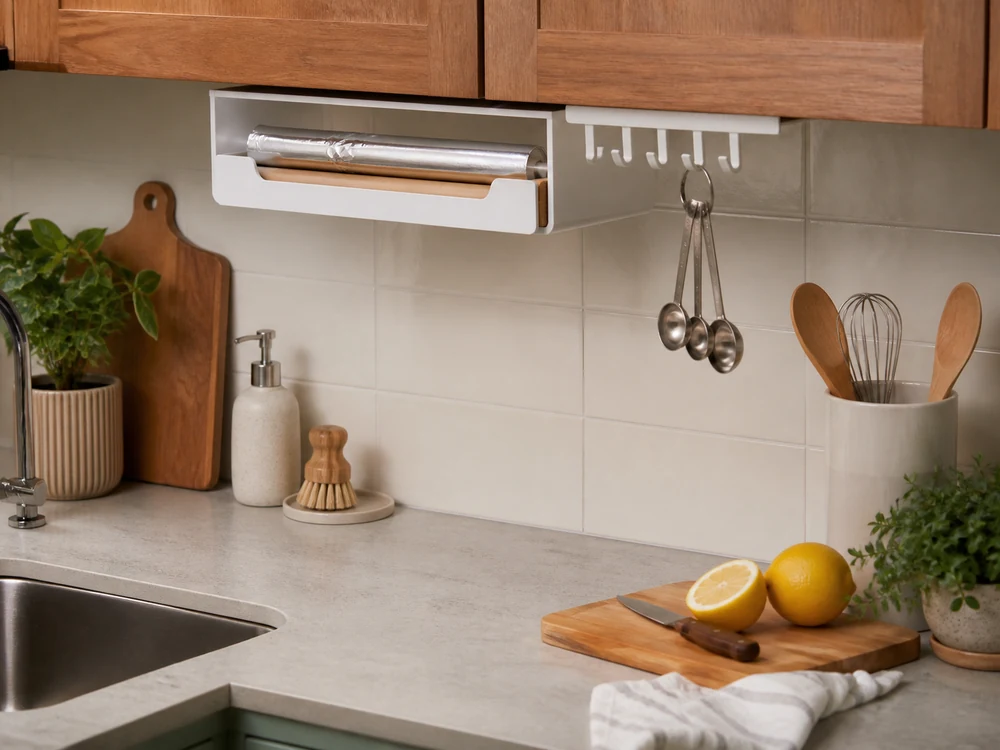
For renters using adhesive options, assume the rating is an ideal-condition number, not a promise for a steamy kitchen. Use adhesive drawers for light wraps, tea bags, or small packets; use screwed or clamped systems only when the cabinet and lease allow it.
Respect Heat And Steam Zones
The underside above a stove, kettle, or toaster is a harsh place for storage. Heat can affect oils, spices, plastic parts, adhesive, and finishes. Steam can make paper towels limp and create residue on baskets or rails.
Keep food, paper, and delicate materials away from direct heat and steam. If the organizer sits near the sink, choose items that can tolerate splash and dry quickly. A clear counter is not a win if the relocated items age faster in their new spot.
Choose Rails For Repeated Motions
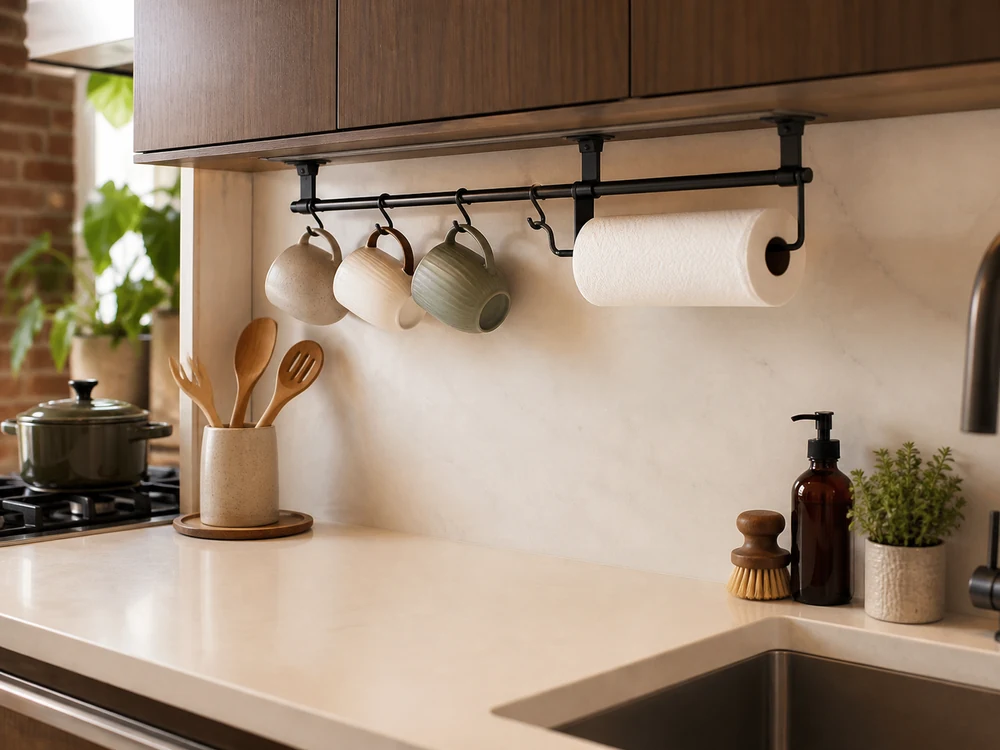
Rails work well for paper towels, a few mugs, light utensils, or small hooks because they support repetitive gestures. The item leaves, the hand uses it, and the item returns without opening a cabinet or drawer.
Limit the rail to the items used in that exact zone. A coffee rail belongs near coffee. A dish towel rail belongs near the sink. A utensil rail belongs where prep actually happens. When a rail serves the wrong zone, it becomes decoration with chores attached.
Use Baskets Only When You Can See The Contents
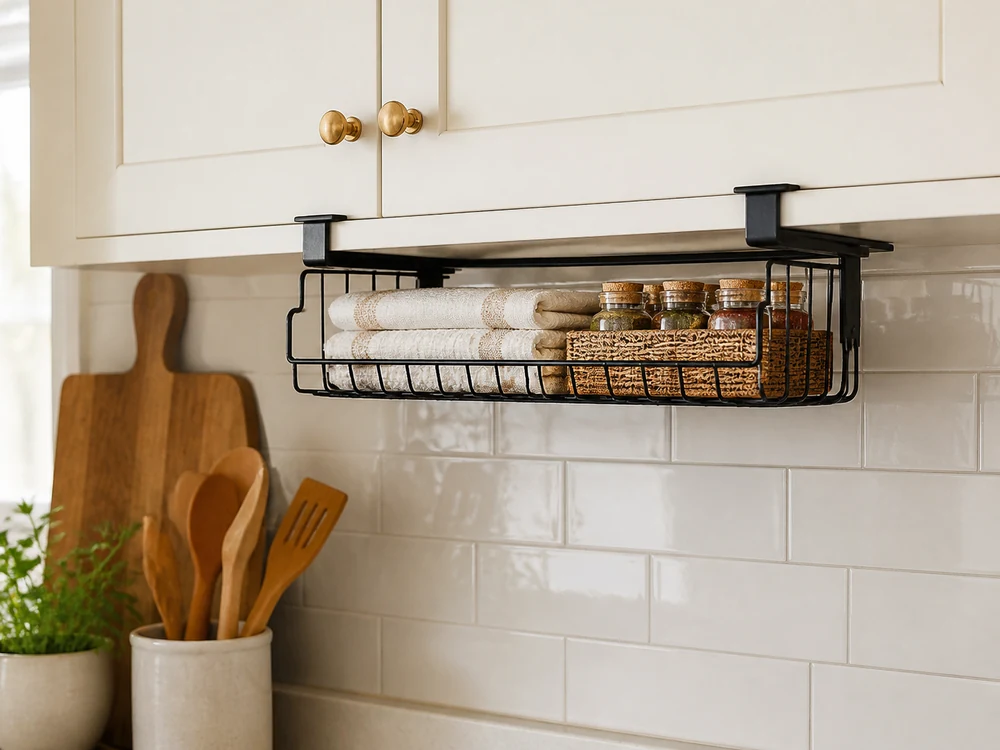
Under-cabinet baskets can hold tea towels, coffee filters, wraps, or small packets. They fail when they are mounted too high, too deep, or too opaque. If you cannot see the back of the basket, you will eventually forget what is in it.
Choose a basket shallow enough for a single category. If the category needs stacking, it probably belongs in a drawer or cabinet instead. The underside should reduce searching, not create another blind shelf.
Leave Room To Clean The Cabinet Bottom
The underside of a cabinet collects cooking film, dust, water spots, and fingerprints. Organizers add edges where residue can gather. Before installing anything permanent, imagine wiping around it after a busy week.
Kitchen comfort is tied to cleanable surfaces and moisture control, which the EPA indoor air quality and moisture guidance reinforces broadly. An organizer that creates a dirty hidden strip above the counter is solving one problem by starting another.
Protect The Visual Line
Upper cabinets already define the top edge of a small kitchen. Hanging too much below them lowers that line and can make the room feel more crowded. This is especially true in galley kitchens, low-ceiling spaces, and counters that already hold small appliances.
Use light colors, slim profiles, and limited categories if the kitchen is visually busy. Sometimes the best under cabinet organizer is one quiet paper towel holder, not a full system.
Plan For Removal
Every under-cabinet solution should have an exit plan. Adhesive may leave residue. Screws leave holes. Clamp systems can mark finishes. Even if you own the home, tastes and routines change, and a kitchen should not be locked into one small product decision forever.
Photograph the cabinet bottom before installation, keep hardware instructions, and avoid over-customizing around a temporary habit. The most successful organizers are easy to remove, clean, and replace when the kitchen routine changes.
That removal plan also keeps buying disciplined. If a product would be annoying to clean, hard to repair, or risky to take down later, it probably deserves a smaller role in the kitchen.
Keep Food Prep Clearer Than Storage
Under-cabinet storage should never make the work zone feel crowded from above. If a basket hangs directly over the cutting board or a rail drops into the eye line above the main prep space, the counter may technically be clearer while the cook feels more boxed in.
Place organizers near the routine they serve but slightly outside the most active chopping, mixing, and plating area. A paper towel holder can sit near prep without hovering over it. A wrap drawer can live under a cabinet beside the fridge. The goal is to recover counter space without making the usable air above it feel busy.
Match The Mount To The Cabinet Material
Solid wood, MDF, laminate, metal brackets, and thin cabinet bottoms do not behave the same way. A screw that holds well in one material may split, loosen, or show through another. Adhesive may grip a smooth clean surface and fail on a slightly textured or greasy one.
Clean the surface, check the manufacturer’s installation notes, and test placement before committing. If the cabinet bottom flexes when touched, keep the organizer light or choose a different location. The invisible underside still deserves the same judgment as any visible shelf.
Do A One-Week Trial With Painter's Tape
Before mounting a rail or drawer, tape a paper outline where it will sit and live with that outline for a week. Notice whether cabinet doors still open naturally, whether your head or hands avoid the area, and whether the item you plan to store is actually used there.
This simple trial catches bad locations before hardware creates consequences. It also reveals when the counter problem is better solved by editing the drawer, moving an appliance, or using a wall rail instead of the cabinet bottom.
Quick Decision Guide
| Problem | Best Move | Watch Out For |
|---|---|---|
| Paper towels crowd prep area | Slim under-cabinet holder | Keep away from sink splash |
| Coffee mugs use cabinet space | Short mug rail | Check loaded weight |
| Wraps slide in drawer | Light adhesive drawer | Use only for low-weight items |
| Dish towels need air | Open rail near sink | Avoid blocking cabinet doors |
Related Her Neat Nest Guides
- Small Kitchen Counter Organization Ideas
- Small Apartment Kitchen Cabinet Organization
- Kitchen Storage Racks
- Renter Friendly Storage Ideas
Final Takeaway
An under cabinet organizer is strongest when it is modest: one job, light weight, cleanable edges, and a location that respects heat and steam. Used that way, it gives a small kitchen back a little counter space without turning the cabinet underside into clutter overhead.
FAQ
Are under cabinet organizers good for renters?
They can be, but renters should favor clamp-on or removable light-duty options and check lease rules before drilling. Adhesive products should be used conservatively in steamy kitchens.
What should I store under cabinets?
Light, frequently used items work best: paper towels, dish towels, small packets, wraps, coffee filters, or a limited number of mugs if the system is rated for the weight.
Can under cabinet organizers damage cabinets?
Yes, if overloaded, installed with the wrong fasteners, exposed to heat, or removed carelessly. Always follow product instructions and test whether the cabinet material can handle the installation.