
Plastic Storage Bins Under Bed: What To Buy And Avoid
Plastic storage bins under bed can be excellent small-bedroom storage, but they are often bought in the wrong height, filled with the wrong items, and shoved into a space that is impossible to clean.
The good version is boring in the best way. It slides smoothly, protects fabric from dust, opens without dragging the mattress, and stores categories you do not need every morning.
Before buying bins, measure the real clearance, decide what deserves that space, and plan how the floor will still be cleaned.
Plastic Storage Bins Under Bed Start With Clearance
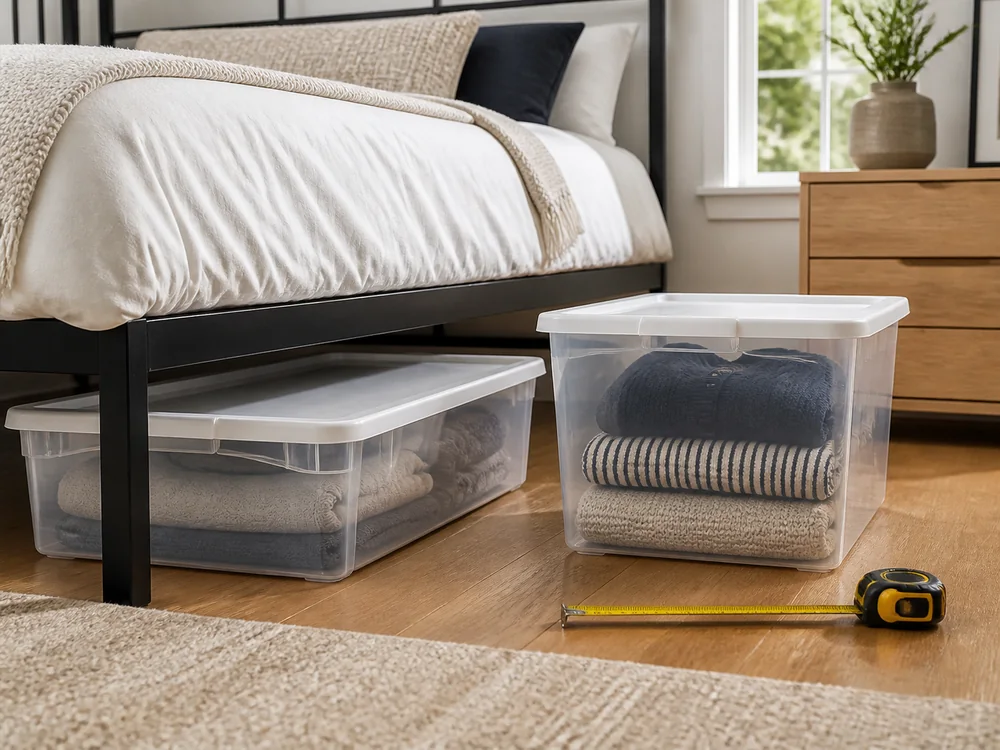
Plastic storage bins under bed should be chosen after measuring the lowest point under the frame, not the tallest-looking gap. Bed rails, center supports, rug edges, and sagging fabric can reduce usable height.
Measure in at least three places and subtract a little room for sliding. A bin that technically fits but scrapes every time will not feel like storage; it will feel like a chore.
Pick The Category Before The Container
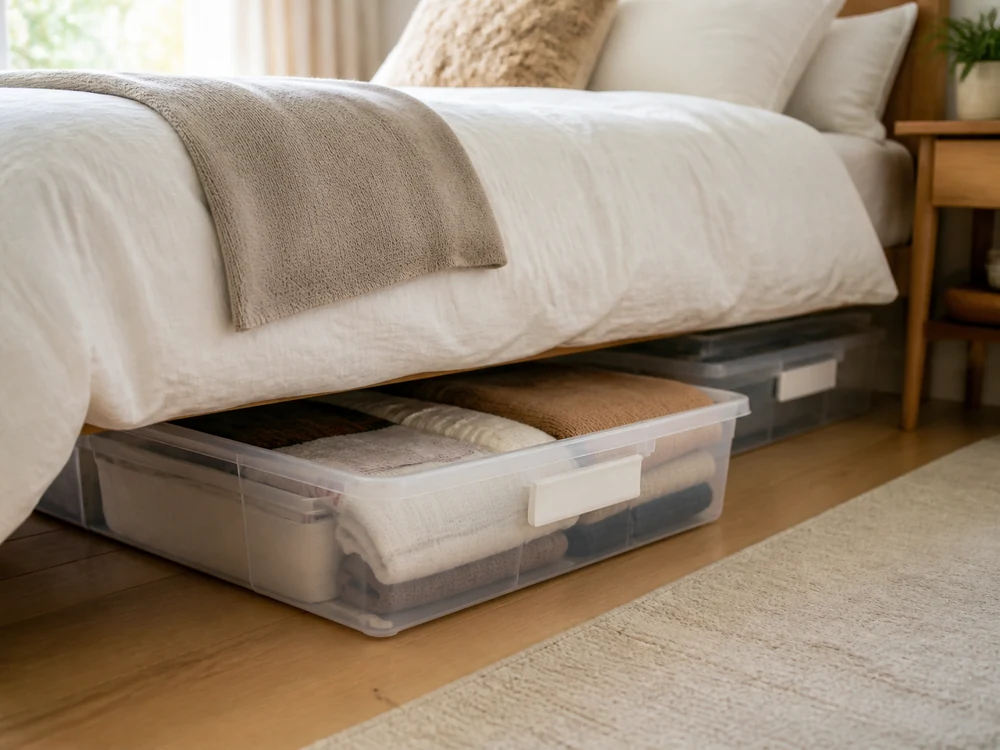
Under-bed space is best for categories with a slower rhythm: off-season sweaters, guest bedding, sentimental textiles, spare curtains, or rarely used shoes. Daily clothes usually become annoying there because access is too low.
Choose the category first, then buy the bin that matches it. Buying the bin first invites random overflow, and random overflow is why under-bed storage becomes forgotten.
Clear Plastic Is Useful For Memory
Clear or frosted plastic helps when you store items for months. You can see the general category without opening every lid, which reduces duplicate buying and digging.
If the room looks visually busy, choose translucent bins that blur the contents rather than fully exposing them. The goal is recognition, not a display case under the bed.
Do Not Overfill Soft Textiles
Plastic bins can protect textiles, but tightly compressed fabric can wrinkle, trap stale smells, and make the lid bow. Fold items so the lid closes flat without pressure.
Add a small breathable fabric bag inside the bin for delicate sweaters if the plastic sides feel harsh. The bin handles dust; the soft layer protects texture.
Use Wheels For Heavy Or Frequent Loads
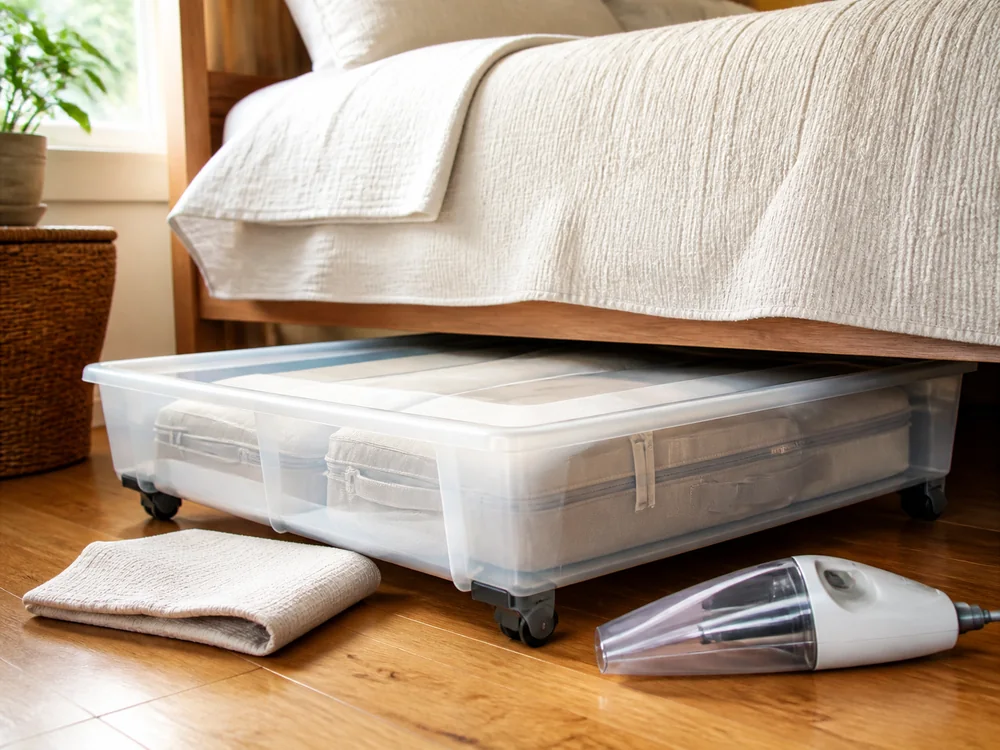
Wheeled bins help when the contents are heavy or accessed more than seasonally. Wheels reduce scraping and make it easier to pull the bin straight instead of twisting it under the bed.
Check whether the wheels add height. A wheeled bin that loses the clearance test is worse than a plain bin that slides smoothly on felt pads.
Choose Lids For Dust, Not Drama
A lid should keep dust out and stay easy to remove. Overcomplicated latches, deep grooves, and brittle hinges can make a low bin awkward in a tight room.
Flat lids also let bins stack temporarily during a closet edit. Domed lids may hold a little more, but they waste precious under-bed height.
Keep Weight Within A One-Hand Pull
If you need two hands, a bent back, and patience to pull the bin out, it is too heavy for under-bed storage. Split heavy categories into smaller bins or choose lighter contents.
Weight matters because under-bed access happens from an awkward angle. Storage should not turn a seasonal sweater into a small lifting project.
Leave A Cleaning Route
Under-bed bins collect dust around their edges. Leave enough space to pull every bin out without rearranging the whole bedroom, and keep one cleaning tool nearby if the floor gathers dust quickly.
A bed packed wall to wall with bins may look efficient for one week. After that, the hidden dust line starts making the room feel less fresh.
Use Labels That Do Not Depend On Reading
Labels are helpful, but under-bed labels are often hard to read from a standing position. Use broad categories, color tabs, or consistent placement so the right bin is obvious even before you crouch.
Avoid detailed inventory labels that become outdated. A simple category such as winter knits or guest sheets is easier to maintain.
Avoid Storing Anything That Can Leak
Do not use under-bed bins for liquids, candles in hot rooms, cleaning products, or anything that could leak or melt near bedding. Low hidden storage is a bad place for slow accidents.
Paper can also be risky in damp rooms or ground-floor apartments. If moisture is a concern, choose a drier closet or add a humidity check before using under-bed space for documents.
Anchor The Bed If The Frame Needs It
Some storage beds, tall headboards, and freestanding furniture near the bed need proper restraint. Storage decisions should not make the sleeping area less safe.
Review the manufacturer’s hardware and CPSC Anchor It furniture safety guidance when furniture is tall, top-heavy, or used in a child’s room. Hidden storage is not worth an unstable setup.
Make A Seasonal Pullout Appointment
Under-bed storage works best when it has a date with the calendar. Pull bins out when seasons change, remove anything you did not miss, and clean the floor before sliding them back.
Without that appointment, the space becomes a time capsule. With it, under-bed bins become a quiet rotation system that helps a small bedroom breathe.
Avoid Mixing Hard And Soft Items
Hard items can press into soft textiles when a bin slides or gets pushed under the bed. Shoes, picture frames, tools, and folded sweaters may all fit, but they do not age well together.
Keep plastic bins under bed assigned by material as much as category. Fabric with fabric, shoes with shoes, and paperwork somewhere drier creates fewer surprises when the bin returns months later.
Check The Bed Skirt Before You Commit
A bed skirt can hide storage, but it can also make access clumsy if the fabric drags, catches, or traps dust. Lift it, pull the bin out, and notice whether the motion still feels clean.
If the skirt is purely decorative, choose one with enough clearance or skip it. Hidden storage works best when the hiding method does not make the storage harder to use.
Use The Nearest Closet As Overflow
Under-bed bins should not carry every category that lacks a home. If the bin becomes a mixed overflow drawer, connect it with the nearest closet or dresser so each item has a logical next stop.
This prevents the under-bed area from becoming a secret attic. The space should support rotation, not rescue every decision that was postponed during cleanup.
Choose Handles You Can Reach From The Side
Many under-bed bins have handles only on the short end. That works if the bed is open at the foot, but it fails when the bed sits near a wall or dresser.
Look for handles on the side you actually approach. A simple grip cutout in the right place can matter more than a clever lid.
Protect The Floor Finish
Plastic edges and tiny wheels can mark softer wood or catch on rugs. Test the bin on the actual floor before loading it, especially in rentals where scratches can cost money later.
Felt pads, smoother bins, or a different storage location may be wiser than forcing a rough container under a bed that moves every week. Check the path again after the bin is full because weight changes how plastic glides, especially when the room has a rug edge or uneven floorboard nearby.
Decision Guide
| Problem | Better Move | Watch Point |
|---|---|---|
| Bin scrapes the frame | Measure the lowest clearance and size down | Allow sliding room |
| Contents are forgotten | Use clear bins and broad labels | Store slow categories only |
| Floor gets dusty | Leave a pullout and cleaning route | Avoid wall-to-wall bins |
| Bin is too heavy | Split the category | Use wheels only if height allows |
Related Her Neat Nest Guides
- Under Bed Storage On Rollers
- Bedroom Storage Ideas For Small Bedrooms
- Small Bedroom Bed Ideas
- Storage Solutions For Small Spaces
Final Takeaway
Plastic storage bins under bed work when they are shallow, easy to pull, dust-aware, and assigned to slower categories. Measure first, store less than the maximum, and keep the floor clean enough that hidden storage stays healthy.
FAQ
Are plastic bins good for under-bed storage?
Yes, especially for dust protection and visibility, as long as the bins fit easily and do not hold damp, leaking, or daily-use items.
What should I store under the bed?
Use the space for off-season textiles, guest bedding, spare curtains, and slow-use categories rather than everyday clothes.
Should under-bed bins have wheels?
Wheels help heavy or frequent bins, but only if they still fit the bed clearance and roll smoothly on your floor.