
Kitchen Cabinet Storage Solutions For Real Cooking
Kitchen cabinet storage solutions deserves a plan that starts with the room’s behavior, not with a shopping list. Cabinet storage should follow the way a kitchen cooks, cleans, unloads, and shops rather than forcing every item into the nearest empty shelf.
The useful test is whether dinner tools, dishwasher unloading, and grocery returns can happen without reshuffling a cabinet. If a choice still works under that pressure, it is more than a pretty idea.
This guide keeps the advice practical: clearance first, storage categories second, styling last. That order prevents a compact room from becoming a series of attractive obstacles.
Each section gives one decision to make, what can go wrong, and how to keep the room easier to reset after a normal day.
kitchen cabinet storage solutions: Kitchen Cabinet Storage Solutions Start With Zones
The best cabinet plan begins with zones, not containers. Cooking tools should live near the stove, dishes near the dishwasher or table route, and food storage near the prep counter.
Walk through breakfast, dinner, and cleanup with cabinet doors open. The cabinet that gets crossed too often is usually holding the wrong category.
Separate Daily Dishes From Hosting Dishes
Daily plates and glasses need the easiest shelf. Hosting dishes can live higher, deeper, or in a less active cabinet because they do not deserve prime reach.
This single separation often creates more order than buying a full set of organizers. Reach should match frequency.
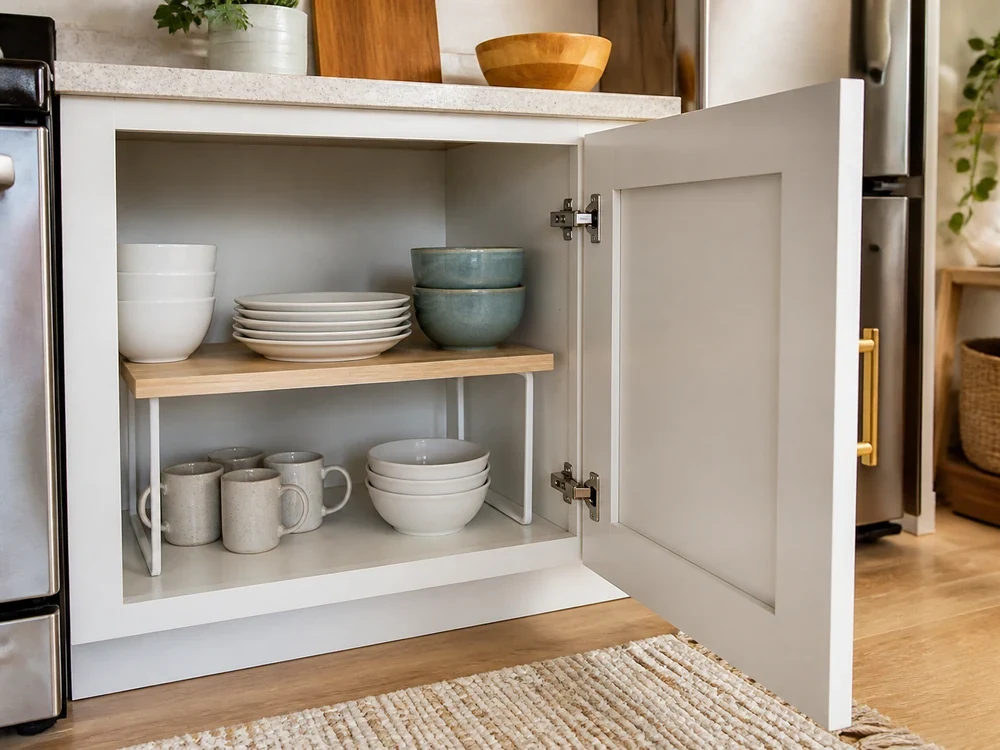
Use Shelf Risers For Short Stacks
Shelf risers work when they split one short stack into two readable levels. They fail when they create a cave under the riser.
Use them for mugs, small bowls, ramekins, or low pantry jars. Avoid risers where hands need to slide behind a dark layer.
Give Lids Their Own System
Lids create cabinet chaos because they do not stack like containers. Treat them as a separate category from the start.
Use a vertical rack, narrow bin, or file-style divider. Store only lids that match containers currently in use.
Store Pans By Motion
Pans should be stored by how the cook grabs them. A nested stack can be compact, but it punishes the pan used every night.
Keep the daily skillet easy to lift alone. Put occasional pieces below, above, or in a neighboring cabinet.
Use Pullouts Where Bending Fails
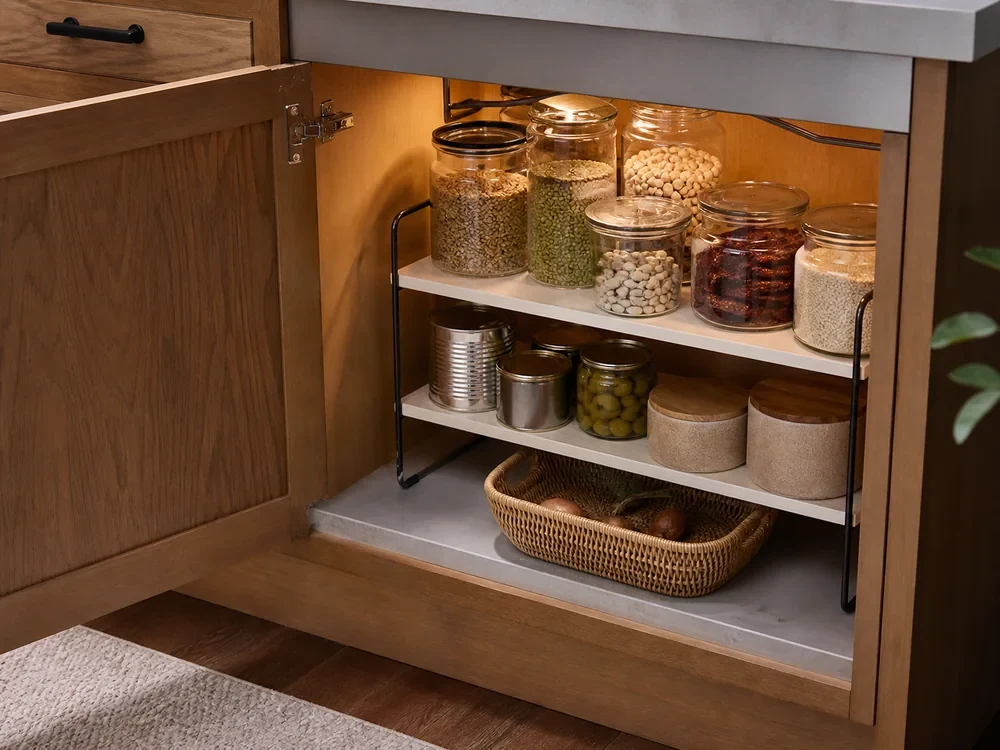
Deep lower cabinets hide items at the back and make people kneel to find them. Pullouts are most valuable when the cabinet is low, deep, and used often.
Choose simple pullout trays for oils, mixing bowls, pots, or cleaning supplies. The goal is visibility with one motion.
Do Not Let Spices Occupy Every Cabinet
Spices need a quick read during cooking. When they spread across shelves, drawers, and lazy Susans, duplicates multiply.
Keep active spices together in one drawer, rack, or narrow cabinet. Archive rare baking or holiday spices separately and review them.
Make Food Storage Visible
Food storage containers are useful only when container and lid meet easily. A beautiful stack of bowls without visible lids still slows cleanup.
Pair containers by size and keep unmatched pieces out of the cabinet. The cabinet should help leftovers leave the counter quickly.
Give Appliances A Parking Rule
Small appliances often take over lower cabinets because they are heavy and awkward. Decide which ones deserve daily parking and which ones are occasional.
The appliance used twice a year should not block the blender or rice cooker used weekly. Weight and frequency both decide placement.
Keep Cleaning Supplies Away From Food
Under-sink storage can become crowded with cleaners, bags, towels, and tools. Keep food-contact items away from cleaning bottles and leaks.
Use stable bins and follow product directions; CPSC Anchor It furniture safety guidance is a practical reminder to think about secure storage and household safety.
Use The Cabinet Door Carefully
Door storage can hold wraps, lids, cutting boards, or measuring spoons, but it also adds movement and weight to the door.
Use door racks only when they close cleanly and do not hit interior shelves. If the door needs a shove, remove the rack.
Build A Baking Cabinet Only If You Bake
A baking zone sounds tidy, but it wastes prime space if baking is rare. Flour, sugar, pans, and mixers should match the home’s real habits.
If baking happens monthly, use one bin or high shelf. If it happens weekly, give it a stronger cabinet near prep space.
Protect The Unloading Route
Dishwasher unloading should be almost automatic. If dishes travel across the room, the counter becomes a temporary holding zone.
Move plates, bowls, cups, and flatware closer to the dishwasher or table route. Storage that respects unloading stays tidy longer.
Use Labels For Shared Cabinets
Labels are most useful where several people put things away. A label is not decoration; it is a shared agreement.
Use simple labels for pantry bins, lids, school lunch supplies, or baking items. Skip labels where the shape already explains the category.
Leave One Cabinet Breathing
A cabinet packed to the edge looks efficient until anything new comes home. Groceries, gifts, and seasonal items need a little slack.
Leave a small open pocket in one food or dish cabinet. Breathing room keeps the whole kitchen from becoming a puzzle.
Edit Before Buying More Organizers
Organizers amplify the inventory that remains. If the cabinet holds duplicates, chipped dishes, expired food, or appliances no one uses, storage hardware will only hide the problem.
Remove the dead weight first. Then buy the one organizer that solves the remaining friction.
Audit The Cabinet With Dirty Hands
Kitchen cabinet decisions should account for messy hands, hot pans, and the speed of dinner. A cabinet that requires careful stacking may fail during real cooking.
Open the cabinet while holding a towel, pot lid, or measuring cup. If the motion feels risky or slow, the storage needs to move closer or become simpler.
Let The Dishwasher Decide Dish Storage
Dish storage should make unloading almost automatic. If clean dishes travel too far, they pause on the counter and create another task.
Move plates, bowls, glasses, and lunch containers nearer to the unloading route. Cabinet beauty matters less than the distance clean dishes must travel.
Divide Pantry Overflow From Cooking Tools
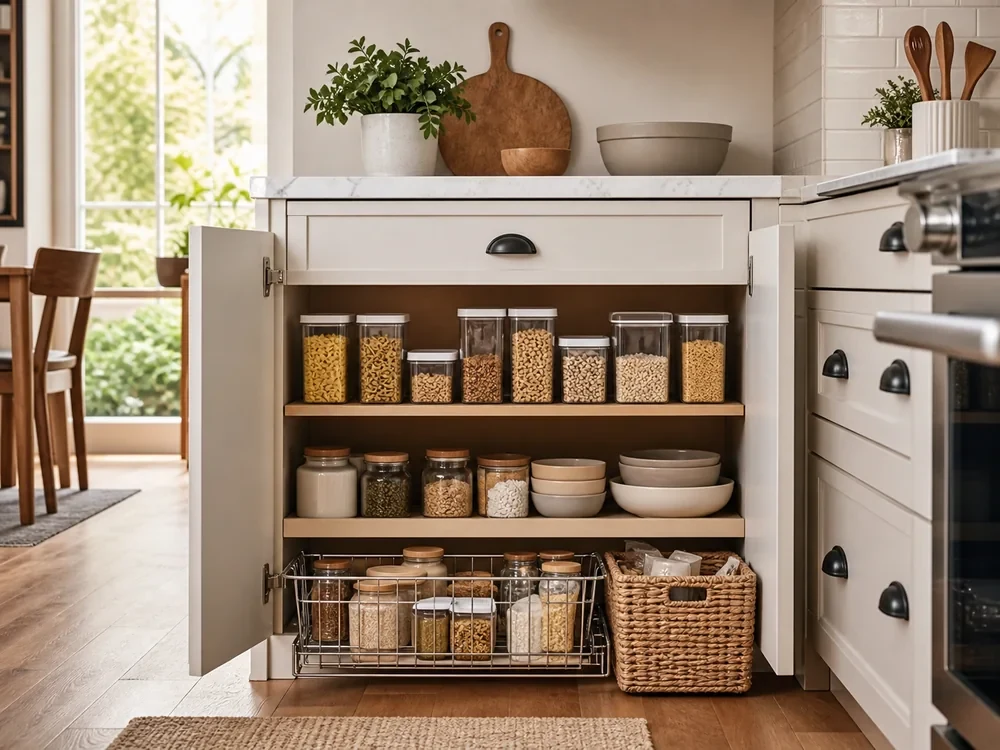
Many cabinets become chaotic because food overflow mixes with pans, baking tools, lunch boxes, and cleaning supplies. The categories may fit physically but not mentally.
Give food a clear boundary before adding organizers. Once pantry overflow is contained, the remaining cabinet jobs become easier to see.
Plan For The Next Grocery Trip
A cabinet that is perfect when emptying it may still fail when new groceries arrive. Leave a receiving space for cereal, snacks, cans, or school lunch supplies.
That slack prevents every grocery trip from becoming a full reorganization. Good cabinet storage includes room for change.
Respect The Cook's Dominant Hand
Cabinet placement can feel wrong when the most used tools sit on the awkward side of the body. The daily cook’s dominant hand should influence where tools land.
Put knives, spices, oils, and pans where the cook reaches naturally. Tiny adjustments can remove dozens of small motions each week.
Keep Backstock Out Of Prime Cabinets
Backstock paper goods, extra bags, and duplicate pantry items can swallow the best cabinets. Prime shelves should serve cooking and daily meals first.
Move backstock higher, lower, or outside the kitchen when possible. The kitchen works better when prime reach is reserved for active use.
Decision Guide
| Problem | Better Move | Watch Point |
|---|---|---|
| Lower cabinet hides items | Add a pullout tray or reduce depth of storage | Visibility beats volume |
| Lids scatter | Use one vertical lid system | Pairs need a meeting place |
| Dishes unload slowly | Move daily dishes closer to dishwasher route | Storage should support cleanup |
| Spices duplicate | Keep active spices in one readable zone | Cooking needs quick scanning |
Related Her Neat Nest Guides
- Kitchen Cabinet Shelf Organizer
- Kitchen Organization Kitchen Storage
- Cabinet Organizer Shelf
- Under Cabinet Organizer
Final Takeaway
Kitchen cabinet storage solutions works when every piece has a job, every category has a limit, and the room can recover without a long reset. Choose the moves that reduce friction first; the room will look better because it behaves better.
FAQ
What are the best kitchen cabinet storage solutions?
The best options are zone planning, pullout trays, shelf risers, vertical lid racks, divided pan storage, door racks used lightly, and strict editing before adding organizers.
How do I organize deep kitchen cabinets?
Use pullouts or large front-to-back bins, store slow items in the back, and keep daily tools where they can be reached in one motion.
Should kitchen cabinets be labeled?
Labels help in shared kitchens and for look-alike bins, but obvious categories such as plates or glasses may not need them.