
Under Bed Rolling Drawers That Do Not Jam Or Clutter
Under bed rolling drawers deserves a plan that starts with the room’s behavior, not with a shopping list. Rolling drawers can create real storage, but only when they roll cleanly, hold the right categories, and stay easy to clean around.
The useful test is whether the drawer can be pulled out on a tired morning without dragging bedding, rug edges, or dust. If a choice still works under that pressure, it is more than a pretty idea.
This guide keeps the advice practical: clearance first, storage categories second, styling last. That order prevents a compact room from becoming a series of attractive obstacles.
Each section gives one decision to make, what can go wrong, and how to keep the room easier to reset after a normal day.
under bed rolling drawers: Measure The Whole Drawer Path
Under-bed storage is not just drawer height. It needs room to roll out, stop, and be opened while someone stands beside the bed.
Measure the path with the rug in place and the bedding hanging as usual. The clearance you use every day is the only clearance that matters.
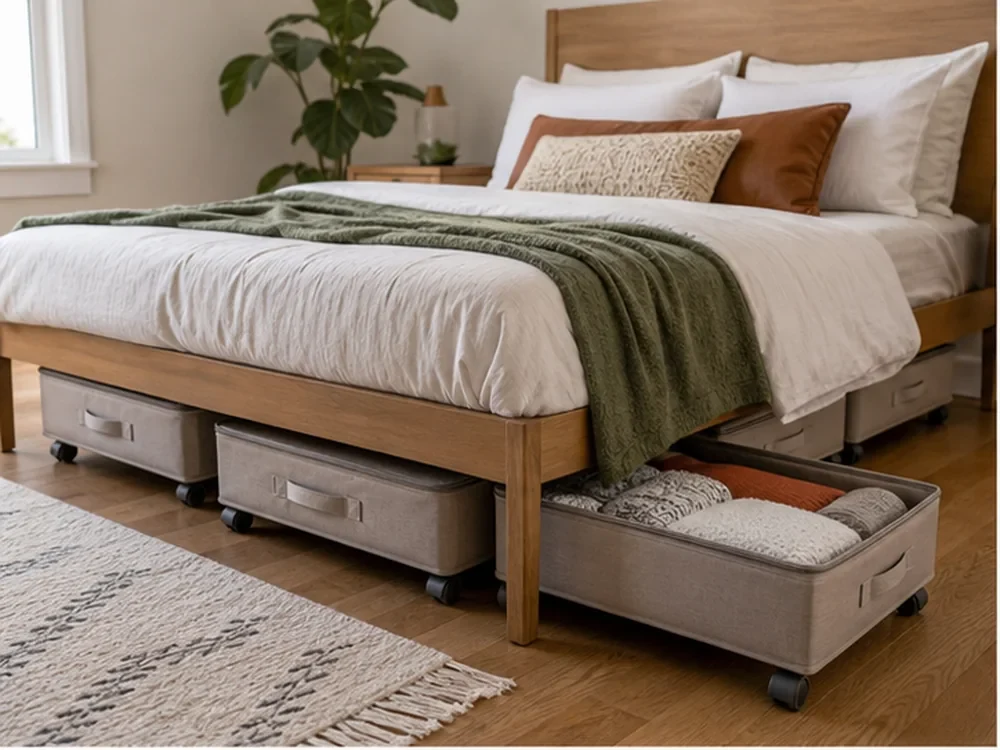
Choose Categories That Move Slowly
Rolling drawers are best for off-season clothing, spare sheets, blankets, guest linens, and rarely used soft goods. Daily socks or chargers do not belong under the bed.
If an item is needed every morning, store it at standing height. Under-bed space should reduce clutter, not add a daily crouch.
Check Wheel Type Against Flooring
Small wheels behave differently on wood, carpet, tile, and thick rugs. A drawer that rolls in a showroom may jam on a bedroom rug.
Choose larger smooth wheels for rugs and softer floors. On hard floors, protect the surface from scratches.
Keep The Drawer Shallow Enough
A drawer that barely clears the frame will scrape, catch bedding, and feel annoying. Height should include handles, lids, and soft bulging contents.
Leave a little vertical slack. Overfilled drawers stop rolling smoothly and make the whole system feel cheap.
Use Labels Where The Contents Hide
Under-bed drawers are low and often shadowed. Labels save time when several drawers look identical.
Use simple category labels rather than decorative tags. The label should be readable while standing or kneeling briefly.
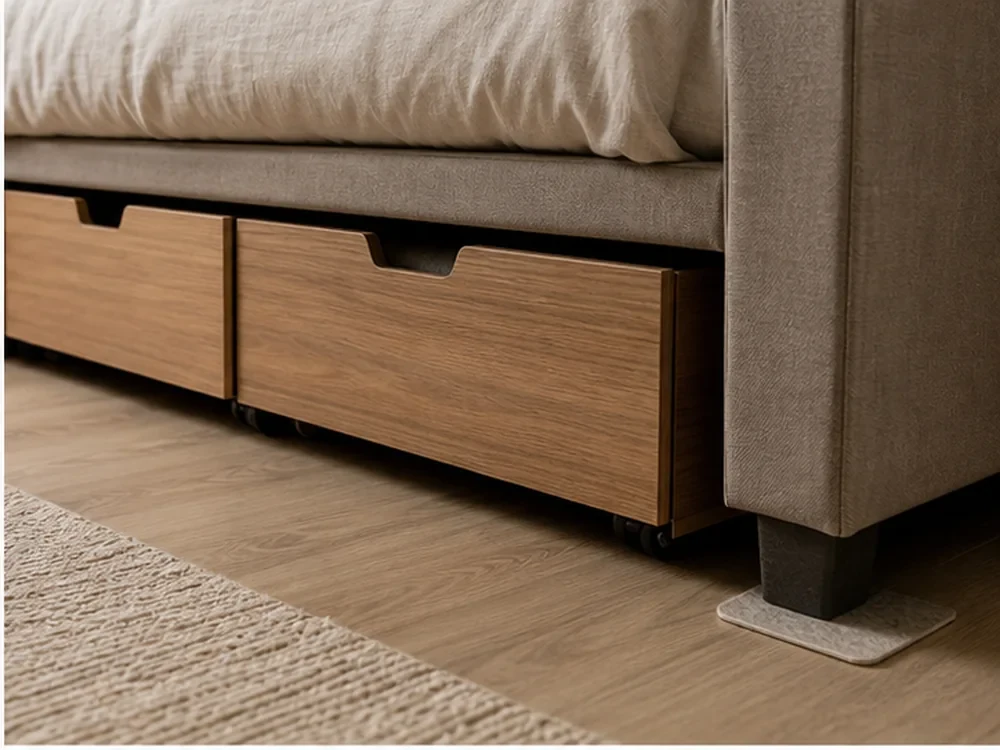
Keep Dust In The Plan
Under beds gather dust faster than people expect. Rolling storage should make cleaning easier, not hide a dusty archive.
Choose lidded drawers or washable bags inside open drawers. Pull everything out on a schedule before dust becomes part of the storage.
Do Not Block Heat Or Vents
Beds sometimes sit near floor vents, radiators, or outlets. Rolling drawers should not block airflow or create cable clutter.
Check the wall and floor before filling every side of the bed. Storage should not interfere with comfort or safety.
Make Handles Easy To Grab
Small recessed handles can look neat and still be hard to use from a low angle. Handles matter because every use begins with a pull.
Choose a drawer you can grab without pinching bedding or bending awkwardly. Convenience decides whether the drawer gets used.
Assign One Drawer Per Season
Seasonal clothing works well when each drawer has a clear time frame. Mixing winter sweaters with spare pillowcases turns retrieval into digging.
Give each drawer one season or one bedding category. Stop when the drawer is full rather than compressing more.
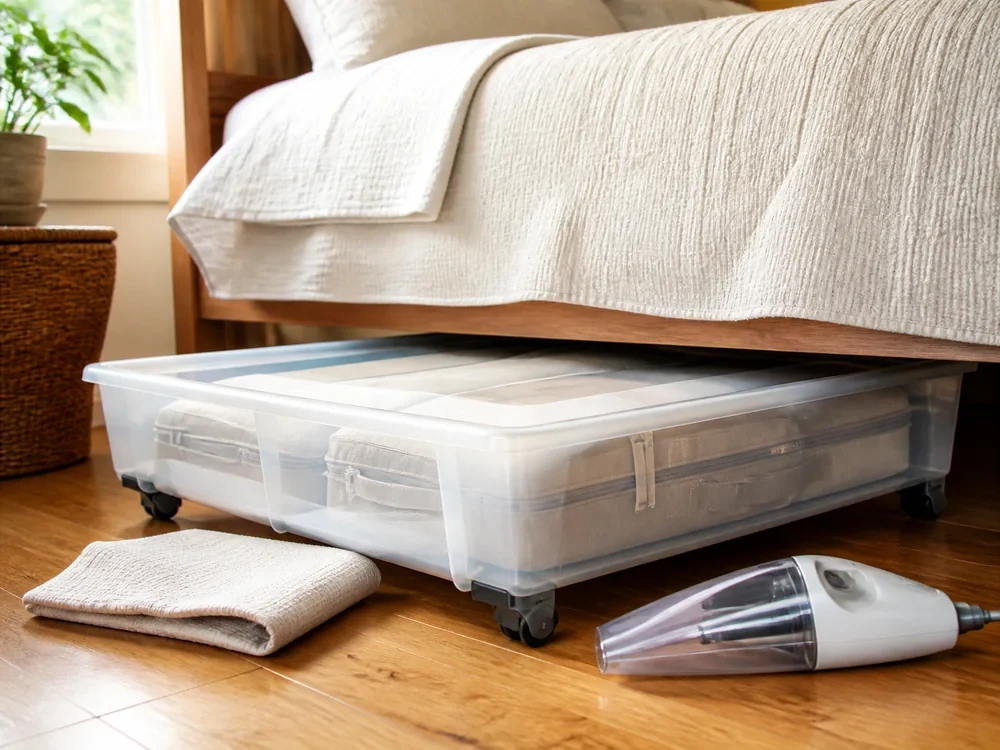
Use Clear Drawers Carefully
Clear drawers show contents, which can help identification but also make the room look busy if they are visible from the doorway.
If the drawer front is visible, use fabric bags or neat folded categories inside. Visibility should help, not add noise.
Pair Drawers With Bed Height
Low beds may not have enough space for useful rolling drawers. Raising the bed can help, but it changes the room’s proportions.
Use risers only if they look stable and intentional. A higher bed that feels awkward may not be worth the storage.
Keep One Side Free If Needed
Not every side of the bed needs storage. In a narrow room, one open side may be more valuable than one more drawer.
Use drawers on the side with the best pull route. Let the other side stay clear for feet, cleaning, or a nightstand.
Avoid Mystery Storage
Under-bed drawers become mystery storage when they hold objects with no shared use. That is when the drawer stops being opened.
If you cannot name the drawer in two words, it needs editing. Spare linens, winter knits, guest bedding, or travel bags are clear names.
Check Weight Before Loading
Rolling drawers can strain when loaded with books, tools, or heavy household items. The bed area is not the best place for dense storage.
Follow product ratings and use stable furniture practices; CPSC Anchor It furniture safety guidance is a useful reminder that stored weight matters.
Plan The Sheet Change
Drawers near the bed edge can interfere with changing sheets. Bedding needs to be tucked and pulled without moving half the storage.
Keep the drawer fronts slightly recessed if possible. The bed should still be easy to maintain.
Review After One Month
A rolling drawer that has not been opened in a month may hold the right slow category, or it may be hiding things you forgot.
Review contents with the season. Remove anything that would be better stored upright, visible, or outside the bedroom.
Test The Drawer With Bedding Hanging
Under-bed drawers are usually measured with the bed stripped or staged. Real bedding hangs, shifts, and sometimes catches the handle or wheel path.
Make the bed normally and then pull the drawer. If the drawer drags fabric every time, the storage will become annoying no matter how much it holds.
Store Things That Forgive Bending
The best under-bed categories are worth bending for only occasionally. Spare sheets, winter knits, travel pouches, and guest blankets usually fit that rhythm.
Daily underwear, electronics, and medicine rarely belong there. Storage that asks for awkward bending every morning will be abandoned.
Match Wheels To The Quiet You Need
Rolling drawers can scrape, thump over rug edges, or rattle on hard floors. Noise matters in bedrooms because storage is often used early or late.
Choose smoother wheels, add felt protection where appropriate, or use lidded bins if rolling noise is not worth the convenience.
Keep One Drawer Half Full
A half-full drawer may look inefficient, but it gives soft goods room to breathe and makes the drawer easier to close. Overfilled drawers bulge into the bed frame.
Use the extra room for seasonal changeover, not daily overflow. Under-bed storage should reduce pressure, not become a compression project.
Use Soft Containers Inside Hard Drawers
Soft inner bags can divide a rolling drawer without adding heavy structure. They make seasonal clothes easier to lift out and air.
This is useful when the drawer is wide. Instead of digging across the whole drawer, pull one fabric group and leave the rest ordered.
Keep The Front View Calm
Under-bed drawer fronts are sometimes visible from the doorway. Clear plastic, mixed colors, and bulging fabric can make the bed look cluttered.
Use matching fronts, fabric liners, or drawers recessed from view. Hidden storage should not announce every object it holds.
Keep A Pull Route On Calendar
Under-bed drawers work better when the pull route is reviewed with seasonal bedding changes. Rugs shift, hampers migrate, and nightstands creep closer over time.
Put the review beside a real household routine. The drawer remains useful when its route stays protected.
Decision Guide
| Problem | Better Move | Watch Point |
|---|---|---|
| Drawer jams | Check wheel type, rug edge, and height slack | Rolling path matters |
| Contents are forgotten | Use labels and one category per drawer | Low storage needs clarity |
| Room looks busy | Use fabric bags or hidden fronts | Clear bins can add noise |
| Cleaning is hard | Use lidded drawers and a pull-out schedule | Dust is part of the plan |
Related Her Neat Nest Guides
- Under Bed Storage With Wheels
- Underbed Storage Drawers
- Plastic Storage Bins Under Bed
- Storage Tips For Small Bedrooms
Final Takeaway
Under bed rolling drawers works when every piece has a job, every category has a limit, and the room can recover without a long reset. Choose the moves that reduce friction first; the room will look better because it behaves better.
FAQ
Are under bed rolling drawers worth it?
Yes, when they hold slow categories, roll easily on the actual floor, and leave enough clearance for cleaning and bed making.
What should go in under bed drawers?
Use them for off-season clothing, spare bedding, guest linens, blankets, or other soft goods that do not need daily access.
How do I stop under bed drawers from collecting dust?
Use lids or inner bags, leave cleaning clearance, and pull the drawers out on a regular schedule.