
Kitchen Organization Kitchen Storage That Resets Fast
Kitchen organization kitchen storage is not one project. It is a chain of small decisions that decide whether cooking ends with an easy reset or a counter full of leftovers, tools, wrappers, and mystery lids.
The strongest small kitchens are not the ones with the most containers. They are the ones where every zone has a clear job, daily tools return without thought, and backstock cannot quietly take over the easiest shelves.
A good system makes the kitchen faster at night, not just prettier on the day it is organized.
Kitchen Organization Kitchen Storage Starts With The Prep Zone
Kitchen organization kitchen storage should begin with the prep zone because cooking needs open space before it needs another bin. Keep a rectangle of counter free for a cutting board, bowl, and the movement of both hands.
If the counter cannot hold that basic task, the storage system is borrowing from the work itself. Move decorative trays, duplicate appliances, or extra jars before adding more organizers.
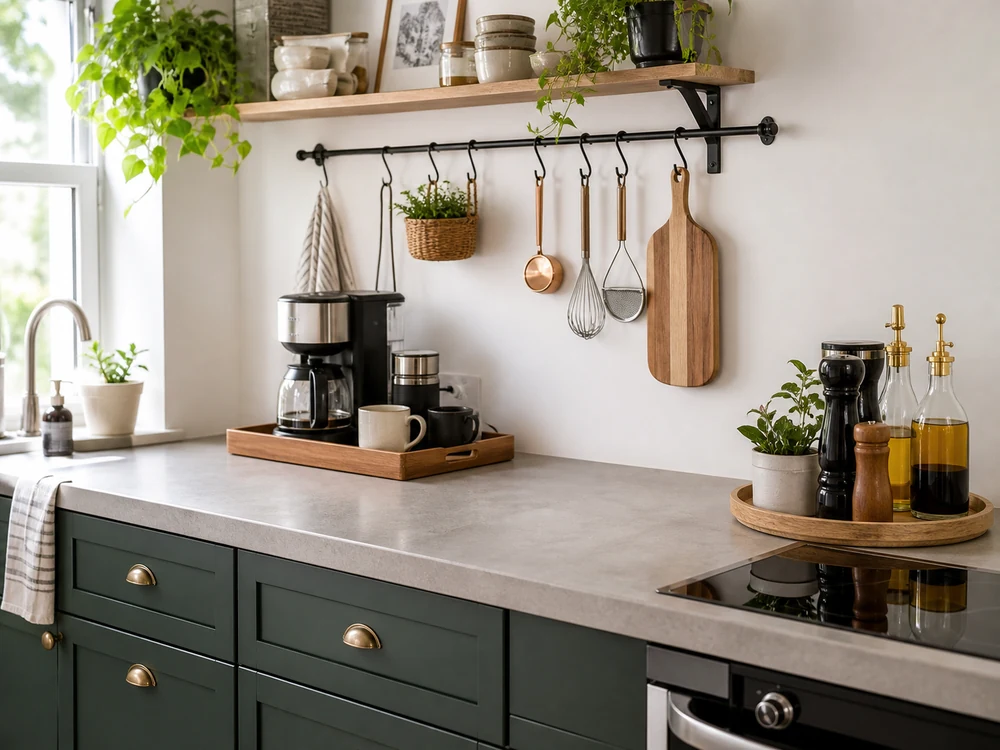
Create Zones By Action, Not Object Type
Object categories matter, but actions matter more. Coffee things belong where coffee starts, chopping tools near the prep zone, and cleanup supplies where spills actually happen.
When zones follow action, the kitchen teaches the household where things return. That is more durable than a perfect cabinet map that only one person remembers.
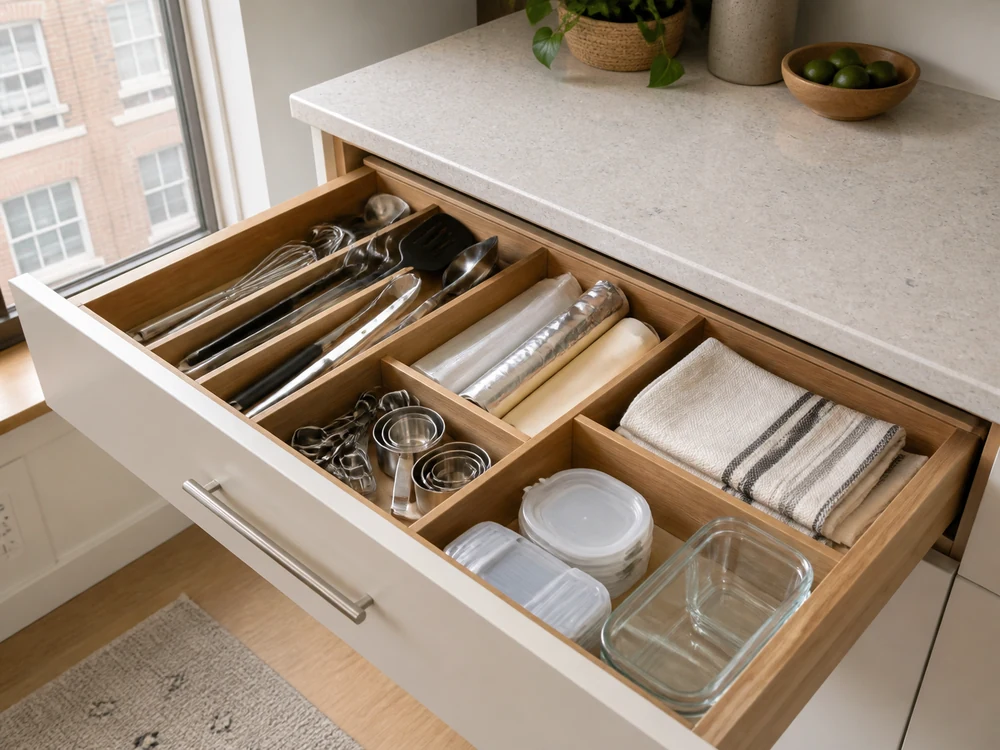
Give Drawers Short Assignments
Drawers fail when they are asked to hold every small thing. Give each drawer a short assignment: cooking tools, wraps, towels, measuring tools, or food containers.
A drawer with a narrow assignment can be reset quickly because out-of-place items stand out. A mixed drawer hides drift until it jams.
Keep The First Cabinet Shelf For Daily Reach
The easiest cabinet shelf should hold daily dishes, breakfast bowls, or the cookware used most often. Backstock should not claim the best reach simply because it arrived in bulk.
Small kitchens need hierarchy. Put daily categories where hands go first and move rare items higher, lower, or outside the kitchen if needed.
Protect The Walking Lane
Rolling carts, side shelves, and floor baskets look useful until they narrow the lane between sink, stove, and fridge. Check appliance doors and body movement before giving floor space to storage.
The logic behind ADA accessible route guidance helps at home too: a clear route makes a room easier for everyone. Storage should not depend on people squeezing past it.
Use Trays To Define Counter Groups
A tray can turn coffee supplies, cooking oils, or tea items into one movable group. That makes wiping the counter faster and stops the group from spreading sideways.
The tray should be smaller than the temptation. If it grows large enough to hold every bottle, it becomes a counter annex rather than a boundary.
Make Pantry Storage Visible From The Front
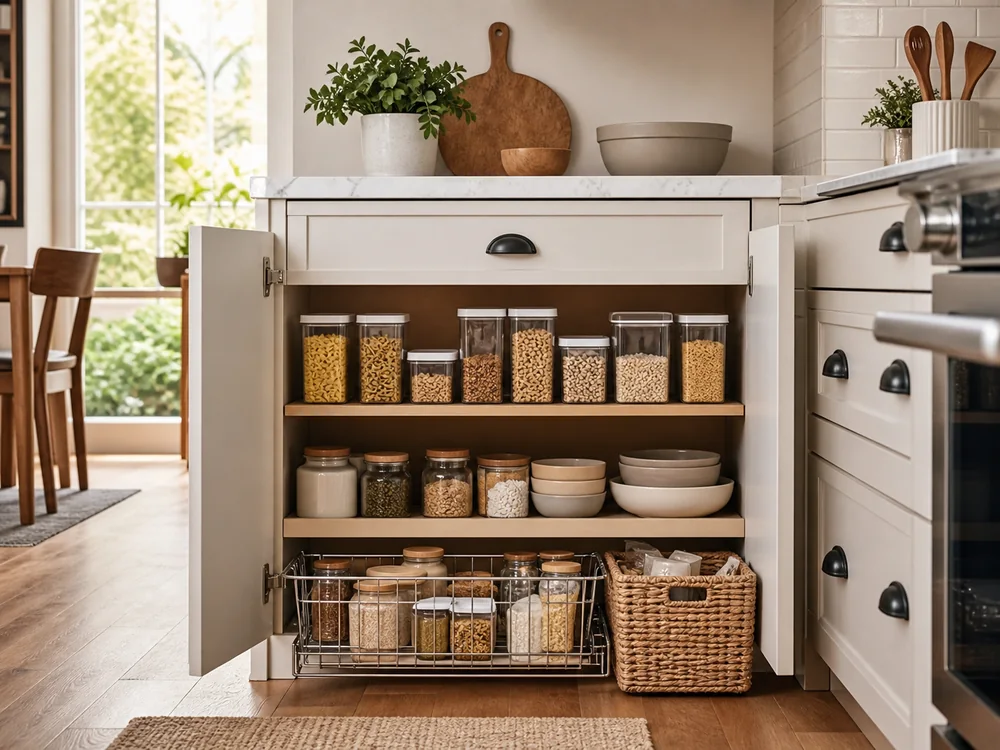
Pantry storage works when you can see what exists before shopping. Clear bins, shallow baskets, and single-file rows prevent the second bag of rice from hiding behind the first.
Visibility is not the same as display. A cabinet can look quiet while still making dry goods easy to check.
Use Pull-Outs For Deep Zones
Deep cabinets swallow food, pans, and small appliances unless the back comes forward. Pull-out baskets, turntables, or handled bins make depth usable without crawling into the cabinet.
Avoid stacking several heavy bins in one deep space. Access should be smooth enough that the household will put items back on an ordinary weeknight.
Stop Lid Chaos With Shape Matching
Food container lids, pot lids, and pan lids behave differently. Container lids need shallow grouping, pot lids often need vertical slots, and pan lids need room for handles.
Do not force every lid into one universal organizer. Match the storage to the shape that causes the mess.
Store Appliances By Frequency And Weight
Daily appliances can stay on the counter if they leave prep space open. Weekly appliances belong in reachable cabinets. Rare or heavy appliances should not sit high where lifting becomes risky.
The best appliance storage is honest about use. If a machine stays out because putting it away is too hard, give it a better home or question whether it deserves the counter.
Make Cleanup Supplies Immediate
A kitchen stays organized when wiping, sweeping, and dish reset are easy. Keep cloths, a small brush, and the cleaner you use close enough that cleanup takes seconds.
Do not hide all cleaning supplies behind complicated bins. The fastest reset is usually the one with the fewest barriers.
Limit Backstock With A Shelf Rule
Bulk buying can break a small kitchen because every bargain asks for a home. Assign one shelf, bin, or cabinet edge as the backstock limit.
When that zone is full, the answer is no until something is used. A limit makes shopping simpler and keeps daily shelves from becoming storage overflow.
Keep Labels Plain And Useful
Labels help when bins look alike or several people use the kitchen. They are less useful when they become decorative work that must be maintained.
Use plain labels for pantry groups and skip labels where the contents are obvious. The goal is faster decisions, not a styled storage performance.
Audit The Kitchen After Dinner
The real test comes after dinner. Notice what remains on the counter, which drawer will not close, and what item never returns to its home.
Fix that evidence directly. Move the category closer, reduce the count, widen the divider, or free a better shelf before buying another container.
Use The Fridge Side Carefully
The side of a refrigerator can hold a towel rail, magnetic basket, or small calendar, but it can also become visual noise at the busiest point in the kitchen.
Keep fridge-side storage shallow and limited to items used in that zone. If bags, papers, and tools gather there, the side panel has become a clutter billboard.
Put Grocery Intake Near Sorting Space
Groceries need a landing and sorting moment before they disappear into cabinets. If the intake surface is missing, bags stay on the floor and pantry items drift into random shelves.
Clear a small landing zone before shopping days. It helps you remove packaging, combine duplicates, and place food where it can be seen.
Give Dish Towels A Rotation Rule
Dish towels can spread across handles, counters, and chairs when they do not have a drying home. Assign one active towel spot and one backup spot.
A small kitchen looks cleaner when textiles have a rotation. Damp towels should dry; clean towels should not compete with cooking tools.
Store Entertaining Pieces Outside Daily Flow
Serving platters, extra glasses, and party pieces rarely deserve prime kitchen space. They can live higher, deeper, or in a nearby cabinet if daily dishes need the easy shelf.
This frees the kitchen for the meals that actually happen. Occasional hosting should not make every weekday cabinet harder to use.
Set A Counter Appliance Review Date
Counter appliances earn their place through frequency. If an appliance sits out for a month without use, it should move to storage or leave the kitchen.
A review date keeps the counter from becoming sentimental real estate. Small kitchens need current habits to outrank good intentions.
Keep Spices Near Heat But Away From Damage
Spices should be close enough to cooking that they are used, but not so close that heat and steam shorten their life. A side drawer or nearby cabinet often beats an exposed stove-side rack.
Group spices by cooking style if alphabetizing slows you down. Fast recognition matters more than a system that looks clever but feels fussy.
Decision Guide
| Problem | Better Move | Watch Point |
|---|---|---|
| Counter stays crowded | Protect one prep rectangle first | Do not organize away work space |
| Drawers jam | Give each drawer a short assignment | Mixed small items create drift |
| Pantry duplicates build up | Make contents visible from the front | Shop from what you can see |
| Carts block movement | Check appliance doors and walking lanes | Floor storage must earn space |
Related Her Neat Nest Guides
Final Takeaway
Kitchen organization and kitchen storage work when the reset is faster than the mess. Start with prep space, assign zones by action, keep backstock limited, and judge the system after dinner.
FAQ
How do I start organizing a small kitchen?
Clear a prep rectangle first, then group items by action: coffee, cooking, prep, cleanup, dishes, food storage, and backstock.
What kitchen storage helps most?
Drawer dividers, pull-out bins, trays for counter groups, clear pantry bins, and closed cabinet storage usually help more than adding open racks everywhere.
How do I stop kitchen clutter from coming back?
Set backstock limits, keep daily items in the easiest reach zones, and audit the kitchen after dinner when the real friction is visible.