
Living Room Ideas For Small Rooms With Real Walkways
Living room ideas for small rooms often fail because they focus on making the room look bigger while ignoring how people cross it. A small living room can be stylish, but it must first let people sit, pass, reach, watch, work, and reset without moving furniture.
The strongest small rooms are not empty. They are edited around honest walkways, seating scale, surface control, and storage that closes when the day is finished.
Think of the living room as a set of lanes and pauses. Once those lanes are clear, the decorative choices have room to feel intentional.
Living Room Ideas For Small Rooms Start With Walkways
Living room ideas for small rooms should start by drawing the paths people actually use. Door to sofa, sofa to kitchen, sofa to window, and entry to balcony may all cross the same compact floor.
The guidance behind ADA accessible route guidance is written for accessibility, but the home lesson is simple: routes feel better when they are clear and predictable. Small rooms cannot afford mystery paths.
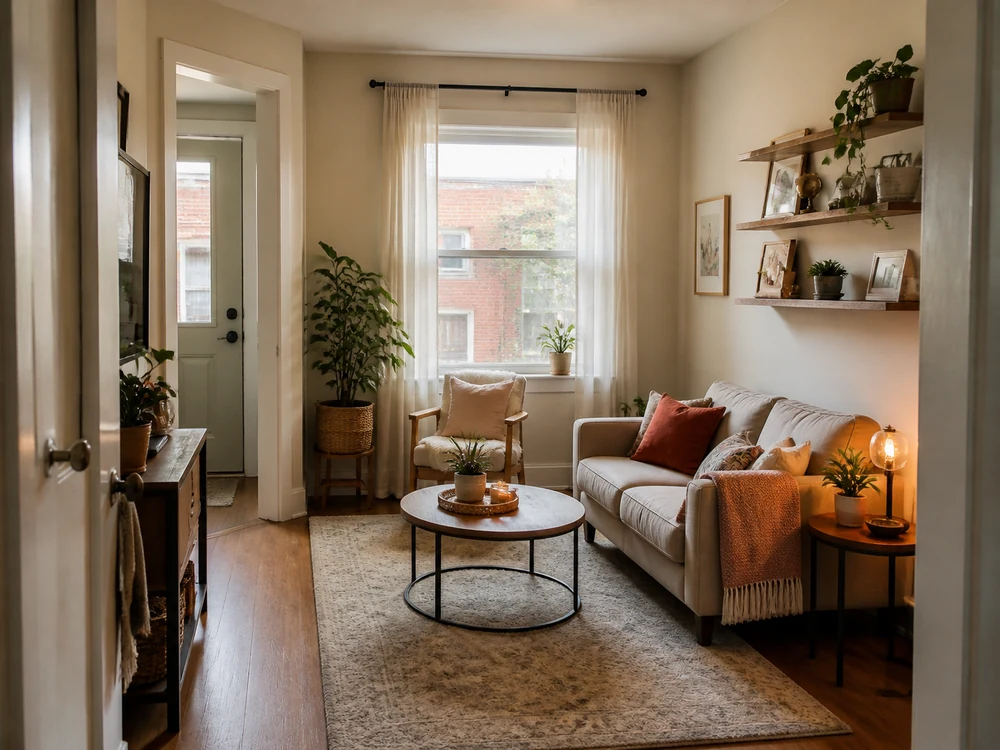
Choose Seating By Sit Count, Not Wish Count
A small living room does not need seating for every imagined gathering. It needs comfortable seating for the people who use the room most days, plus flexible backup when guests arrive.
A loveseat and one light chair may work better than a sectional that wins on capacity but blocks the room. The best seat count is the one that leaves people able to move while the room is occupied.
Use Round Or Soft-Edge Tables Where Paths Cross
Coffee tables sit in the danger zone of small living rooms. Round, oval, nesting, or soft-edge tables reduce shin collisions and keep traffic feeling looser.
If the table must store remotes or blankets, choose one with a lower shelf or drawer. Open tabletop clutter makes a tight room feel smaller because it occupies the center of the view.
Let Closed Storage Carry The Visual Weight
Open shelves can look warm, but small living rooms often need closed storage more than display. Games, cords, spare candles, papers, and toys disappear better behind simple doors.
Use open shelves for a small number of calm objects and books. Let cabinets carry the categories that would otherwise make the room look busy by lunchtime.
Float The Media Wall Carefully
Floating media storage can free floor space, but it should not become a thin wall of objects. Keep the TV area simple, hide cables, and give the storage below enough closed capacity for real items.
Mounting everything too high makes the room uncomfortable even if the floor looks open. Let eye level from the sofa guide the screen, then build storage around that line.
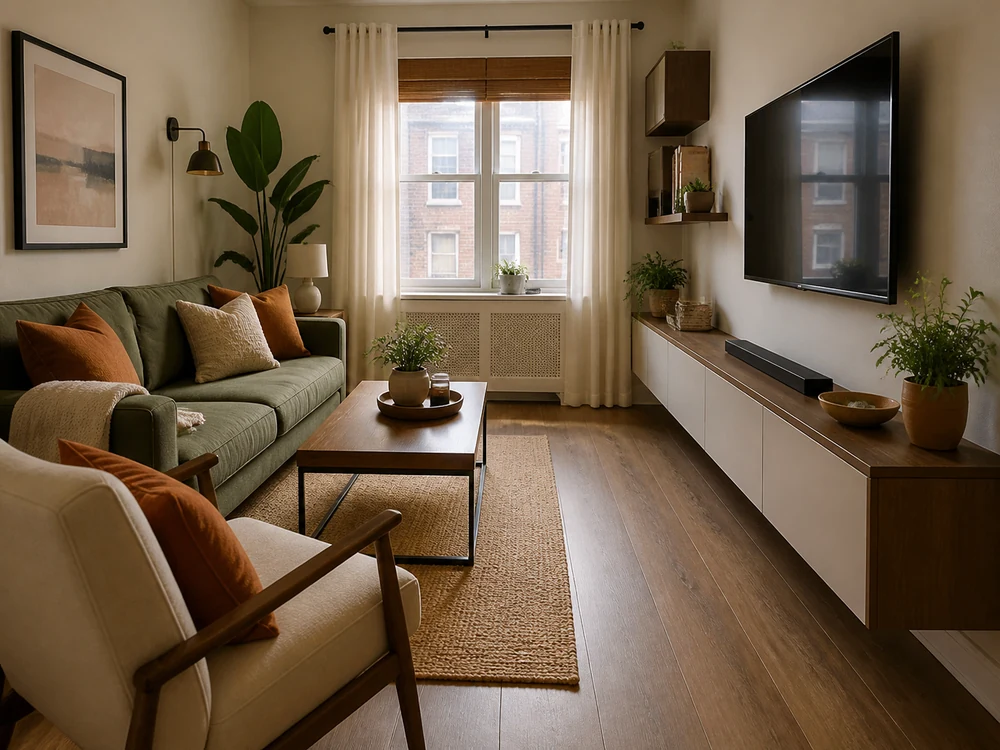
Put The Rug Under The Conversation
A rug should connect the seating pieces rather than float alone in the middle. In a small room, at least the front legs of the sofa or chair should touch the rug when possible.
The rug can also define a living zone in an open apartment. Choose a size that clarifies the area without blocking door swings or creating curled edges in walking lanes.
Use Lighting To Create Corners
Small rooms benefit from lighting that separates activities. A floor lamp near reading, a table lamp by the sofa, and soft ambient light can make one room feel like several useful corners. The Energy Saver lighting guidance is a good reference when picking efficient bulbs for daily use.
Avoid depending only on a ceiling fixture. Overhead light flattens the room and makes every object compete at once.
Build A Work Zone That Can Disappear
If the living room also handles work, the desk zone needs an end-of-day reset. A slim desk behind a sofa, a wall shelf with a stool, or a closed secretary desk can work when cords and papers have a quick home.
Do not let the work zone face the whole room unless it stays tidy easily. A compact room feels calmer when work can visually stand down after hours.
Use Ottomans With A Clear Job
An ottoman can act as table, footrest, storage, or extra seat, but it cannot do every job at once without becoming a moving obstacle. Choose the main role first.
Storage ottomans are best for soft categories like throws, games, or workout bands. Avoid stuffing them with mixed objects that no one wants to sort later.
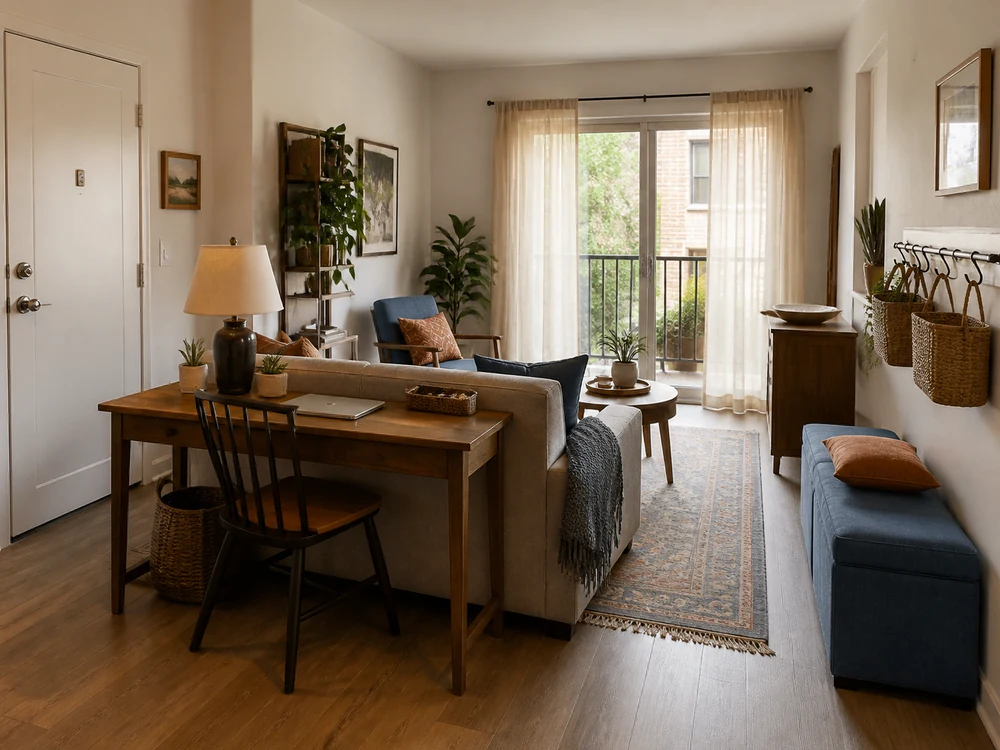
Keep The Sofa Wall From Becoming A Gallery Dump
The wall above a sofa is tempting, but too many small frames can make a compact living room feel restless. One larger piece, a pair of related works, or a controlled ledge may read better.
Leave space above the sofa back so the seating area can breathe. Art should finish the room, not press down on it.
Use Curtains To Add Height Without Weight
Curtains can make a small room feel taller when they hang high and move easily. Heavy puddled fabric may look rich in a photo but becomes a dust catcher and a floor obstacle in a tight room.
Choose fabric that filters light if privacy allows. Natural light gives compact rooms depth, and a bright window can do more work than another decorative object.
Create One Daily Reset Basket
Small living rooms collect remote controls, chargers, books, toys, mail, and glasses. One reset basket or drawer gives the room a fast evening finish without pretending every item deserves a custom organizer.
Keep the reset place small. When it fills, sort it. A large basket only delays the decision and quietly becomes the room’s hidden clutter engine.
Make Plant Choices By Traffic
Plants add life, but floor plants need protection from walking lanes. If a plant is bumped every time someone crosses the room, it belongs on a stand, shelf, or different wall.
Use greenery to soften corners that do not need body clearance. A healthy small plant in the right place beats a dramatic plant that constantly blocks movement.
Audit The Room With Two People Moving
A small living room may feel fine when one person sits still. Test it with two people moving: one standing up, one crossing to the kitchen, someone reaching for a blanket, and a door opening.
Those small collisions show what to fix. Shift the table, remove a side chair, close storage, or change the rug before adding more decor.
Let The Longest Wall Do The Quiet Work
The longest wall in a small living room should usually carry the calmest storage or the main sofa, not the busiest mix of shelves, plants, art, and media. One long visual line can make the room feel steadier.
When the longest wall is too busy, every other decision has to compete. Use that wall to create order, then let smaller corners carry personality.
Choose Side Tables By Reach Radius
Side tables should serve the seat without blocking the path around it. Sit down, reach naturally, and place the table where a glass or book can land without twisting.
Tiny rooms often need C-tables, narrow stools, or wall ledges rather than full end tables. The right surface disappears into the routine instead of demanding a furniture lane of its own.
Keep Guest Flexibility Folded Away
Guest seating should not permanently punish the daily room. Folding stools, stackable poufs, or a light chair from another room can provide backup without crowding every ordinary evening.
Store guest pieces where they return easily. If flexible seating is hard to access or hard to put away, it will either never be used or never leave the living room.
Decision Guide
| Problem | Better Move | Watch Point |
|---|---|---|
| Traffic crosses the coffee table | Use round, oval, or nesting tables | Protect shin clearance |
| Room feels visually loud | Move mixed items behind closed doors | Display fewer categories |
| Too many seats crowd the floor | Seat daily users first and add flexible backup | Capacity is not comfort |
| Work clutter stays visible | Create an end-of-day desk reset | Cords need a home |
Related Her Neat Nest Guides
- Small Living Room Decorating Ideas
- Living Room Small Design
- Modern Small Living Room Ideas
- Small Space Furniture Ideas
Final Takeaway
Living room ideas for small rooms work when walkways stay real. Size seating for daily life, use closed storage for visual relief, and give every flexible piece one main job.
FAQ
How do you arrange a small living room?
Map the walking routes first, then choose seating that leaves those routes open. Add closed storage, a right-sized rug, and smaller tables where paths cross.
What furniture is best for small living rooms?
Compact sofas, light chairs, nesting tables, closed media storage, storage ottomans, and slim desks usually work better than oversized sectionals or deep consoles.
How can I make a small living room feel calm?
Reduce open clutter, use warm layered lighting, keep the central path clear, choose one strong rug, and let closed cabinets hide mixed everyday items.