
Designing Small Spaces Bedroom Plans That Breathe
Designing small spaces bedroom plans is less about shrinking furniture and more about deciding what the room must protect. Sleep needs quiet, clothes need access, drawers need pull space, and the floor needs a route that does not ask you to turn sideways every morning.
A compact bedroom can feel calm when the big moves are chosen in the right order. Bed placement comes first, then door behavior, drawer clearance, lighting, textiles, and the small surfaces that catch daily objects.
The smartest plan is not the fullest plan. It is the one that makes the room easy to enter, easy to reset, and easy to use when you are tired.
Designing Small Spaces Bedroom Plans Starts At The Door
Designing small spaces bedroom layouts should begin at the doorway because that is where the room is judged and used first. If the first view is a blocked dresser, a half-open closet, or a chair carrying clothes, the room feels tense before you reach the bed.
Keep the first walking line plain. A runner, visible floor strip, or empty edge beside the bed can make the bedroom feel intentionally planned rather than tightly packed.
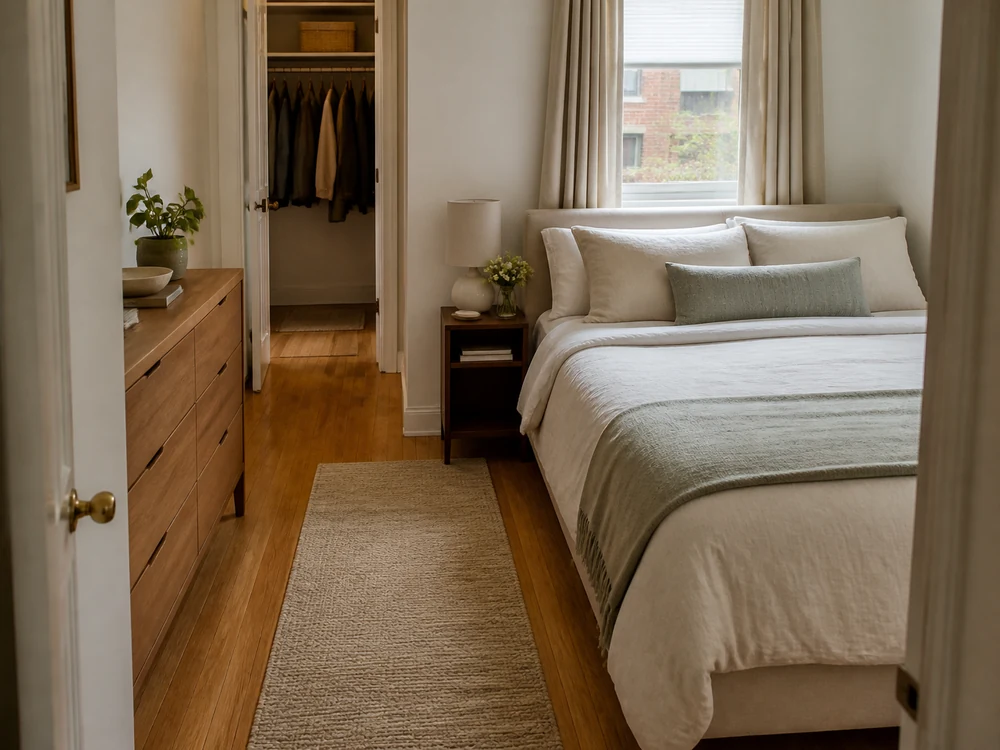
Let The Bed Choose The Main Route
The bed decides the rest of the room because it is the largest object and the most repeated destination. Place it where making the bed, reaching a lamp, and stepping out in the dark remain simple.
A centered bed is not automatically better. In a narrow room, shifting the bed a little can protect the closet, create a slim desk wall, or make room for a hamper that will actually be used.
Give Drawers Their Full Pull Space
A dresser should be measured with drawers open, not closed. The depth of an open drawer plus the space for your body is the real footprint.
If a drawer forces you to stand on a rug edge or move a nightstand, the storage will become annoying. A taller, narrower chest may be more useful than a wide piece with theoretical capacity.
Separate Sleep Storage From Dressing Storage
Sleep storage belongs near the bed: a book, charger, water glass, eye mask, or hand cream. Dressing storage belongs where clothes are chosen, folded, or returned.
Mixing those routines makes the bedroom harder to reset. A bedside shelf should not hold folded jeans, and a dresser top should not become the place where every night object waits.
Use Wall Height Where It Does Not Loom
Vertical storage helps when it sits away from the pillow and away from the main shoulder path. Shelves above a desk or dresser feel lighter than a heavy wall of storage over the bed.
Any tall furniture near sleeping space needs steady anchoring. Check the manufacturer’s hardware guide and the CPSC Anchor It furniture safety guidance before relying on a tall bookcase, wardrobe, or chest.
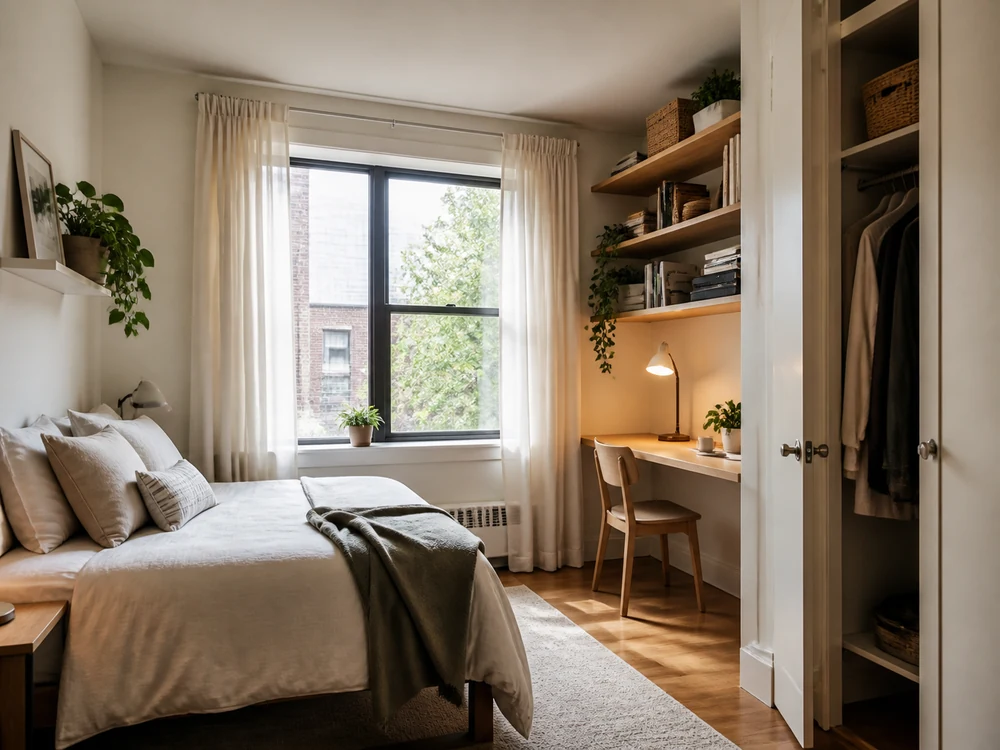
Make One Side Of The Bed Lighter
Matching nightstands can make a small bedroom look crowded. One full nightstand and one wall ledge may serve the room better than a pair that squeezes both sides.
The lighter side should still feel intentional. A small sconce, narrow shelf, or stool can give that side a job without pretending the room has more width than it does.
Use Mirrors To Borrow Light, Not Clutter
A mirror should reflect a window, calm textile, or clean wall. If it doubles the laundry basket or the open closet, it amplifies the exact thing you want to quiet.
Slim full-length mirrors are often stronger than wide decorative mirrors because they help dressing while claiming less wall. Let function decide the shape.
Keep The Hamper In The Real Drop Zone
The hamper belongs where clothes actually leave the body. If it sits across the room because the corner looks nicer, clothes will form a second system on the chair.
Use a simple basket or soft-sided hamper that can slide out for laundry day. Small bedrooms reward objects that move easily when the room needs to reset.
Let Curtains Add Height Without Bulk
Curtains can make a bedroom feel taller when they hang cleanly and do not swallow the window. Heavy folds beside a narrow bed can make the wall feel thick.
Choose fabric that filters light and moves easily. The window is valuable depth, so avoid blocking it with a dresser, plant stand, or shelf that makes the room feel sealed.
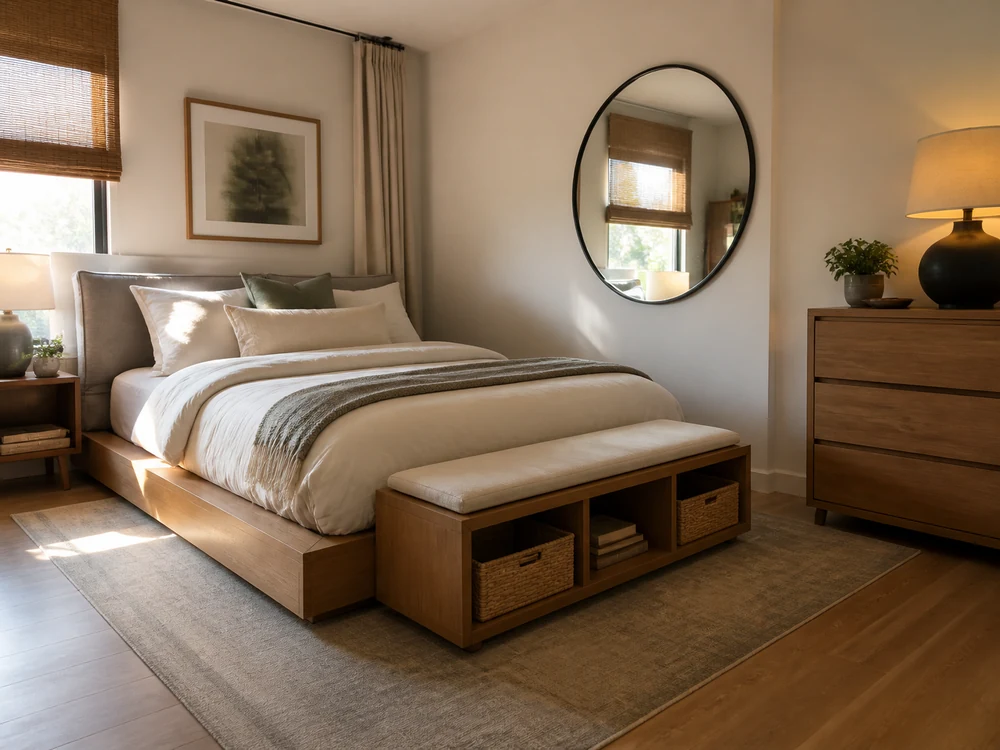
Design The Desk Corner As A Quiet Guest
If the bedroom also holds a desk, keep the desk visually quieter than the bed. A slim work surface, one lamp, and closed storage for papers help the sleep area stay dominant.
A desk that faces the bed with cords and papers exposed can make the whole room feel unfinished. Give work a closing ritual so it disappears at night.
Use Under-Bed Storage With A Limit
Under-bed storage should hold categories you do not need every day: seasonal linens, spare blankets, or out-of-season clothing. It should not become a hidden pile of postponed choices.
Use low containers that pull smoothly and leave enough clearance for cleaning. If you cannot reach the bin without lifting the bed skirt and dragging, the system will not last.
Choose A Rug By Movement, Not Only Size
A rug should soften the first step out of bed and keep the route stable. If the door catches it or drawers roll over it, the rug is working against the plan.
Runners can be more effective than one large rug in a narrow bedroom. They give comfort where feet land while leaving a clean border of floor that makes the room feel more open.
Create A Morning Reset Surface
A small bedroom needs one surface that can be cleared in a minute. It might be a tray on the dresser, a bedside shelf, or the top of a closed wardrobe drawer.
Keep that surface strict. When it fills with receipts, jewelry, hair ties, and mail, the room is asking for a shorter reset routine, not a larger tray.
Judge The Plan On Laundry Day
Laundry day reveals whether the bedroom works. Watch where clean clothes fold, where dirty clothes wait, and whether the closet can receive items without moving furniture.
A good compact plan survives a basket of laundry on the bed. It gives you enough surfaces and routes to finish the task instead of turning the whole room into a staging area.
Plan The Outlet Wall Early
Outlets quietly decide where lamps, chargers, fans, and work devices can live. If the bed blocks the only useful outlet, cords will stretch across the room and make the layout feel temporary.
Use cord paths as part of the plan. A plug-in sconce, short charging cable, or dresser-side power strip can keep the sleeping area calm without adding another table.
Leave The Door Back Useful But Light
The back of the bedroom door can hold a robe, scarf, or tomorrow’s outfit, but it should not become the room’s second closet. Too much hanging fabric makes the entrance feel crowded.
Choose one light-duty door hook or a narrow rail. The door should still open flat enough that the room feels easy to enter.
Keep Bedside Technology Visually Quiet
Phones, watches, earbuds, and chargers can make a peaceful compact bedroom feel like a workstation. Give technology one narrow charging spot and keep cords behind the furniture line.
The goal is not to hide every device. It is to stop small electronics from becoming the first thing the room shows at night and in the morning.
Decision Guide
| Problem | Better Move | Watch Point |
|---|---|---|
| Closet feels blocked | Move furniture outside the door swing or slide path | Treat doors as active space |
| Bed dominates the room | Lighten one bedside and clear the first walking line | Symmetry is optional |
| Dresser frustrates daily use | Measure drawers fully open before keeping it | Closed furniture lies about space |
| Room resets slowly | Create one strict morning surface | Small trays need limits |
Related Her Neat Nest Guides
Final Takeaway
Designing a small spaces bedroom works when the plan respects movement before beauty. Protect the door route, give drawers room, keep bedside storage honest, and let soft details finish a layout that already functions.
FAQ
What is the first step in designing a small bedroom?
Start with the door-to-bed route and the closet opening. Those two movements reveal where the bed, dresser, hamper, and nightstand can realistically sit.
Should small bedrooms use tall storage?
Yes, when tall storage is anchored, not over the pillow, and placed where it does not crowd the main walking path.
How do I make a small bedroom easier to reset?
Use one strict landing surface, a hamper in the real drop zone, limited under-bed storage, and furniture that does not block drawers or closet doors.