
Small Living Room Decorating Ideas With Breathing Room
Small living room decorating ideas often focus on making the room look bigger. That helps, but it is not the whole job. A compact living room also needs to host conversation, television, reading, laptop work, pets, guests, and the small objects that drift across the coffee table by evening.
The best decorating choices make the room easier to scan. They choose a sofa that respects the path, tables that can move, shelves that do not become storage overflow, and lighting that does more than decorate a corner.
Think of decorating as visual editing. You are not trying to hide real life. You are deciding which parts of real life deserve to be visible.
Core idea: Decorating a small living room means deciding what the room should not have to look at all day.
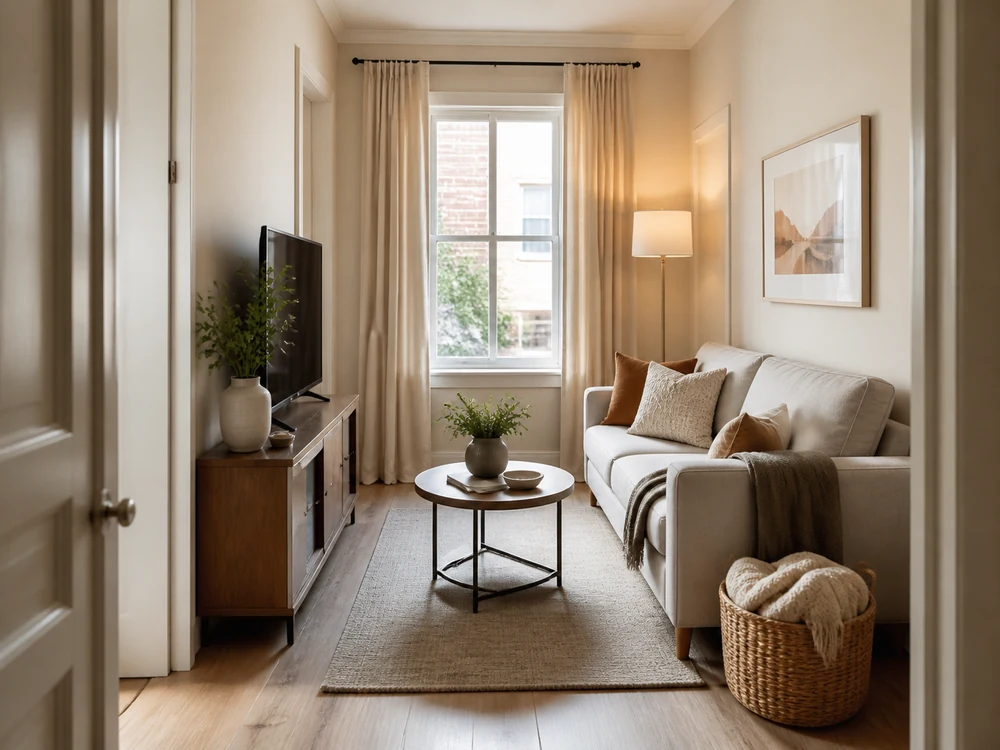
Small Living Room Decorating Ideas: The First Decision
Decorating a small living room means deciding what the room should not have to look at all day. This guide keeps the advice tied to measurable room behavior rather than decorative formulas.
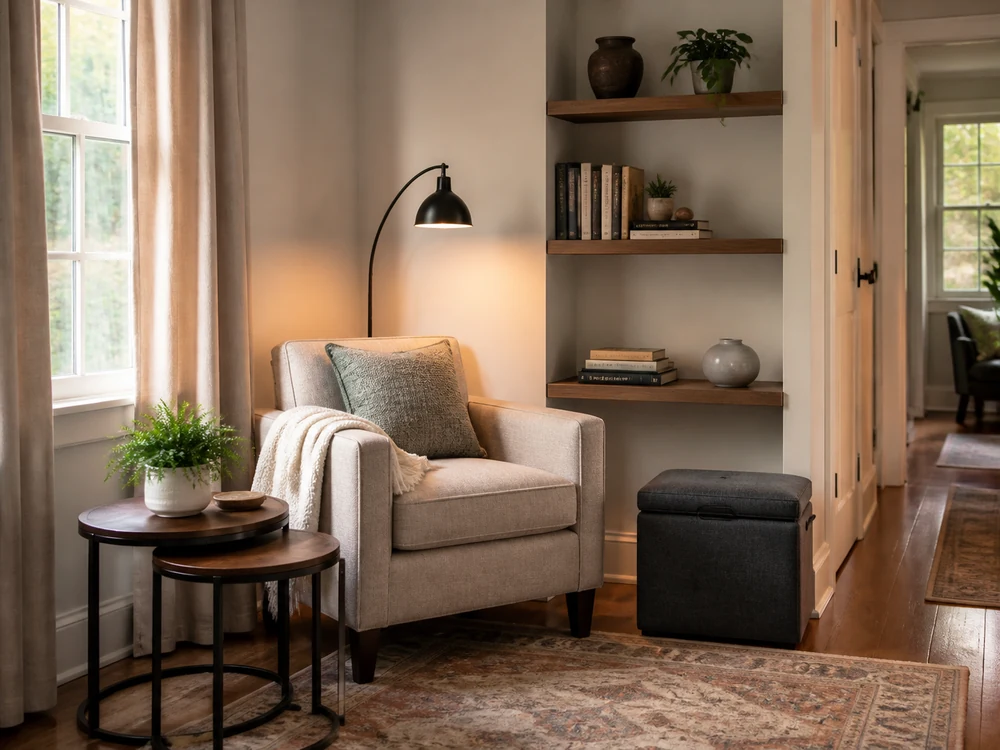
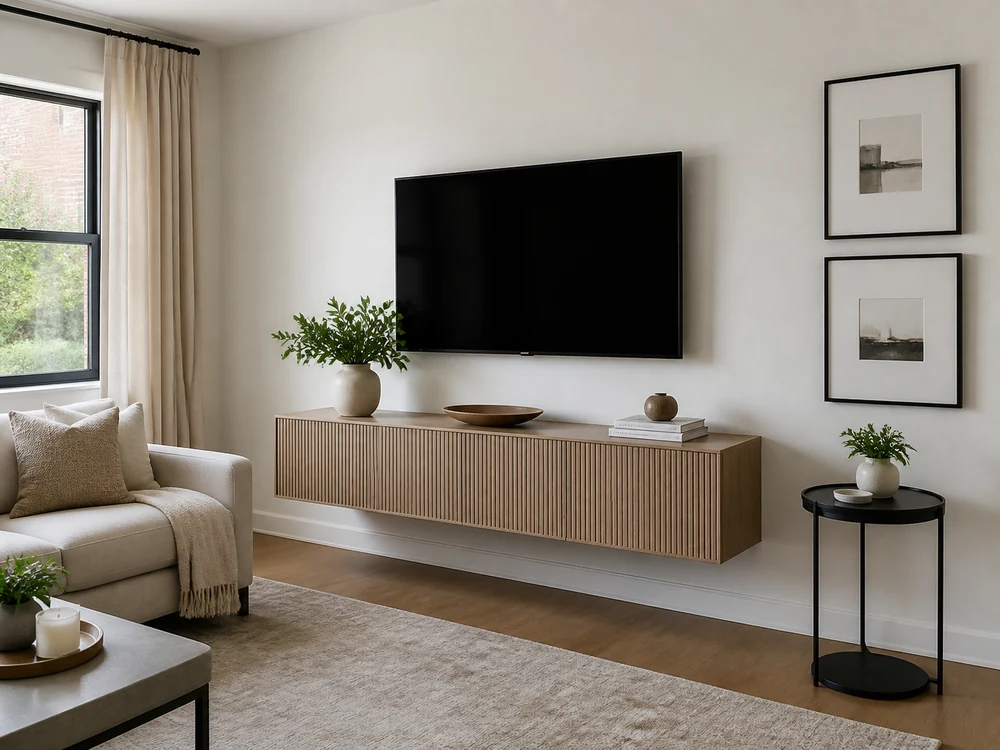
Decorate The Traffic Lane First
Before choosing art or pillows, walk the room’s main path. Door to sofa, sofa to window, sofa to kitchen, sofa to hallway. In a small living room, that route is part of the decor because anything placed badly in it will be noticed every day.
Clear movement has value beyond aesthetics. ADA accessible route width guidance is written for accessibility, but the principle applies at home: a route should remain understandable after furniture is added. Decor that steals the path is not working, even if it photographs well.
Use A Sofa That Leaves Air Around It
The sofa sets the room’s scale. A long sofa with slim arms can work better than a shorter sofa with bulky arms. A deep seat can feel luxurious but may steal the walkway. A high, skirted base can make the floor disappear, while exposed legs can lighten the room.
Measure depth as seriously as width. Then leave visible air at one end if possible. That small gap keeps the sofa from looking wedged into the room and makes the whole layout feel more deliberate.
Choose Rugs To Connect, Not Cover
A rug should connect the seating pieces without becoming a wall-to-wall compromise. If it is too small, the furniture looks stranded. If it is too large or thick, it may catch doors, table legs, or chair feet.
Flatweave or low-pile rugs usually behave better in small living rooms. Let the rug define the conversation zone, then keep its edges out of the main traffic line. The room feels calmer when the floor plan is readable.
Make The Coffee Table Earn The Center
The center of a small living room is valuable. A coffee table needs to support real routines: drinks, remotes, a book, a snack, maybe a laptop for an hour. If it only displays objects, it may not deserve the space.
Round tables soften tight circulation. Nesting tables flex when guests arrive. A storage ottoman hides blankets but needs a tray for stable surfaces. Choose the center piece by what it lets the room do, not by how complete it makes the photo.
Style Shelves With Gaps
Open shelves work best when they show restraint. Books, a plant, one object, and a little empty space can make a small room feel curated. Chargers, paperwork, craft supplies, and remote controls usually belong behind a door.
Leave gaps on purpose. Empty space on a shelf is not wasted; it is what lets the useful items look intentional. If every shelf is full, the wall becomes another form of clutter.
Keep The TV Wall Quiet
The TV wall already holds attention, so it does not need every decorative idea at once. A shallow closed cabinet, two calm frames, one plant, and hidden cables may be more effective than a large gallery wall around the screen.
When the television is off, the wall should still feel composed. If the room only looks good when the screen is on, the decorating plan is leaning too hard on the black rectangle.
Layer Light Instead Of Adding More Objects
A floor lamp, small table lamp, or wall sconce can make a compact room feel finished without adding another surface to style. Lighting creates zones: reading, conversation, evening television, and soft background light.
Use warm bulbs and place lamps where activities happen. A lamp behind a chair is more useful than a lamp on a table no one sits near. Good lighting reduces the urge to solve flatness with more decor.
Give Blank Space A Role
A small living room does not need every wall filled. Blank space can separate the TV area from the reading corner, let art breathe, and keep shelves from feeling like a storage display.
If a wall feels too empty, try changing the lamp height, rug placement, or art scale before adding more little objects. Often the room needs stronger proportion, not more things.
Reset Shared Items Nightly
Decor fails when shared objects have no home. Remotes, coasters, chargers, pet toys, and throws should have one neutral landing place that everyone can use without asking who put it away last.
This can be a drawer in the media cabinet, a lidded basket, or a tray on a side table. The room stays decorated because the everyday objects stop competing with the intentional ones.
Scale Art To The Furniture Below It
Tiny art above a sofa can make a compact room feel strangely unfinished, while a wall full of small frames can feel busy. Use art to relate to the furniture below it. One larger piece, two aligned frames, or a simple vertical pair can bring order without crowding the wall.
The bottom edge matters. Hang art low enough to feel connected to the sofa, cabinet, or chair, not floating near the ceiling. In small rooms, that relationship makes the wall feel designed instead of decorated in fragments.
Use Plants As Shape, Not Filler
Plants can soften a small living room, but too many small pots scatter attention. One taller plant beside a cabinet or one trailing plant on a shelf may do more than several little pots across the table, TV wall, and windowsill.
Choose the plant by the shape the room needs. A vertical plant can lift a low cabinet. A round pot can soften a square media wall. A trailing plant can loosen a strict shelf. When plants have a shape job, they feel like decor rather than another category to maintain.
Keep Seasonal Decor In A Single Rotation Point
Small living rooms can feel chaotic when seasonal decor lands on every surface. Choose one rotation point: the coffee table tray, the media cabinet, one shelf, or the pillow covers. Let that place change while the rest of the room stays stable.
This keeps the room fresh without asking the whole layout to absorb each season. It also makes storage easier because the off-season items belong to one zone, not to every drawer and basket in the room.
Quick Decision Guide
| Problem | Best Move | Watch Out For |
|---|---|---|
| Room feels cramped | Protect one main path | Do not decorate into the walkway |
| Shelves look busy | Add gaps and closed storage | Do not display every useful item |
| TV wall dominates | Use shallow storage and quiet art | Hide cables |
| Room feels flat | Layer lamps by activity | Avoid adding more small decor |
Related Her Neat Nest Guides
- Living Room Small Design
- Storage For Small Spaces
- Small Living Room Storage Ideas
- Renter Friendly Storage Ideas
Final Takeaway
Small living room decorating ideas work when they reduce visual negotiation. Keep the path readable, choose furniture by scale, let shelves breathe, and use lighting to finish the room. A compact living room can feel rich without making every surface perform.
FAQ
How do I decorate a small living room?
Start with the traffic lane, choose furniture that fits the path, use a rug to connect seating, and keep useful clutter in closed storage.
What should I avoid in a small living room?
Avoid oversized sectionals, overfilled shelves, too many tiny decor objects, and coffee tables that block movement.
How can I make a small living room feel cozy but not cluttered?
Use warm lighting, textured textiles, a few larger decor pieces, and closed storage for shared everyday items.