
Living Room Small Design: Make A Compact Room Feel Usable
living room small design are strongest when the room is judged by movement, not by a staged photo.
Living room small design is not only about choosing a small sofa. The room may need to host conversation, television, reading, work, pets, guests, toys, and the only generous surface in the home. A compact living room fails when those jobs collide in the walking path.
The most comfortable small living rooms are not empty. They are edited. The sofa fits the lane, tables move when needed, closed storage hides visual noise, and open shelves hold only the items that benefit from being seen.
Start with how people cross the room and where clutter appears at night. The design will feel more natural when it protects movement first and adds style second.
Core idea: Living room small design succeeds when traffic, storage, and sightlines are planned before decorative styling.
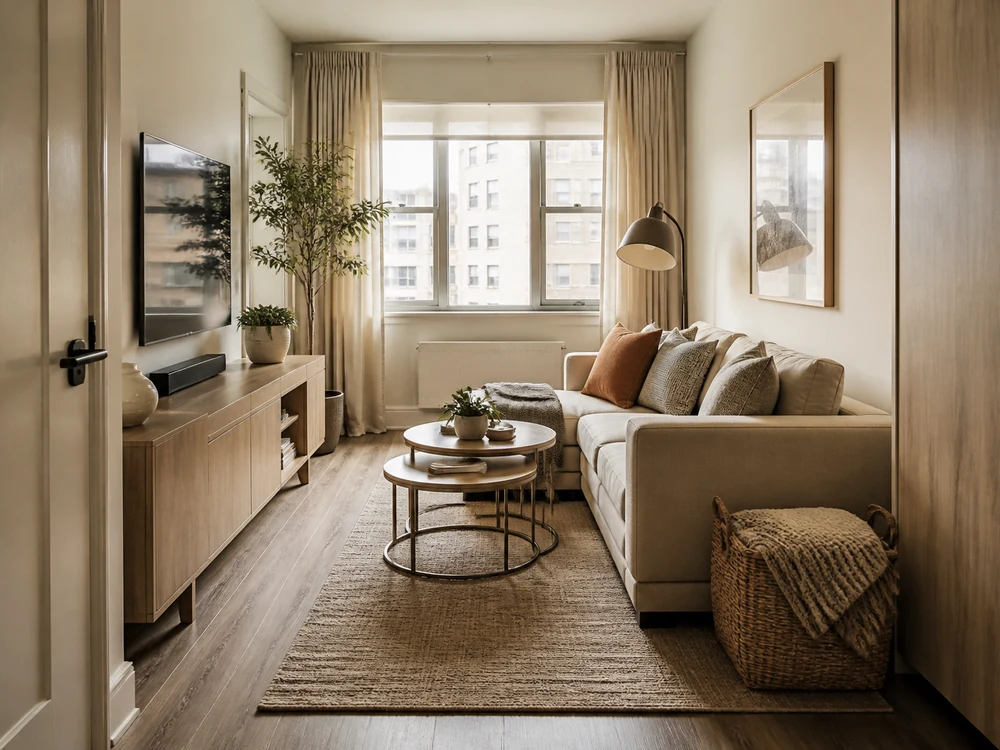
Living Room Small Design: The Decision That Changes The Room
Living room small design succeeds when traffic, storage, and sightlines are planned before decorative styling. The details below are written for lived-in small homes, where a good idea has to survive rushing, cleaning, guests, and the ordinary objects that return every evening.
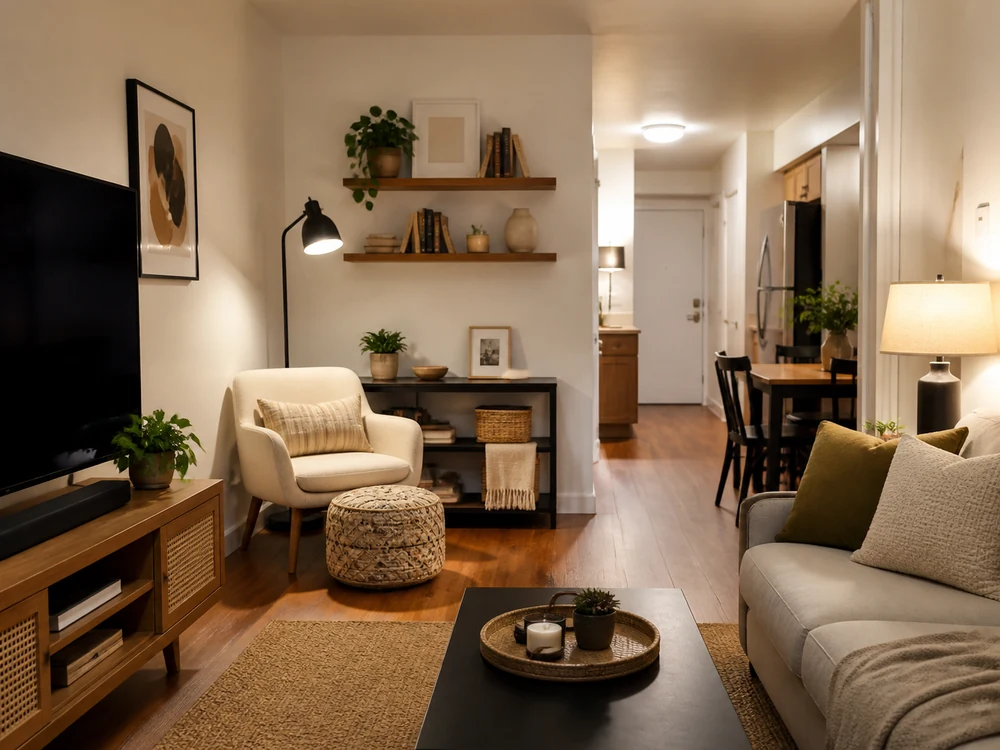
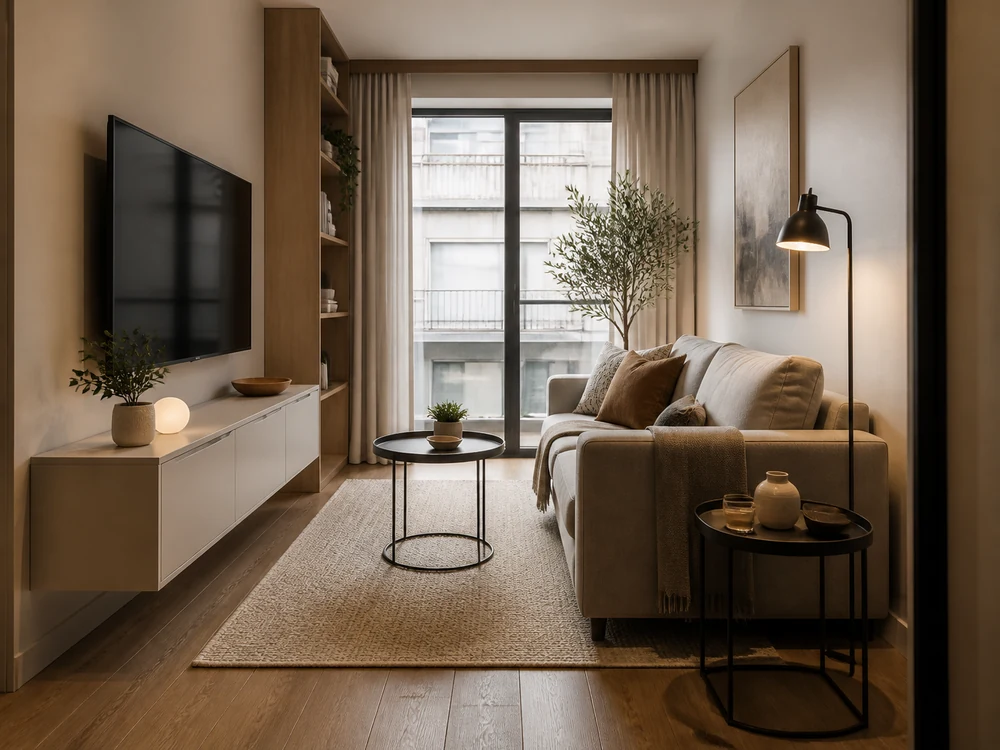
Draw The Traffic Lane First
Before choosing furniture, draw the path from door to sofa, sofa to kitchen, sofa to window, and sofa to any hallway or bedroom. In small homes, one awkward chair can make every trip through the room feel like an apology.
Leave the most common path visually open. This does not mean pushing every piece against the wall; it means giving the body a predictable route. If you carry laundry, groceries, or a tray through the room, test the route with those real objects before finalizing the layout.
Choose A Sofa By Depth And Arm Shape
Sofa width gets attention, but depth and arm shape often matter more. A deep sofa can steal the room even if it is not very long. Thick rolled arms can remove several useful inches from a compact seating area.
Look for a seat depth that suits real lounging without swallowing the walkway. Slim arms, exposed legs, and a tight back can help a sofa feel lighter. If the household often hosts guests, one sofa plus a movable chair may be better than a sectional that never changes shape.
Use Closed Storage For Visual Noise
Open shelves are attractive when they hold books, objects, and plants with breathing room. They are less successful as the main storage for chargers, game controllers, paperwork, pet supplies, craft tools, and spare cables. In a small living room, too much visible storage makes the walls feel busy.
Use closed storage for the items that are useful but not beautiful. A shallow media cabinet, storage ottoman, or low sideboard can calm the room more than another styled shelf. The point is not to hide life; it is to decide which parts of life need to be seen all day.
Let Tables Move Or Nest
A large fixed coffee table can dominate the center of a small living room. Nesting tables, a small round table, or a storage ottoman gives the room a way to change between work, snacks, stretching, guests, and cleaning.
Choose tables by edge behavior. Sharp corners in a tight lane are annoying. A table that is too low becomes a clutter shelf. A table that is too precious never gets used. The best small-room table is easy to move and easy to clear.
Use Rugs To Clarify, Not Shrink
A rug can define the seating area, but a rug that is too small may make the furniture look stranded. In a compact room, aim for a rug that connects the main seating pieces without curling into the traffic path.
Flat weaves are easier under moving chairs and nesting tables. If the room already has strong visual texture, choose a quieter rug and let pillows or art carry smaller accents. The rug should organize the room, not compete with every storage decision.
Make The TV Wall Do Storage Quietly
The TV wall often becomes the default storage wall because it already has attention. Use that attention carefully. A shallow closed cabinet below the screen can hold devices, remotes, games, and cables without turning the wall into a stacked display.
Avoid building storage so high and busy that the screen sits inside clutter. A calm media wall lets the room rest when the TV is off. In very narrow rooms, wall-mounting the screen and using a shallow cabinet can return valuable inches to the walkway.
Layer Lighting Instead Of Adding More Decor
Small rooms often feel flat because one ceiling light tries to do every job. A floor lamp behind the sofa, a wall sconce near a reading chair, or a small table lamp on closed storage can make the room feel intentional without adding another decorative object.
Place lights where activities actually happen. Reading light near the chair, soft light near the sofa, and task light near a temporary work spot. Good lighting can make existing furniture feel better before any new furniture is purchased.
Create A Nightly Reset That Takes Five Minutes
A compact living room needs a closing routine because it usually works hard all day. The reset should be short: remotes back, blankets folded, cups removed, toys or projects into one closed spot, tables cleared.
Clear routes matter in homes as much as they do in formal design guidance. The ADA accessible route width guidance is a useful reminder that movement space has value. A living room small design should end the evening with enough clear path that tomorrow starts easily.
Let One Wall Stay Quiet
Small living rooms can become visually loud because every wall receives a job: television, shelves, art, hooks, a desk, a mirror, plants, and storage. A quiet wall gives the eye somewhere to rest and makes the useful wall feel more intentional.
The quiet wall does not have to be blank. It may hold one framed piece, a slim lamp, or nothing at all. What matters is that the room has contrast between active storage and visual pause. That pause often makes compact furniture look more deliberate and less like it was squeezed in.
Give Shared Items A Neutral Home
Living rooms collect shared objects: chargers, remotes, blankets, coasters, game pieces, pet toys, and half-finished books. If these items belong to everyone, they often belong to no one, which is why they drift across tables and sofa arms.
Choose one neutral home that does not depend on a single person’s memory. A drawer in the media cabinet, a lidded basket beside the sofa, or a tray on a side table can work. The location should be reachable from the seat where the item is used, or it will not survive a normal evening.
Keep Decorative Objects Larger And Fewer
Tiny decor can make a compact living room feel busy because every small item asks for attention. Larger, fewer objects usually read as calmer: one lamp instead of three little accessories, one substantial bowl instead of a cluster of trays, one plant with presence instead of scattered small pots.
This does not mean the room has to be minimal. It means scale should support clarity. When storage, seating, and movement already work hard, decor should give the room rhythm rather than another layer of sorting.
Quick Decision Guide
| Problem | Best Move | Watch Out For |
|---|---|---|
| Room feels hard to cross | Open one main traffic lane | Test with laundry basket |
| Sofa dominates the room | Slim arms and moderate depth | Measure depth, not only width |
| Clutter is always visible | Closed low storage | Reserve open shelves for display |
| Center feels crowded | Nesting tables or ottoman | Keep pieces movable |
Related Her Neat Nest Guides
- Storage For Small Spaces
- Small Apartment Organization Ideas
- Small Living Room Storage Ideas
- Renter Friendly Storage Ideas
Final Takeaway
Living room small design becomes easier when the room is treated as a working space, not a furniture puzzle. Protect the main lane, choose pieces by depth and movement, hide visual noise in closed storage, and let lighting do some of the decorative work. The result is a compact room that feels used, not squeezed.
FAQ
How do you design a small living room?
Start with the traffic lane, then choose seating, storage, tables, rugs, and lighting around that path. Keep useful clutter in closed storage and reserve open surfaces for items that reset easily.
What furniture works best in a small living room?
Moderate-depth sofas, slim-arm chairs, nesting tables, shallow media cabinets, storage ottomans, and wall-mounted lighting often work better than oversized sectionals or heavy coffee tables.
How can I make a small living room feel bigger?
Keep one clear path, use closed storage to reduce visual noise, choose furniture with lighter profiles, and layer lighting so the room has depth instead of one flat overhead light.