
Slim Bathroom Storage Cabinet Ideas For Tight Rooms
A slim bathroom storage cabinet sounds like the polite answer to every cramped bathroom, but the wrong one can make a small room harder to use. Depth, door swing, towel drying, base clearance, and the splash zone matter more than the catalog width.
The useful cabinet is not simply narrow. It gives daily items a dry home, opens without fighting the toilet or sink, and still leaves enough floor visible for cleaning. In a rental or older apartment bathroom, that usually means choosing less capacity than the cabinet claims.
Use the cabinet as a tool for editing the room, not as permission to store everything the bathroom has ever held.
Slim Bathroom Storage Cabinet Placement Test
A slim bathroom storage cabinet should pass a placement test before it earns shelf liners or baskets. Stand where you wash your face, reach for a towel, turn toward the toilet, and open the door. If the cabinet interrupts any of those movements, the room will feel smaller every day.
The test also protects the design from false capacity. A cabinet can hold dozens of items and still be wrong if every reach feels tight. Choose the location that lets the bathroom routine continue naturally, even if that means accepting a shorter or shallower cabinet.
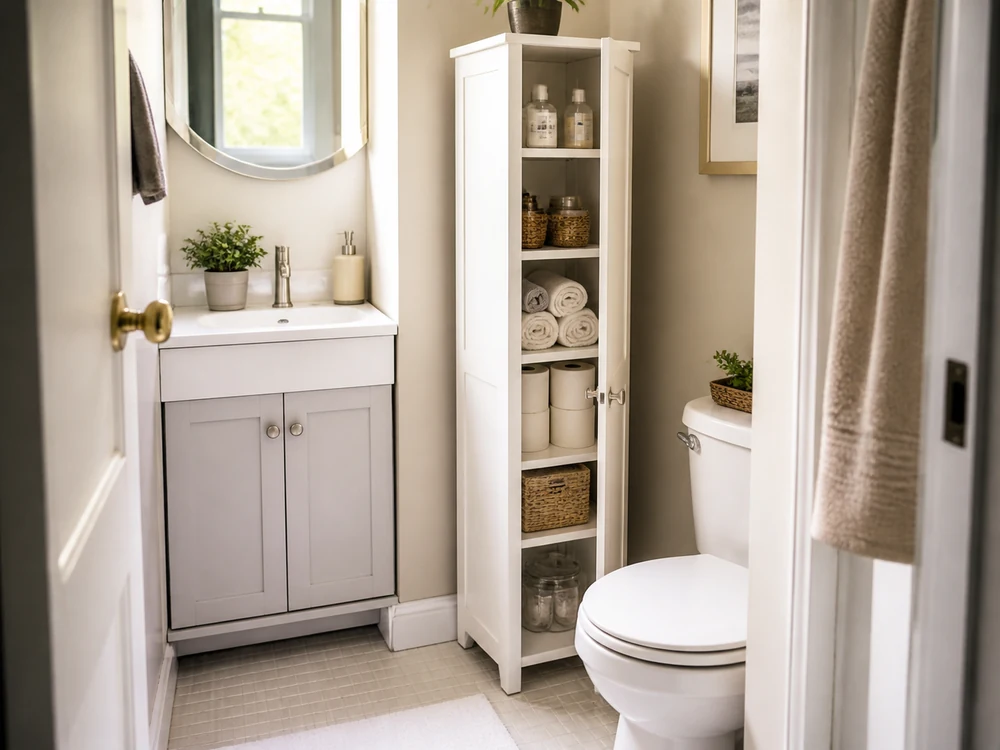
Start With The Door, Not The Cabinet
Measure the door swing before falling in love with a cabinet. A unit that fits the wall can still fail if its door hits the toilet, the vanity, a towel bar, or your knees when you are brushing your teeth.
Open the bathroom door, cabinet door, vanity door, and any drawer that will move near the cabinet. The best placement is the one that lets all of those motions happen without a little negotiation every morning.
Treat Depth As The Main Luxury
Depth is often the hidden problem. A 12-inch cabinet can look slim online and still feel bulky beside a pedestal sink. In tight bathrooms, the difference between a shallow cabinet and a deep one is the difference between gliding through the room and turning sideways.
Use painter’s tape on the floor to mark the footprint. Then stand at the sink, step toward the toilet, and reach for a towel. If your hip keeps finding the tape line, the cabinet is not slim enough for that room.
Store Daily Items At Hand Height
A slim cabinet should not turn routine items into a squat-and-search exercise. Put toothpaste backstock, cotton rounds, face cloths, and daily refills between waist and shoulder height. Reserve the lowest shelf for heavier backstock or things used less often.
This keeps the cabinet from becoming a narrow cave. You are more likely to maintain it when the top half works like a tiny supply closet rather than a decorative tower.
Keep Towels Away From Damp Walls
Rolled towels look tidy, but they should not be pressed against a wall that collects condensation. Leave a little air around fabric and avoid packing every shelf to the edge.
Moisture is not just a comfort issue. The EPA indoor air quality moisture guidance explains why indoor moisture control matters, and a small bathroom cabinet should support drying rather than trapping damp textiles.
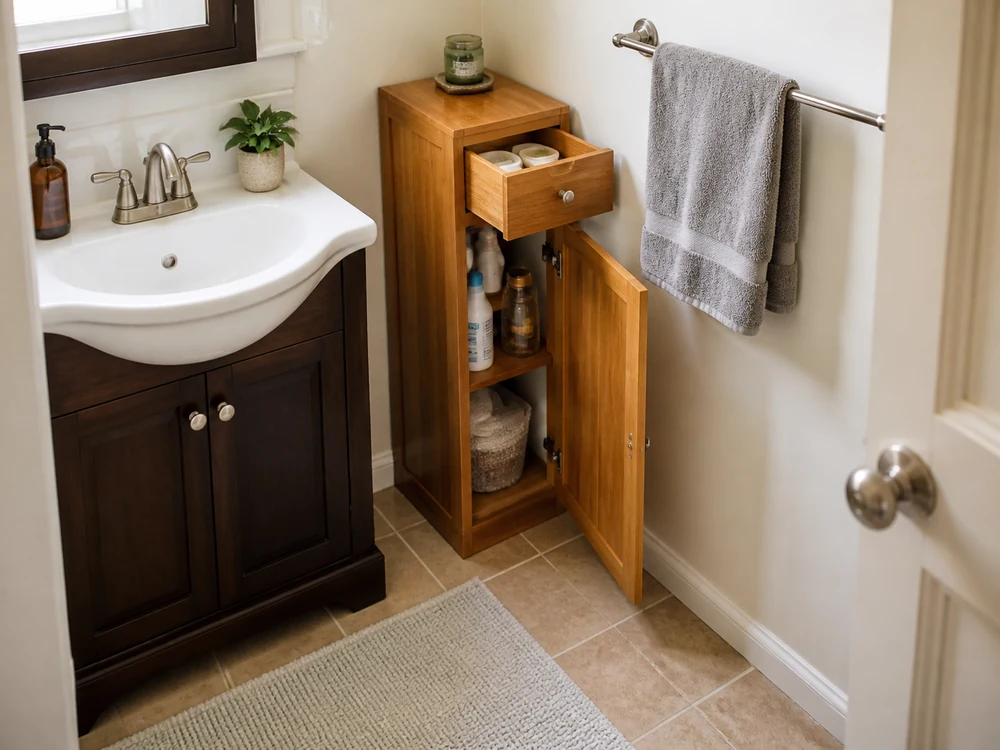
Choose Legs When Cleaning Is Hard
A cabinet on short legs can be easier to clean around than a solid block on the floor. The gap does not need to be dramatic; it only needs to let dust, hair, and water spots stop hiding.
If the room has uneven tile or a baseboard that keeps furniture from sitting flush, legs can also make the cabinet look intentionally placed instead of jammed into a leftover corner.
Use Closed Storage For Visual Noise
Open shelves can work for towels, a plant, or one basket. They do not work as well for half-used bottles, spare razors, medicine, cleaning spray, and bright packaging.
Let the cabinet doors hide the categories that make the room feel busy. A small bathroom already has tile lines, fixtures, mirror reflections, and towels in view; it does not need every supply label visible too.
Avoid A Cabinet That Blocks Repairs
Bathrooms have plumbing access, shutoff valves, caulk lines, and places where leaks announce themselves slowly. Do not place a cabinet where it hides the first sign of trouble or makes a repair person move half the room.
Leave enough space to inspect the sink base, toilet line, and any wall area that has already shown moisture stains. Storage that conceals a problem is not storage; it is delay.
Let One Shelf Stay Almost Empty
A tiny bathroom needs a place for temporary things: a hair mask, a travel toiletry bag, guest soap, a clean washcloth before a shower. If every shelf is assigned to permanent backstock, temporary items land on the sink.
Keep one reachable shelf lightly filled. That small release valve makes the cabinet feel generous even when the bathroom is not.
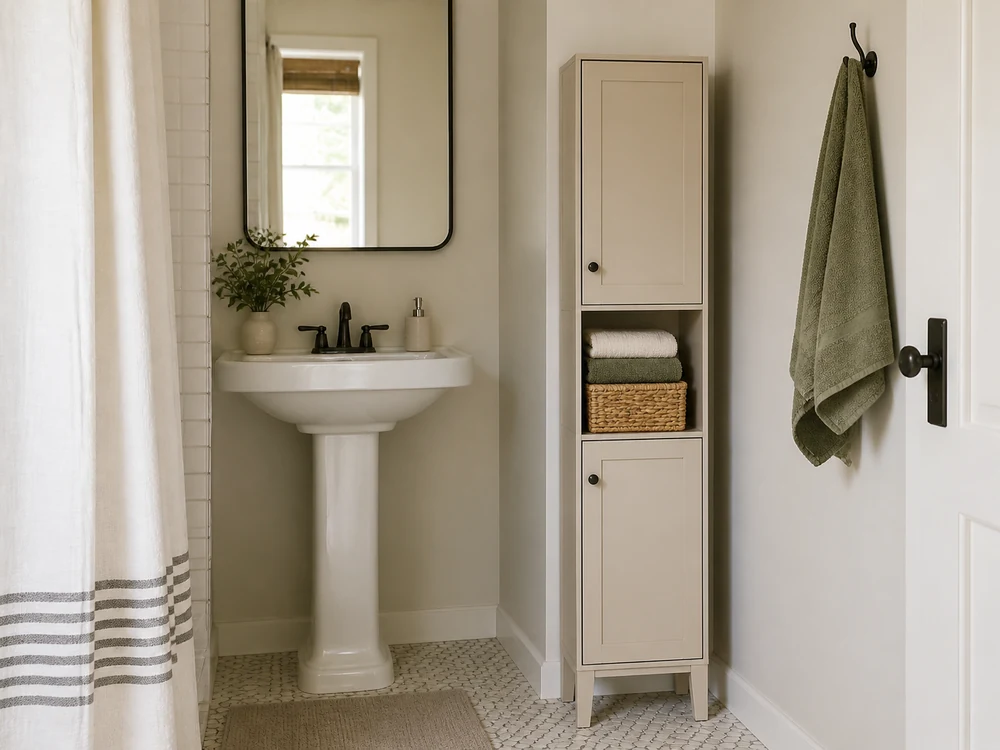
Use Baskets By Behavior, Not Aesthetic
A basket that looks beautiful but has no category will become a mixed bin. Use small baskets for actions: morning face items, spare dental items, guest refills, or cleaning cloths.
Do not choose baskets deeper than your hand can search comfortably. In a narrow cabinet, shallow containers keep the back of the shelf from becoming a forgotten layer.
Anchor Tall Cabinets When Needed
A narrow cabinet can be tippy because its height often outruns its footprint. If it is tall, top-heavy, or near children, use the manufacturer’s anchoring hardware and place heavier items low.
Review CPSC Anchor It furniture safety guidance before treating a tall cabinet like a harmless accent. A bathroom piece can be slim and still need proper restraint.
Match The Finish To The Fixtures
The cabinet finish does not have to match the vanity exactly. It does need to respect the room’s existing metals, tile tone, and towel colors. A calm white cabinet can disappear, while warm wood can soften a cold bathroom.
Avoid adding a finish that demands a second round of decorating. The cabinet should quiet the room, not start an argument with the mirror, faucet, and floor.
Edit Before You Load It
Do not fill a new cabinet with everything removed from the sink area. Sort first: daily items, weekly items, backstock, guest items, and things that belong somewhere else.
The first load sets the habit. If the cabinet begins with categories, it can stay useful. If it begins as overflow, it will become another narrow place to lose things.
Build A Tiny Maintenance Rule
Slim cabinets stay useful when they have a maintenance rule that is smaller than a cleaning day. Once a week, open the door, remove anything damp, check the bottom shelf for dust, and pull forward one item that has drifted to the back.
This quick rule matters because small bathrooms hide decline. A cabinet can look calm from the outside while lotion caps, extra samples, and old packaging collect inside. A short review keeps the cabinet from becoming a narrow version of the clutter it was meant to solve.
Notice What Guests Should Never Need
Guest supplies are often the category that bloats a bathroom cabinet. A spare roll, a clean hand towel, and visible soap are enough for most visits. Extra razors, hotel bottles, old gifts, and backup cosmetics do not need the most reachable shelves.
Give guest items a small, polite zone instead of letting them share space with daily routines. The bathroom feels calmer when the cabinet supports normal use first and hospitality second.
Decision Guide
| Problem | Better Move | Watch Point |
|---|---|---|
| Door hits the sink | Use shallower depth or sliding access | Do not trust wall width alone |
| Towels smell damp | Leave air around fabric | Avoid packing shelves tight |
| Floor is hard to clean | Choose short legs or wall-mounted storage | Skip solid bases in dusty corners |
| Cabinet feels messy | Use closed doors for packaging | Keep one shelf lightly filled |
Related Her Neat Nest Guides
Final Takeaway
A slim bathroom storage cabinet earns its place when it protects movement, stays dry, and makes everyday items easier to reach. Buy for depth, swing, moisture, and cleaning first; the prettiest cabinet is the one that does not make the bathroom harder to live with.
FAQ
How deep should a slim bathroom storage cabinet be?
Many tight bathrooms work better with shallow depth than maximum capacity. Tape the footprint on the floor and test sink, toilet, and door movement before buying.
Where should I put a slim cabinet in a small bathroom?
Place it outside the splash zone, away from plumbing access, and where its doors or drawers can open without blocking the main routine.
Should bathroom storage cabinets be open or closed?
Use closed storage for packaging and backstock, then reserve limited open space for towels or one attractive basket.