
Tiny Bedroom Design Ideas That Feel Calm And Useful
Tiny bedroom design deserves a plan that starts with the room’s behavior, not with a shopping list. The design has to make the room restful while still allowing dressing, cleaning, charging, and storage to happen without drama.
The useful test is whether the first five minutes after waking feel simple or cramped. If a choice still works under that pressure, it is more than a pretty idea.
This guide keeps the advice practical: clearance first, storage categories second, styling last. That order prevents a compact room from becoming a series of attractive obstacles.
Each section gives one decision to make, what can go wrong, and how to keep the room easier to reset after a normal day.
tiny bedroom design: Start With The Bed's Shadow
The bed casts a functional shadow: the space needed to step out, pull bedding straight, and reach a light. Design inside that shadow before decorating outside it.
A bed shifted a few inches can open a drawer, reveal a window, or create a better laundry route. Small changes matter more here than big gestures.
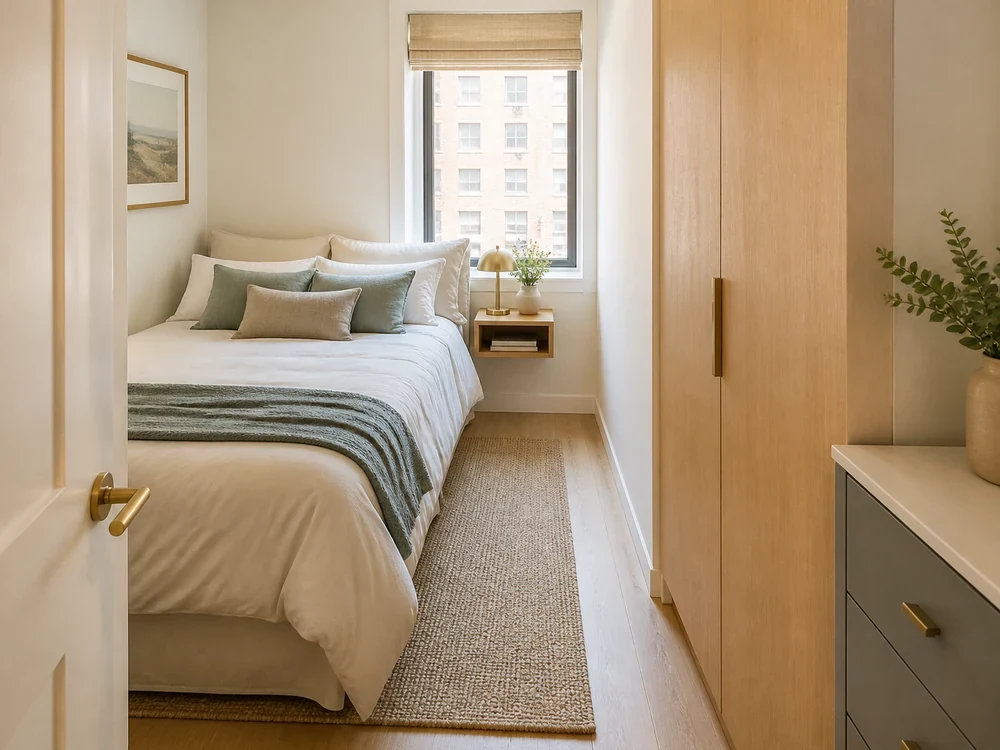
Use One Strong Vertical Move
Tiny rooms often need height, but not height on every wall. One vertical storage moment can solve clutter while the other walls stay calmer.
Anchor tall pieces properly and review CPSC Anchor It furniture safety guidance before trusting a high cabinet or shelf near sleeping space.
Let Color Connect Zones
Color should connect the bed, storage, and window without making the room feel themed. Repeat one quiet accent rather than scattering many unrelated small objects.
A pillow, artwork, and small vessel can carry the idea. The room feels larger when the eye reads connection instead of counting decor.
Keep The Floor Shape Visible
Visible floor gives a tiny bedroom its sense of air. Furniture that sits wall to wall can make the room feel like a storage box.
Use raised legs, shallow pieces, or wall-mounted shelves where possible. Keep under-bed storage pulled back from the first view.
Design Around Door Behavior
The door swing is part of the plan. Hooks, stools, rugs, and hampers can all make a door feel heavier than it is.
Open the bedroom, closet, and cabinet doors at the same time. The overlap shows where the design is pretending space exists.
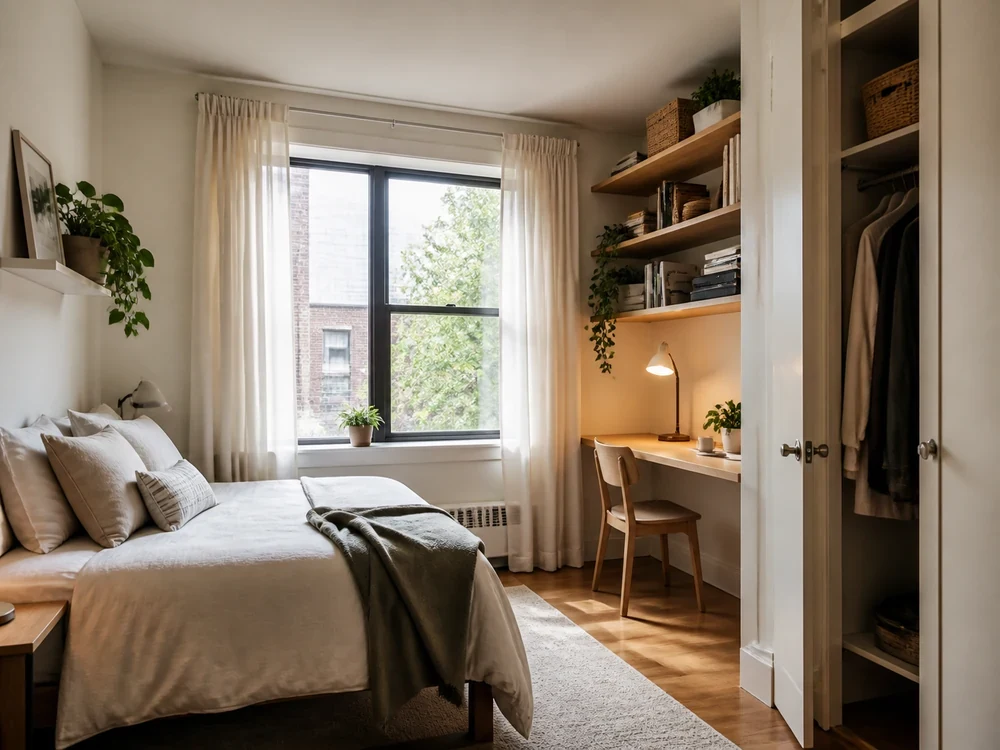
Make The Window A Quiet Feature
The window may be the room’s deepest visual line. Do not crowd it with tall storage unless there is no other practical option.
Low furniture, simple curtains, and a narrow plant can make the window feel generous without demanding floor area.
Give The Nightstand A Strict Role
The nightstand should not be the room’s office, vanity, and junk drawer. In a tiny bedroom, that surface becomes visible from everywhere.
Keep one tray or drawer for the true bedtime routine. Move makeup, mail, and spare cords to a closed zone.
Use Light As Architecture
Lighting can give a tiny bedroom structure without adding furniture. A sconce outlines the bed, a small lamp warms the dresser, and daylight handles the morning.
Choose bulbs with comfort and efficiency in mind; Energy Saver lighting guidance gives a practical baseline for daily-use lighting.
Put Storage Near The Return Moment
Storage works when it sits near the moment an item is returned. A beautiful box across the room will not catch pajamas after midnight.
Watch where clothes, books, and chargers land for three days. Put storage there or remove the habit that creates the pile.
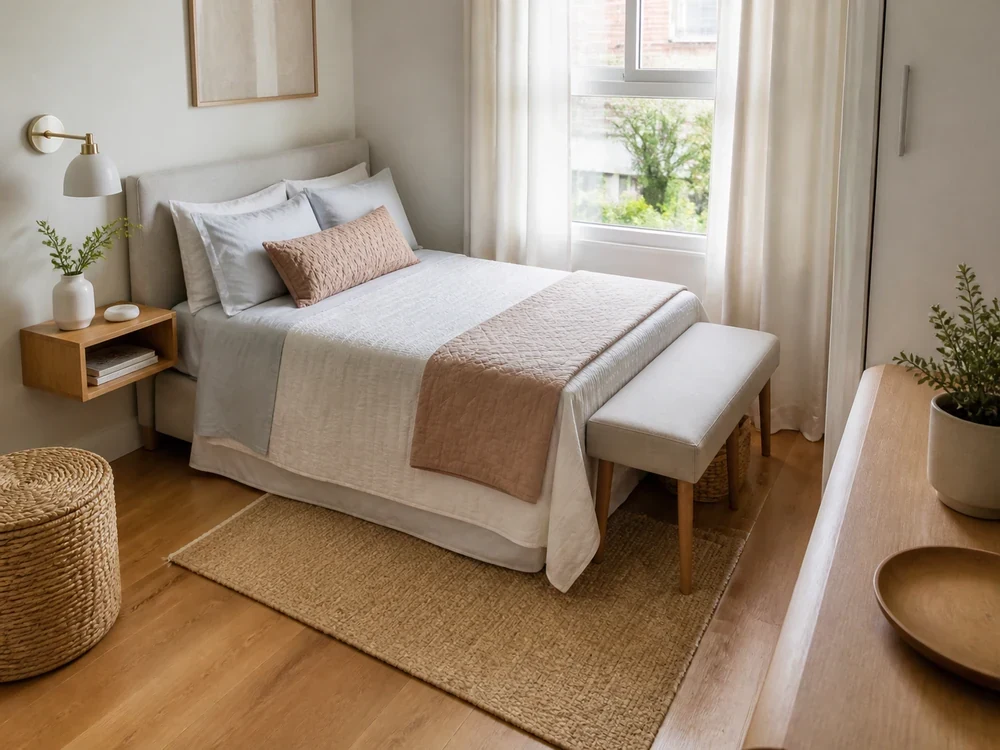
Use Mirrors With A Clean Reflection
A mirror doubles whatever it sees. If it reflects a hamper or crowded shelf, the room gets twice the visual noise.
Aim the mirror at daylight, bedding, or a clear wall. Its job is to help dressing and light, not to create an illusion at any cost.
Let One Wall Stay Blank
A blank wall is not wasted in a tiny bedroom. It gives the room a pause and makes the useful pieces look chosen.
If every wall has hooks, art, shelves, or rails, the room may feel busy even when it is tidy.
Choose Textiles By Handling
Textiles soften a tiny bedroom, but every textile needs a reset routine. Extra pillows and throws become clutter if they have no night home.
Use fewer pieces with better texture. A washable duvet, one throw, and curtains that move easily may do enough.
Keep Work Tools Off The Pillow Side
If the room also holds work, keep devices and papers away from the pillow view. Sleep space should not face unfinished tasks.
Use a closed tray, wall pocket, or drawer for work shutdown. The bed area should see the end of the day.
Audit The Corners
Corners collect objects because they feel available. In a tiny bedroom, a crowded corner can make the whole room feel stalled.
Give each corner a job or leave it empty. A plant corner, hamper corner, or reading light corner works better than miscellaneous overflow.
Make Cleaning Easy To Start
Tiny bedrooms become stale when cleaning requires moving too many pieces. Design should make vacuuming and dusting quick enough to do often.
Leave a route for the vacuum and avoid storage that has to be unpacked just to reach the floor.
End With The Doorway Test
Stand outside the room at night and look in. The design should show a bed ready for sleep, a floor you can cross, and no obvious pile asking for attention.
If the first view feels busy, remove one visible category before adding anything decorative.
Design The Room At Night
Tiny bedrooms are often planned in daylight, but the hardest moment is late at night when the floor is shadowed and the body is tired. Walk the route in dim light before deciding on furniture corners.
The design should still feel obvious when the room is not styled. A calm night route is a stronger success signal than a photo-ready daytime corner.
Control The First Reflection
Mirrors can expand a tiny bedroom or double the most crowded part of it. The first reflected view should be bedding, daylight, a simple textile, or a clear wall.
If the mirror reflects cables, the hamper, open shelves, or the work area, it makes the room mentally louder. Move the mirror before adding more storage.
Let Texture Do Quiet Work
A tiny room does not need many decorative objects to feel finished. Texture can carry warmth without adding things to dust, move, or store.
Use one tactile blanket, simple curtain fabric, a woven shade, or a matte lamp. Texture that stays in place is more useful than small decor that has to be reset.
Plan A Shutdown Ritual
If the tiny bedroom also holds work, grooming, or laundry, it needs a shutdown ritual before sleep. The ritual can be as small as closing one tray, hanging one shirt, and clearing the bedside surface.
Design storage around that ritual. A room that resets in three motions will stay calmer than a room that depends on weekend cleaning.
Use The Pillow View As The Edit
The pillow view is the most important view in a tiny bedroom because it is the last thing seen at night and the first thing seen in the morning.
Remove or close whatever looks unfinished from that angle. A tiny room becomes easier to live with when the sleeping view is protected.
Choose Art By Scale, Not Quantity
One calm piece of art can do more than several small frames. Many little frames create visual tapping around a room that already has many edges.
Use art to anchor the bed or dresser, then stop. Negative space around art can make the wall feel intentional rather than empty.
Decision Guide
| Problem | Better Move | Watch Point |
|---|---|---|
| Room feels cramped | Protect visible floor and door swing | Air is a design material |
| Decor looks scattered | Repeat one accent across fewer objects | Connection beats quantity |
| Nightstand overflows | Limit it to bedtime tools | Small surfaces need rules |
| Window feels blocked | Use low pieces and simple curtains | Borrowed depth matters |
Related Her Neat Nest Guides
Final Takeaway
Tiny bedroom design works when every piece has a job, every category has a limit, and the room can recover without a long reset. Choose the moves that reduce friction first; the room will look better because it behaves better.
FAQ
How do you design a tiny bedroom?
Start with the bed path, door swing, and storage return points, then add light, textiles, and decor after movement is clear.
What colors work in a tiny bedroom?
Soft neutrals, muted greens, warm whites, and controlled accents work well when they connect the room instead of competing.
Should tiny bedrooms have open shelves?
Open shelves can work for calm repeated categories, but mixed personal items usually belong behind doors or in drawers.