
Small Sleeping Room Ideas For Calmer Nighttime Flow
A small sleeping room asks for a different kind of design than a standard bedroom. The room may not have space for a full dressing zone, a reading chair, and a display wall, so the plan has to protect sleep first and let the remaining furniture earn its place.
The useful question is not how much can fit. It is which objects make the room easier to enter at night, easier to wake in, and easier to reset before the next evening.
Treat the room as a quiet tool. If a piece interrupts the path, catches laundry, reflects clutter, or keeps the eye alert, it is costing more than its footprint suggests.
Small Sleeping Room Layout Begins With The Wake-Up Path
Small sleeping room planning should begin with the path your feet take when you first stand up. That path needs more respect than a styled corner, because it sets the mood before coffee, light, or music has a chance to help.
Leave the busiest side of the bed as the easiest side to use. A narrow route can still feel civilized when it has no sharp stool, loose basket, charging cord, or drawer pull competing for attention.
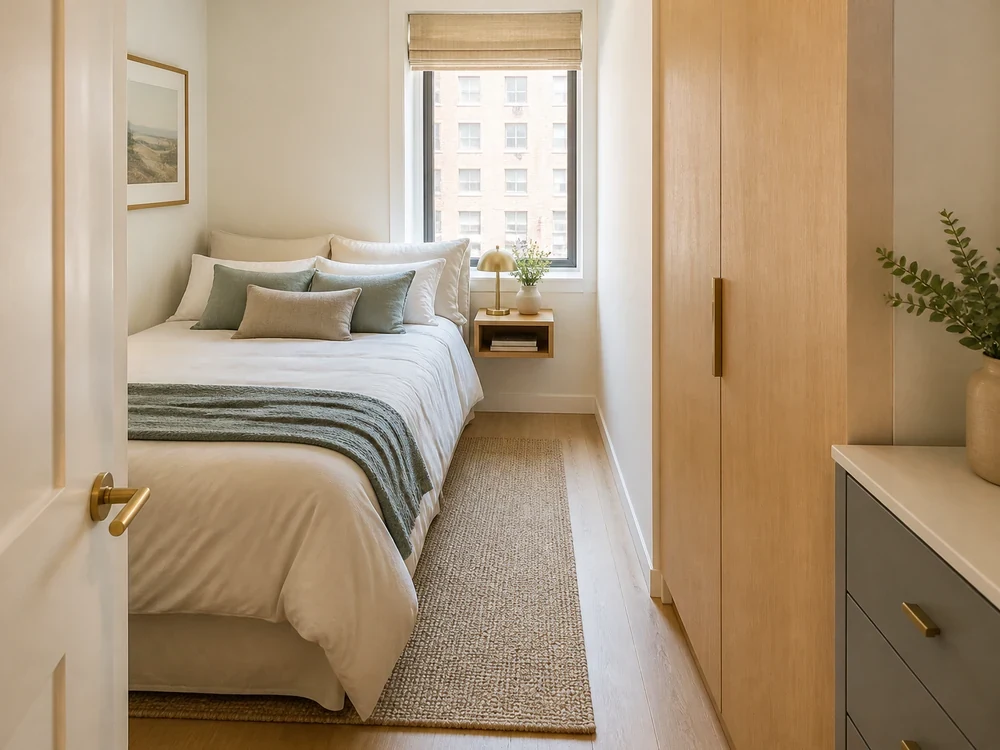
Let The Bed Be Low Drama, Not Low Quality
A lower bed can make the ceiling feel higher, but comfort still matters. Choose the bed by mattress support, clearance, and sheet-changing access instead of chasing the thinnest frame in a product photo.
If storage under the bed is needed, keep it slow and seasonal. The room will feel less restful if daily pajamas, chargers, or work papers require kneeling beside the bed every morning.
Give The Night Routine One Honest Surface
A tiny room often fails because every surface is asked to hold the whole day. One small night surface should hold only the true night routine: water, glasses, book, phone, or medicine.
Use a wall ledge, stool, or narrow table rather than forcing a full nightstand where shoulders need to pass. The surface should clear in seconds, not hide a week of decisions.
Make Light Gentle Enough For The Last Ten Minutes
Lighting should help the body understand that the day is ending. The Energy Saver lighting guidance is a practical reference when choosing efficient bulbs, but in a sleeping room the warmth and direction of light are just as important as energy use.
A shaded sconce, small lamp, or dimmable plug-in fixture can replace a bulky table. Aim light at the task, not across the whole pillow, so the room can stay calm while still being useful.
Keep Dressers Away From The First Breath Of The Room
The first view from the door should not be a crowded dresser top. A small sleeping room feels immediately smaller when the eye lands on receipts, bottles, coins, and unfolded clothes.
If the dresser has to face the door, give its top one controlled role: a tray, lamp, or folded textile. Anything that needs sorting belongs in a drawer, not in the room’s first sentence.
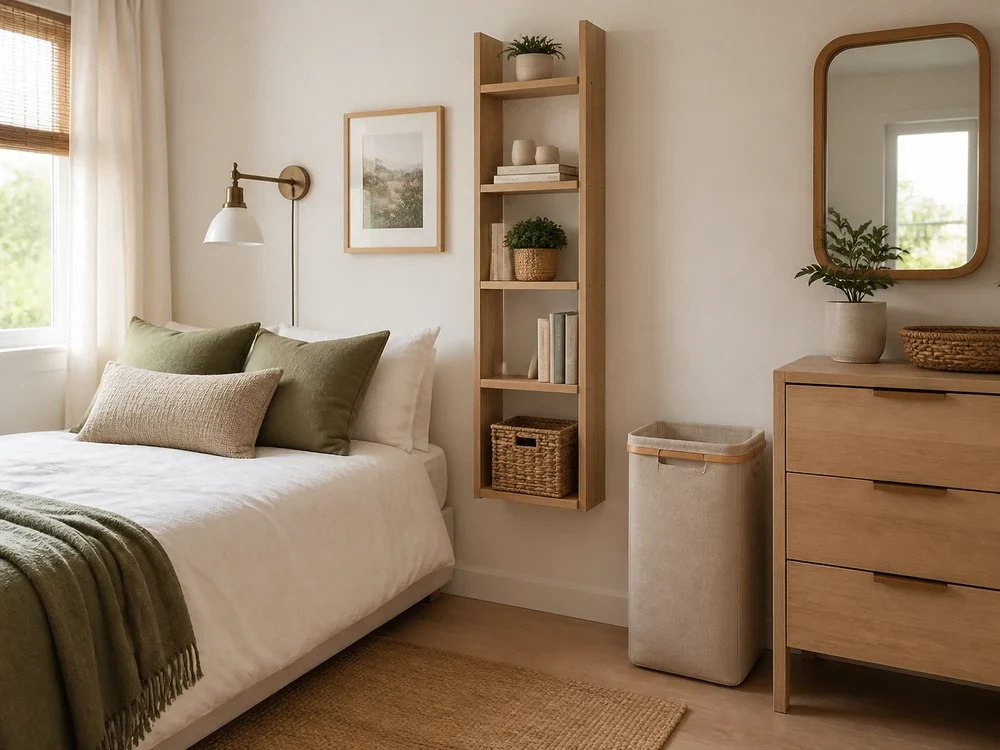
Use Hooks For The Clothes That Are Not Dirty Yet
Half-worn clothes create trouble because they are not ready for the hamper and not ready for the closet. A wall hook, valet peg, or small rail can solve that category without adding another chair.
Put the hook where clothes actually come off. A perfect hook behind a blocked door is a decorative idea; a modest peg near the routine will get used.
Treat The Hamper As Furniture
A hamper is not an afterthought in a compact sleep room. It takes space, changes the smell of the room, and decides whether clothes land on the floor.
Choose a shape that fits the route and empties easily. A tall narrow hamper can be better than a wide lidded basket if it lets the door swing and keeps laundry from spreading.
Let Mirrors Support Dressing, Not Surveillance
A mirror can help a small room borrow light, but it can also double clutter. Place it where it reflects the window, a clean textile, or a useful dressing spot.
Avoid reflecting the hamper, open closet, or crowded shelf from the bed. The room should not make you stare at unfinished chores while you are trying to rest.
Edit Sound And Texture Together
Sleep rooms are felt through sound as much as sight. A small rug, fabric shade, curtains, and soft bedding can reduce the hard echo that makes a compact room feel exposed.
Do not add textiles randomly. Use them where the body touches the room: feet beside the bed, shoulder near a curtain, hand near a lamp, and blanket weight at night.
Keep Scent And Air Simple
Small rooms hold scent quickly. Strong candles, wet laundry, and overfilled baskets can make the room feel stale even when it looks neat.
Ventilate when possible and keep scented objects minimal. A sleeping room should smell clean and quiet, not like several products competing in a closed box.
Use Vertical Storage Away From The Pillow
Tall storage works best on a wall the body does not sleep under. Shelves above the pillow may save floor space, but they can make the bed feel less sheltered.
Any tall or loaded storage deserves careful fastening. Review the maker’s hardware and the CPSC Anchor It furniture safety guidance before trusting a narrow bookcase or wall unit near a bed.
Choose Color By Morning Light
Colors behave differently in the early light that reaches a small sleeping room. A shade that looks rich at noon can feel heavy at dawn if the room has one small window.
Test bedding, curtain, and wall color together. The best palette is the one that makes the first minutes of the day feel clear rather than dim.
Create A Door-Closed Reset
The room should pass a door-closed test. When the door is shut, you should be able to see the bed, floor path, and one calm surface without scanning a list of unfinished tasks.
Make the reset small enough to repeat: return clothes, clear the night surface, close the drawer, and pull the cover into place. The habit matters more than a dramatic makeover.
Do Not Turn The Bed Into Office Storage
A small sleeping room sometimes doubles as remote-work overflow, but papers and devices near the pillow keep the room mentally awake. Give work objects a closed container or a place outside the room.
If a desk must live nearby, let it shut down visually. A covered tray, drawer, or wall pocket is better than a laptop glowing from the bedside corner.
Leave One Wall Unasked
One quiet wall can make a small sleeping room feel larger than a fully decorated room. Empty space is not failure; it is how the eye knows where to rest.
Use art, shelves, and hooks with restraint. The room does not need every wall to participate when its main job is helping the body sleep.
Audit The Room On A Bad Night
A perfect morning is not the real test. Notice the room after a late night, a laundry delay, or a rushed workday, because that is when weak storage becomes visible.
Fix the friction you actually experience. A better lamp, smaller hamper, clearer hook, or calmer dresser top can change the room more than another decorative object.
Decision Guide
| Problem | Better Move | Watch Point |
|---|---|---|
| Nightstand overflows | Shrink it to one true night routine | Less surface can mean less mess |
| Laundry lands near the bed | Add a hamper and one half-worn hook | Two clothing states need two homes |
| Room feels alert at night | Lower light and reduce reflected clutter | Sleep needs visual quiet |
| Storage feels heavy | Move tall pieces away from the pillow | Height should not loom over rest |
Related Her Neat Nest Guides
Final Takeaway
A small sleeping room works when it protects rest before storage ambition. Keep the wake-up path clear, let lighting soften the evening, give laundry a real address, and edit the first view until the room feels quiet with the door closed.
FAQ
How do you arrange a small sleeping room?
Start with the wake-up path beside the bed, then place the bed, night surface, hamper, dresser, and lighting so each routine can happen without moving another object.
What should I avoid in a small sleeping room?
Avoid deep nightstands, shelves over the pillow, visible work clutter, blocked hampers, and mirrors that reflect the messiest part of the room.
How can a small sleeping room feel calmer?
Use warm directional light, fewer open surfaces, soft textiles where the body touches the room, and one repeatable door-closed reset.