
Furniture Ideas For Small Bedrooms With Better Flow
Furniture ideas for small bedrooms deserves a plan that starts with the room’s behavior, not with a shopping list. A compact bedroom can hold real furniture, but only when each piece protects sleep, dressing, laundry, and floor movement.
The useful test is whether the bed can be made, drawers can open, and clothes can return without moving another object. If a choice still works under that pressure, it is more than a pretty idea.
This guide keeps the advice practical: clearance first, storage categories second, styling last. That order prevents a compact room from becoming a series of attractive obstacles.
Each section gives one decision to make, what can go wrong, and how to keep the room easier to reset after a normal day.
furniture ideas for small bedrooms: Measure The Morning Route First
The first furniture decision should be the route from the door to the bed and closet. A dresser that looks slim can still block the body when the drawer is open and the hamper is nearby.
Tape the walking line on the floor before buying. Keep the most repeated route free from corners, stools, and storage baskets that ask to be stepped around.

Let One Dresser Solve One Clothing Problem
A dresser should answer a real clothing problem: folded basics, seasonal pieces, or shared storage. When it tries to hold every category, the top becomes a sorting counter.
Choose height and drawer depth by use. A tall chest can be better than a wide dresser if the top drawer is reachable and the bottom drawer opens without hitting the bed.
Use The Bed Frame To Remove Furniture
The bed frame can replace another piece when it includes useful storage, but it should not become a hard-to-reach archive. Side drawers only help when there is room to pull them fully.
If the side path is tight, choose lift-up storage or bins from the foot. That keeps capacity from stealing the one route the room needs most.
Choose Nightstands By Hand Reach
A nightstand should hold the few objects touched in bed, not everything that lacks a drawer. The right size is measured by reach, not by matching the bed.
One full nightstand and one wall ledge can look intentional. Matching tables are less important than giving the heavier routine a real home.
Treat Wardrobes As Moving Furniture
Wardrobe doors change the room every morning. Hinged doors need swing, sliding doors need clear tracks, and fabric fronts need tidy storage behind them.
Open the wardrobe with laundry in hand during planning. If the route collapses, the wardrobe is too deep, too wide, or on the wrong wall.
Put Tall Pieces Where They Feel Structural
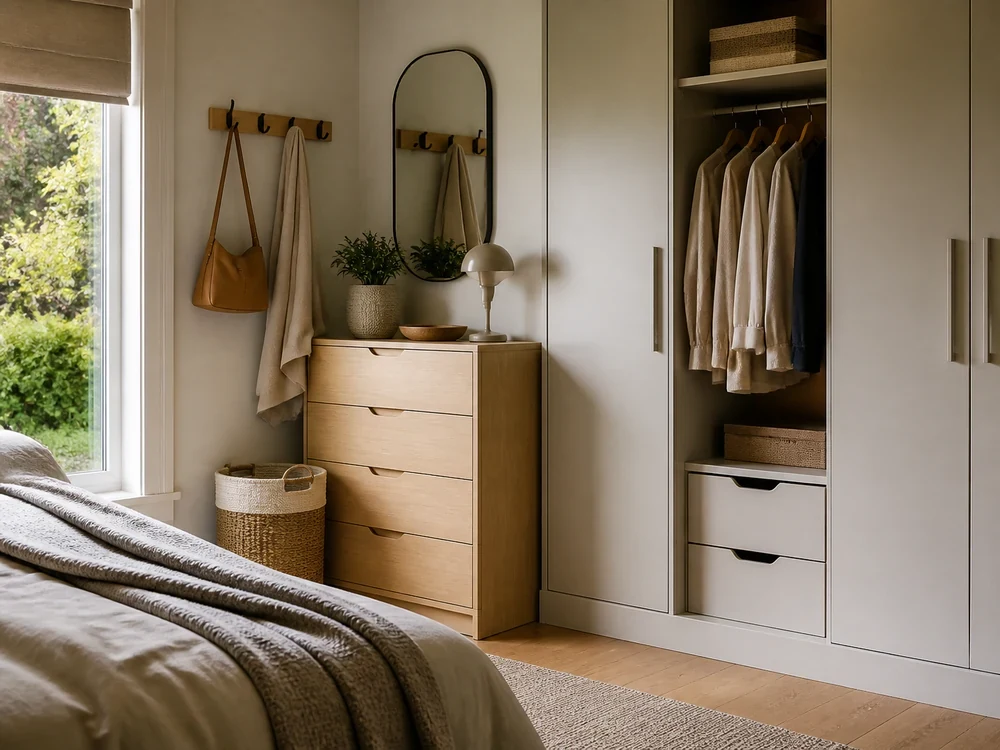
Tall furniture in a small bedroom should be secure before it is styled. Review hardware directions and CPSC Anchor It furniture safety guidance before loading bookcases, wardrobes, or high chests.
Place height where the wall already feels solid, not beside the narrowest path. The goal is storage that steadies the room rather than looming over it.
Let Lighting Replace Extra Tables
A wall lamp, clip light, or plug-in sconce can remove the need for a second table. This is one of the cleanest furniture ideas for a room with little floor.
Use warm efficient bulbs where light stays on for evening routines; Energy Saver lighting guidance is useful for comparing choices without turning the room harsh.
Give Laundry A Small Piece With Authority
Laundry needs furniture-level respect because it appears every day. A hamper shoved into leftover space will migrate into the walkway or onto the bed.
Use a narrow hamper where clothes actually drop. Add a hook for worn-once items so the chair does not become the third closet.
Use Shelves Above Work Zones
Shelves work best above a dresser, desk, or door-adjacent wall. Over the pillow, they can feel visually heavy and make sleep space less restful.
Keep shelf depth shallow and categories readable. A shelf with books and one box is useful; a shelf of mixed small items is delayed sorting.
Make The Mirror Earn The Wall
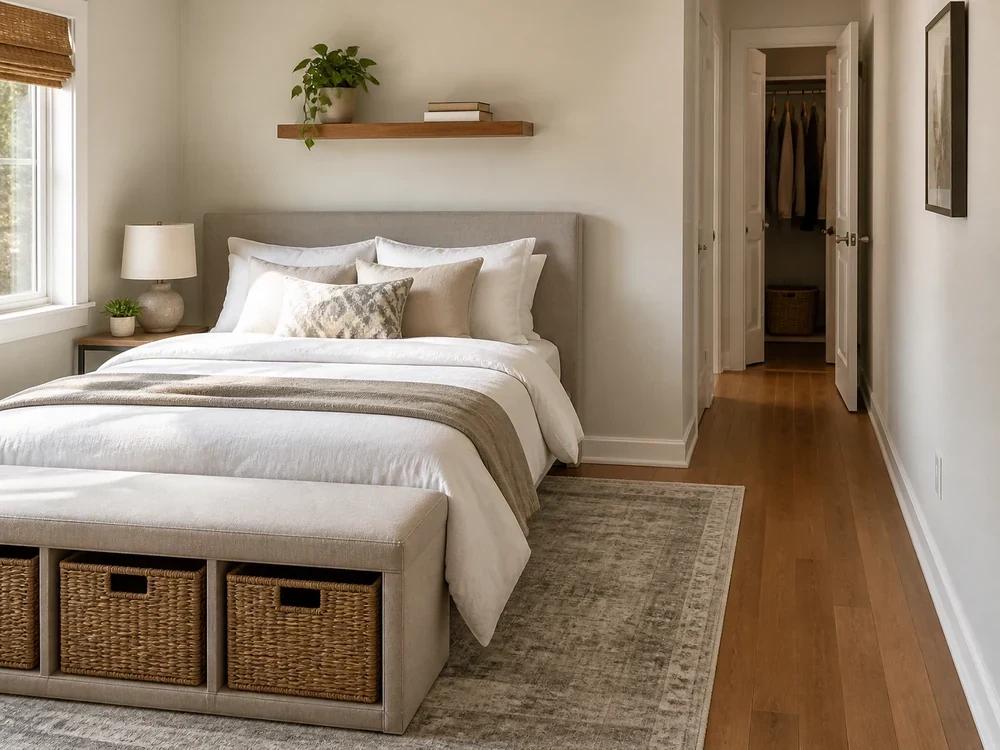
A mirror should support dressing or borrow light. If it reflects laundry, open closet chaos, or a crowded shelf, it doubles the wrong thing.
Place it near the dressing route and angle it toward daylight or a calm textile. Function comes first; visual expansion is only a bonus.
Use Furniture Legs Selectively
Raised legs can make a room feel lighter by letting the floor continue underneath. This helps in bedrooms where every solid block shortens the wall.
Use leggy pieces where cleaning and visual air matter. Keep solid storage where hidden capacity truly solves a closet shortage.
Create One Reset Surface
The dresser top or nightstand should show clutter early rather than hide it. A small tray can keep jewelry, glasses, and receipts from spreading.
Do not add more trays when the first one fills. Empty the category or move it to a drawer so the surface remains a daily signal.
Leave A Furniture Gap At The Window
Windows give small bedrooms borrowed depth. Tall furniture pressed against the glass makes the room feel sealed and dark.
Use lower pieces near the window when possible. Let curtains move easily and keep plants or baskets from stealing the daylight path.
Use A Bench Only If It Solves Dressing
A bench can help with shoes, folded blankets, or a morning outfit. It fails when it becomes a laundry shelf at the end of the bed.
If the bench is mostly decorative, replace it with hooks or a smaller stool. The room should not keep furniture that only stores indecision.
Test Two People Moving
Even a single room may need two-person movement when someone changes sheets, opens the closet, or carries laundry. Furniture that works in stillness can fail in motion.
Have one person open the dresser while another passes the bed. The collision will show which piece needs to shrink or move.
Keep The Final Edit Ruthless
A small bedroom often improves when one piece leaves. The best furniture plan may be a bed, a dresser, a light, and one real storage wall.
Remove the piece that needs the most explanation. If it does not serve sleep, dressing, laundry, or reset, it is probably borrowing space.
Pressure-Test The Bedside Wall
The wall beside the bed often looks like unused space until the room is tired, dark, and full of laundry. Test that wall with a phone charger, book, glasses, water, and the actual reach from the pillow.
If the hand has to search behind a lamp or knock into a drawer pull, the furniture is too fussy. Small bedrooms reward plain reach more than they reward matching furniture sets.
Choose A Dresser By Return Speed
A dresser works only if clean clothes return to it quickly. Deep drawers can hide volume, but they also invite piles when every shirt must be lifted to find another.
Before buying, choose the drawer category and imagine putting laundry away on a busy evening. If the category needs folding discipline the household does not keep, use fewer deeper categories or add dividers.
Treat Empty Floor As A Feature
A small bedroom can look unfinished when the floor is visible, but that open floor is what lets the room breathe. The best furniture ideas protect that emptiness deliberately.
Leave space where feet land, where drawers open, and where bedding gets shaken out. The room will feel more expensive when movement is easy and the furniture stops asking for excuses.
Use One Upgrade At A Time
Changing every furniture piece at once can create a prettier version of the same traffic problem. Replace the worst offender first and live with the room for a week.
A narrower nightstand, better hamper, or taller chest can reveal the next problem clearly. Slow upgrades prevent a small bedroom from becoming a showroom that still does not function.
Photograph The Room Before Shopping
A quick doorway photo shows bulk, shadows, and blocked paths better than memory. Use it to decide whether the room needs a smaller piece, a taller piece, or fewer pieces.
The photo is not for styling. It is a practical check against buying furniture for an imagined room instead of the bedroom that exists.
Keep Hardware Visually Quiet
Knobs, pulls, legs, and lamp bases can make a small bedroom feel busier than the furniture size suggests. Quiet hardware lets the useful shape do the work.
Match finishes loosely and avoid too many tiny contrasts. The room will feel calmer when the eye is not stopping at every handle.
Decision Guide
| Problem | Better Move | Watch Point |
|---|---|---|
| Drawer path is blocked | Use taller storage or move the dresser to a wider wall | Capacity is useless without pull clearance |
| Bedside feels crowded | Use one nightstand and one wall ledge | Symmetry is optional |
| Laundry lands on furniture | Add a hamper and worn-once hook | Clothes need three destinations |
| Room feels heavy | Move tall pieces away from narrow routes | Height needs breathing room |
Related Her Neat Nest Guides
- Small Bedroom Furniture
- Small Space Bedroom Furniture
- Storage Tips For Small Bedrooms
- Tiny Bedroom Design
Final Takeaway
Furniture ideas for small bedrooms works when every piece has a job, every category has a limit, and the room can recover without a long reset. Choose the moves that reduce friction first; the room will look better because it behaves better.
FAQ
What furniture works best in a small bedroom?
Choose a correctly scaled bed, one useful bedside surface, a dresser with full drawer clearance, and storage that does not block the closet or door.
Should I use matching bedroom furniture in a small room?
Only if matching pieces fit the real routes. Mixed pieces with similar finishes often work better because each side of the room can solve a different problem.
How do I make bedroom furniture look less crowded?
Use fewer open categories, protect visible floor, place tall pieces carefully, and keep the first doorway view calm.