
paper clutter organization for small apartments is easier when the system matches the way the space is actually used. In a small home, the best organizer is not always the biggest one. It is the one that makes the next normal weekday easier: grabbing breakfast, putting shoes away, finding a toy piece, or clearing a stack of mail before it spreads.
This guide focuses on practical, renter-friendly steps that can be tested before you buy more storage. Use it as a working plan, not a perfect-room checklist.
Paper Clutter Organization For Small Apartments: The Simple Rule
The simple rule for paper clutter organization for small apartments is to store by frequency first and appearance second. The item used every day should be easiest to reach. Backups, seasonal pieces, duplicates, and occasional tools can move one step farther away. This keeps the visible space useful instead of crowded.
Choose One Paper Landing Spot
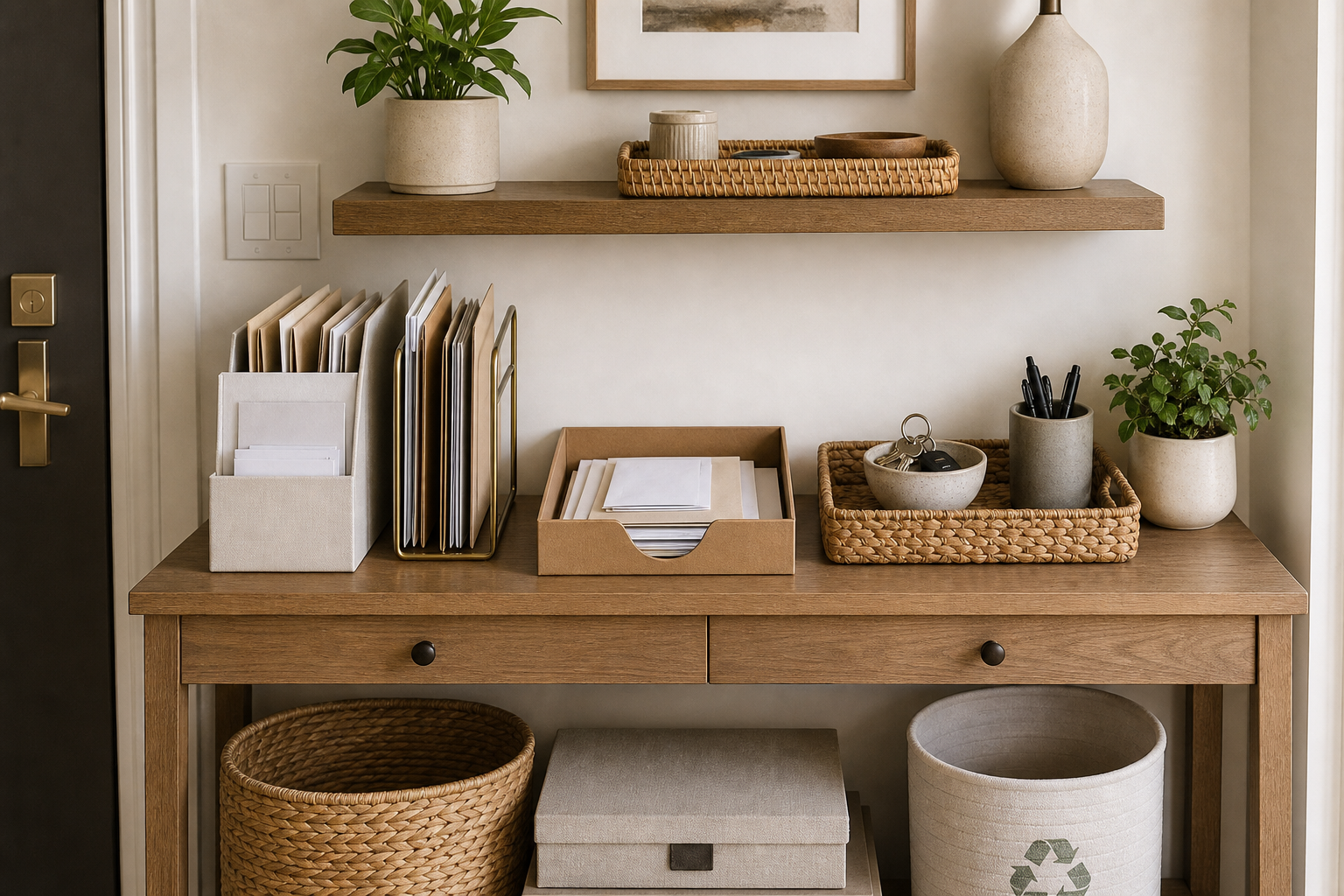
Paper spreads in a small apartment because every flat surface is close by. Choose one landing spot for mail, receipts, school papers, apartment notices, and forms. It can be a tray on an entry table, a slim basket on a shelf, or a vertical holder near the kitchen.
Paper clutter organization for small apartments starts by refusing to let paper land in five places. One landing spot makes the next step obvious.
Sort Paper Before It Sits Down
When paper enters the apartment, sort it into keep, act, scan, shred, recycle, or file. This takes less than a minute when the categories are visible. The goal is not to finish every task immediately. The goal is to keep junk mail from sitting beside important documents.
If you are tired when you walk in, use a temporary inbox. But the inbox must have a size limit. A small tray is better than a deep basket because it tells you when paper is getting out of control.
Create A Tiny Action Folder
An action folder holds paper that needs a next step: pay, call, sign, return, schedule, or discuss. Keep it in the easiest place to reach, not buried in a filing box.
This folder is the working part of the system. If it gets too full, the issue is not storage; it is that action paper is not getting a weekly appointment.
Keep Permanent Papers Somewhere Boring
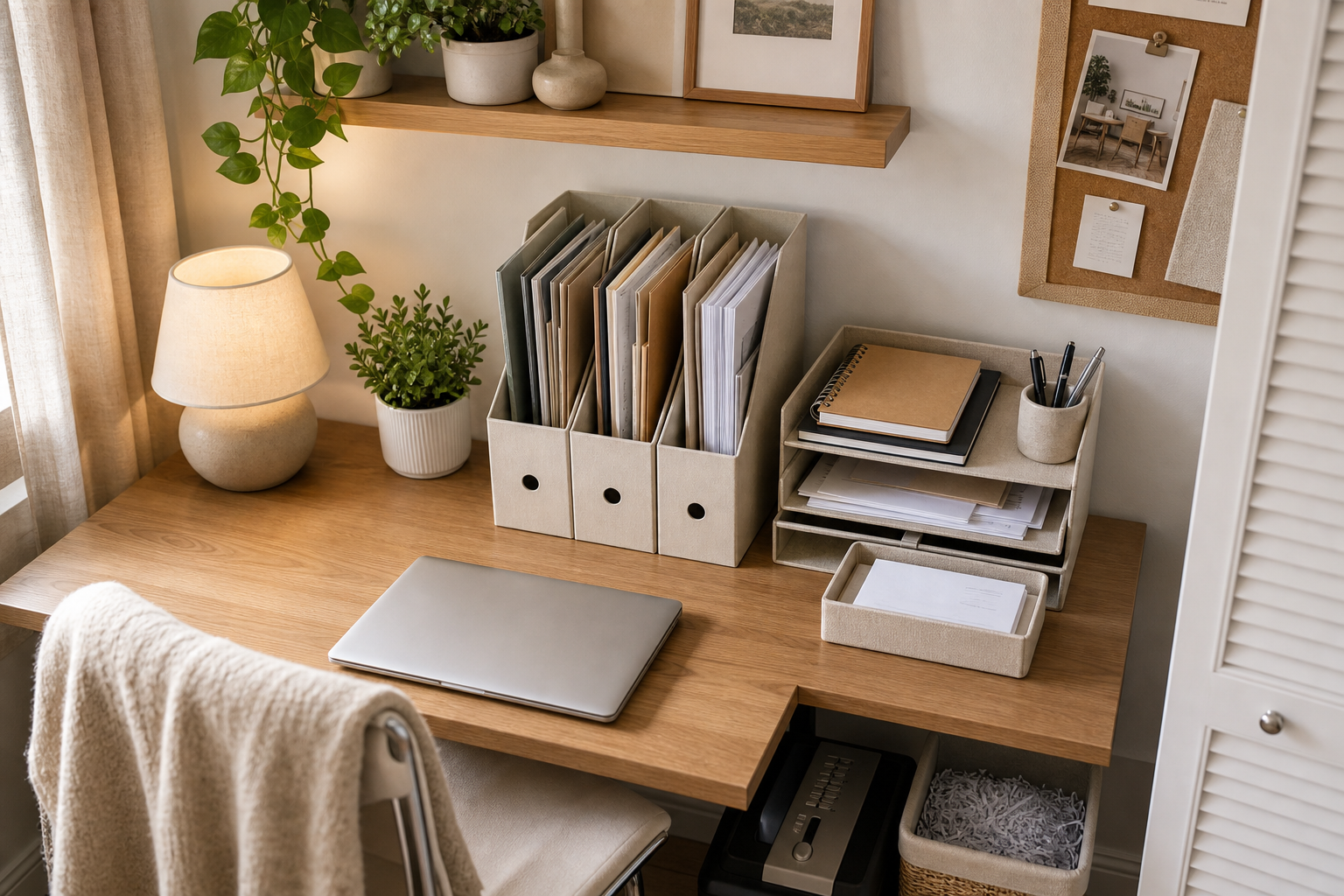
Permanent documents do not need prime counter space. Use a small file box, expanding folder, or document case for leases, insurance papers, tax records, medical documents, and warranties. Store it in a closet, under a bed, or on a high shelf.
The important part is separation. Permanent papers should not mix with pizza coupons, receipts, and mail you need to answer this week.
Use A Shred Rule For Sensitive Paper
Sensitive paper needs a clear exit path. The FTC offers consumer guidance on shredding documents, and the practical home rule is simple: do not let sensitive papers pile up because the shredder is across the room.
If you do not own a shredder, keep one labeled envelope or folder for shred-day paper and empty it regularly. Do not use an oversized box that can hide months of delayed decisions.
Make Receipts Prove They Deserve Space
Most receipts do not need to live forever. Keep short-term receipts in one small envelope or tray until returns, reimbursements, or warranty checks are handled. Then recycle or shred as appropriate.
A receipt system should be smaller than the problem. If receipts fill a drawer, the system is keeping too much.
Stop Using The Kitchen Counter As An Office
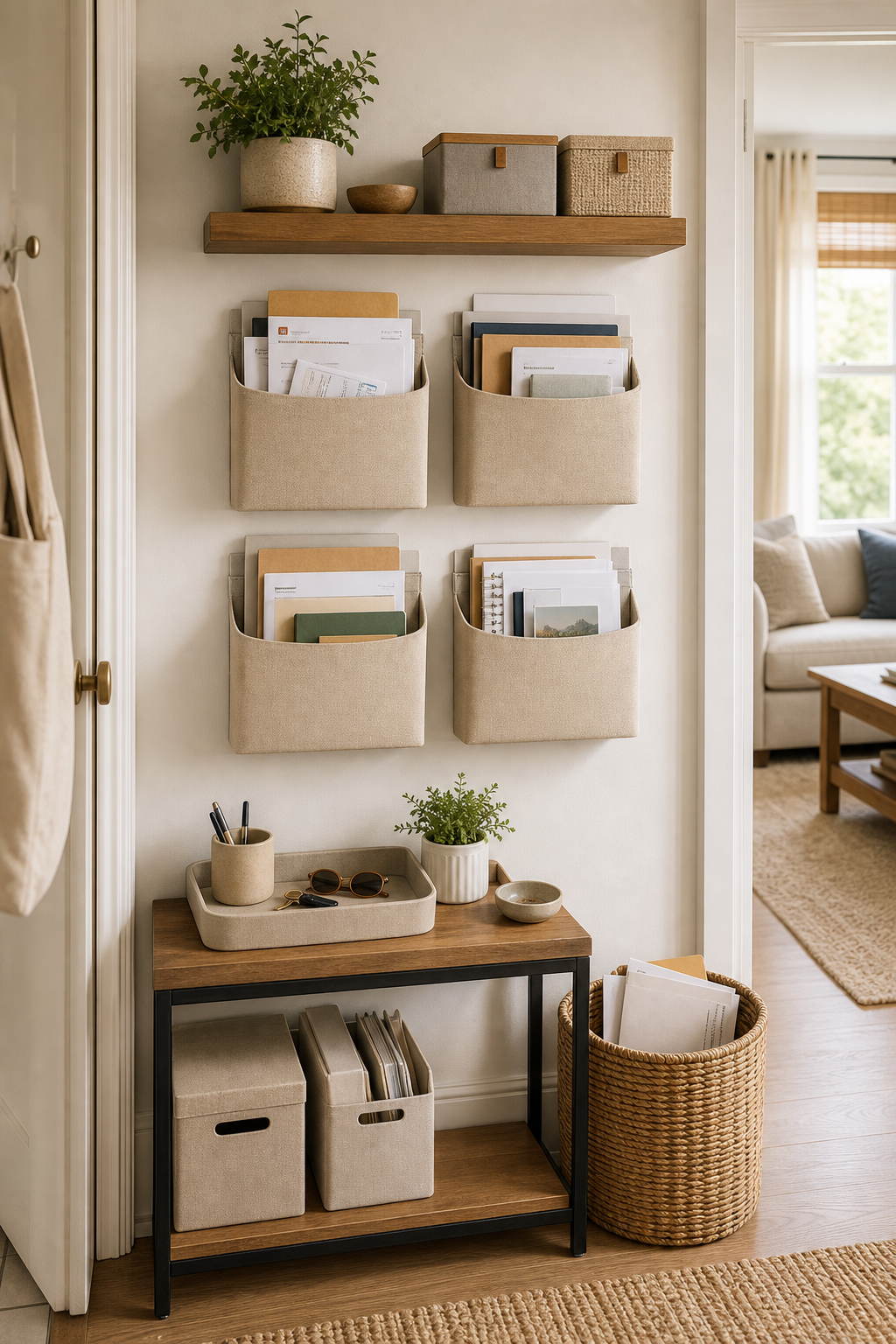
The kitchen counter is tempting because it is central, but paper on a counter competes with cooking and cleaning. If paperwork has to happen in the kitchen, use a portable folder that leaves when the task ends.
This protects the counter from becoming a permanent admin zone. Paper clutter organization for small apartments works better when every system can close or move.
Do A Weekly Ten-Minute Paper Reset
Once a week, empty the landing tray, handle the action folder, move permanent papers to long-term storage, and remove recycling. Put the reset on a day that already has admin energy, such as bill-pay day or grocery list day.
The weekly reset is what keeps a small paper system small. Without it, even the prettiest tray becomes a pile with edges.
Quick Buying Checklist
Before buying anything for paper clutter organization for small apartments, measure the exact space and watch the way the category behaves for two normal days. Notice what lands on the floor, what gets hidden, what is too annoying to put away, and what you reach for most often. Those observations are more useful than a product photo.
- Measure width, depth, height, door swing, and hand clearance before buying.
- Choose shallow containers for daily items and deeper bins only for overflow.
- Keep heavy items low and use freestanding storage when wall damage is a concern.
- Leave one empty margin so the system can accept groceries, laundry, mail, toys, or shoes during a normal week.
- Test the setup for seven days before buying a full matching set.
Three Layout Recipes To Try First
The daily-use recipe: Keep only the items used most often in the easiest zone. This makes paper clutter organization for small apartments feel lighter because the visible area has fewer decisions and fewer half-used categories.
The overflow recipe: Move duplicates, seasonal items, and backups to a labeled secondary home. The overflow spot should be easy enough to reach when needed but not so easy that it steals the best space.
The renter-safe recipe: Put weight on floors, shelves, cabinets, or freestanding furniture. Use removable hooks and adhesive pieces only for light repeat-use items, and follow product instructions carefully.
Common Mistakes To Avoid
The first mistake is buying storage before reducing duplicates. Extra containers cannot fix a category that is too large for the space. The second mistake is hiding daily items too well. If the item is annoying to return, it will migrate back to the counter, floor, sofa, or nearest flat surface.
The third mistake is skipping the reset path. Good paper clutter organization for small apartments should be easy to restore in a few minutes. If the system requires perfect folding, stacking, or sorting every night, it is probably too delicate for real life.
The Seven-Day Test
After the first setup, use the space for seven normal days before buying anything else. Watch which items stay in place, which ones drift out, and which container is too full to use comfortably. A week of ordinary use shows whether paper clutter organization for small apartments is solving the real problem or only making the area look finished for a short time.
At the end of the week, change only one thing: move a bin closer, reduce a category, add a small label, or remove a product that is blocking the daily path. Small corrections are easier to keep than a full rebuild. The goal is a system that still works when the home is busy, not one that depends on a perfect reset every morning.
When To Stop Organizing
Stop when the category is easy to find, easy to put away, and easy to reset. Matching containers can wait. Extra labels can wait. The practical finish line for paper clutter organization for small apartments is a space that no longer creates the same daily friction. If the floor, counter, shelf, or entry stays clear most of the week, the system is already doing its job.
Product Fit Before Product Buying
When a product looks useful, check the measurements against the real zone before adding it to a cart. For paper clutter organization for small apartments, the most important measurements are usually depth, clearance, handle space, and whether the item can be removed with one hand. A beautiful organizer that blocks the door, hides the back row, or makes cleaning harder will not stay useful.
It also helps to buy one test piece before buying a full set. Try one bin, one tray, one shelf riser, or one basket for a week. If it solves the problem without creating a new one, repeat it. If it does not, you have avoided turning a small-space problem into a matching-container problem.
Helpful Sources And Related Guides
Use common sense with food, paper, furniture, and child-related storage. Keep safety, moisture, weight, and access in mind as you choose products and routines.
- FTC guidance on shredding documents
- Entryway Organization Ideas Without A Closet
- Kitchen Counter Organization For Small Kitchens
- Small Spaces
FAQ
How do you organize paper clutter in a small apartment?
Use one paper landing spot, a tiny action folder, a permanent document file, and a weekly reset that clears the tray before it overflows.
Where should important papers go in a small apartment?
Keep permanent papers in a compact file box, expanding folder, or document case stored away from daily surfaces.
How do I stop mail from piling up?
Sort mail before it sits down, recycle junk immediately, and keep action mail in one visible folder with a weekly review time.
Final Takeaway
Paper clutter organization for small apartments works when the setup is honest about space, frequency, and reset habits. Start with the one category that creates the most friction, give it a clear home, and adjust after a week of normal use.