
Entryway organization ideas without a closet have to do two jobs at once: catch the things you drop when you walk in, and stay narrow enough that the front door still feels easy to use. A no-closet entry is not a failed mudroom. It is a small drop zone that needs sharper rules.
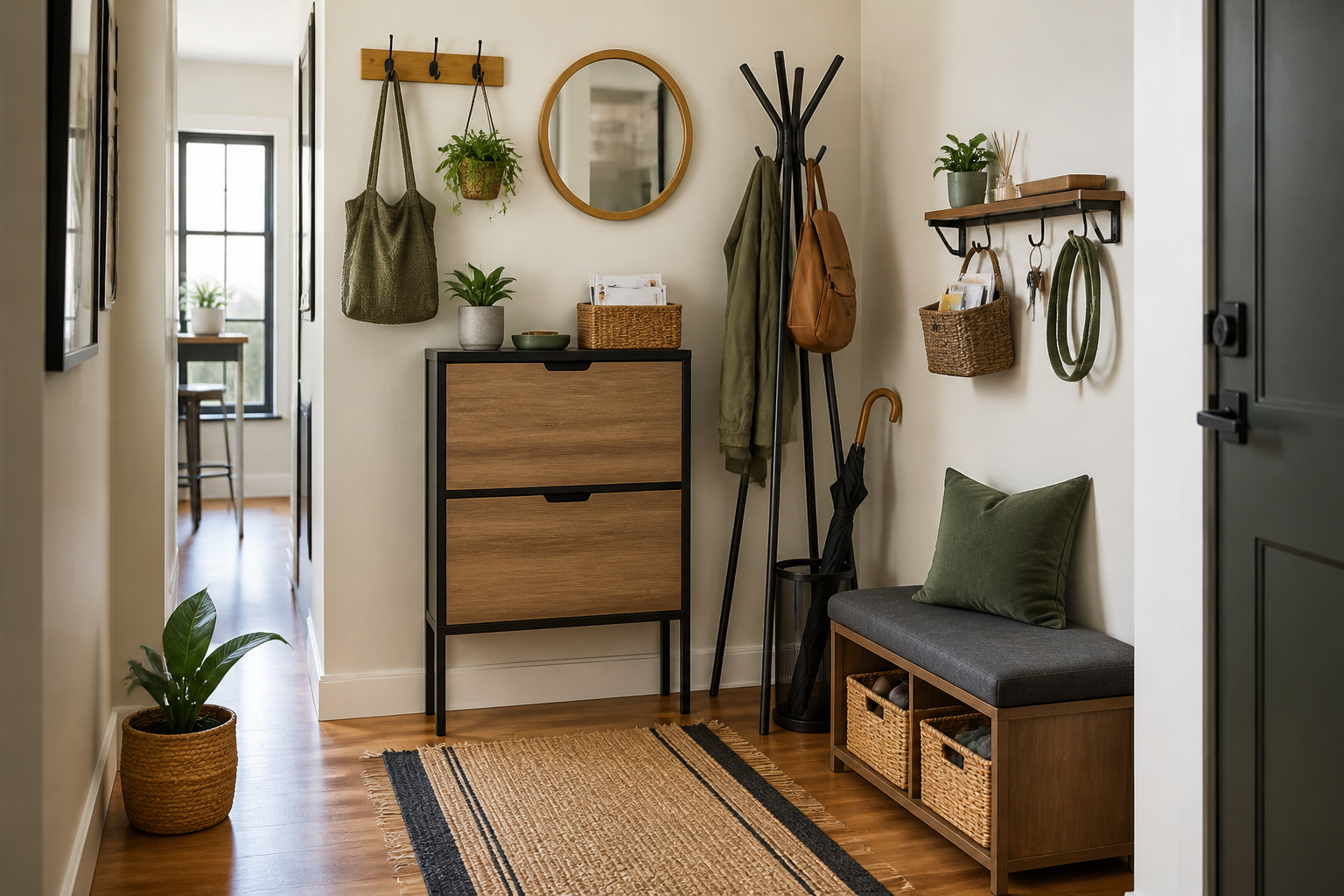
Table of Contents
Entryway Organization Ideas without a Closet: Quick Setup Rules
For entryway organization ideas without a closet, start with one working zone before buying a full set of organizers. Put daily items in the easiest reach, move backups one step away, and leave enough empty space to return items quickly. This keeps the setup useful after the first week, which is the real test of any small-space storage idea.
The practical test for entryway organization ideas without a closet is simple: the room should be easier to use on a rushed weekday, not just prettier for a photo. Keep the system visible, light, and easy to reset.
Name The Four Things Your Entry Must Catch
Most entryways need to catch shoes, outerwear, bags, and small items such as keys or mail. If you also have a dog leash, stroller, umbrella, work badge, or reusable shopping bags, name those too. The system should be designed around real objects, not a picture of a perfect hallway.
When everything is named, shopping becomes easier. You are not looking for entryway furniture. You are looking for a home for shoes, coats, bags, and keys.
Choose One Shoe Solution, Not Three
Shoes are usually the first mess people notice. In a narrow entry, choose one main shoe solution: a slim cabinet, a two-tier rack, or baskets under a bench. Do not combine several bulky shoe systems unless the entry is wide enough for them to breathe.
A closed shoe cabinet looks calmer, but an open rack is easier for kids and daily shoes. Pick the option your household will actually use.
Use Freestanding Coat Storage When Walls Are Off Limits
If drilling is not an option, a freestanding coat rack can work better than overloaded adhesive hooks. Look for a base that feels stable when coats are unevenly placed. Keep heavy winter coats balanced and avoid hanging full backpacks on one side.
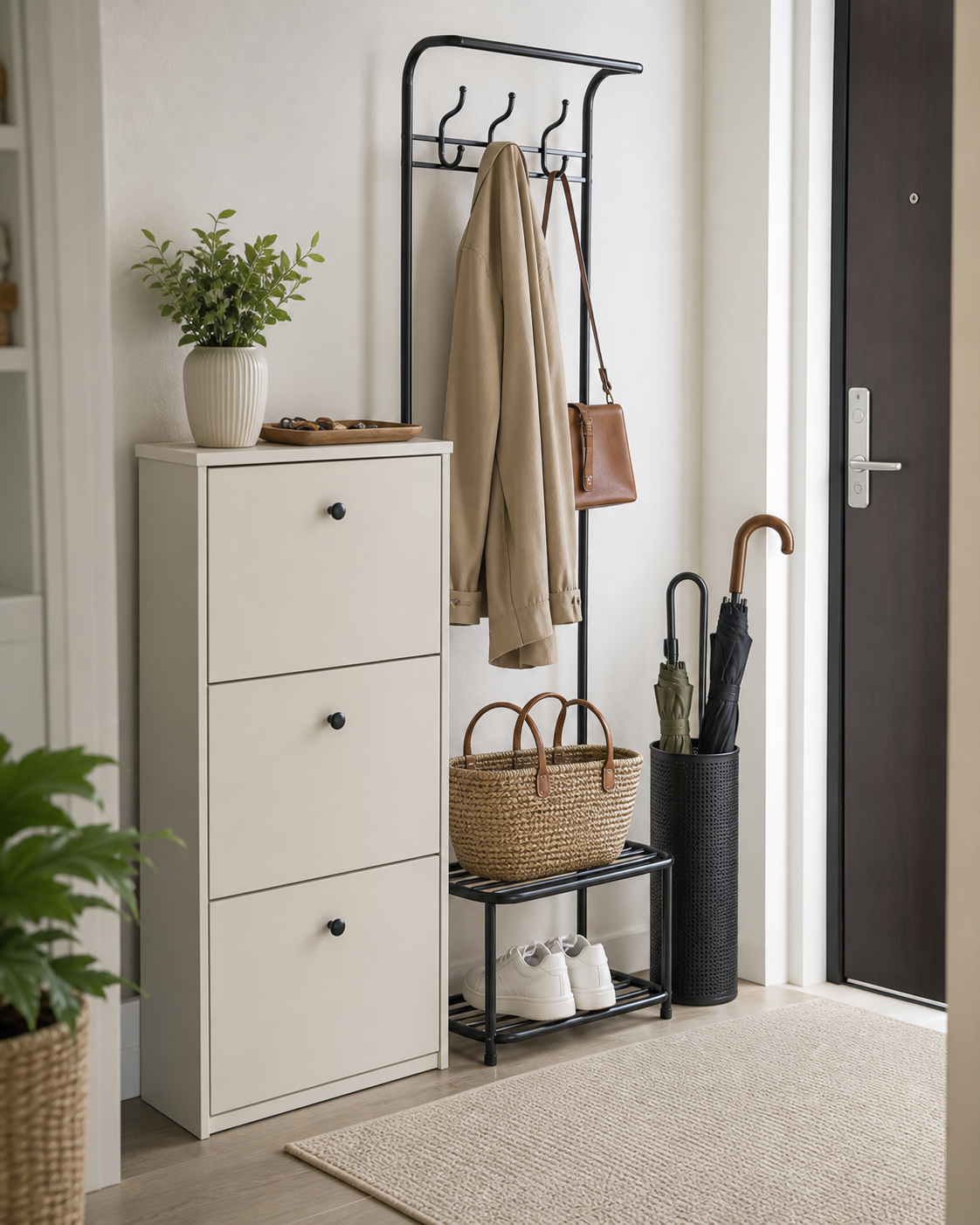
If you do use removable hooks, give them light jobs: keys, a small tote, a cap, or a leash. Heavy coats and bags belong on furniture that stands on the floor.
Create A Small Landing Spot For Keys And Mail
A key tray prevents the entry from becoming a search zone. Use one small tray, bowl, or wall-safe organizer near the door. Add a separate mail rule: sort mail before it sits down, or give it a vertical holder that holds only a few days of paper.
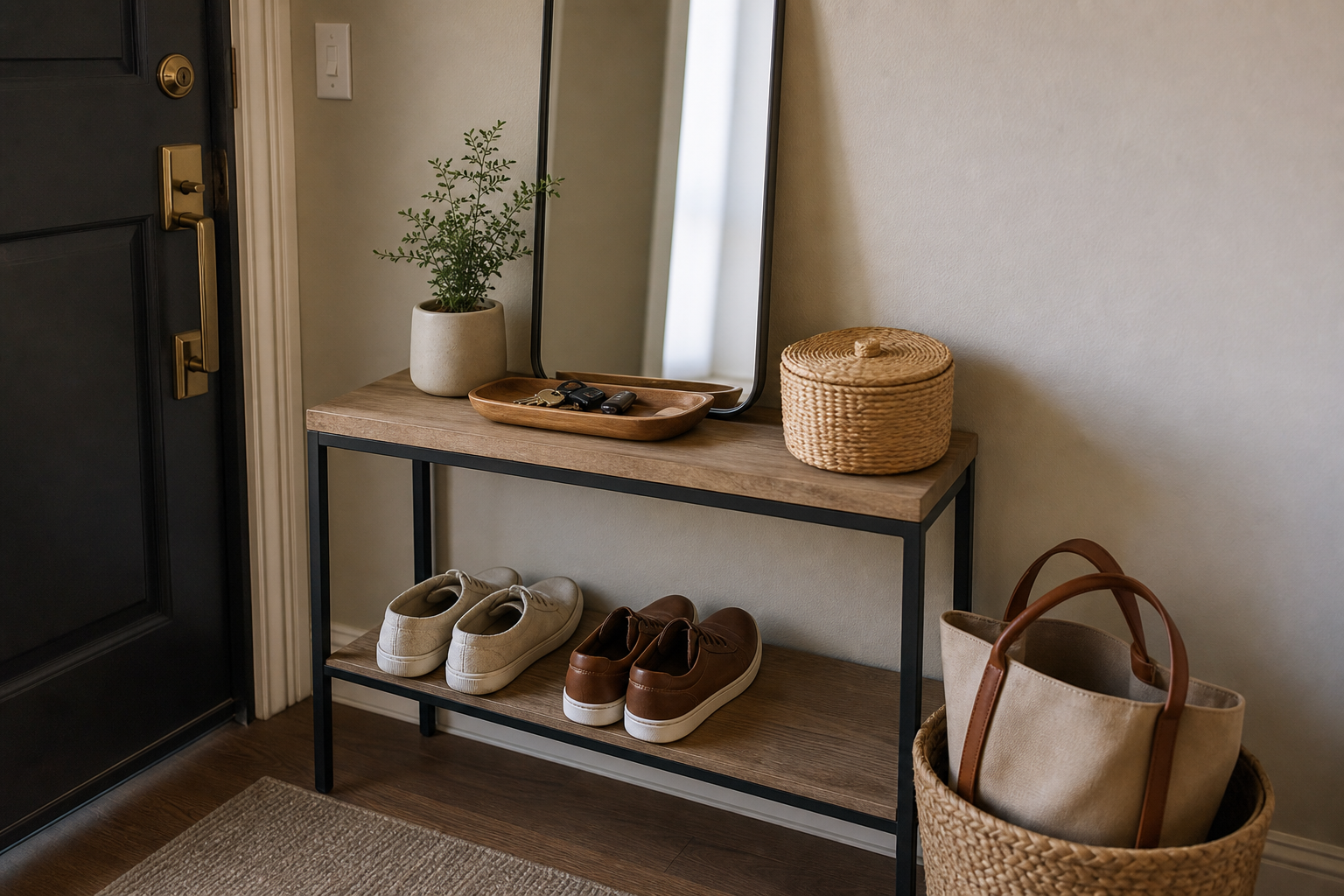
The smaller the tray, the better. A large basket for small items quickly becomes a junk drawer without a drawer.
Make Bags Easier To Leave Than The Floor
Bags land on the floor when the official storage is too far away or too fussy. A simple hook, bench, or basket should be closer than the nearest chair. If you carry a work bag daily, it deserves one repeatable spot. If you keep reusable bags near the door, fold them into one bin instead of letting them spread.
Households with several people usually need bag zones assigned by person. Labels are optional; consistent placement is not.
Add A Weather Layer
Umbrellas, wet shoes, hats, and gloves need a plan before bad weather arrives. Use a boot tray if the floor is vulnerable. Keep a small basket for gloves or hats only during the season they are used. Off-season accessories should leave the entry.
This is where entryway organization ideas without a closet often beat a crowded closet. The best no-closet system shows you what needs drying, cleaning, or returning.
Keep The Visual Line Quiet
A no-closet entry is visible, so visual clutter matters. Use two or three repeated materials: one wood tone, one metal finish, one basket style. Matching every piece is not required, but repeated materials make practical storage feel intentional.
Do not overdecorate the drop zone before the function works. A mirror or small art piece is fine. Five decorative objects on top of a shoe cabinet usually become obstacles.
The Nightly Thirty-Second Reset
Every evening, reset shoes into the cabinet or rack, empty the key tray of paper, hang bags, and move anything that belongs in another room. The reset should take less than a minute. If it takes longer, the system has too many categories or not enough room.
A good entryway system is not the one that never gets messy. It is the one that can be restored quickly.
Quick Buying Checklist
Before buying anything for entryway organization ideas without a closet, sketch the actual path through the room. Mark the door swing, the drawer or cabinet clearance you do have, the spot where you stand most often, and the nearest outlet or water source if it matters. This quick map keeps you from buying a storage piece that technically fits but blocks the movement that happens every day.
- Measure the exact width, depth, and height before buying anything for entryway organization ideas without a closet.
- Choose freestanding or cabinet-supported storage for heavy items.
- Use removable hooks, magnets, or tension pieces only for lightweight jobs.
- Keep one empty margin so daily reset does not feel like a puzzle.
- Save packaging and removal directions for renter-friendly products.
Three Layout Recipes To Try First
The daily-use recipe: Put the five to ten items you touch every day in the easiest zone, then move everything else one step farther away. This recipe is best when the space feels cluttered even after you tidy it. It makes entryway organization ideas without a closet feel calmer because the most visible area has fewer decisions.
The overflow recipe: Keep the main space light and create one labeled overflow bin outside the prime zone. Use this when backups, seasonal items, or duplicates are the real problem. The overflow bin should be easy enough to reach when you need a refill but inconvenient enough that it does not become daily clutter.
The renter-safe recipe: Put weight on the floor, inside cabinets, or on freestanding furniture, then use removable products only for light repeat-use items. This is the safest version of entryway organization ideas without a closet when you cannot drill, patch, repaint, or risk a failed adhesive strip.
What Not To Buy Yet
Skip any organizer that requires a perfect version of your habits. If it needs every item folded the same way, lined up by height, or returned with two hands, it may not survive a normal week. Also skip oversized sets before measuring. A matching set of bins can waste space if the shelf, cabinet, closet, or entryway has awkward dimensions.
Be careful with products that promise instant extra space but hide the problem. Deep baskets, tall stacks, and closed boxes can make entryway organization ideas without a closet look better for one day while making daily retrieval harder. If you cannot see the category or pull it out easily, it is probably storage for overflow, not storage for daily use.
How To Keep The System Working
Give the setup a seven-day test before calling it finished. During that week, notice what lands on the floor, what gets left on the counter, what never makes it back into a bin, and what you still cannot find. Those friction points are more useful than a shopping list. Adjust the system around the behavior that actually happens.
Once the layout works, schedule a short reset at the same time every week. Bring duplicates forward, remove trash or empty packaging, return items to their zones, and decide whether any category has outgrown its container. The best version of entryway organization ideas without a closet is not a one-time makeover. It is a small system that is easy to restore before clutter spreads.
If the reset still feels hard, reduce the visible inventory before adding another organizer.
Helpful Sources And Related Guides
Safety and home-health decisions need a practical check: keep heavy furniture stable, avoid moisture traps, and do not overload removable products.
FAQ
How do you organize an entryway with no coat closet?
Use a slim shoe solution, freestanding coat rack, small key tray, bag zone, and seasonal basket. Keep heavy items on floor-supported furniture.
What should be stored at the front door?
Only daily items: active shoes, one coat or jacket per person, keys, bags, umbrellas, and current-season accessories.
Are adhesive hooks enough for a no-closet entryway?
They are enough for light items, but heavy coats and backpacks are safer on freestanding racks, benches, or cabinets.
Final Takeaway
Entryway organization ideas without a closet works when the system is honest about space, weight, and daily habits. Start with the items you touch most, give each category one clear home, and keep backup storage from taking over the easiest spots.