
Organizer Rack Kitchen Ideas For Counters And Cabinets
An organizer rack kitchen plan should not begin with the rack. It should begin with the work that keeps failing: cooking oil crowding the prep zone, sheet pans sliding sideways, spices hiding behind mugs, or pantry jars spreading into the walkway.
A rack is useful when it gives one category a reliable address. It becomes clutter when it turns a counter, cabinet, or narrow gap into a second junk drawer with shelves.
Use racks as small pieces of kitchen architecture. Decide which job each rack performs, then protect the counter, cabinet door, and walking lane around it.
Organizer Rack Kitchen Planning Starts With The Failed Zone
Organizer rack kitchen planning works best when it starts with the mess that repeats. If oils drift beside the stove every night, a counter rack may help. If cutting boards crash in a cabinet, an upright rack belongs inside the base cabinet.
Do not buy a rack for a vague promise of order. Name the failing zone first, then choose a rack that changes that exact behavior.
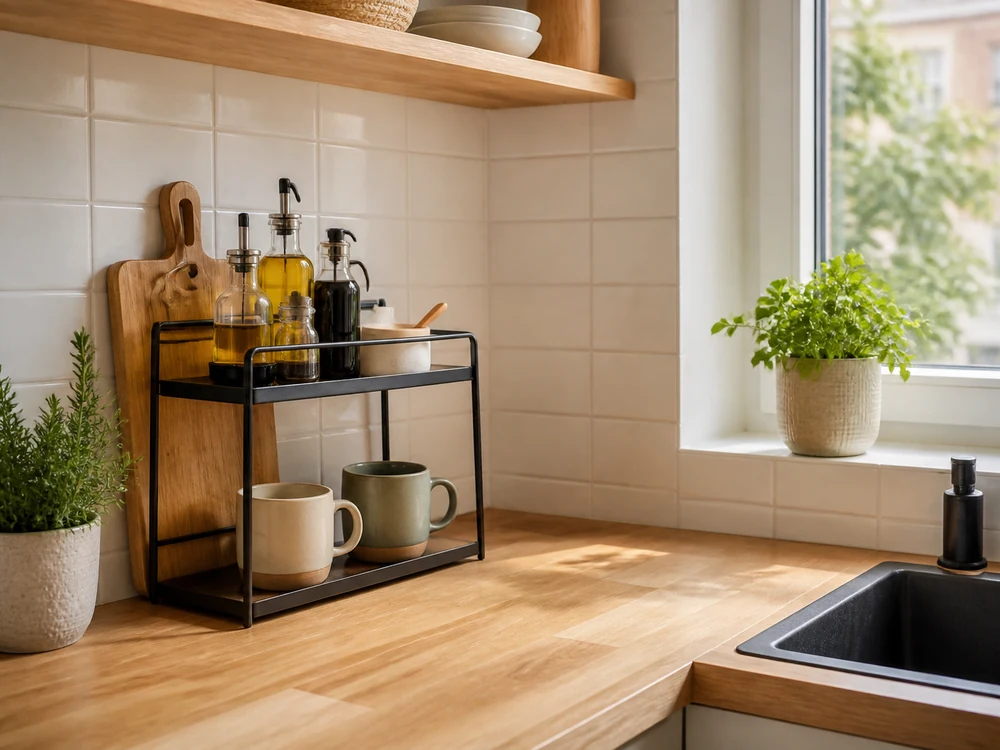
Protect The Prep Rectangle
The most valuable counter space is the rectangle where chopping, mixing, and plating happen. A rack that steals that rectangle will frustrate cooking even if it looks tidy.
Place counter racks at the back corner, side edge, or appliance zone. The front working edge should stay open enough for a cutting board, bowl, and the movement of both hands.
Use Counter Racks For Daily Tools Only
A counter rack should hold items used often enough to justify being visible. Cooking oil, salt, pepper, mugs, or a small tea station can make sense. Seasonal gadgets and duplicate jars usually do not.
Visibility is a cost in a small kitchen. If the rack becomes a display for everything you might use, it will make the whole counter feel louder.
Turn Pans And Boards Upright
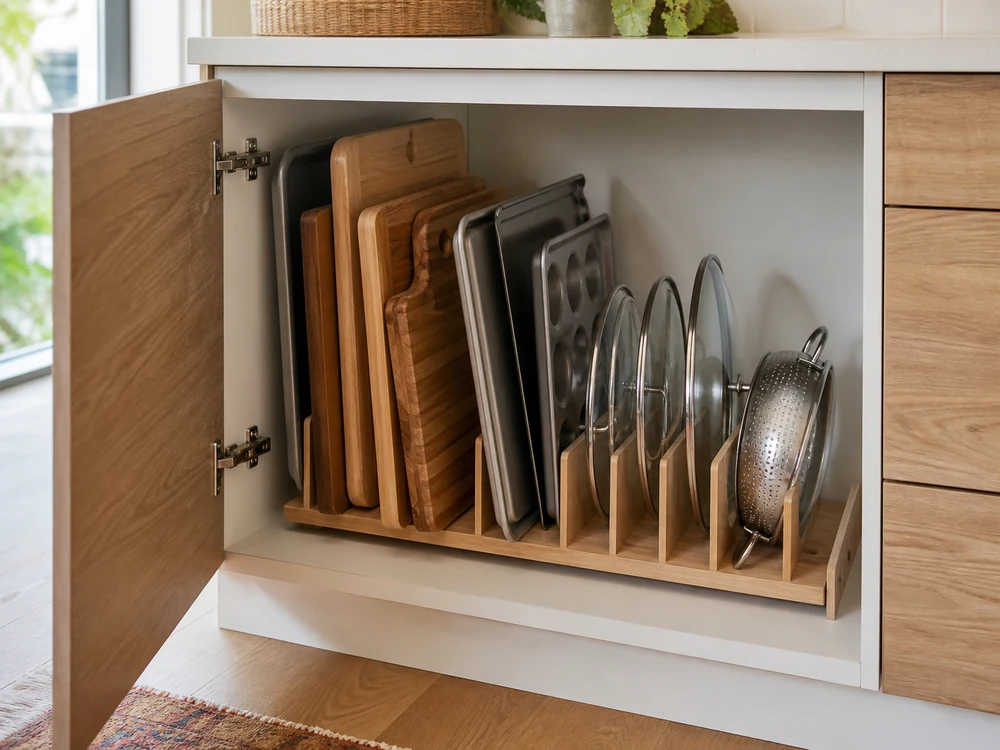
Inside cabinets, vertical racks often beat stacking. Cutting boards, sheet pans, lids, and trays are easier to pull when they stand upright with dividers keeping them from collapsing.
The key is spacing. Too many slots create friction because every item scrapes its neighbor. Fewer, wider lanes usually feel more useful than a rack filled to the last centimeter.
Check Door Swing Before Adding A Side Rack
Slim rolling racks and side-wall units are tempting in narrow kitchens, but door swing decides whether they belong. Check the refrigerator door, oven door, dishwasher drop, and any nearby pantry door.
A kitchen walkway should stay predictable. The logic behind ADA accessible route guidance is helpful even in private homes: routes work better when clear width is protected rather than borrowed for storage.
Let Heavy Items Stay Low
Racks make objects look lighter than they are. Cast iron, stacks of plates, glass jars, and heavy appliances should stay low and stable, especially in kitchens where people move quickly.
Use upper racks for lighter tools or visible routines. If removing an item requires two hands and careful balance, it belongs lower or behind a more secure door.
Separate Cooking From Beverage Storage
A kitchen rack loses clarity when coffee filters, oils, mugs, vitamins, and onions share one shelf. Split routines so each rack has a readable job.
A beverage rack can live near the kettle or coffee maker. Cooking oils should sit near the stove but outside direct heat. Pantry jars need labels or clear containers so the rack does not become a guessing game.
Use Cabinet Racks To Reduce Stacking Pressure
Cabinet racks are most valuable when they remove stacks that cause daily avalanches. Pan lids, bakeware, food container lids, and cutting boards are classic candidates because they are thin but slippery.
Do not over-rack every cabinet. Some deep shelves work better with bins, lazy Susans, or pull-outs. Let the shape of the category decide the tool.
Keep Rack Feet Away From Wet Edges
Counter racks near the sink need attention because water sits under feet and creates grime. If a rack supports mugs or soap, choose one that lifts easily and does not trap puddles under a solid base.
A rack should make cleaning faster, not create four damp corners that need a toothbrush. Check the counter after one week and move the rack if water collects.
Create A Rack Exit Rule
Every rack needs an exit rule. When a new bottle, jar, pan, or mug enters, an older item leaves the rack or moves to backstock. Without that rule, the rack simply raises the clutter line.
Small kitchens reward limits. A two-tier rack can look orderly with six useful items and chaotic with twelve almost useful ones.
Use Transparent Height For Pantry Gaps
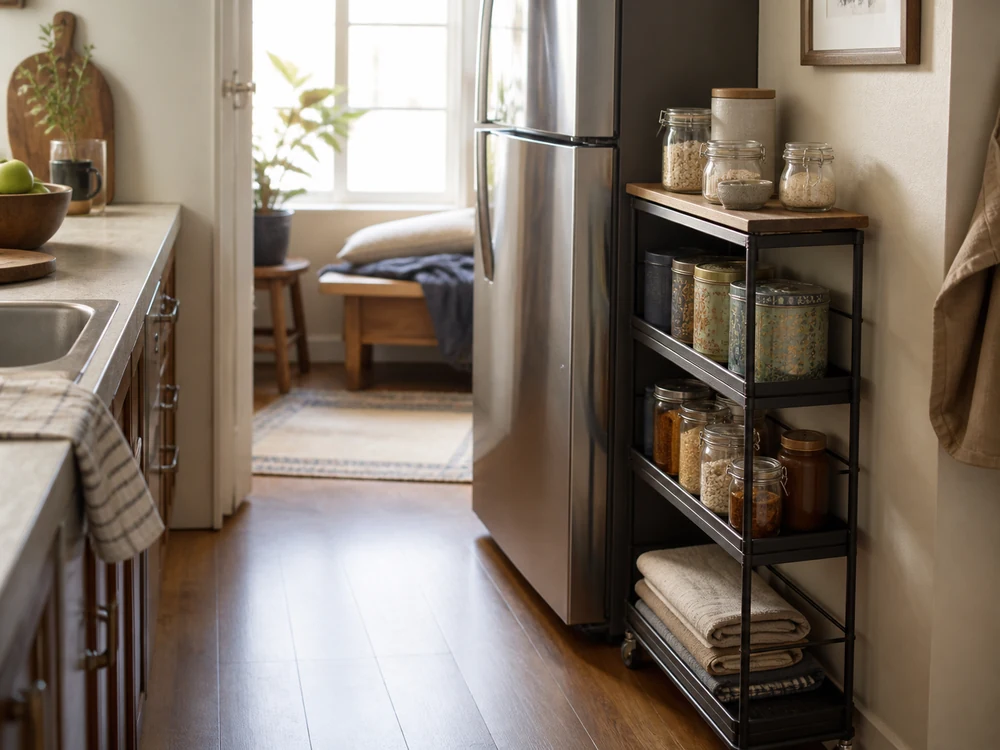
A narrow rack beside a refrigerator can be smart when it holds slim pantry goods, but it should not block light or make the walkway feel like storage squeezed into a hallway.
Keep the top tier light and the lower tiers more stable. Jars, cans, and bottles should not sit so high that pulling the rack feels risky.
Match Rack Material To The Mess
Wood looks warm but may stain near oil. Powder-coated metal wipes well but can chip if heavy pans hit it. Bamboo is friendly for dry goods but needs care near constant water.
Choose material by the mess the rack will meet, not by the photo that sold it. A rack beside the stove needs different patience than one inside a dry pantry cabinet.
Make Labels Useful, Not Decorative
Labels help when multiple people use the kitchen or when jars look alike. They are unnecessary when the category is obvious and the rack is small.
Use plain labels for pantry racks and skip them for daily counter items. The goal is faster decisions, not a display that needs maintenance.
Audit The Rack During Dish Reset
The best time to judge a kitchen rack is during dish reset, not after organizing. Watch whether items return naturally, whether a pan catches, and whether the counter still has enough working room.
If the rack needs constant rearranging, it is serving the container rather than the kitchen. Remove a category, widen the spacing, or move the rack to the zone where the behavior actually starts.
Let The Rack Follow Heat Zones
A rack beside the stove should handle heat-adjacent routines without sitting where oil splatter lands every night. Salt, oil, and a pepper mill can stay close, while plastic tools and paper towels need more distance.
Heat zones also change how materials age. Metal usually tolerates stove-side life better than unfinished wood, while dry pantry racks can be warmer and more decorative without becoming sticky.
Use A Tray Under Small Counter Racks
A tray under a small counter rack creates a cleaning shortcut. Instead of lifting every bottle one by one, you move the whole group, wipe the counter, and return the set in seconds.
Choose a tray with a low lip so it does not steal hand space. The goal is to define the rack zone lightly, not to build another container wall on the counter.
Make Shared Kitchens Self-Explaining
In a shared household, the best rack is the one another person can reset without asking. Keep similar items together, avoid hidden layers, and give the most-used objects the easiest pull.
A rack that only one person understands will fail whenever someone else unloads groceries or dishes. Small kitchens need storage that communicates through placement, not through a private mental map.
Decision Guide
| Problem | Better Move | Watch Point |
|---|---|---|
| Counter feels crowded | Move the rack to a back corner or side edge | Protect prep space first |
| Pans slide around | Use wider vertical dividers | Avoid overfilled slots |
| Walkway narrows | Check appliance and door swings | Slim racks still need clearance |
| Rack gets dirty | Choose wipeable material and liftable feet | Watch wet edges |
Related Her Neat Nest Guides
Final Takeaway
An organizer rack kitchen setup works when each rack has one job and the surrounding space remains usable. Protect prep space, store heavy items low, and audit the rack by how easily the kitchen resets after cooking.
FAQ
Where should I put an organizer rack in a kitchen?
Put it where the repeated mess begins: back counter corners for daily oils or mugs, base cabinets for pans and boards, and pantry gaps only when walkways stay clear.
Are counter racks good for small kitchens?
They can help if they hold daily items and leave the prep rectangle open. They hurt when they turn the counter into open backstock.
What should go in a cabinet rack?
Cutting boards, sheet pans, lids, trays, and food container lids are strong choices because they are easier to use upright than stacked.