
Very Small Living Room Ideas For Real Daily Flow
Very small living room ideas must respect the fact that the room is usually a path, lounge, media space, guest area, and landing zone at the same time. A pretty layout that blocks one of those jobs will not last.
The strongest compact rooms use scale, light, and storage discipline before adding decor. They do not ask a tiny room to hold a full-size sofa, oversized coffee table, and every display object at once.
A very small living room can feel generous when there is a clear route, a real seat, a surface that clears fast, and closed storage for the mixed items no one wants to see.
Very Small Living Room Ideas Start With The Main Route
Very small living room ideas should begin with the route people use most. That may be from the entry to the sofa, from the kitchen to the window, or from the hallway to the balcony.
Protect that route before choosing a rug or table. A room feels bigger when movement is obvious and smaller when every step asks for negotiation.
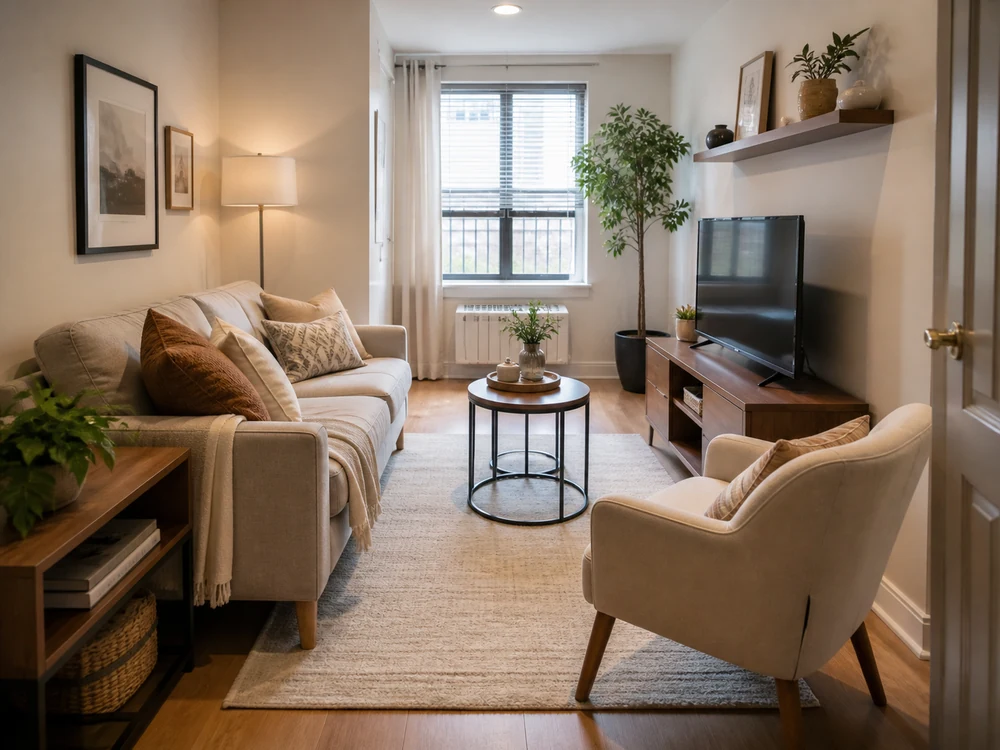
Choose Seating By Arm Width
In a tiny room, sofa arms can waste more usable space than people expect. Slim arms, raised legs, or a compact loveseat may give the same comfort with less bulk.
Do not judge seating only by seat count. A smaller sofa that leaves air around it often feels more comfortable than a larger one that traps the room.
Let One Chair Be Movable
A movable chair, pouf, or stool can give flexibility without permanently crowding the room. It can face the sofa for guests and move aside when the route needs to open.
Choose a piece light enough to shift easily. Flexible furniture only works when moving it is not a project.
Use A Coffee Table That Clears Fast
The coffee table in a very small living room should clear in one motion. A tray, lower shelf, or nesting table can help when it does not become a permanent holding zone.
Round and oval shapes are useful where knees, doors, and walking routes are close. Hard corners feel larger when the room is narrow.
Keep Media Storage Low And Calm
A low media console can ground the television without making the wall feel heavy. Closed drawers or baskets help hide remotes, cords, games, and small electronics.
Avoid building the whole room around the screen. A very small room needs the media wall to support relaxing, not dominate every sightline.
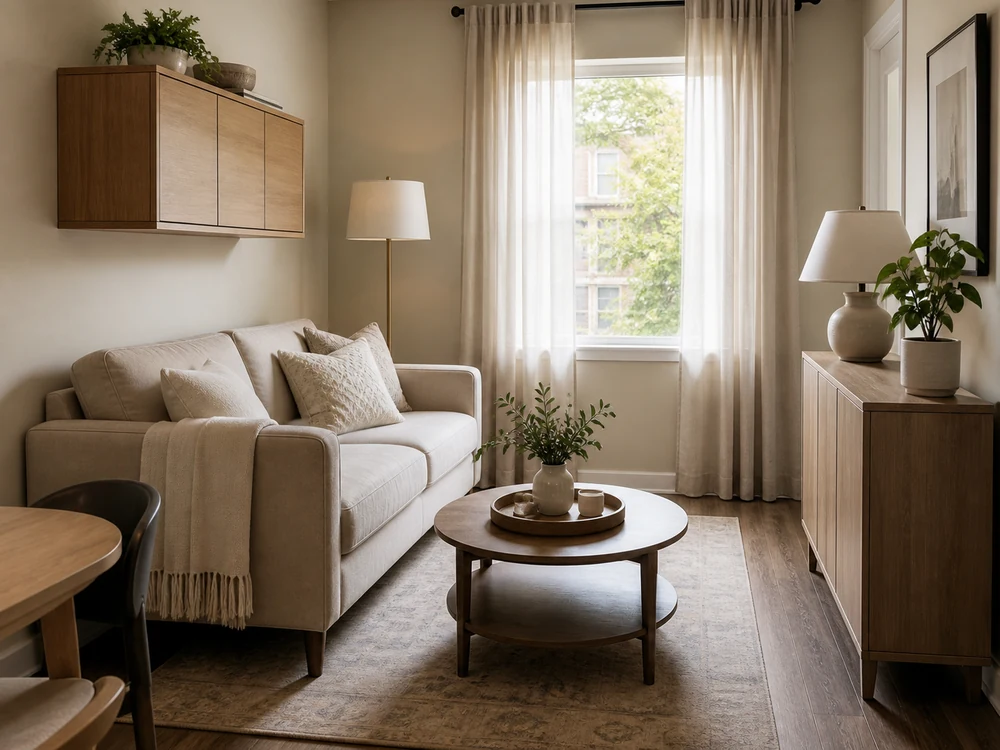
Use Wall Shelves As Punctuation
A wall shelf can add personality without using floor space, but it should behave like punctuation, not a second storage unit. A few objects are enough.
Leave space around the shelf so it looks intentional. Packed shelves make a tiny room feel like it is carrying too much overhead.
Let Lighting Create Zones
Lighting can separate a reading corner, media wall, and conversation area without moving walls. A floor lamp or sconce can make the room feel layered even with little furniture.
Choose warm efficient bulbs so the room can stay inviting in the evening. The Energy Saver lighting guidance is a useful reference for selecting light that saves energy without feeling harsh.
Choose Rugs By Path Edges
A rug should support the seating area and still leave the walking lane readable. If the rug edge catches feet or disappears under every piece, the floor plan loses clarity.
In narrow rooms, a slightly smaller rug with visible floor around it can feel more open than a rug forced under all furniture.
Move Storage Behind Doors
Very small living rooms often hold mixed categories: chargers, blankets, papers, toys, pet items, and games. Open shelves rarely make those categories look calm together.
Use closed cabinets, lidded baskets, or drawers for mixed storage. Let open surfaces hold only the objects that improve the room’s mood.
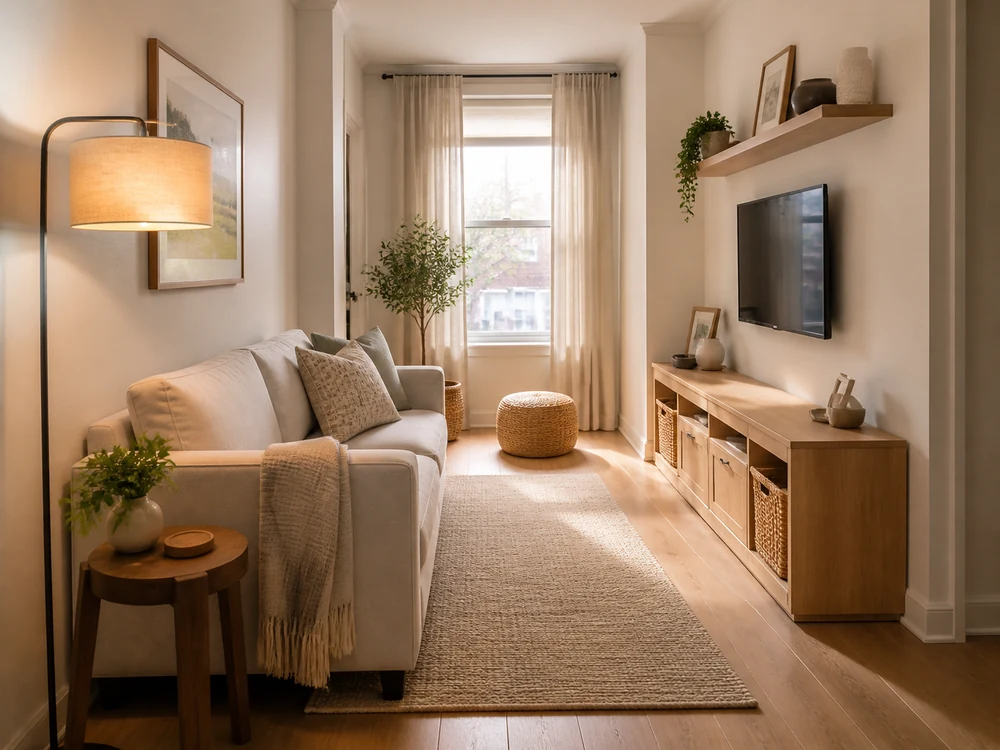
Keep The Window Wall Light
The window is the room’s borrowed depth. Heavy furniture, tall plants, or stacked objects near it can make the room feel sealed.
Use light curtains, low pieces, and enough open glass. Daylight is one of the few small-room tools that costs no floor space.
Use Side Tables Instead Of Extra Surfaces
A small side table near the seat can be more useful than a large central table. It gives a lamp, drink, or book a place without blocking the middle.
If every seat needs a surface, use narrow pieces, nesting tables, or wall-mounted ledges. Keep the center open where possible.
Give Throws And Pillows A Limit
Soft textiles make a very small living room feel warm, but they can crowd the seat quickly. Limit pillows by how many can stay while someone sits comfortably.
Throws need a basket, drawer, or sofa arm routine. If they live on the floor, they are not decor; they are unfinished storage.
Make The Entry Edge Behave
If the living room starts at the front door, the entry edge needs a small boundary. Shoes, bags, and mail should not drift into the seating area.
Use one hook, tray, or closed cabinet near the door. The living room feels calmer when arrival clutter has a first stop.
Style With Larger Calm Objects
Many tiny decorative objects make a tiny room feel busy. Fewer larger objects can give the eye a place to rest without increasing clutter.
Use one framed piece, one plant, one vessel, or one stack of books. Let the object be readable from across the room.
Reset The Room From The Seat
The evening reset should be possible from the seating area: remotes away, table cleared, blanket returned, and dishes removed. If storage is too far away, objects will stay visible.
Place small return homes near the habits that create clutter. A drawer beside the sofa may be more valuable than a larger cabinet across the room.
Keep The Tallest Piece Away From The Narrowest Point
Tall storage can help a very small living room, but it should not stand at the narrowest point of the route. Height and tightness together make a room feel pinched.
Put taller pieces where the wall already has depth or where the route widens. Let lower furniture handle the passage areas.
Use Color To Connect, Not Fill
Color can make a tiny living room feel designed without adding objects. Repeat one accent in a pillow, artwork, and small vessel rather than adding several unrelated pieces.
The goal is connection, not a theme. Too many accents make the eye count decor when the room needs calm.
Let The Room Have A Storage Offstage
Not every living room item needs to live in the living room. Extra games, seasonal throws, spare cords, and seldom-used serving pieces can move to a hallway, bedroom closet, or high cabinet.
A very small living room improves when it stops auditioning as whole-home storage. Keep only the items that support sitting, watching, reading, talking, or resetting.
Measure The Sofa With A Side Table In Mind
A sofa that technically fits can still fail if it leaves no place for a drink, lamp, or book. Measure seating with the side surface included, not as a standalone piece.
Sometimes a slightly shorter sofa plus a useful side table creates a more livable room than the largest sofa the wall can hold.
Keep Display Below The Busy Line
In a very small living room, the busiest visual line is often eye level across the media wall and shelves. Too many objects there make the room feel packed.
Move some display lower, behind doors, or to one quiet shelf. The room can hold personality without making every wall compete.
Decision Guide
| Problem | Better Move | Watch Point |
|---|---|---|
| Room feels blocked | Protect the main route before choosing decor | Movement makes size feel honest |
| Sofa overwhelms the room | Check arm width and visible floor | Seat count is not the only measure |
| Media wall dominates | Use low closed storage and fewer display pieces | The screen should not own the room |
| Surfaces collect clutter | Keep return homes near the seat | Reset must match behavior |
Related Her Neat Nest Guides
- Living Room Ideas For Small Rooms
- Small Living Room Decorating Ideas
- Small Front Room Decor
- Modern Small Modern Living Room Design
Final Takeaway
Very small living room ideas work when the room can move, sit, relax, and reset without drama. Choose scaled seating, protect the main path, keep mixed storage closed, and let lighting and texture do more than extra furniture.
FAQ
How do you arrange a very small living room?
Start with the main walking route, choose scaled seating, keep the media wall low, use a clearable table, and store mixed items behind doors.
What furniture should I avoid in a very small living room?
Avoid oversized sectionals, deep coffee tables, bulky arms, tall storage near windows, and open shelving for mixed clutter.
How can a very small living room feel cozy?
Use warm lighting, soft textiles with limits, a right-sized rug, a few larger decor pieces, and storage near the habits that create clutter.