
Small Foyer Design Ideas That Keep The Door Clear
Small foyer design has to solve the first thirty seconds at home. Keys, shoes, coats, bags, mail, and guests all arrive before the rest of the house has a chance to help.
A tight foyer succeeds when the door can open fully, the floor stays readable, and the few visible objects look chosen. It does not need a full mudroom; it needs a strict landing plan.
The goal is a first impression that works under pressure. If the foyer can handle a rainy bag, two pairs of shoes, and a set of keys without spreading into the next room, the design is doing its job.
Small Foyer Design Begins With The Door Swing
Small foyer design should start by tracing the door swing. The best bench, hook rail, or shoe cabinet becomes a problem if it forces the door to stop short.
Keep the swing zone visually empty. That emptiness is not wasted space; it is the entry doing its most important job.
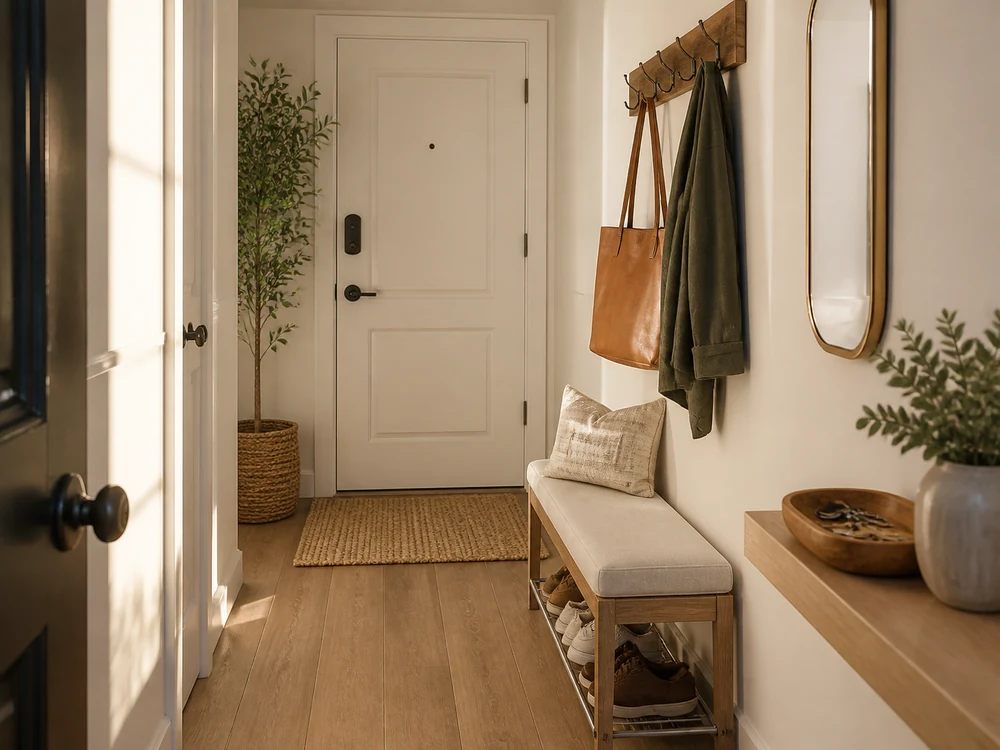
Give Shoes A Limit You Can See
Shoes multiply quickly near the door because the foyer is convenient. Use a tray, two-tier rack, or closed cabinet that shows when the category is full.
A visible limit prevents the entry from becoming a shoe hallway. Store only current pairs there and move special-occasion shoes elsewhere.
Use Hooks For Active Items Only
Hooks should hold the items leaving the house soon: one coat, one bag, one dog leash, or a scarf in season. They should not become an archive of outerwear.
Leave at least one hook empty for guests or temporary overflow. An empty hook makes a small entry feel prepared rather than maxed out.
Choose A Bench By Depth, Not Charm
A bench can be useful, but depth matters more than style. If it steals the walking lane, it will make the foyer feel smaller every day.
In very narrow entries, a wall-mounted perch, slim stool, or shoe cabinet top may work better than a traditional bench.
Place The Mirror Where It Helps Leaving
A foyer mirror should support the last check before leaving and bounce light into the entry. It should not reflect clutter from the floor or a packed hook rail.
If the mirror doubles visual mess, move it higher, narrow it, or angle the first-view storage so the reflection feels calm.
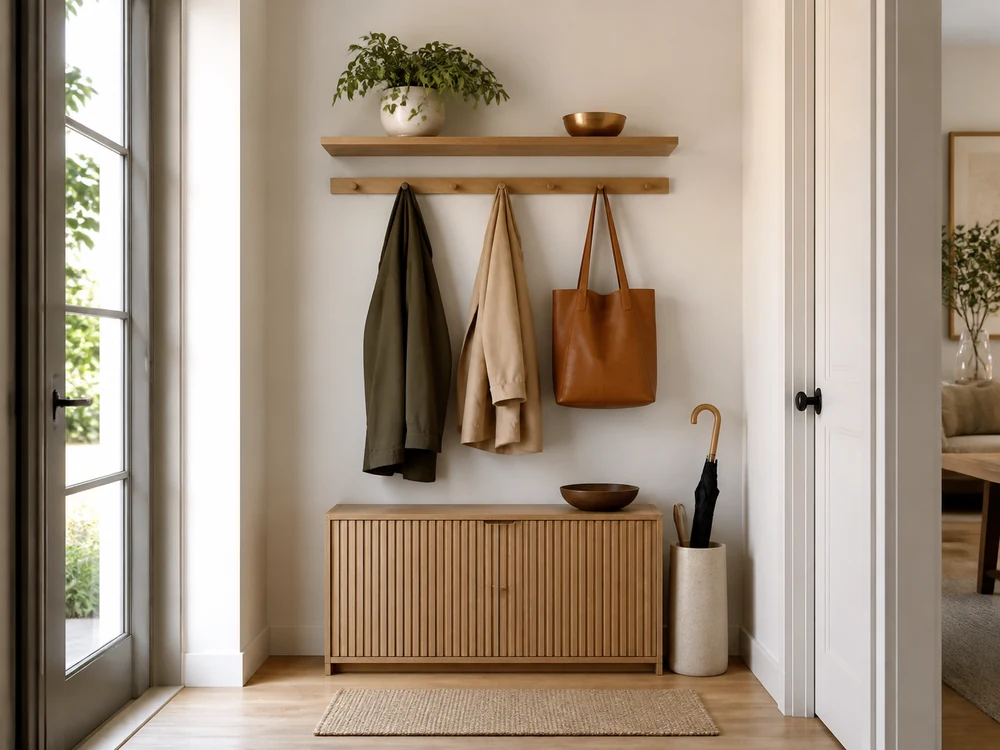
Use Light To Mark The Threshold
Lighting gives a tiny foyer presence even when there is no room for furniture. A sconce, flush fixture, or small lamp on a shelf can make the entry feel intentional.
Efficient lighting is useful in entries because these lights switch on often. The Energy Saver lighting guidance can guide bulb choices that stay warm without wasting energy.
Keep The Drop Zone Shallow
Keys and mail need a landing spot, but it should be shallow enough to reveal overflow. A deep basket hides errands until they become a pile.
Use a bowl, small tray, or narrow shelf. If paper enters here, decide whether it moves to an action tray, recycling, or a file before it reaches the living room.
Make Rugs Flat And Door-Friendly
A foyer rug must survive the door, shoes, and cleaning. Thick rugs that catch under the door or curl at the edge make the entry feel unfinished.
Use a flat washable rug or mat that defines the landing zone without tripping the first step. The rug should support the route, not decorate against it.
Use Vertical Storage With Breathing Room
Vertical storage is powerful in a small foyer, but it needs spacing. A shelf, hooks, mirror, and art all stacked on one wall can feel like a storage column.
Choose the pieces that support entry behavior first. Decorative pieces should fill the pauses, not compete with the routine.
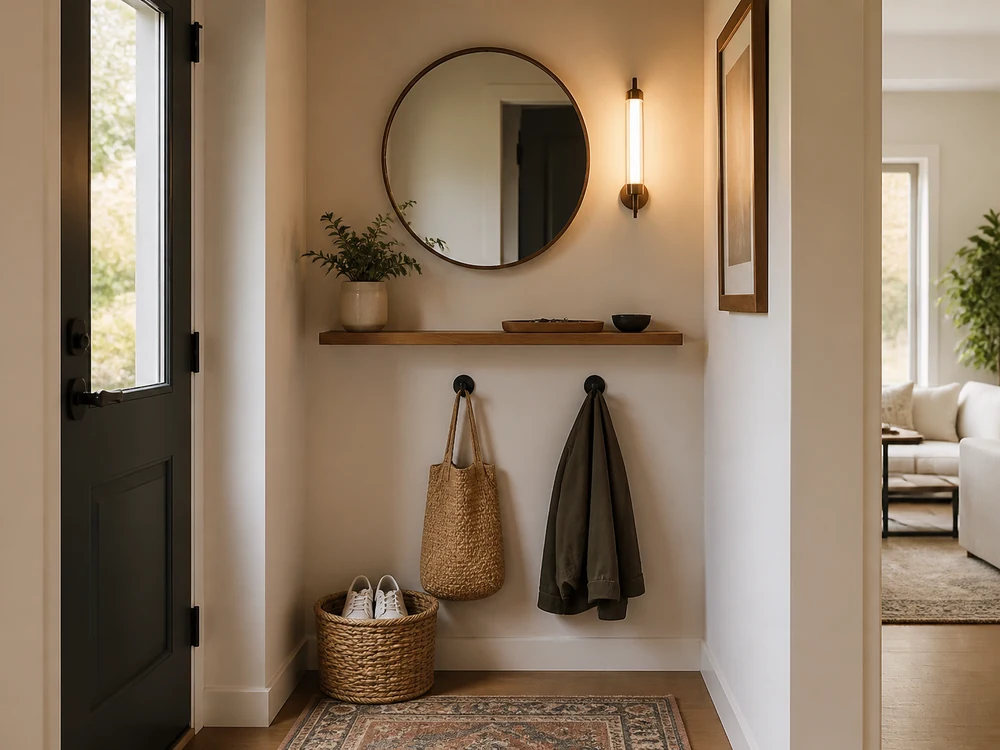
Hide The Mixed Categories
Sunscreen, spare keys, batteries, dog bags, gloves, and receipts rarely look good together. Give mixed categories a drawer, lidded box, or closed shoe cabinet.
Open storage should hold simple items with similar shapes. Closed storage can carry the practical mess that every entry needs.
Plan A Guest Landing Spot
Guests arrive with coats, bags, shoes, umbrellas, or small packages. A tiny foyer feels more generous when one temporary landing place is available.
This can be one empty hook, a bench corner, or a basket that stays lightly used on normal days. Guest space is a design feature, not leftover capacity.
Keep Plants Out Of The Walking Lane
A plant can soften a tight entry, but it should not brush ankles, bags, or the door. Use narrow pots, wall shelves, or a dead corner that traffic never needs.
If the plant gets bumped daily, it is in the wrong place. The entry should welcome movement before decoration.
Tie The Foyer To The Next Room
A small foyer often opens directly into a living room. Repeat one material or color so the transition feels deliberate: wood tone, black metal, woven texture, or a quiet wall color.
Do not match everything. A single repeated cue can make the entry feel connected without making both rooms look over-designed.
Test The Design With A Grocery Bag
A foyer can look finished until you carry groceries, mail, and a wet umbrella through it. Test the design with one full bag in hand and notice what catches your elbow.
Move the obstacle, not your body. Good foyer design makes the awkward arrival easier without asking for a new habit every day.
Reset The Foyer At Night
A small foyer benefits from a short night reset because it is the first thing you see in the morning. Return shoes, clear the landing shelf, and hang only tomorrow’s active items.
This does not need to become a cleaning ritual. Two minutes is enough when the entry has limits that show exactly what belongs there.
Keep The Walking Strip Predictable
The walking strip through a foyer should feel predictable even when someone carries a bag, opens the door, or steps around another person. A tight entry becomes stressful when the path shifts every day.
Borrow the spirit of ADA accessible route guidance without turning the home into a commercial plan: keep the route simple, readable, and free from movable storage that creeps outward.
Choose Storage That Survives Weather
A foyer handles rain, dust, wet soles, and seasonal gear before the rest of the home sees them. Materials should wipe easily and tolerate occasional dampness.
A woven basket can work for dry shoes, but wet umbrellas and muddy footwear need a tray or washable mat. Design for the worst arrival, not the cleanest one.
Edit The Foyer By Sound
Sound reveals clutter in a small entry. If bags scrape the wall, shoes clatter, or the door hits a basket, the design is too close to the route.
Move the noisy item first. A quieter foyer often feels larger because movement is no longer announcing every obstacle.
Let The First Wall Stay Legible
The first wall should tell visitors what to do without explaining itself. Shoes low, coats at hand height, keys on a small shelf, and mirror above create a readable order.
When every object sits at the same visual weight, the entry feels busy. Give the wall a clear top, middle, and bottom so the eye can settle quickly.
Plan For The Item That Always Arrives Late
Every household has one late-arriving item: a return package, sports bag, library book, or dry-cleaning bundle. If it has no temporary home, it will block the foyer.
Reserve a small off-floor spot for that item. The goal is not long-term storage; it is preventing one errand from undoing the whole entry.
Decision Guide
| Problem | Better Move | Watch Point |
|---|---|---|
| Door feels blocked | Clear the swing zone before adding storage | Empty space is functional |
| Shoes spread outward | Use a visible shoe limit | Current pairs only |
| Hooks look messy | Keep active items and leave one hook empty | Hooks are not archives |
| Entry feels dark | Add warm threshold lighting | Light can replace furniture |
Related Her Neat Nest Guides
Final Takeaway
Small foyer design works when it protects arrival. Keep the door clear, limit shoes, use hooks with restraint, make the drop zone shallow, and leave enough margin for guests and real errands.
FAQ
How do I design a very small foyer?
Start with the door swing, then add a visible shoe limit, a small drop zone, restrained hooks, flat rug, and mirror or light that helps the entry feel intentional.
What should not go in a small foyer?
Avoid deep benches, crowded hook rails, thick rugs that catch the door, oversized plants, and open storage for mixed categories.
How can a small foyer look welcoming?
Use warm light, one clear material story, a tidy landing shelf, and a little guest capacity so the entry feels prepared rather than packed.