
Small Entryway Design Ideas That Keep The Door Clear
Small entryway design has to solve a fast moment. People arrive with keys, shoes, bags, coats, mail, rain, groceries, and no patience for a beautiful object that blocks the door.
A tight entry succeeds when the room handles arrivals before it tries to impress guests. Door swing, shoe limits, lighting, and one honest drop zone matter more than a large console or a crowded wall of hooks.
Design the entry as a pause, not a storage closet. The best version gives every repeated arrival move a small place to land and then lets the rest of the home begin.
Small Entryway Design Begins With The Door Arc
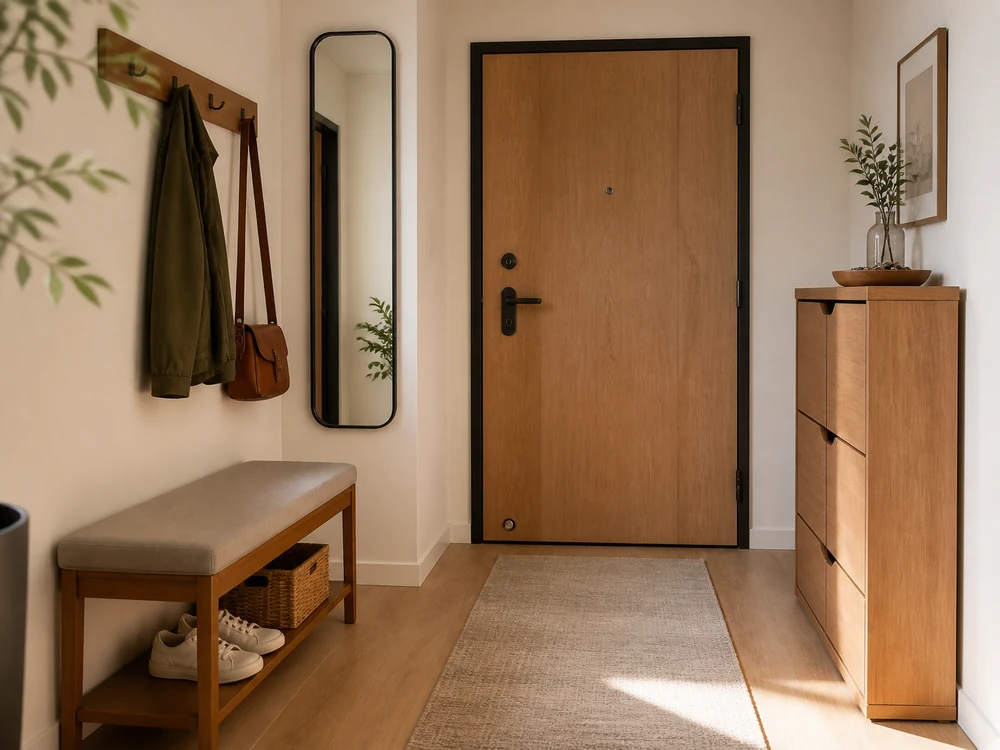
Small entryway design should begin by opening the door fully and watching the arc it claims. That area is not spare floor; it is moving space. Keep baskets, benches, plants, and umbrella stands outside that sweep.
Clear routes are not only a commercial design concern. The principles behind ADA accessible route guidance are useful at home because predictable paths make small entries easier for everyone carrying something.
Put The First Landing Surface Where Hands Stop
Keys and mail land where hands naturally pause, not where a styled shelf happens to fit. Stand inside the door with a bag on your shoulder and notice where your hand wants to go.
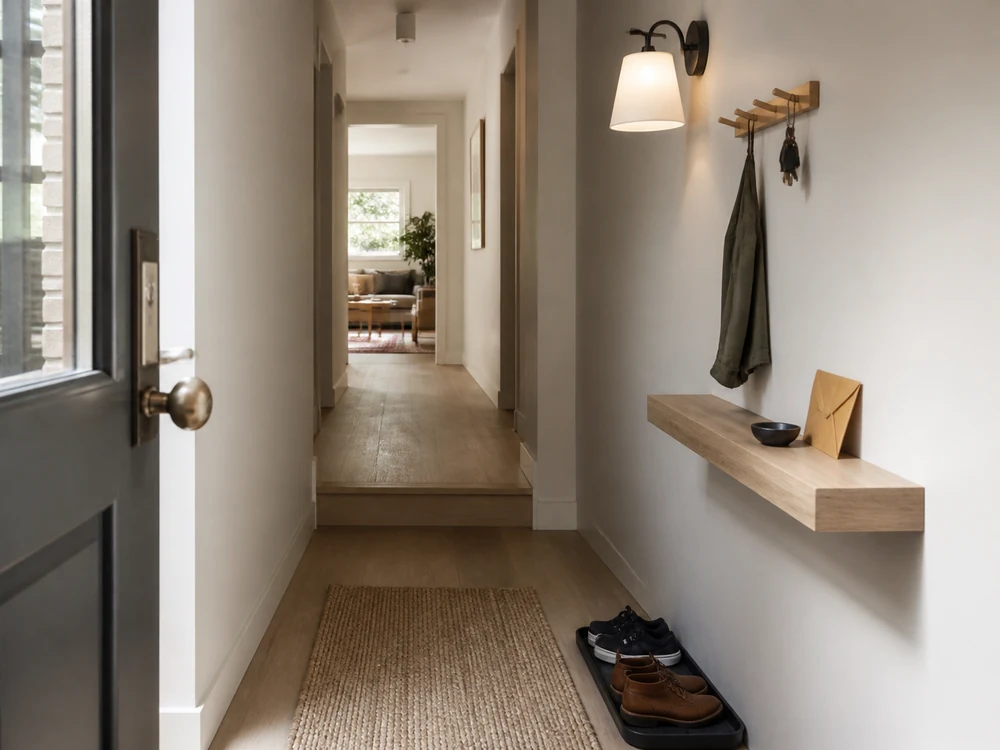
A shallow ledge, narrow wall pocket, or tiny tray can be enough. If the surface is too deep, it will collect receipts, sunglasses, loose coins, and objects that belong somewhere else.
Limit Shoes By Visible Capacity
Shoes can dominate a small entry faster than furniture. Give current shoes a visible limit: one tray, one low shelf, or one drawer per person. Overflow should move to a closet or bedroom.
Visible capacity is better than vague storage. When the tray is full, the decision is obvious. Without a limit, the entry becomes a slow-growing shoe archive.
Use Hooks For Light Rotation, Not The Whole Wardrobe
Hooks are practical only when they hold the current rotation. Everyday coat, tote, leash, hat, or umbrella can belong there. Heavy seasonal coats and rarely used bags should not live at the door year-round.
Crowded hooks make a small entry feel narrower because hanging fabric pushes into the path. Leave at least one hook empty so the wall has some visual relief.
Choose A Bench By Behavior
A bench earns its place when someone actually sits to put on shoes or when it hides a tight shoe category without blocking the route. If everyone stands, a bench may be taking floor that a shallow cabinet would use better.
Open-base benches keep a narrow entry lighter, but they also invite shoes underneath. Closed benches hide more, yet they can look bulky near a tight door. Let behavior choose.
Make The Rug A Boundary And A Tool
A rug should catch dirt, signal the entry zone, and stay flat under the door. Thick rugs that jam the door or slide underfoot create more irritation than warmth.
In a narrow entry, a runner can guide movement into the home. Leave floor visible at the sides if possible so the entry does not feel like a carpeted tunnel.
Use A Mirror To Check Light And Scale
A mirror can make a small entry feel open, but it should not reflect a pile of shoes or a crowded hook wall. Aim it toward light, art, or a calm part of the next room.
Scale the mirror to the wall rather than the wish for a larger foyer. A tall narrow mirror often helps more than a wide one because it supports quick outfit checks without claiming too much width.
Light The Entry Before Decorating It
Small entries often depend on poor overhead light. A wall sconce, plug-in picture light, or warm lamp near the landing zone can make the entry feel intentional with very little furniture. The Energy Saver lighting guidance can help when choosing efficient bulbs for lights that stay on often.
Good light also exposes clutter, which is useful. A dim entry hides the problem until shoes, mail, and bags have already taken over.
Make Packages Temporary By Design
Returns, deliveries, library books, and borrowed items need a temporary parking place. Give them one basket or lower shelf, then keep the container small enough that it cannot become permanent storage.
The package zone should sit outside the door arc and away from the main walking line. If you trip over errands, the entry is reminding you that the temporary place is too ambitious.
Use Wall Color As A Quiet Direction Cue
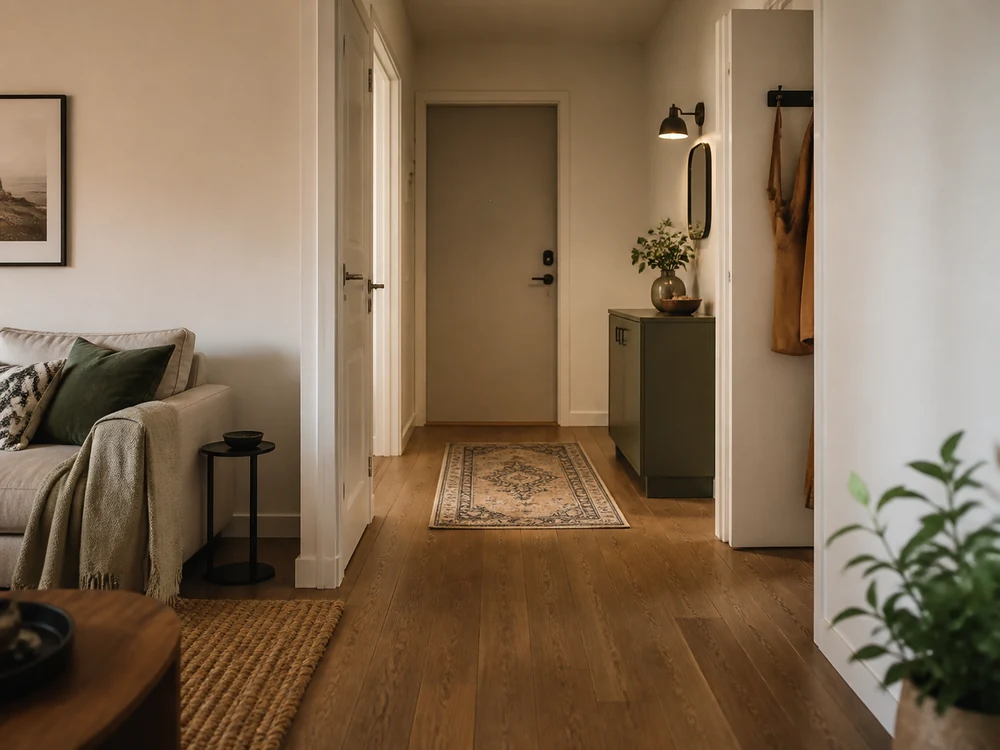
A subtle wall color, painted trim, or repeated material can help an entry feel designed without adding objects. The color should guide the eye into the home rather than stopping it at the doorway.
Avoid many tiny decorative accents in a small entry. One stronger wall choice usually feels calmer than six small objects fighting for attention.
Plan For Wet Days
A small entry is tested by rain and snow. Wet shoes, umbrellas, coats, and bags need a landing plan that does not soak the rug or block the door.
Use a washable mat, a small umbrella hook or stand, and a place for damp outerwear that can breathe. Pretty storage fails quickly if it cannot handle weather.
Connect The Entry To The Next Room
A tiny entry often opens straight into a living room or kitchen. Repeat one material or color from the next room so the transition feels intentional rather than abrupt.
The entry should have its own job, but it should not feel like a separate tiny stage. A shared wood tone, black metal detail, or textile color can connect the zones without clutter.
Keep Decor Above Knee Traffic
Low decorative objects are risky in an entry because knees, bags, shoes, and vacuum heads move through the same area. Put personality on the wall, ledge, mirror frame, or rug instead.
Floor decor should be rare and narrow. A plant can work only if the door and bags do not brush it every day.
Audit The Entry At Arrival Time
Judge the design when someone comes home, not when the space is empty. Watch where bags fall, which shoes stay out, whether mail lands properly, and whether the door opens without a shuffle.
Adjust the entry around that evidence. Move the hook, shrink the tray, remove the bench, or raise the shelf before buying another organizer.
Design For The Thing You Carry Most
An entry used by someone carrying groceries needs a different pause than one used by a runner, a dog owner, or a parent with school bags. Identify the object that arrives most often and give it the least awkward landing place.
That single decision can change the whole entry. A strong grocery landing shelf, leash hook, backpack rail, or umbrella spot prevents the floor from becoming the default answer.
Keep The Threshold Visually Lighter Than The Hall
A dark or heavy object beside the door makes a tight entry feel smaller before anyone steps inside. Keep the threshold light and push stronger color or taller storage slightly deeper into the hall.
This creates a calmer first impression and protects the door area from feeling blocked. The eye should move inward, not stop at a bulky cabinet.
Give Housemates One Personal Boundary
Shared entries work better when each person has one visible boundary. It can be a hook, cubby, narrow drawer, or shoe slot, but it should be small enough to discourage overflow.
Personal boundaries reduce negotiations at the door. The entry stays easier to reset because excess has an obvious owner instead of becoming anonymous clutter.
Decision Guide
| Problem | Better Move | Watch Point |
|---|---|---|
| Door catches objects | Clear the full swing arc | The threshold is not storage |
| Shoes spread out | Use one visible capacity limit | Overflow needs another home |
| Hooks look heavy | Keep only active items by the door | Leave one hook empty |
| Entry feels dark | Add warm task light near the landing zone | Light before more decor |
Related Her Neat Nest Guides
- Tiny Entryway Ideas
- Small Foyer Decorating Ideas
- Small Apartment Shoe Storage Ideas
- Small Entryway Ideas
Final Takeaway
Small entryway design works when it respects arrival behavior. Protect the door arc, limit visible shoes, light the landing zone, and give temporary items a controlled place to pause.
FAQ
How do you design a very small entryway?
Start with the door swing, then add a shallow landing surface, limited shoe storage, a flat rug, warm light, and hooks for current items only.
What should every small entryway have?
Most need a place for keys, a shoe limit, a hook or two, a rug that clears the door, and lighting that makes the arrival zone easy to read.
Should I use a bench in a small entryway?
Use a bench only if people sit there or if it stores shoes without blocking the route. Otherwise a shallow cabinet or wall shelf may work better.