
Bathroom Wall Storage Shelves That Stay Dry And Useful
Bathroom wall storage shelves look like an easy win until they collect damp towels, dusty jars, and bottles no one can reach. The wall can help a small bathroom, but only when the shelf is placed for moisture, cleaning, and the body using the room.
A shelf that is too deep near the sink becomes an elbow hazard. A shelf that is too high turns backstock into decoration. A shelf too close to the shower asks every object to tolerate steam.
Good bathroom shelves are quieter than most shopping photos suggest: shallow, wipeable, lightly loaded, and honest about what belongs in open air.
Bathroom Wall Storage Shelves Need A Dry Wall First
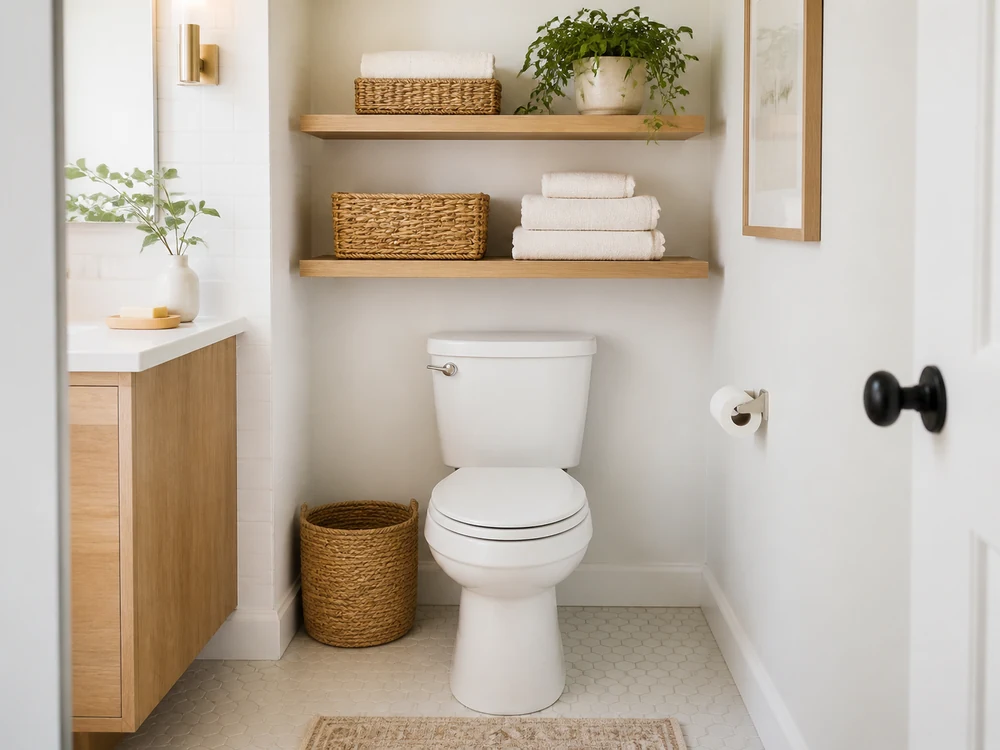
Bathroom wall storage shelves should start with the wall least punished by splash and steam. The obvious spot above the toilet may work, but only if the shower does not blow moisture directly toward it.
Moisture control matters in small rooms because damp textiles and crowded surfaces hold humidity. Review EPA indoor moisture guidance when deciding what should stay exposed and what belongs in closed storage.
Choose Shelf Depth By Shoulder Clearance
Depth is more important than length in a tight bathroom. A shelf can be wide without becoming annoying, but a deep shelf beside a vanity catches shoulders, sleeves, and hair tools.
Use shallow shelves for daily items and reserve deeper storage for closed cabinets. If you lean around a shelf to wash your face, the shelf is already too assertive.
Put Daily Items Between Eye And Chest Height
Open shelves are most useful when the items you touch often sit between eye and chest height. That zone lets you see and grab without stretching over a wet sink or crouching beside the toilet.
Backstock can sit higher, but only when it is light and clearly grouped. A high shelf full of mixed bottles becomes forgotten inventory rather than storage.
Use Open Shelves For Calm Categories
Open bathroom shelves work best for categories that look orderly without constant styling: folded washcloths, spare hand towels, cotton rounds, a small plant, or a lidded basket.
Skincare bottles, medicine, razors, and cleaning products usually age better behind a door. Closed storage protects privacy and reduces the label noise that makes small bathrooms feel crowded.
Anchor Shelves Like Furniture
A wall shelf is still furniture, even when it floats. Use studs, proper anchors, and the shelf maker’s weight limits. Tile walls and old plaster need extra care because failure can damage more than the objects on the shelf.
Do not judge safety by the shelf’s empty look. Towels absorb water, jars get heavier when filled, and people sometimes lean on shelves without thinking.
Avoid The Toilet-Tower Effect
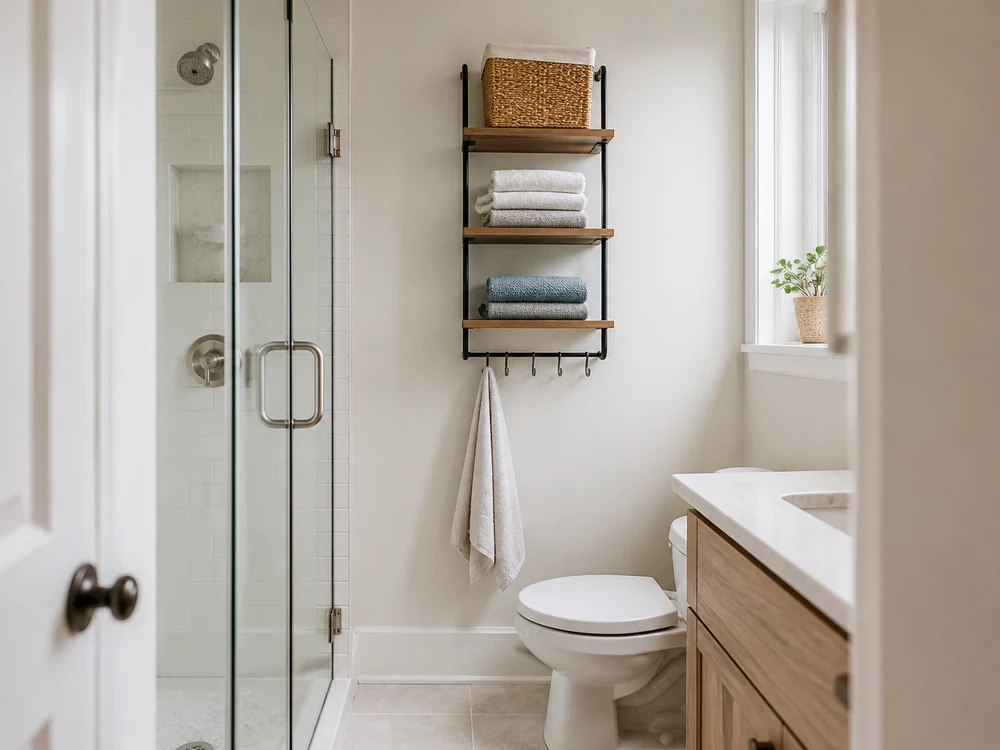
Shelves above the toilet can be practical, but stacked tiers often make the toilet wall feel like a display rack. Two shallow levels may look calmer than a tall ladder unit packed from tank to ceiling.
Leave breathing room above the tank so cleaning remains easy. If a shelf makes it difficult to wipe around the toilet, the storage is costing more time than it saves.
Give Towels Space To Dry
Folded towels look lovely on shelves, yet bathrooms are not linen closets. Keep only a small number near the shower and let the rest live in a drier spot if the room steams heavily.
Rolled towels can fit tight shelves, but they also hide how many are stacked. A visible limit keeps the shelf from becoming a damp tower of fabric.
Place Baskets Where Labels Are Not Needed
Baskets are useful when the category is obvious from context. A small basket of extra soap near the sink makes sense. A basket of mystery bottles above eye level does not.
Avoid identical baskets for every category unless the shelf is behind a door. In open storage, too many matching bins can feel strangely busy because the eye has to decode them.
Keep Mirror Edges Clear
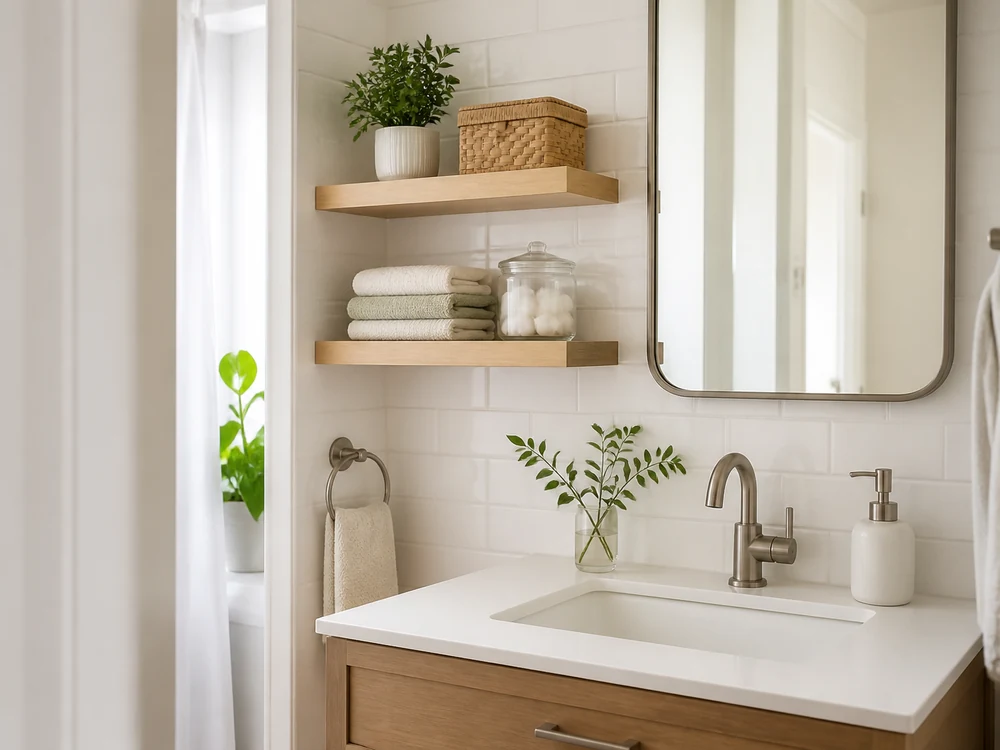
Shelves near mirrors need restraint because they appear twice. A crowded ledge beside a mirror doubles the clutter through reflection and makes the vanity feel narrower.
If the mirror wall is your only option, use one small shelf for the most repeated routine and keep decorative objects off it. Let the mirror bring light instead of duplicating storage.
Make Cleaning A Shelf Requirement
Bathrooms shed lint, hair, powder, and water spots. Any shelf with fussy brackets, rough wicker, or too many tiny objects will be harder to keep clean in a small room.
Choose wipeable finishes and leave enough space to lift objects quickly. A shelf that cannot be cleaned without dismantling a display will slowly stop looking fresh.
Separate Wet Tools From Dry Goods
Razors, bath brushes, and washcloths need airflow after use. They should not sit in the same basket as paper refills, cotton pads, or spare towels.
Use hooks, a slotted tray, or a vented container for damp tools. The wall can help, but only if water has somewhere to go.
Use One Shelf As A Landing Strip
A narrow shelf near the sink can act as a landing strip for a ring, hair clip, or contact lens case. Keep it deliberately small so it cannot turn into a permanent counter extension.
This kind of shelf solves a real behavior: tiny items need a safe pause. It should not become the place where every product rests between decisions.
Let Tile Lines Guide Placement
Tile gives useful visual structure. Aligning a shelf with grout lines, mirror edges, or cabinet tops can make wall storage look built in rather than added after the fact.
Misaligned shelves are more noticeable in small bathrooms because the eye is close to every surface. A few minutes of measuring can make inexpensive shelves look more deliberate.
Edit The Shelf Every Refill Day
Use refill day as the shelf audit. When toilet paper, soap, or shampoo comes home, check whether the wall shelves are still carrying active items or old leftovers.
Small bathrooms stay functional through small removals. The shelf should earn its place each week by making a routine easier, not by storing everything that lacks a better home.
Respect The Space Above The Head
Shelves above the toilet, tub, or vanity can feel efficient, but anything over a head or shoulder line needs extra restraint. Avoid glass jars, heavy ceramic planters, or stacked bins in places where someone bends, reaches, or dries hair.
Use lighter categories up high and keep the front edge visually quiet. A shelf can add storage without making the room feel like objects are hovering over every routine.
Build One Shelf For Restocking, Not Shopping
A small restock shelf should answer one question: what is about to run out? Keep the quantity low enough that you can see the next replacement without counting a whole supply pile.
This rule prevents wall shelves from becoming a miniature store aisle. It also keeps buying habits visible, which is often more useful than squeezing in another tier.
Leave Steam Room For Fragrance And Paper
Fragrance, tissues, spare rolls, and paper packaging can suffer in humid bathrooms. If those items must sit on a wall shelf, place them on the driest wall and avoid cramming them beside damp towels.
A small gap between categories helps air move and keeps the shelf from smelling closed-in. The bathroom should feel fresh because storage is edited, not because every open shelf carries scented products.
Give The Bottom Shelf A Humble Job
The lowest wall shelf is often best for plain, replaceable items rather than delicate display. A small stack of washcloths, one refill basket, or a cleaning cloth zone can live there without asking for perfect styling.
This keeps the prettier eye-level shelf lighter and makes the whole wall easier to maintain after rushed mornings.
Decision Guide
| Problem | Better Move | Watch Point |
|---|---|---|
| Shelf gets damp | Move exposed items to the driest wall | Do not store paper near splash |
| Shelf feels bulky | Reduce depth before reducing length | Shoulders need clearance |
| Open storage looks noisy | Use calmer categories and fewer labels | Closed cabinets can work harder |
| Cleaning takes too long | Choose wipeable finishes and fewer pieces | Leave lifting room |
Related Her Neat Nest Guides
- Bathroom Storage Shelves
- Bathroom Storage Ideas Small Bathrooms
- Small Bathroom Storage
- Narrow Bathroom Storage
Final Takeaway
Bathroom wall storage shelves succeed when they respect moisture, reach, and cleaning. Keep them shallow, lightly loaded, carefully anchored, and placed where the room stays useful after the first week.
FAQ
Where should bathroom wall shelves go?
Place shelves on the driest practical wall, outside splash paths, with daily items between eye and chest height.
How deep should bathroom shelves be?
Most small bathrooms do better with shallow shelves. If a shelf catches shoulders or blocks sink use, it is too deep for that location.
What should I put on open bathroom shelves?
Use open shelves for towels in small numbers, washcloths, lidded baskets, cotton rounds, soap refills, or one plant that tolerates humidity.