
Bathroom Storage Shelves That Stay Useful And Dry
Bathroom storage shelves look simple: add a level, gain space. In a small bathroom, the decision is more delicate. Shelves sit near steam, splash, towels, paper, glass jars, toothbrushes, cleaning sprays, and people moving through a narrow room.
A good shelf makes categories easier to see without turning the bathroom into a product display. It keeps towels dry, backstock protected, daily items reachable, and surfaces cleanable.
The shelf itself matters less than its zone. Over the toilet, beside the shower, above the sink, and inside a corner all need different rules.
Core idea: Bathroom storage shelves work best when they separate dry backstock from wet daily items and remain easy to clean.
Bathroom Storage Shelves: The First Decision
Bathroom storage shelves work best when they separate dry backstock from wet daily items and remain easy to clean. This guide keeps the advice tied to measurable room behavior rather than decorative formulas.
Give Every Shelf A Moisture Category
Before installing or styling anything, decide whether the shelf is for dry backstock, damp-use items, daily sink items, or display. Mixing those categories is how shelves become sticky, dusty, and confusing.
Paper, cotton, spare towels, and extra bars of soap need the driest positions. Daily bottles can sit closer to the sink if they are grouped in a washable tray. Damp washcloths need air, not a closed basket.
Use Over-Toilet Shelves With Restraint
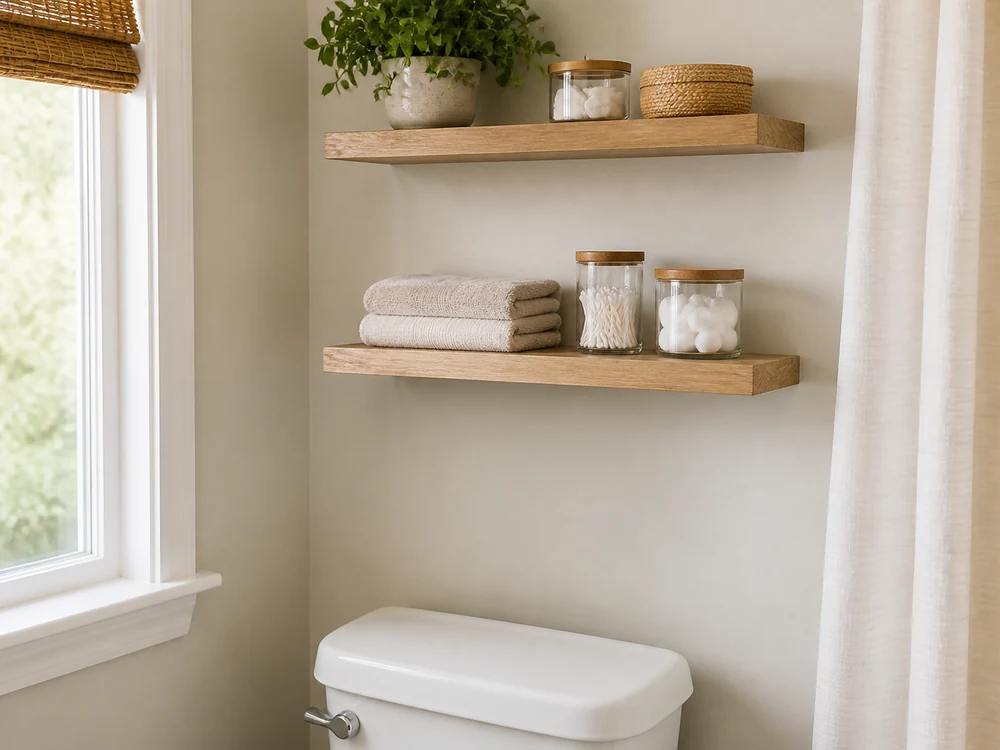
The wall above the toilet can be useful, but it is also visually prominent. Deep shelves can make the toilet area feel crowded and create awkward reaching. Shallow shelves with limited categories usually work better.
Leave enough clearance above the tank for cleaning and access. Store light items only. A towel stack, a small jar, and one plant can be plenty. If the shelf needs a stool to reach, it is not daily storage.
Keep Shower-Adjacent Shelves Outside Splash
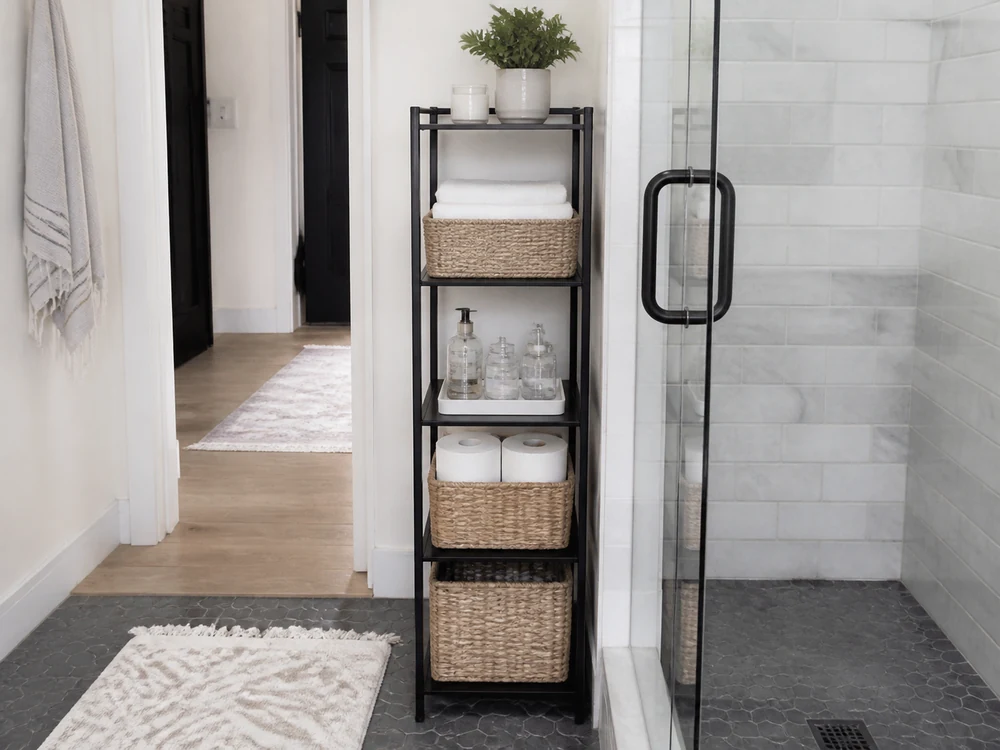
A shelf beside the shower should not pretend it lives in a dry room. Even outside the glass, steam and occasional splash can affect baskets, labels, paper goods, and wood finishes.
Moisture guidance from EPA indoor air quality and moisture guidance supports a practical rule: storage should dry, breathe, and remain inspectable. Use open shelves for towels only if they stay outside direct splash and have air around them.
Use Trays On Sink-Corner Shelves
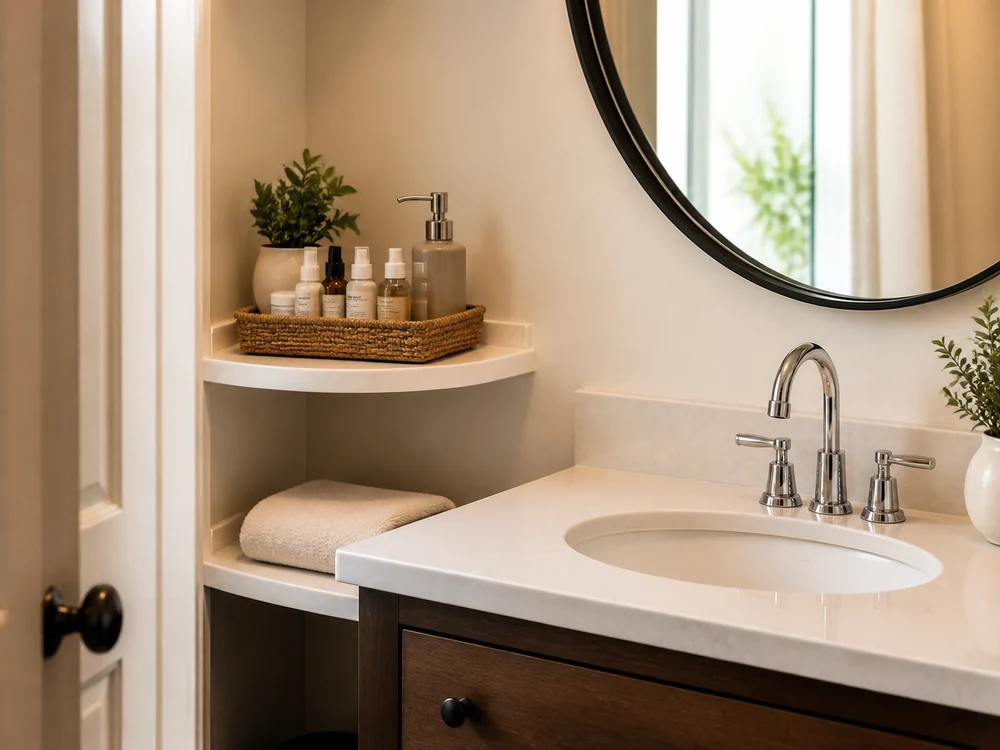
Sink-corner shelves fail when tiny bottles spread across two levels. A tray turns daily products into one removable group. It also makes wiping easier because you can lift the group instead of cleaning around every bottle.
Keep only the items used at that sink. Backstock belongs higher, behind a door, or in a dry cabinet. A shelf near the faucet should serve the morning and evening routine, not the entire bathroom inventory.
Choose Materials By Cleaning Style
Wood adds warmth but needs dryness and wiping. Metal feels slim but can rust if the finish is weak. Glass looks light but shows water spots. Plastic is practical but can look cheap if overloaded.
Choose the material you will maintain. A beautiful shelf that requires careful drying after every shower may not be the right shelf for a busy small bathroom.
Limit Basket Depth
Baskets can hide visual noise, but deep baskets create forgotten backstock. Use shallow baskets for categories that should leave as a group: washcloths, hair tools, travel items, or extra rolls.
If a basket is hard to pull down safely, it belongs lower or behind a door. Shelf storage should reduce searching, not make the bathroom depend on blind reaching.
Make Towels Easy To Dry
A folded towel stack looks calm, but towels that are even slightly damp need air. Do not place used towels on a shelf meant for clean backstock. Give active towels hooks, bars, or open spacing.
Reserve shelves for clean folded towels only when the shelf is away from splash and steam. Otherwise, keep just one or two hand towels there and store the rest in a drier cabinet.
Leave Cleaning Access Below
Shelves shed dust and collect product residue. The area below them still needs wiping, especially over a toilet or beside a sink. A shelf that blocks cleaning will slowly make the bathroom feel older.
Before installing, imagine wiping the wall, tank, counter, and shelf underside. If that sounds annoying before anything is stored, the shelf is too deep or too close to a messy zone.
Stop Before The Bathroom Looks Like A Shop
Open bathroom shelves can accidentally turn daily life into retail display. Matching jars, folded towels, plants, candles, skincare, and baskets can look polished in a photo and crowded in person.
Use fewer categories and let some items remain behind doors. The bathroom should feel clean first, styled second.
Make Shelf Height Match The Risk
A shelf above shoulder height should hold light, low-risk items. Heavy jars, glass bottles, and daily products that require careful handling belong lower. A high shelf that looks pretty can become a hazard when wet hands and a slippery floor are part of the routine.
Place the most frequently used items between waist and eye level when possible. Reserve higher shelves for spare towels, light baskets, or decorative objects that do not need daily reaching. Shelf height is a safety and habit decision, not just a wall composition.
Use One Shelf As A Release Valve
A bathroom sometimes needs a temporary place for an active routine: a skincare set during a busy week, guest toiletries, or medicine that must stay visible for a short time. A small open shelf can serve that purpose if it is deliberately limited.
Choose one release-valve shelf and keep the rest stable. When the temporary routine ends, clear that shelf first. This prevents every shelf from becoming an archive of old routines.
Check Reflections Before Installing
Bathroom shelves often appear in mirrors. A tidy shelf can double the sense of order; a crowded shelf can reflect into the room and make it feel twice as full. Before installing, hold a piece of cardboard where the shelf will go and look at the mirror.
If the shelf reflects directly behind your face or into the main doorway, keep it shallower and calmer. A shelf that looks fine from the side may dominate the room once the mirror repeats it.
Choose Open Or Closed Ends By What Might Fall
Open-ended shelves look lighter, but small bottles, glass jars, and rolled washcloths can slide when the shelf is bumped. A small lip, rail, or basket edge may be worth the visual weight if the shelf sits near a door, shower, or towel hook.
Use open ends for stable folded towels or display items. Use a contained edge for daily products, cotton jars, or anything handled with wet hands. The shelf should not make the bathroom ask for careful movements every morning.
Audit The Shelf Once A Month
Bathroom shelves collect old routines quickly. A bottle with one use left, a guest product, a nearly empty jar, and a decorative candle can sit there for months because they look harmless. Once a month, remove everything and rebuild the shelf from the current routine outward.
Keep what is used, store what is spare, and discard what is finished. This short audit prevents open shelves from becoming a quiet museum of bathroom leftovers.
Quick Decision Guide
| Problem | Best Move | Watch Out For |
|---|---|---|
| Over-toilet wall is empty | Two shallow shelves | Keep tank access clear |
| Shower supplies migrate | Shelf outside splash zone | Use moisture-safe material |
| Sink counter is crowded | Corner shelf with tray | Keep daily items only |
| Towels smell damp | Airier towel storage | Separate clean from used towels |
Related Her Neat Nest Guides
Final Takeaway
Bathroom storage shelves are useful when they respect moisture and cleaning. Give each shelf a category, keep splash zones honest, limit basket depth, and leave surfaces easy to wipe. Small bathrooms feel calmer when shelves hold less but work harder.
FAQ
Where should bathroom storage shelves go?
Useful places include above the toilet, beside the sink, outside the shower splash zone, or on a dry wall near towels. The best location depends on moisture and reach.
What should I put on bathroom shelves?
Store light, dry, easy-to-clean categories such as hand towels, jars, small baskets, daily bottles in a tray, or limited paper backstock away from splash.
Are open shelves good in bathrooms?
Open shelves can work well, but they need careful category limits and regular wiping. Use closed storage for messy or moisture-sensitive backstock.