
Organizing Tips For Small Spaces That Hold Up
Organizing tips for small spaces only work when they survive ordinary days. A small home can look calm after a deep clean and fall apart again by dinner if the system depends on perfect behavior.
The goal is not to own less than a human life requires. The goal is to give daily items short, visible routes back to where they belong. Small spaces need limits you can see and resets you can complete when tired.
Think in boundaries, not bins. A tray, basket, hook, shelf, or drawer should tell an object when it has gone too far.
Organizing Tips For Small Spaces: The Daily Reset
Organizing tips for small spaces should make the daily reset short enough to finish. The best system is not the most photogenic shelf; it is the one that lets you clear the table, floor, and entry before the room starts feeling smaller.
A daily reset needs a clear order. Put door items back first, clear food and dishes second, return loose textiles third, and empty one basket last. The order matters because small homes often fail from visible edges before hidden storage is even involved.
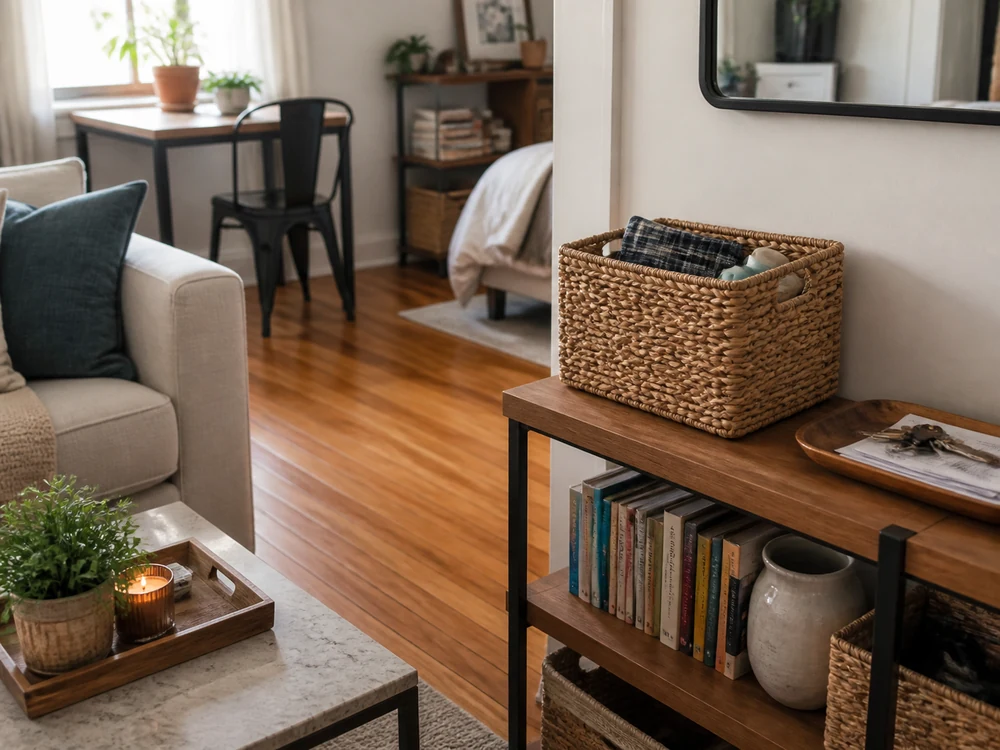
Create One Reset Basket Per Main Zone
A reset basket is not storage. It is a short-term collector for things that belong elsewhere: a sweater near the sofa, a book beside the bed, a charger on the table.
Use one basket in the zone that fails most often. Empty it during a daily or weekly reset. If the basket becomes permanent storage, shrink it or move the category closer to where it is used.
Use Boundary Trays On Working Surfaces
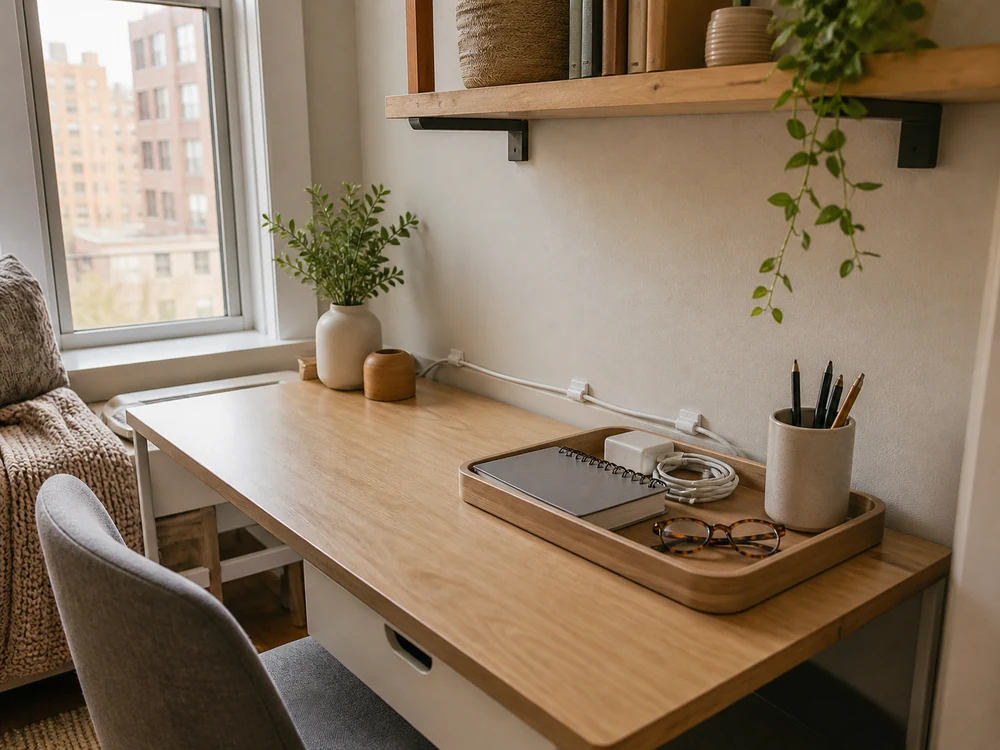
Small surfaces need visible limits. A tray on a desk, nightstand, entry shelf, or coffee table keeps small items from spreading until the whole surface feels claimed.
The tray should hold the category, not decorate it. Glasses, keys, charger, notebook, remote, or daily jewelry can live there. Loose leftovers should not.
Design An Exit Zone
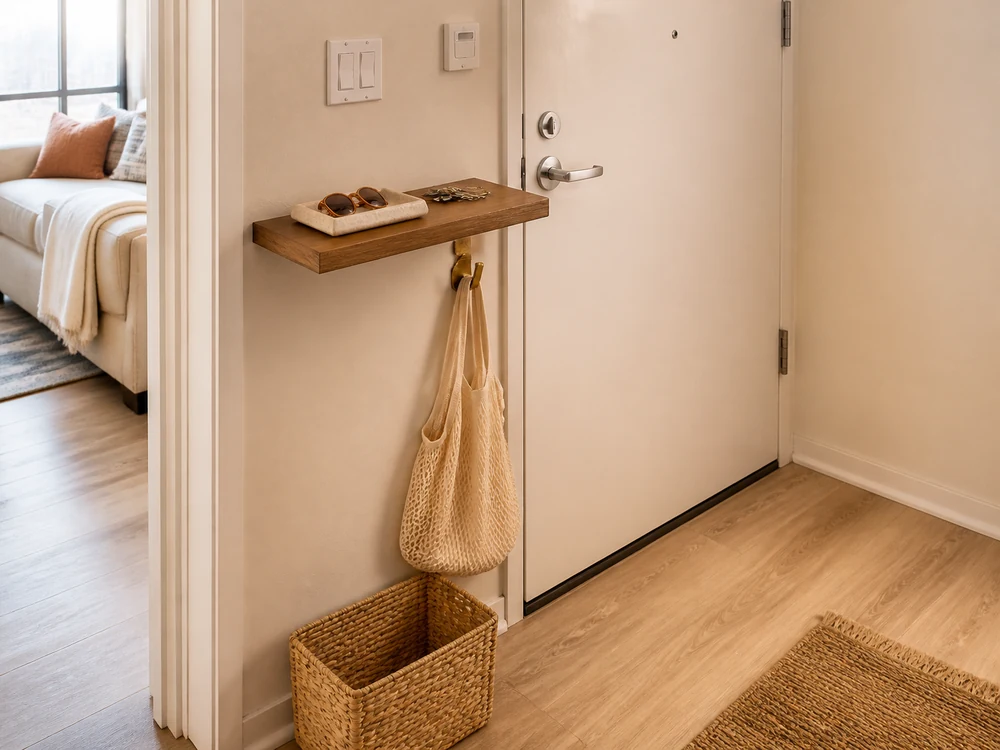
Every small home needs a leaving station: keys, sunglasses, returns, outgoing mail, tote bag, or transit card. Without that zone, leaving items scatter across the kitchen and sofa.
Keep the exit zone shallow and visible. It should make departure easier without turning the entry into a storage room.
Store By Decision Speed
Fast decisions belong in easy places. Daily shoes, daily mug, favorite pan, current book, and work charger should not require opening three containers.
Slow decisions can live farther away. Seasonal decor, guest linens, spare cords, and extra supplies can tolerate a box, lid, or higher shelf.
Let Containers Show Their Limit
A container should tell you when the category is full. If a basket can hide unlimited tote bags, the system will keep accepting them until it collapses.
Choose containers that match the amount you actually want to maintain. Visible limits are kinder than ambitious storage.
Make The Floor A Non-Storage Surface
In small spaces, the floor is the first thing to disappear. Once bags, shoes, packages, laundry, and boxes are allowed to wait there, the room feels smaller immediately.
Set a rule that the floor is for furniture and movement. Temporary floor items need a container, hook, shelf, or scheduled next step.
Keep Like-With-Like From Becoming Too Broad
Like-with-like is useful until the category becomes too large. ‘Cords’ may need to become phone cords, computer cords, and mystery cords to review. ‘Papers’ may need mail, reference, and action.
Small homes often need smaller categories because mixed bins cost more time than they save.
Use The First Minute Rule
If a reset takes under one minute, do it before sitting down: hang the bag, clear the tray, return the cup, put shoes on the mat, or empty the reset basket.
This rule works because it respects fatigue. A small home stays organized through small recoveries, not heroic weekend cleanouts.
Give Every Pretty Basket A Boring Job
Pretty baskets are useful when their job is specific. Throws, returns, workout gear, pet items, or guest linens can each have a real home.
A basket with no job becomes decor that collects guilt. Assign it before placing it in the room.
Leave One Shelf For Change
Small spaces change quickly. A guest visits, a hobby starts, a season changes, or a work project arrives. If every shelf is full, change lands on the floor.
Leave one small shelf, bin, or drawer partly open for temporary life. Flex space is what keeps a compact home from breaking under normal variation.
Walk The Main Route Weekly
Once a week, walk the route from door to kitchen, kitchen to sofa, sofa to bed, and bed to bathroom. Notice what your body avoids.
If furniture or storage narrows the route too much, adjust it. The ADA accessible route guidance is formal guidance, but at home the principle is practical: clear routes reduce daily friction.
Review The System By What You Ignore
The ignored basket, unopened bin, crowded hook, or overflowing tray is feedback. It does not mean you failed; it means the system is too far away, too broad, too hidden, or too annoying.
Small-space organizing becomes durable when you edit the system instead of blaming the person using it.
Protect One Clear Surface
Choose one surface that must return to clear every night: the desk, coffee table, kitchen counter, or entry ledge. This surface becomes the visual reset button for the home.
Protecting one surface is more realistic than demanding every surface stay perfect. When that surface clears, the room has a place to breathe and the next reset has a place to begin.
Create A Waiting Place For Unfinished Decisions
Small spaces get messy when unfinished decisions have no holding area. Items to return, repair, donate, compare, or decide on should not roam across the room.
Give unfinished decisions one small waiting place with a deadline. When the spot fills, make the decisions before adding more. This prevents delayed choices from becoming the room’s visible personality.
Make The Easiest Choice The Neatest Choice
An organizing system should make the neat choice easier than the messy one. If hanging a bag takes more effort than dropping it on the chair, the chair will win.
Move the hook, lower the basket, remove the lid, shorten the route, or reduce the category. In a small space, convenience is not laziness; it is the design material that keeps the system alive.
The room will tell you where the easy choice currently is. Look for the pile that returns every week, then build the official home exactly where that pile already wants to be.
Use A Ten-Item Exit Audit
Once a month, remove ten items from the room that no longer need to live there. They can be receipts, duplicate chargers, old samples, stretched baskets, worn towels, or objects waiting for a decision.
The number is intentionally small. A ten-item audit is light enough to repeat and strong enough to keep small spaces from quietly filling every edge.
Reward The System With Empty Space
When a drawer, basket, or shelf finally has extra room, resist the urge to fill it. Empty space is the reward that makes the next week easier.
Small spaces need slack because life keeps arriving. Leaving slack inside the system prevents every new item from becoming visible clutter, especially during busy weeks when routines are thinner.
Decision Guide
| Problem | Better Move | Watch Point |
|---|---|---|
| Surfaces spread | Use a boundary tray | Keep the tray category narrow |
| Items drift room to room | Add a reset basket | Empty it on a schedule |
| Leaving is chaotic | Create an exit zone | Keep it shallow and visible |
| Systems fail after a week | Review what you ignore | Make the return path easier |
Related Her Neat Nest Guides
- Organizing Small Spaces
- Storage For Small Spaces
- Small Apartment Organization Ideas
- Tiny Entryway Ideas
Final Takeaway
Organizing tips for small spaces last when they respect real behavior. Use visible limits, short reset paths, and zones that match daily movement. The best system is not the one with the most containers; it is the one you can still follow at the end of a tired day.
FAQ
What is the best way to organize a small space?
Start with the items that move every day, then create simple return paths with trays, reset baskets, hooks, and shallow zones.
How do I stop clutter from coming back?
Use visible limits, empty reset baskets regularly, keep the floor clear, and adjust any system you keep ignoring.
Do I need more storage bins for a small home?
Not always. You may need smaller categories, better limits, and easier return paths before buying more bins.