
Bathroom Furniture Small Enough For Tight Rooms
Bathroom furniture small rooms can handle is rarely the piece that looks most impressive online. The room has water, steam, doors, towels, cleaning products, and plumbing that still needs to be reachable after storage is added.
A vanity may fit until its drawer opens into the toilet. A linen cabinet may look slim until the door blocks the bath mat. A wall cabinet may solve storage while making the sink area feel boxed in.
The right furniture is modest but precise. It gives daily items a home, keeps towels dry, preserves the floor, and never hides a problem you need to inspect.
Core idea: Small bathroom furniture should be selected by depth, door movement, moisture behavior, and access to plumbing before style.
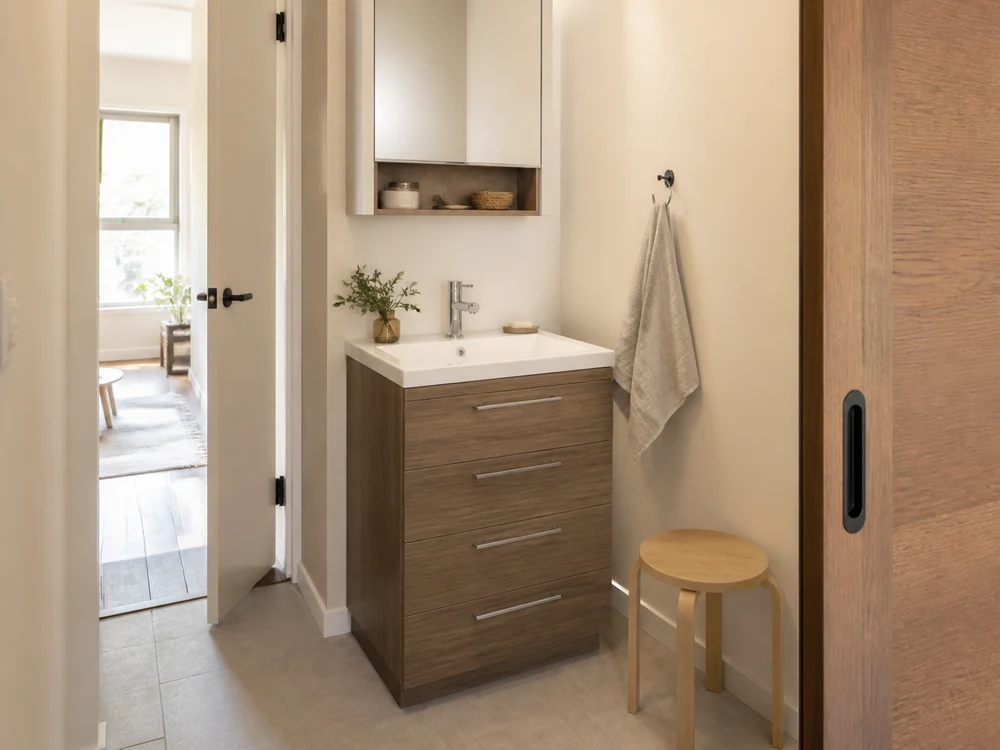
Bathroom Furniture Small: The First Decision
Small bathroom furniture should be selected by depth, door movement, moisture behavior, and access to plumbing before style. This guide keeps the advice tied to measurable room behavior rather than decorative formulas.
Measure Depth Before Width
Width is obvious in a small bathroom, but depth is usually what ruins the room. A cabinet that projects too far can pinch the sink approach, block a door, or make the toilet area feel crowded. Measure how far the piece comes into the room with doors and drawers open.
Use painter’s tape on the floor and live with the footprint for a day. Step out of the shower, reach the sink, open the bathroom door, and pick up a towel. If the tape changes your movement, the furniture is already too deep.
Choose Vanities By Drawer Behavior
A small vanity with drawers can be more useful than a larger cabinet with one dark cavity. Drawers bring items forward, which matters when the sink cabinet is narrow. But drawers must work around plumbing and still open fully enough to be useful.
Look for internal cutouts, shallow top drawers, or a mix of drawers and open plumbing space. Avoid furniture that hides pipes so completely that a leak or valve becomes hard to inspect.
Keep Linen Cabinets Truly Narrow
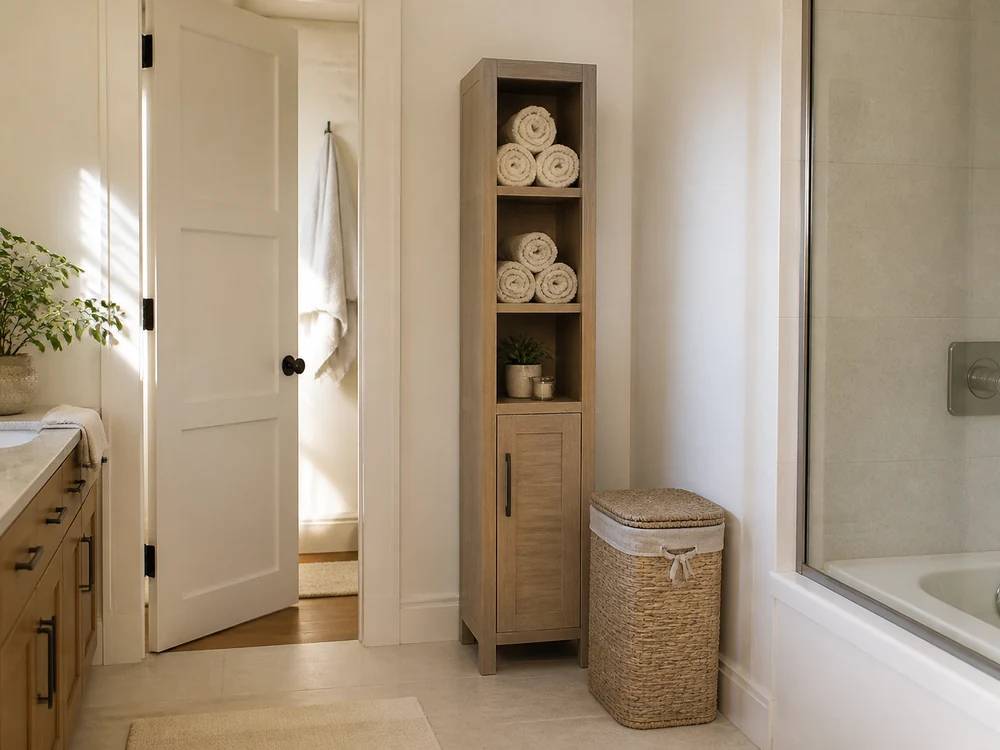
A tall linen cabinet can rescue towels and backstock, but only if it stays slim and stable. Deep cabinets invite forgotten supplies in the back. Wide cabinets can make the bathroom feel like a storage corridor.
Use the cabinet for dry categories: towels, washcloths, spare soap, and paper backstock. Keep cleaners lower and separated. If the cabinet is tall, follow manufacturer safety instructions and avoid loading heavy items high.
Respect Door And Drawer Swings
Bathroom furniture moves. Vanity drawers pull out, cabinet doors swing, hamper lids lift, medicine cabinets open, and shower doors need space. The furniture footprint is only the closed version of the room.
Map every moving part. If two doors cannot open at the same time, decide whether that matters. A bathroom can tolerate some compromises, but daily conflicts around the sink or toilet become irritating fast.
Use Wall Furniture To Save Floor, Carefully
Wall-mounted cabinets and floating vanities can make the floor easier to clean and the room feel lighter. They also put more demand on the wall, anchors, and installation quality.
Use wall furniture only where the wall can support it and the piece does not block head movement or mirror use. In rentals, freestanding shallow pieces may be safer than drilling into tile or unknown wall materials.
Keep Moisture In The Decision
A bathroom is not a dry closet. Steam, splash, damp towels, and cleaning sprays affect materials. Solid wood, veneer, MDF, metal, bamboo, and plastic each age differently when moisture is part of the room.
The EPA indoor air quality and moisture guidance is a useful reminder that moisture and indoor comfort are connected. Choose furniture that can be wiped, ventilated, and kept away from direct splash when possible.
Do Not Hide Plumbing For The Sake Of Calm
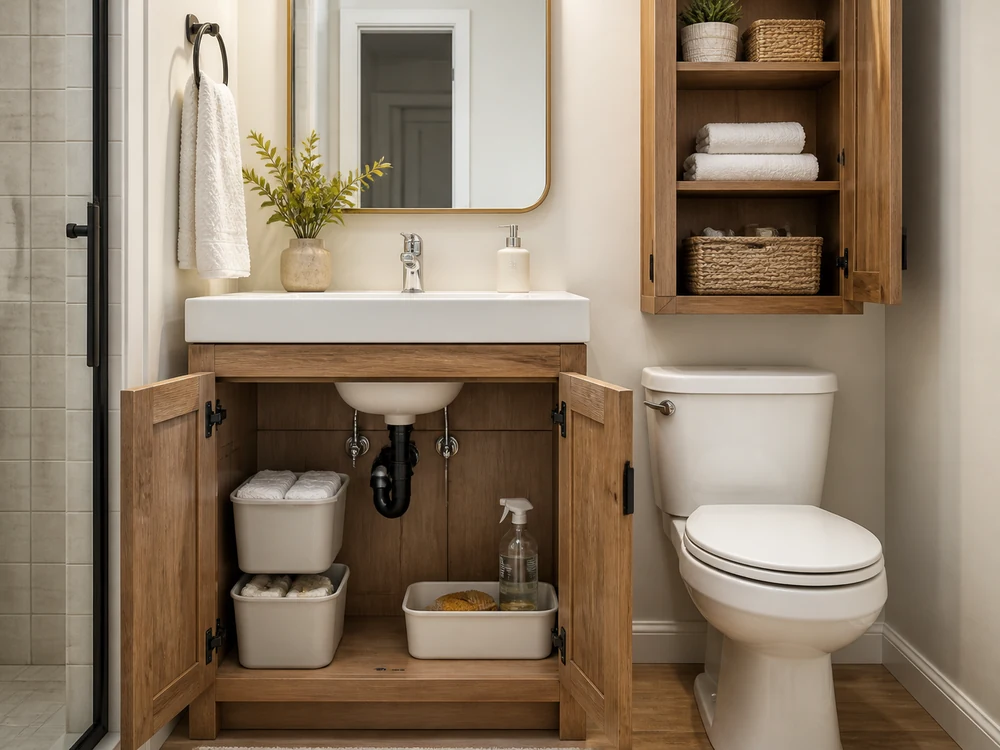
The most polished vanity photo often hides the plumbing completely. Real bathrooms need access to the trap, shutoff valves, and the floor beneath the sink. Storage should work around those elements, not erase them.
Use shallow bins that can be removed quickly. Keep a small gap around pipes. Store anything that could leak in a tray. A neat cabinet is not a success if it delays finding a leak.
Give The Hamper A Real Position
A bathroom hamper is furniture too. If it sits in the walkway or blocks a cabinet, the room will never feel finished. Choose a narrow, lidded, or soft-sided hamper only if it has a real parking place.
If the bathroom is too tight, move the hamper just outside the room and keep only a hook or towel bar inside. Forcing laundry storage into a wet room can make the room feel smaller and less clean.
Use Style As The Last Filter
Once depth, access, moisture, and movement work, style can decide between finishes. Warm wood can soften tile. Matte metal can keep a shelf visually light. A mirrored cabinet can add function and light.
Do not let style override the tests. Bathroom furniture earns its place by surviving water, opening properly, and staying easy to inspect.
Plan For The Things Guests Notice First
Guests notice the sink approach, the towel location, and whether there is a dry place for a small toiletry bag. They do not need to see every backup product you own. Small bathroom furniture should make those first-use moments feel clear.
A hook near the sink, a slim shelf for one guest towel, or a shallow drawer that keeps the counter open can make the bathroom feel more generous than a tall cabinet packed with supplies. Think of the furniture as hospitality infrastructure, not only household storage.
Separate Beauty Tools From Cleaning Tools
Hair tools, skincare, razors, spare paper, and cleaning products should not fight for the same furniture zone. Mixing them makes the cabinet harder to clean and less pleasant to use. It also increases the chance that a damp sponge or leaky cleaner sits too close to towels or personal items.
Use height as the divider. Personal daily items can live near the sink. Cleaners belong low, contained, and easy to remove. Spare towels and paper should stay dry and higher if possible. A small cabinet works better when each shelf has a different risk level.
Use Open Space Below Furniture As A Cleaning Tool
Furniture with legs or a floating base can make a small bathroom easier to maintain because dust, hair, and moisture are visible. A solid base can hide grime along the floor line. That does not make solid furniture wrong, but it changes the cleaning commitment.
Look at the bottom edge before buying. If a mop or cloth cannot reach the area easily, the piece may make the room feel older faster. In a bathroom, cleanability is part of the furniture’s design.
Buy Less Capacity Than The Cabinet Promises
Bathroom furniture often advertises capacity, but small rooms need recoverable capacity. A cabinet that holds too much can hide expired products, damp towels, and duplicate supplies. Leave one shelf or drawer partly open so the room has room for normal replenishment.
That small margin prevents every shopping trip from becoming a rearranging project. The cabinet should absorb life quietly, not operate at maximum density all year.
Quick Decision Guide
| Problem | Best Move | Watch Out For |
|---|---|---|
| Sink area feels tight | Shallow vanity or wall cabinet | Measure open drawers |
| Towels have no home | Slim linen cabinet | Keep heavy items low |
| Under-sink area is messy | Removable bins around plumbing | Leave valves visible |
| Floor is hard to clean | Floating or legged piece | Confirm wall support |
Related Her Neat Nest Guides
- Small Bathroom Storage
- Narrow Bathroom Storage
- Bathroom Organizer Shelf
- Renter Friendly Bathroom Storage
Final Takeaway
Bathroom furniture small spaces can use should feel almost tailored. Measure depth, test moving parts, protect plumbing access, and choose materials that tolerate moisture. The room will look better because the furniture stops fighting the bathroom’s real constraints.
FAQ
What bathroom furniture works in a small bathroom?
Slim vanities, shallow wall cabinets, narrow linen cabinets, removable under-sink bins, and compact hampers can work when they preserve door movement and plumbing access.
Should small bathrooms use floating furniture?
Floating furniture can make the floor feel more open and easier to clean, but it needs proper wall support and installation.
How deep should small bathroom furniture be?
It depends on the room, but shallow pieces usually work better. Measure the closed footprint and the open drawer or door footprint before buying.