
A bathroom organizer shelf can be the most useful piece in a tight room, but it can also become a tiny stage for clutter.
The difference is whether the shelf has rules. Without rules, travel bottles, duplicate products, spare rolls, towels, and cleaning tools all compete for the same open view.
Open bathroom shelving is visually loud in a small room. Every bottle, basket, towel edge, and backup roll becomes part of the design whether it deserves that attention or not.
bathroom organizer shelf should be evaluated as a working system: what gets wet, what must stay dry, what has to move first, and what becomes unsafe when it is overloaded.
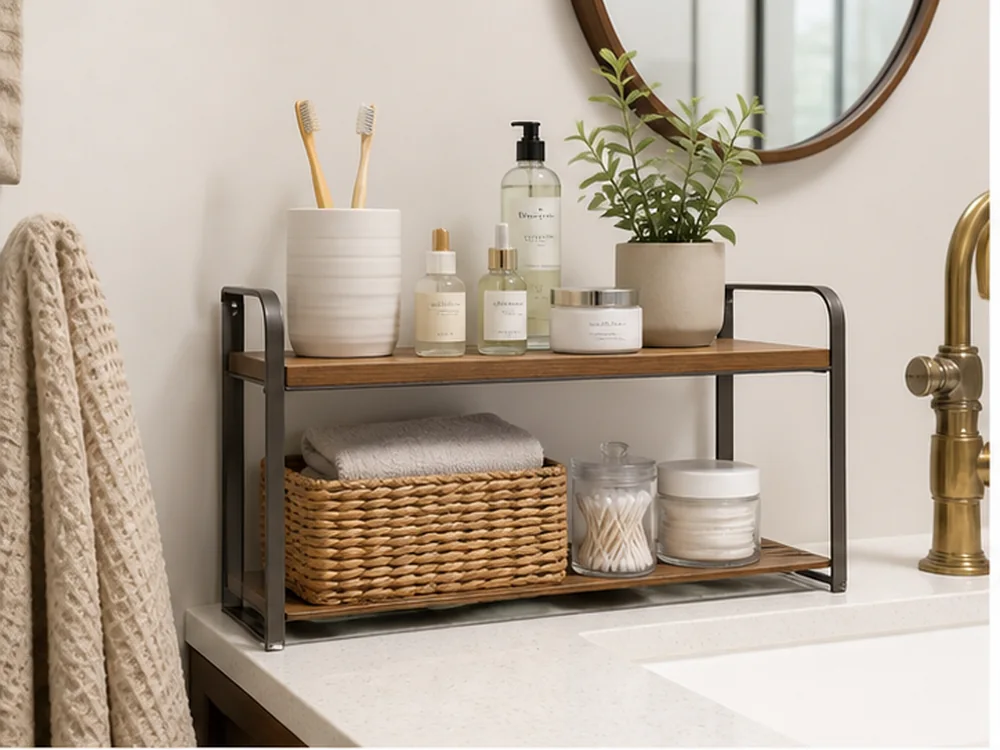
Bathroom Organizer Shelf Starts With Edit Before You Add Tiers
Do not solve a crowded sink by adding more levels first. Remove expired, duplicated, empty, and rarely used products, then decide whether the remaining items deserve open storage.
Use this section as a real-life check for Bathroom Organizer Shelf Ideas: look at the wet edge, the hand path, and the object that usually gets returned last. If Bathroom Organizer Shelf Starts With Edit Before You Add Tiers still works after an ordinary evening, it deserves space in a small home.
For an organizer shelf, editing comes before buying. Count the products that are half-used, expired, duplicated, or kept only because they are visible; those are the items that make an open shelf look busy before the shelf has done anything wrong.
Try building the tier with only tomorrow morning's routine, then add one backup basket if the shelf still has breathing space. That exercise keeps the organizer from becoming a public inventory of every spare bottle in the room.
Give The Top Tier To Light, Dry Items
The highest tier should hold light dry items, not heavy glass or wet products. Keep weight and reach realistic for the person using the bathroom daily.
The useful detail in Give The Top Tier To Light, Dry Items is not the container itself but the friction it removes. Watch what has to be lifted, dried, or moved aside, then keep the part of Bathroom Organizer Shelf Ideas that shortens that motion.
Weight belongs in the lower half of the unit, but visual weight matters too. A row of dark bottles at eye level can make a small bathroom feel narrower than a lighter towel stack or a single lidded box.
Stand at the doorway and squint. If the shelf reads as stripes, labels, and loose shapes before it reads as one clean storage decision, remove one category rather than adding another container.
Keep The Middle Tier For Daily Rhythm
The middle shelf is prime territory. Use it for items that leave and return every day, such as face wash, deodorant, or a small grooming tray.
A polished the organizer shelf should remove one daily hesitation instead of adding another container to a tight room.
Daily rhythm should be obvious from the first glance. The things used every morning deserve the easiest reach, while guest extras, refills, and travel sizes should not interrupt the middle tier.
A useful reset is to return only what was touched this week. Anything else has to earn a protected bin, a cabinet spot, or a higher shelf outside the main routine.
Renters also need a reversible plan: if the organizer shelf depends on holes, adhesive, or pressure against trim, confirm the surface and removal risk before treating it as permanent.
Use The Bottom Tier As The Spill-Aware Zone
A bathroom organizer shelf near the sink or toilet needs a bottom shelf that can be wiped. Avoid paper goods or fabric directly under drippy bottles.
Before buying for bathroom organizer shelf, rehearse the most awkward return: tired hands, a damp floor or dusty edge, and no spare counter waiting nearby.
The bottom tier has to be treated like a spill zone, especially near the sink or toilet. It should tolerate drips, cleaning spray, and fast wiping without making paper goods or towels vulnerable.
Place one washable tray on that level and leave the rest open enough to see dust. Hidden clutter at floor height is still clutter; it is simply harder to clean.
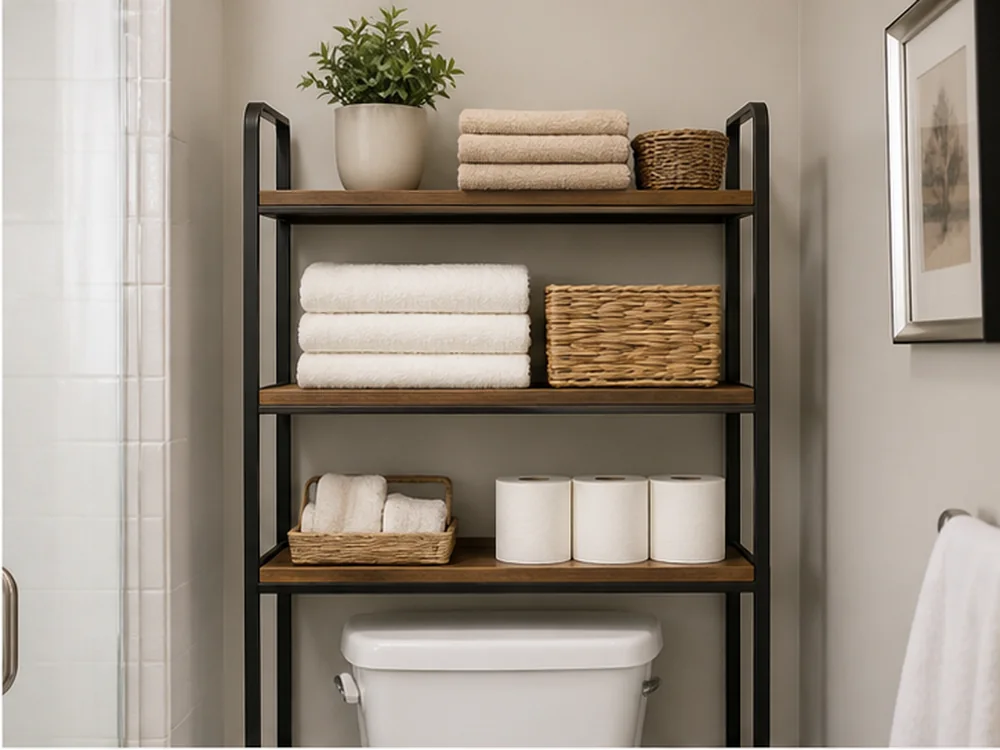
Contain Backups In One Basket
Backups should not spread across the organizer. One basket for extras creates a visual limit and stops the shelf from becoming a mini warehouse.
Capacity matters less than release speed when the room is already compact; the best answer is the one that gets used without negotiation.
Backups are where organizer shelves usually lose discipline. One basket can be useful; three baskets often mean the shelf is compensating for overbuying rather than organizing daily life.
Set a visible limit before shopping for refills. If the basket is full, the next product waits until something is used, not until another tier is added.
Leave Space Around Towels
Towels need air and clean edges. If folded towels fill a shelf so tightly that one towel drags the stack down, reduce the quantity or move them to a cabinet.
Choose materials with the boring future in mind: wiping, drying, tightening, lifting, and checking the back corner after several months.
Folded towels need air as much as they need a home. A tight towel stack may look hotel-neat in a photo, but in a humid bathroom it can hold mustiness and make one towel drag the rest forward.
Keep the towel group short enough that a clean towel can leave without disturbing the shelf. That single-motion test is more useful than a perfect stack.
For a rented home, photograph the surface before installing the organizer shelf, keep the product limits, and avoid any fix that would be expensive to undo at move-out.
Keep Cleaning Supplies Separate
Cleaning supplies do not belong beside skincare or spare towels unless they have their own contained, labeled zone. Separate by use and risk, not by container color.
The quiet advantage of bathroom organizer shelf is control over the first reach and the final reset, not the number of objects a product photo can hold.
Cleaning supplies deserve separation because their job, scent, and risk are different from skincare. A bathroom organizer shelf should not make a spray bottle and a face cloth look like the same category.
If cleaners must stay on the shelf, give them a washable lower caddy with labels facing forward. The point is fast identification, not decorative concealment.
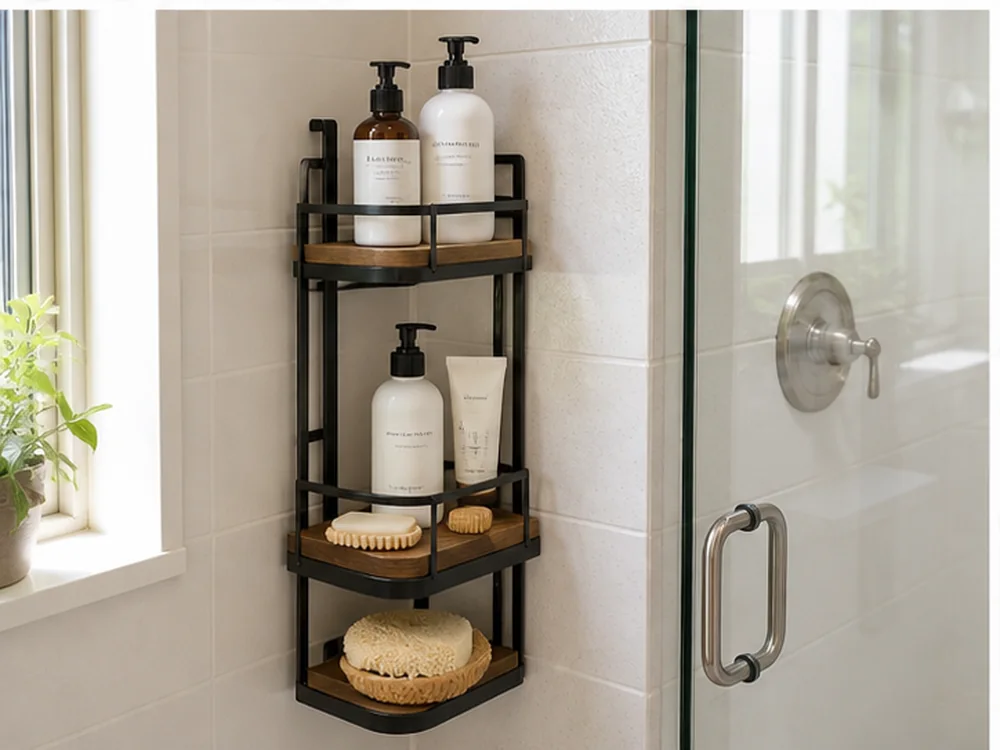
Match Shelf Material To Cleaning Frequency
Open metal, sealed wood, acrylic, and rattan all behave differently in damp rooms. Choose the material you will actually clean, not the one that photographs best.
When two locations both seem possible, choose the one that keeps the floor path clearer and the most vulnerable item easier to inspect.
Material choice should follow the cleaning habit of the person using the bathroom. Rattan, acrylic, metal, and sealed wood can all work, but each fails differently when dust, steam, and product residue build up.
Choose the finish you will actually wipe, not the finish that looks best in a staged corner. Open shelving stays beautiful only when maintenance is part of the design.
Reset The Shelf By Absence
A strong bathroom organizer shelf has empty space. If every inch is filled after the reset, the system has no room for daily movement.
Treat the final margin as working space, not bonus capacity; that margin is what lets hands, cloths, cords, towels, or drawers move cleanly.
A strong reset ends with absence. Empty space on an organizer shelf is not wasted capacity; it is the room's allowance for wet hands, a guest toiletry, or the product that returns slightly out of place.
After the shelf is arranged, remove one more visible item and live with the gap for a week. Most small bathrooms look calmer when the final edit is restraint.
Bathroom Organizer Shelf Ideas Safety And Care
The setup should never override maker directions, lease limits, ventilation, moisture control, furniture stability, or the need to keep exits and plumbing accessible. The safer solution may be a smaller shelf, a lower cabinet, or fewer stored items.
The Organizer Shelf Buying Mistakes To Avoid
Buy only after measuring the real opening, loaded weight, reach path, cleaning access, and material exposure. Skip products that look compact only in an empty room, hide leaks, trap damp fabric, require unsafe overhead lifting, or make daily items slower to use.
The Organizer Shelf Related Reading And Source
- EPA Care for Your Air indoor air quality guide
- Renter Friendly Bathroom Storage No Drilling
- Small Apartment Bathroom Shelf Organization Ideas
- Tiny Bathroom Storage Ideas For Renters
The Organizer Shelf FAQ
What should go on a bathroom organizer shelf?
Use it for daily toiletries, a limited towel stack, one backup basket, or light dry items; keep cleaners and wet items contained.
How do I make a bathroom shelf look less cluttered?
Edit duplicates first, group by use, use one basket for backups, and leave visible space instead of filling every tier.
Is an over-toilet organizer shelf safe?
It can be useful when stable, correctly assembled, and not overloaded; tall units may need anchoring according to product and safety guidance.
The Organizer Shelf Final Check
A bathroom organizer shelf should make editing easier, not let every small product earn a permanent place in the open. That is the standard to keep during the final edit: fewer hidden decisions, clearer access, and a storage choice that makes the next ordinary use easier.