
Small Storage Solutions For Bedrooms That Respect Real Routines
Small storage solutions for bedrooms often look serene when the bed is made and every drawer is closed. The real test arrives later: a phone charger drops beside the bed, a sweater lands on a chair, clean laundry waits too long, and tomorrow’s clothes need somewhere to pause.
A bedroom is not a showroom. It is the room where routines happen half awake. Storage has to respect that softness or it will become another chore.
The strongest bedroom plan gives easy homes to the items that appear daily and slower homes to everything else.
Editorial thesis: Small storage solutions for bedrooms should be designed around low-energy moments, because bedrooms get messy when storage expects discipline at the exact time people are tired.
Bedroom Storage Decision Guide
| Situation | Best Fit | What To Check |
|---|---|---|
| Bedside clutter | Tray plus drawer | Surface stays useful at night |
| Closet overflow | Seasonal rotation | Current clothes get best access |
| Clean laundry delay | One-load basket | Limit prevents a new pile |
| Under-bed textiles | Soft covered bags | Clean and fully dry only |
Start At The Bedside, Where Clutter Begins Quietly
The nightstand is often blamed for mess, but the problem is usually undefined categories. Sleep items, jewelry, books, medication, chargers, tissues, and a glass of water cannot all share the same flat surface.
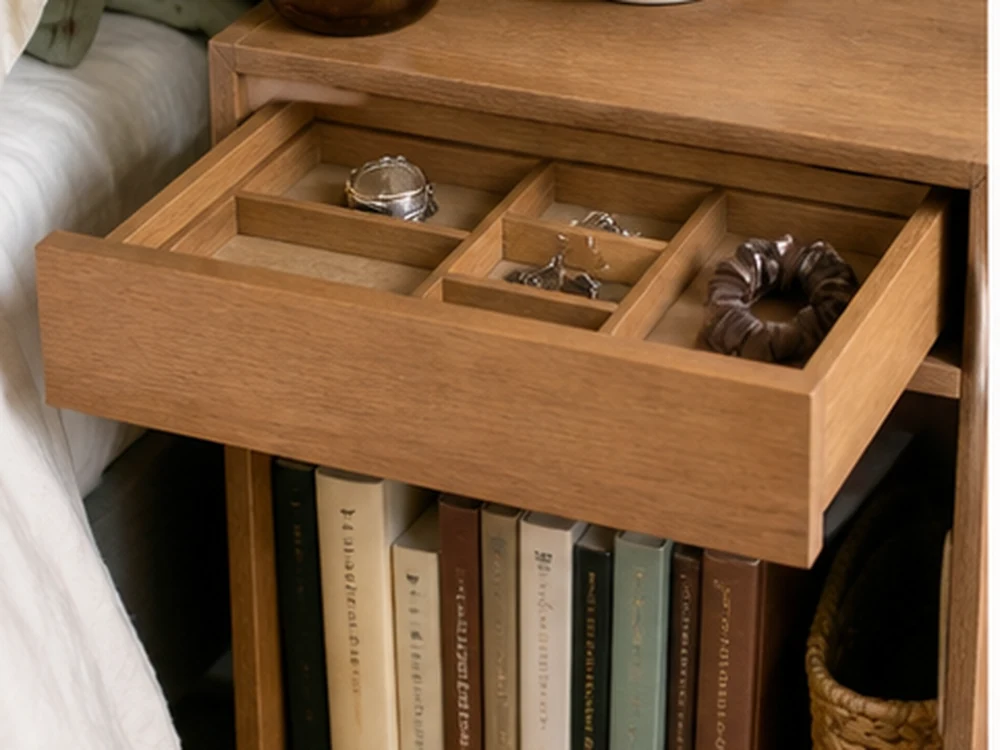
Use a drawer for private small items, a tray for the items that must stay visible, and one vertical slot for the book or device in current use. A bedside zone feels calm when the surface is not asked to remember every habit.
Notice what appears during the last ten minutes before sleep. Glasses, lip balm, a charger, a book, and jewelry need different kinds of containment. When the nightstand only has one open surface, those categories blur together and the bedroom starts each morning with visual noise.
Make The Closet Serve The Current Season First
A small closet fails when it tries to hold all seasons at the same level of access. The current season deserves the easiest rod and shelf space. Off-season knits, heavy linens, and occasional clothing can move to high bins, under-bed storage, or a less convenient drawer.
This one decision often does more than buying another organizer. When the closet stops presenting every garment as equally active, getting dressed becomes faster and the bedroom chair collects fewer maybes.
Use Under-Bed Storage For Textiles With A Calendar
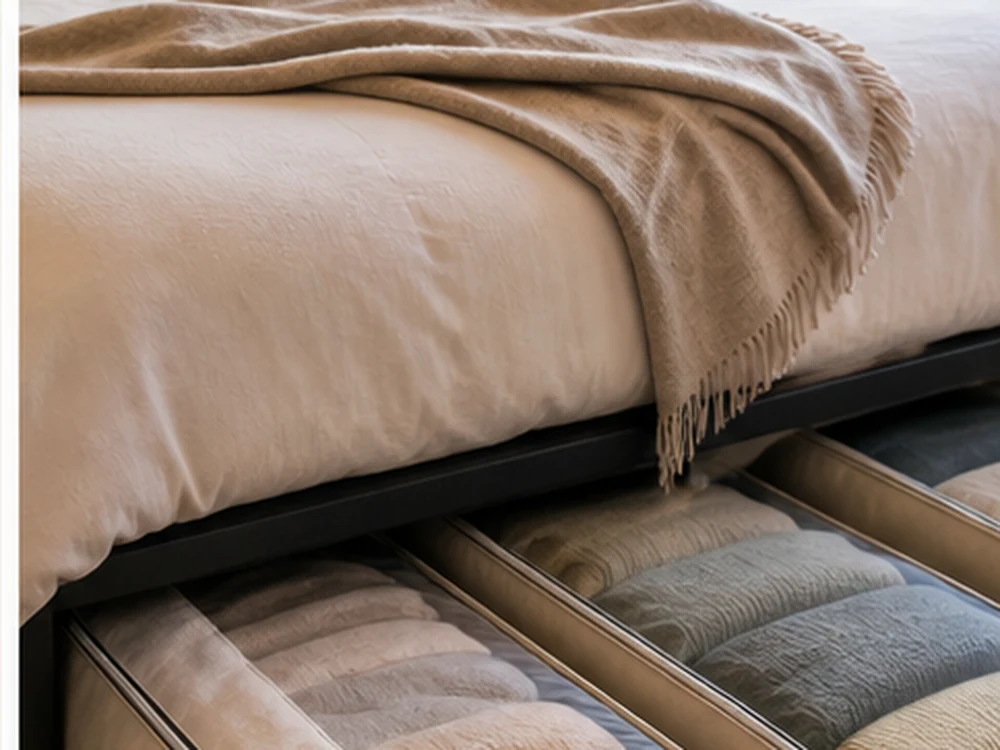
Under-bed storage works best for items with a predictable return date: winter bedding, guest sheets, seasonal sweaters, or spare blankets. It works poorly for items used every morning because the pullout path is too slow.
Choose breathable or sealed storage based on the textile and the room. Anything stored under the bed should be clean, fully dry, and protected from dust. If the bin is too heavy to pull with one hand, split the category before it becomes permanent dead storage.
Under-bed storage should feel like a drawer, not an archive. Keep the categories seasonal, soft, and easy to name from the outside. If you have to open three bins to remember what lives there, the storage is technically hidden but functionally lost.
Give Clean Laundry A Short-Term Landing Place
Many bedrooms do not need more wardrobe storage; they need a respectful place for clean laundry during the gap between drying and putting away. Without that place, the bed, chair, or floor becomes the default.
A shallow basket, divided hamper, or open shelf can hold one load only. The limit matters. If the landing place holds three loads, it stops being a transition and becomes a second closet without structure.
Bedroom clutter often follows the laundry path. Clean clothes need a quick fold zone, worn-again pieces need a visible pause, and true laundry needs a hamper that is easier to use than the floor. Those three routes prevent one soft pile from becoming the room's default system.
Choose Dressers By Drawer Behavior, Not Just Width
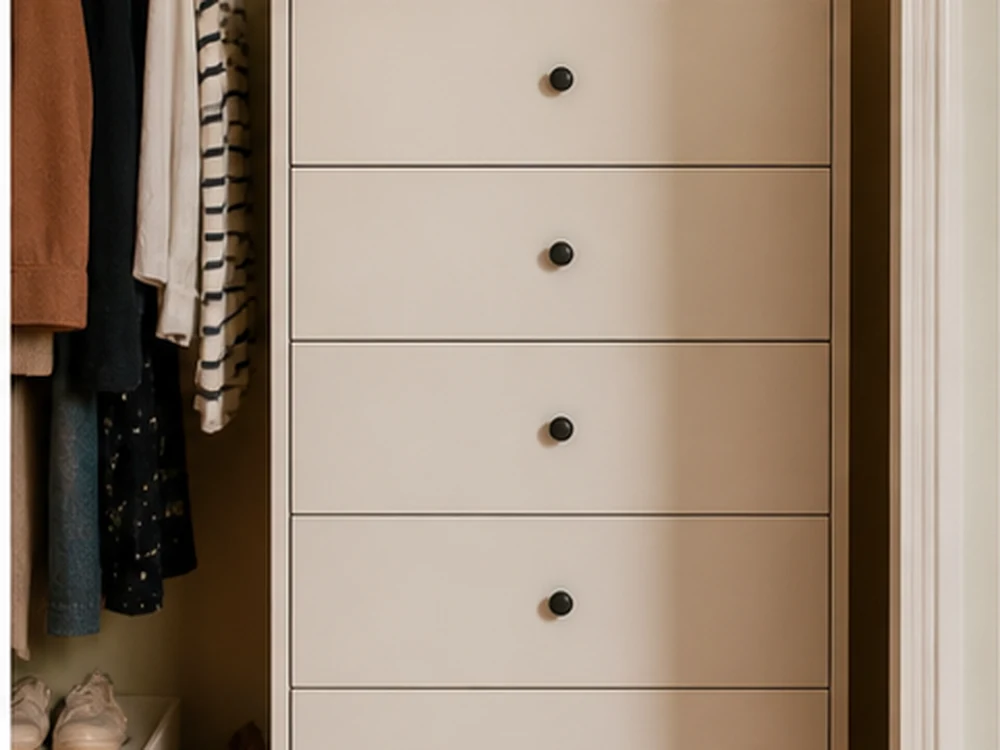
A narrow dresser can still fail if the drawers are too deep, too shallow, or too stiff. Small bedroom storage should make common categories visible at a glance: underwear, sleepwear, exercise clothes, folded knits, or accessories.
Use dividers only where they prevent a real drift. Socks and small accessories benefit. Bulky sweaters may need fewer stacks rather than more compartments. Drawer organization should reduce folding anxiety, not make every reset feel like a puzzle.
Keep Decor From Stealing Storage Jobs
A bench at the end of the bed looks generous until it becomes the laundry pile. A decorative ladder looks charming until it holds yesterday’s outfits forever. Bedroom pieces should be honest about the behavior they invite.
If a surface attracts piles, either give it a container and a limit or remove it from the room. Small storage solutions for bedrooms work better when beauty and behavior agree.
Leave A Morning Path Clear
The route from bed to closet to door should not require stepping around bins. A storage piece that technically fits but narrows the first movement of the day will feel irritating even if the measurements are correct.
Stand where you get dressed and open every drawer, closet door, and bin you expect to use. If one piece blocks another, the room needs fewer layers, not more cleverness.
The first reach of the morning should hold the items that leave with you. If belts, socks, workout clothes, or hair tools sit behind slower categories, the room gets disturbed before the day starts. Put the recurring morning pieces where half-awake hands can find them.
Use Air And Light As Storage Constraints
Bedrooms hold textiles, shoes, paper, and sometimes workout gear, so air matters. Do not pack damp clothing, worn shoes, or recently laundered textiles into sealed storage too quickly.
Guides like EPA indoor air quality guide are useful reminders that comfort at home is tied to moisture, air, and cleanable surfaces. Bedroom storage should help fabrics stay fresh, not hide stale air under the bed.
The Chair Test For Bedroom Storage
If a bedroom has a chair, bench, or empty corner that constantly collects clothes, treat that spot as research. The pile is showing you which decision the current storage system refuses to make. Often the issue is not dirty laundry or clean laundry; it is the in-between outfit that might be worn again.
Give that category a specific place before buying more drawer organizers. A wall hook behind the door, a shallow basket for once-worn clothes, or one open rail can protect the bed and floor from becoming sorting zones. The rule should be narrow enough that it cannot absorb the whole wardrobe.
This is also where adult bedrooms need mercy. A realistic system allows a pause without letting the pause spread. When storage includes a dignified place for unfinished decisions, the room stays calmer because it no longer depends on perfect end-of-day energy.
The goal is not to remove every sign of use. The goal is to prevent temporary choices from claiming the floor, the bed, and the first surface you see in the morning.
That is why the best bedroom storage often looks almost boring. It repeats the same easy motion every day, which is far more valuable than a complicated system that only works after a full Sunday reset.
Boring storage is often the system that survives a busy week.
Build A Bedroom Reset Path
For a fuller small-home system, connect this plan with Small Bedroom Storage Without A Closet, Small Apartment Under Bed Storage Bins, Bedroom Organization Ideas For Small Rooms, and Small Closet Organization Ideas.
A good bedroom reset path is short enough to do on a low-energy evening. Clear the bedside surface, return one clothing category, empty the visible chair or basket, and stop. That limited route works better than a full-room reset that sounds impressive but never happens on a weekday.
The Bedroom Storage Bottom Line
Small storage solutions for bedrooms should feel forgiving without becoming vague. Give tired routines the easiest homes, move inactive textiles out of prime reach, and protect the morning path. The room will look calmer because it is easier to use, not because it has been forced into perfection.
Small Bedroom Storage Questions
What are the best small storage solutions for bedrooms?
Start with bedside containment, seasonal closet rotation, a one-load laundry landing spot, and protected under-bed textile storage. These solve the mess points most small bedrooms repeat.
How do I organize a small bedroom without a closet?
Use a slim dresser, wall hooks for current items, under-bed storage for seasonal textiles, and one visible clothing rail only if it can stay edited.
Is under-bed storage good for bedrooms?
Yes, for clean, dry, low-frequency textiles or seasonal items. It is less helpful for anything needed daily or anything too heavy to pull out easily.