
Under The Counter Storage: Smarter Rules For Awkward Cabinets
Under the counter storage looks like hidden capacity, which is why it is so often overloaded. A cabinet door closes, the clutter disappears, and the awkward little cave under the sink is expected to behave like a normal shelf.
It is not a normal shelf. It has pipes, damp risk, cleaning chemicals, dark corners, and hinges that limit what can slide out. Good storage begins by respecting those interruptions.
Once the obstacles are treated as part of the plan, under-counter space can become one of the most useful zones in a small home.
Editorial thesis: Under the counter storage should be built around obstacles and inspection first, because pipes, moisture, heat, and cleaning products make this space less simple than an empty cabinet shelf.
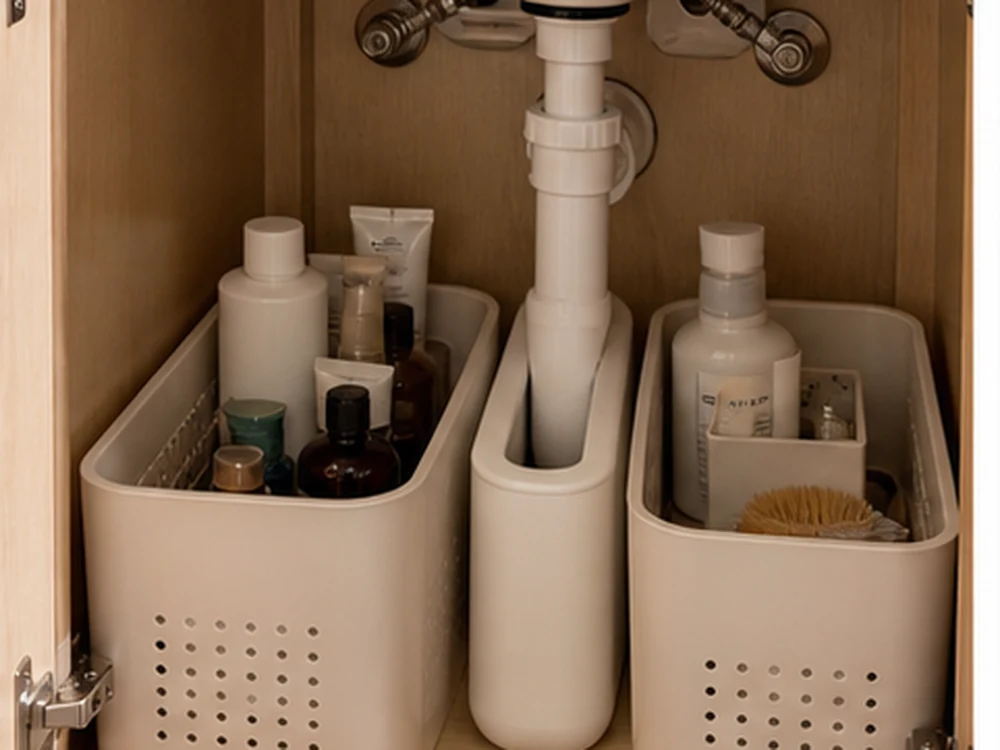
Under-Counter Cabinet Decision Guide
| Situation | Best Fit | What To Check |
|---|---|---|
| Visible plumbing | Two narrow bins | Leave valves and pipes inspectable |
| Deep cabinet | Handled bin or pull-out | Check door and hinge clearance |
| Mixed cleaners and towels | Separate wet and dry zones | Protect textiles from bottles |
| Rental cabinet floor | Removable liner or tray | Use light color to reveal drips |
Draw The Obstacles Before Buying A Bin
Open the cabinet and sketch the objects that cannot move: drain pipe, supply lines, disposal, shutoff valves, hinges, shelf pins, and door frame. Measure height in several places, not just at the front edge.
A bin that fits the open space may still collide with plumbing when it slides. Under the counter storage needs a map before it needs a product. The best container is often two narrow bins around the pipe, not one heroic box across the full width.
A cabinet under a counter rarely has a clean rectangle inside. Measure the pipe path, valve handles, disposal housing, and door hinge swing before choosing bins. The best container is often shorter or narrower than the opening because it respects the obstacles that must stay reachable.
Keep Inspection Access Visible
The most dangerous under-counter system is the one that hides a leak beautifully. Leave valves visible and keep a small gap around pipes so dampness, rust, or drips can be noticed early.
Use clear or open bins for areas near plumbing and avoid stacking paper goods directly on the cabinet floor. If something must be moved every time you check for moisture, the layout is too dense.
The emptiest part of the cabinet is not wasted space when it gives you a leak check. Leave a narrow lane where you can see the back wall, floor, and pipe connections. That gap makes under-counter storage feel calmer and helps small problems stay small.
Separate Cleaners From Textiles
Bathrooms and kitchens often store towels, sponges, paper rolls, trash bags, and cleaning products under the same counter. That mix is convenient but not always wise. Damp bottles and strong cleaners should not rub against guest towels or cotton products.
Create a cleaning side and a dry side. A tray for bottles, a lidded bin for vulnerable goods, and a towel stack away from pipes can make the cabinet easier to trust.
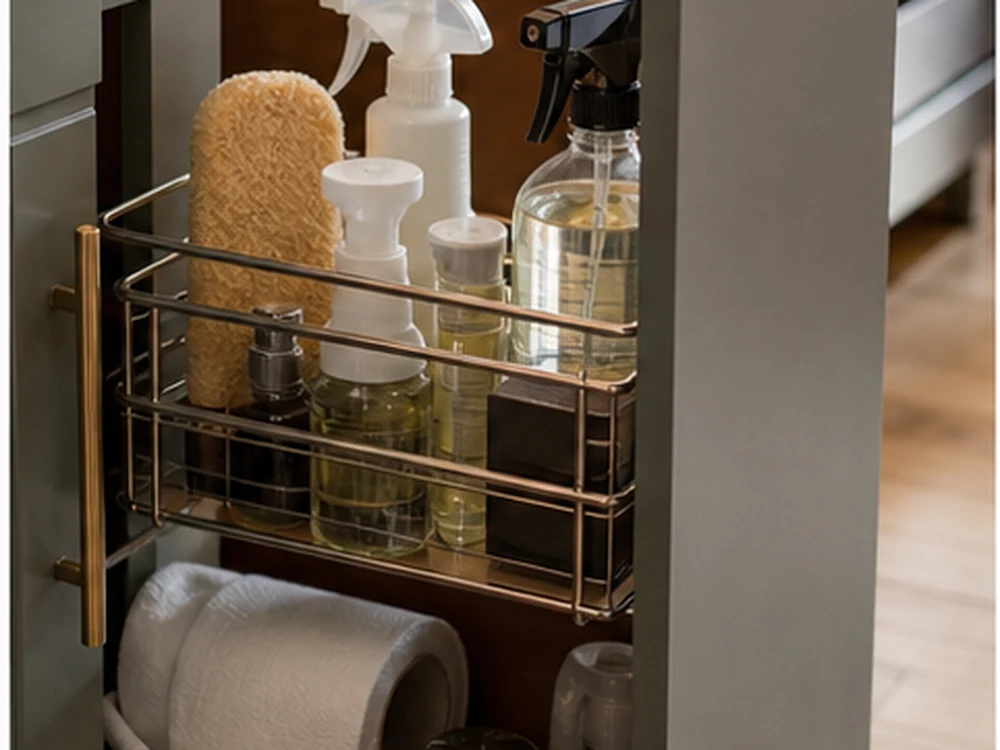
Do not let towels, paper refills, and cleaning bottles share one deep bin. A tiny leak or loose cap can travel through soft items before you notice it. Keep liquids in wipeable trays and keep absorbent backstock higher, drier, or in a separate protected container.
Use Pull-Outs Only When They Clear The Door
Pull-out racks are excellent when the cabinet is deep and the door opening is generous. They are frustrating when hinges, pipes, or narrow frames stop the drawer before it reaches useful extension.
Measure the inside door clearance and test how far the rack must pull to access the back row. If the pullout cannot extend enough, use handled bins instead. A bin can angle around obstacles in a way a rigid track cannot.
A pullout is useful only if the door, hinge, and handle let it move without twisting. Test the full path with the cabinet door open at its real angle. If the tray bumps the frame or forces you to lift it, a simpler open bin may be easier to maintain.
Size Containers By Product Height, Not Cabinet Height
Tall spray bottles create strange dead zones. If the tallest bottle barely clears the plumbing, the top of the cabinet becomes unusable. Group tall bottles together and use shorter bins for brushes, cloths, dishwasher tablets, or backup soap.
Avoid stacking small items under tall items just to use every inch. Under the counter storage should reveal what is inside quickly, especially when a spill or late-night cleanup needs fast access.
Protect The Cabinet Floor
A washable liner, shallow tray, or leak-resistant mat can save a cabinet base from slow damage. This matters in rentals, where water stains under a sink can become a deposit issue even when the original leak was small.
The liner should be removable and light-colored enough to show drips. Dark, patterned liners can hide the very problem they are meant to control.
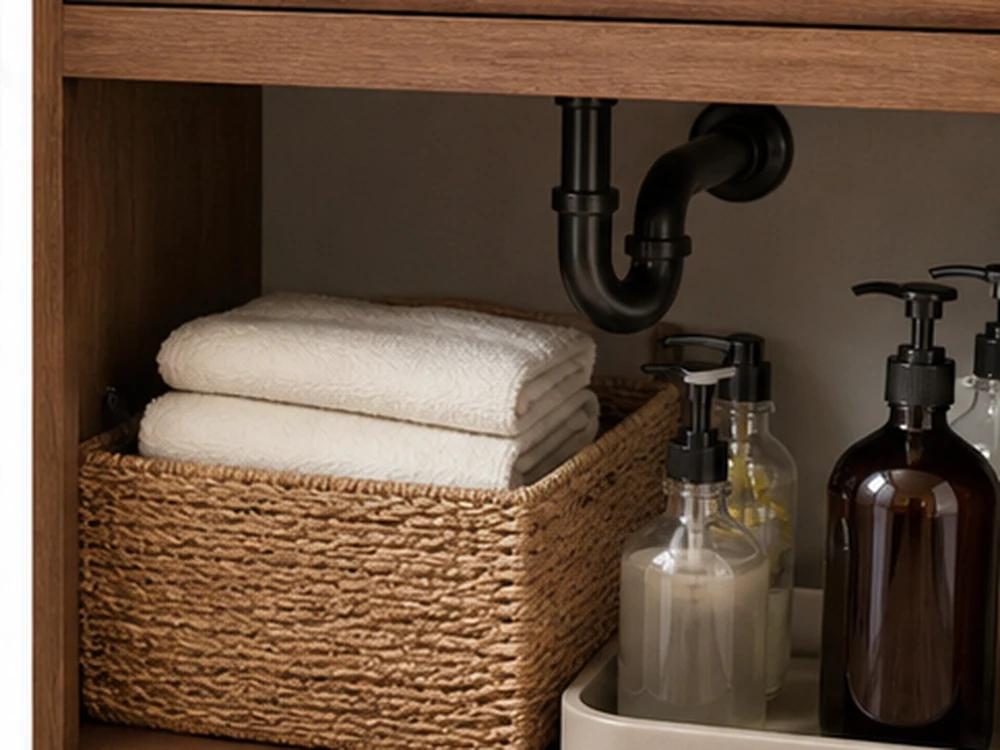
Treat the cabinet floor like a surface you will need to read later. A light liner, shallow tray, or washable mat can show spills before they spread into corners. Avoid hiding the entire base under dark bins, because you want stains, dust, and moisture marks to be visible early.
Label By Task, Not By Product Type
Labels such as cleaners, backup, and cloths are fine, but task labels often work better: daily wipe-down, toilet refill, dishwasher reset, guest towel, leak check. They tell the next person what the bin is for, not just what is inside.
Task labels also reveal duplication. If two bins both claim to be daily cleaning, the cabinet is probably holding more bottles than the routine requires.
Keep Moisture And Air In The Decision
Closed cabinets below sinks can stay humid after leaks, hot showers, or dishwashing. Do not store damp cloths there indefinitely, and do not pack the cabinet so tightly that air cannot move around pipes and containers.
EPA indoor air quality guide is a helpful outside reference for thinking about moisture and home air quality. Under-counter storage should make drying and cleaning easier, not hide the conditions that create stale cabinet smells.
The Leak-First Reset
Before reorganizing under the counter, empty the cabinet and check it like a maintenance zone. Look for swollen cabinet base, mineral marks, rust around fittings, soft spots in shelf liners, sticky bottle rings, and dark back corners. Storage should never cover signs that the cabinet itself needs attention.
Once the cabinet is clean, rebuild from the pipe outward. Put inspection access into the layout before adding the products back. A small flashlight, a light-colored tray, and a clear path to the shutoff valves can be more valuable than another tier of bins.
This leak-first reset changes what belongs under the counter. Items that would be ruined by a drip should move higher or into a protected container. Bottles that might leak should sit in a washable tray. The goal is a cabinet that looks organized and can still tell you when something is wrong.
After that, keep the front row for the things used weekly and the back row for protected backup. The cabinet will feel less packed because every item has a reason to be in that specific depth.
If a guest or partner can open the cabinet and understand the zones in ten seconds, the layout is probably strong. Confusion under the counter almost always turns into duplicate bottles and forgotten supplies.
Clarity matters because these cabinets are usually opened in a hurry, with wet hands or a small household problem already underway.
Connect The Cabinet To The Room
For a fuller small-home system, connect this plan with Under Kitchen Sink Organization Ideas, Under Bathroom Sink Organization For Renters, Small Bathroom Cabinet Organization, and Small Apartment Kitchen Cabinet Organization.
The Under-Counter Bottom Line
Under the counter storage is best when it admits the cabinet is awkward. Plan around pipes, protect the floor, separate wet and dry categories, and keep inspection easy. The result is not just a neater cabinet; it is a cabinet you can use without wondering what is happening in the dark back corner.
Under The Counter Storage Questions
What should I store under the counter?
Store task-based categories such as daily cleaners, trash bags, dishwasher supplies, dry backup items, or towels only when they are protected from moisture and separated from bottles.
How do I organize under the counter around pipes?
Use two narrow bins, shallow trays, or a pull-out that clears the pipe and door frame. Keep valves visible so leaks can be spotted early.
Should towels go under the bathroom counter?
Towels can go there only if the space stays dry, clean, and separated from damp bottles or cleaning supplies. If the cabinet is humid, store towels elsewhere.