
Small bedroom storage without a closet starts with one practical question: what needs to be easier tomorrow morning, not what would look best in a perfect photo. This guide keeps the setup realistic for small homes, rentals, and busy weeks.
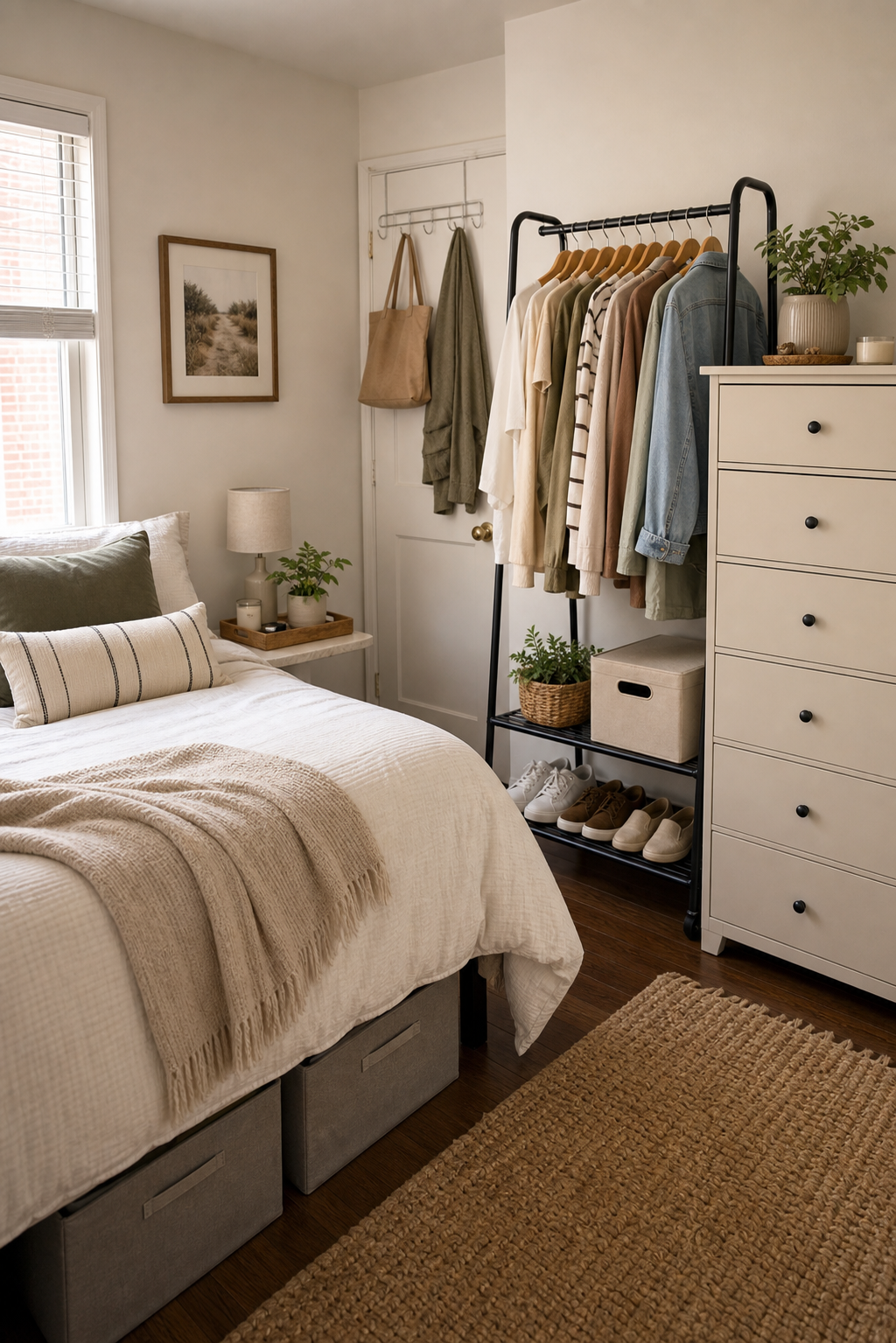
Table of Contents
Small Bedroom Storage Without A Closet: Quick Answer
The best small bedroom storage without a closet plan protects the easiest space for daily use, moves overflow one step away, and uses containers that can be reset quickly. Start with the items you touch most often, then give backups and occasional items less convenient homes.
This guide keeps the advice focused on the room problem itself: what needs first reach, what can move to overflow, and which storage choice will still work after a busy week.
Separate Daily Clothes From The Full Wardrobe
A no-closet bedroom becomes messy when every piece of clothing tries to live in the easiest spot. Start by separating daily clothes from off-season, occasional, and sentimental items. The daily group deserves the rack or dresser. Everything else needs a lower-priority home.
This prevents the garment rack from becoming a crowded display. It also makes laundry easier because clean clothes have realistic destinations.
Make A Freestanding Wardrobe Zone
A compact garment rack can replace part of a closet, but only if it has limits. Hang the clothes you wear most, keep shoes on a lower shelf, and use one closed bin for accessories or overflow.
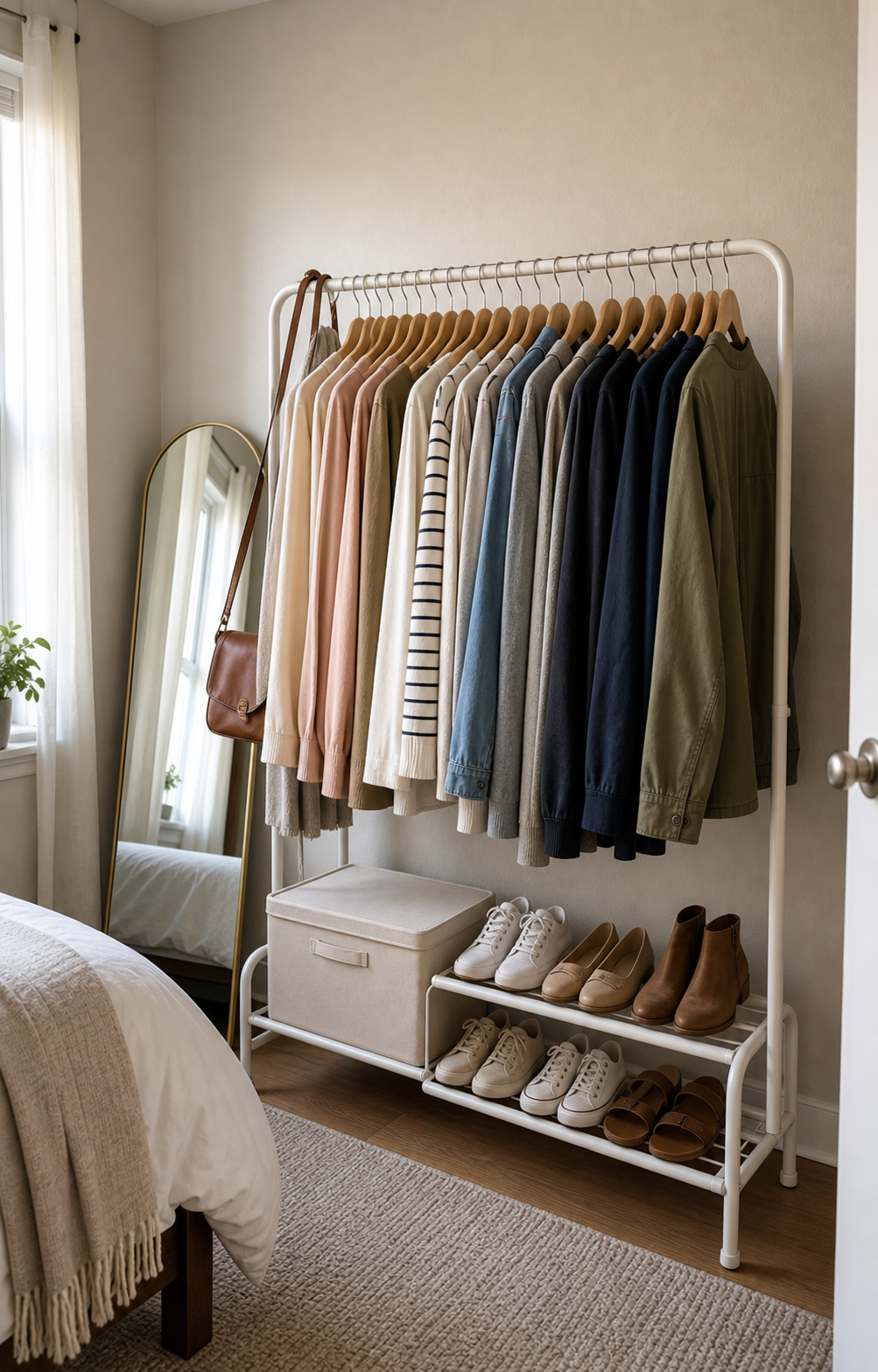
Avoid overloading the rack. If it bows, wobbles, or blocks the walking path, the system is already too full.
Use Under-Bed Storage For Overflow
Under-bed bins are useful for sweaters, extra linens, seasonal shoes, and backup bedding. Choose shallow bins that pull out easily and leave enough room to clean around the bed.
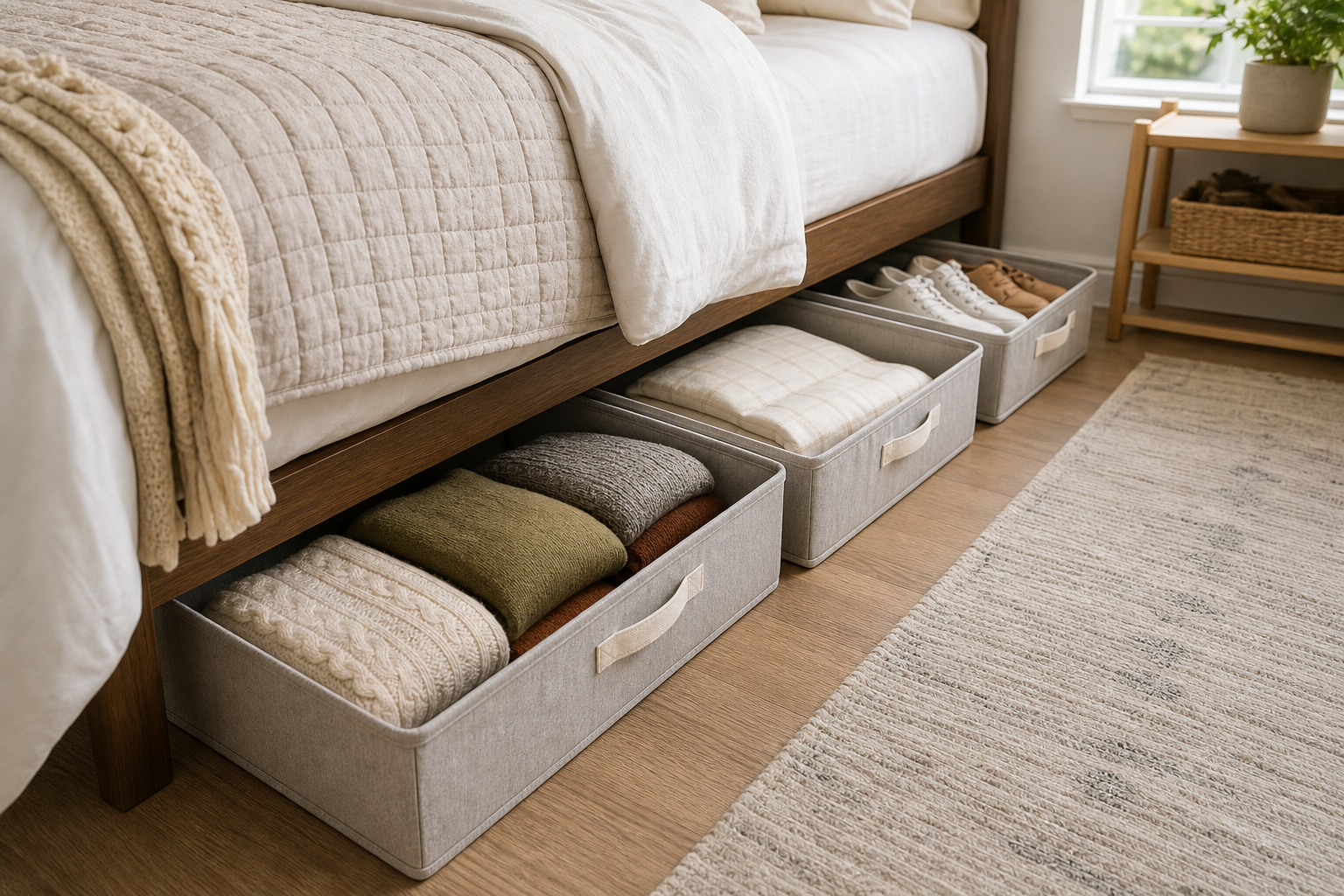
Do not put daily clothes under the bed unless there is no other option. Storage that is slightly annoying to reach works better for items you use less often.
Let The Dresser Do Real Work
A dresser is not just backup storage. Give each drawer a job: everyday tops, bottoms, sleepwear, workout clothes, or accessories. Drawer dividers help only when the categories are already clear.
If drawers are packed tight, remove duplicates before buying a second dresser. More furniture can make a small bedroom feel smaller.
Use The Door For Light Repeat Items
Over-door hooks can hold robes, tomorrow’s outfit, belts, or a light bag. They should not carry heavy stacks of clothes. The door still needs to close easily and quietly.
If the door zone looks messy from the hallway, reduce it to one or two repeat-use items.
Create A Laundry Reentry Rule
No-closet rooms often fail when clean laundry has nowhere to go. Keep empty hangers on the rack, leave one dresser drawer margin, and fold laundry before it reaches the bed.
A system that cannot accept clean laundry is not finished. It will turn the bed, chair, or floor into storage.
Rotate Seasonally Before Buying More
Twice a year, move off-season clothes into bins and bring current pieces forward. This makes a small bedroom feel larger without adding furniture.
If a piece has not been worn through two seasons, donate, repair, or store it outside the daily zone.
Quick Buying Checklist
Before buying anything for small bedroom storage without a closet, measure the space and decide which category deserves the easiest reach. A product that technically fits can still fail if it blocks a door, drawer, cabinet, walkway, pipe, outlet, vent, or daily movement.
- Measure width, depth, and height before buying storage for small bedroom storage without a closet.
- Choose freestanding, removable, or cabinet-supported storage when renting.
- Keep heavy items low and light repeat-use items higher.
- Leave one empty margin so the system can be reset without a puzzle.
- Take one phone photo after the reset so you know what the working version looks like.
What Not To Buy Yet
Skip any organizer that requires perfect habits. If the item has to be folded, aligned, nested, or returned with two hands every single time, it may not survive a normal week. The safest version of small bedroom storage without a closet is usually boring, visible, and easy to restore.
Also avoid buying a full matching set before testing the layout. Matching bins can waste space when shelves, cabinets, counters, or closets have awkward dimensions. Test one zone first, then repeat what works.
Three Layout Recipes To Try First
The daily-use recipe: Put the five to ten items you touch most often in the easiest zone, then move everything else one step farther away. This recipe is best when the area looks cluttered even after you tidy it. It makes small bedroom storage without a closet feel calmer because the visible space has fewer decisions.
The overflow recipe: Keep the main zone light and create one overflow spot for backups, seasonal items, or duplicates. The overflow spot should be easy enough to reach when you need a refill but inconvenient enough that it does not become daily clutter. This is especially useful in rentals and small rooms where one crowded shelf can make the whole space feel stuck.
The renter-safe recipe: Put weight on the floor, inside cabinets, on a dresser, or on freestanding furniture. Use removable products only for lightweight repeat-use items. This version protects the space and keeps small bedroom storage without a closet from depending on an adhesive hook, a tight corner, or a product that only works in a staged photo.
Common Mistakes To Avoid
The first mistake is buying storage before removing duplicates. Extra bottles, extra linens, extra clothing, and extra tools make every organizer look too small. Edit the category first, then decide what size container it actually needs. The second mistake is hiding daily items too well. A closed bin can look tidy, but if it makes a daily item annoying to reach, that item will return to the counter, bed, floor, or nearest flat surface.
The third mistake is ignoring the reset path. If an item is easy to take out but hard to put back, the system will fail during a normal week. Good small bedroom storage without a closet should make returning the item almost as easy as grabbing it. That usually means fewer categories, shorter stacks, lighter bins, and enough empty space for your hand to move.
A Simple Seven-Day Test
After setting up the first version, use it for a full week before buying more. Notice which items drift out of place, which containers are too full, and which categories still need a better home. A week of normal use tells you more than a perfect reset photo. If the same object lands in the same wrong spot three times, move the storage closer to that spot instead of blaming the habit.
At the end of the week, remove one item, resize one category, or move one container. Small adjustments work better than rebuilding the whole space. The goal is not a flawless shelf. The goal is a setup that still makes sense when you are tired, busy, or putting things away quickly.
Container Sizing Rules That Prevent Clutter
Containers should fit the category, not the other way around. A deep basket can hide too much, a narrow tray can become crowded, and a tall bin can make lower items disappear. Choose shallow containers for daily items, handled bins for pull-out categories, and open baskets only when the contents are easy to recognize at a glance.
Leave a little empty space in every container. The empty margin is not wasted space; it is what lets the system accept real life. If a bin is packed perfectly on day one, it will overflow as soon as laundry returns, groceries come home, or one extra backup item is added. A working setup needs room for the ordinary mess of a week.
How To Decide What Stays Visible
Visible storage is best for items used daily or items that are forgotten when hidden. Hidden storage is better for backups, seasonal items, occasional tools, and anything that creates visual noise. When a category is visible, keep it smaller and neater. When a category is hidden, make it easy to pull forward so the back of the shelf does not become a dead zone.
A good rule is to store by frequency first and by beauty second. The prettiest setup will not last if the most-used object is stored behind three other things. Place repeat-use items where your hand already goes, then use bins, trays, carts, or shelves to make that spot look intentional.
When To Stop Organizing
Stop when the space is easier to use, not when every product matches. The last ten percent of styling often adds the most cost and the least function. Matching labels, extra baskets, and decorative containers can wait until the basic system survives normal use.
If the area can be reset in a few minutes, if the main category is easy to find, and if the floor or counter is no longer catching overflow, the system is doing its job. Save the remaining budget for a problem that still slows down the household.
How To Keep The System Working
Give the setup seven days before calling it finished. Notice what lands on the floor, what stays on the counter, what never makes it back into a bin, and what you still cannot find. Those friction points show where small bedroom storage without a closet needs a smaller category, a more visible container, or fewer items.
Once a week, remove trash and empty packaging, bring duplicates forward, return each category to its zone, and decide whether anything has outgrown its container. A good system is not a one-time makeover. It is a short reset that keeps small bedroom storage without a closet from sliding back into clutter.
Helpful Sources And Related Guides
Use practical storage with common sense: keep heavy furniture stable, avoid moisture traps, and keep cleaning or food-related items in safe zones.
- CPSC tip-over information center
- Small Closet Organization For Lots Of Clothes
- Entryway Organization Ideas Without A Closet
- Small Spaces
FAQ
How do you store clothes in a bedroom with no closet?
Use a limited garment rack for daily clothes, a dresser for folded categories, under-bed bins for overflow, and door hooks only for light repeat-use items.
Are garment racks good for small bedrooms?
They can work well if they are not overloaded and if the bedroom still has a clear walking path.
What should go under the bed?
Store off-season clothes, spare linens, occasional shoes, and backup bedding under the bed. Keep daily clothes easier to reach.
Final Takeaway
Small bedroom storage without a closet works when the setup is honest about space, weight, frequency, and daily habits. Start with the zone that bothers you most, make it easy to reset, and keep backup storage from taking over the easiest place to reach.