
how to organize deep pantry shelves is easier when the system matches the way the space is actually used. In a small home, the best organizer is not always the biggest one. It is the one that makes the next normal weekday easier: grabbing breakfast, putting shoes away, finding a toy piece, or clearing a stack of mail before it spreads.
This guide focuses on practical, renter-friendly steps that can be tested before you buy more storage. Use it as a working plan, not a perfect-room checklist.
How To Organize Deep Pantry Shelves: The Simple Rule
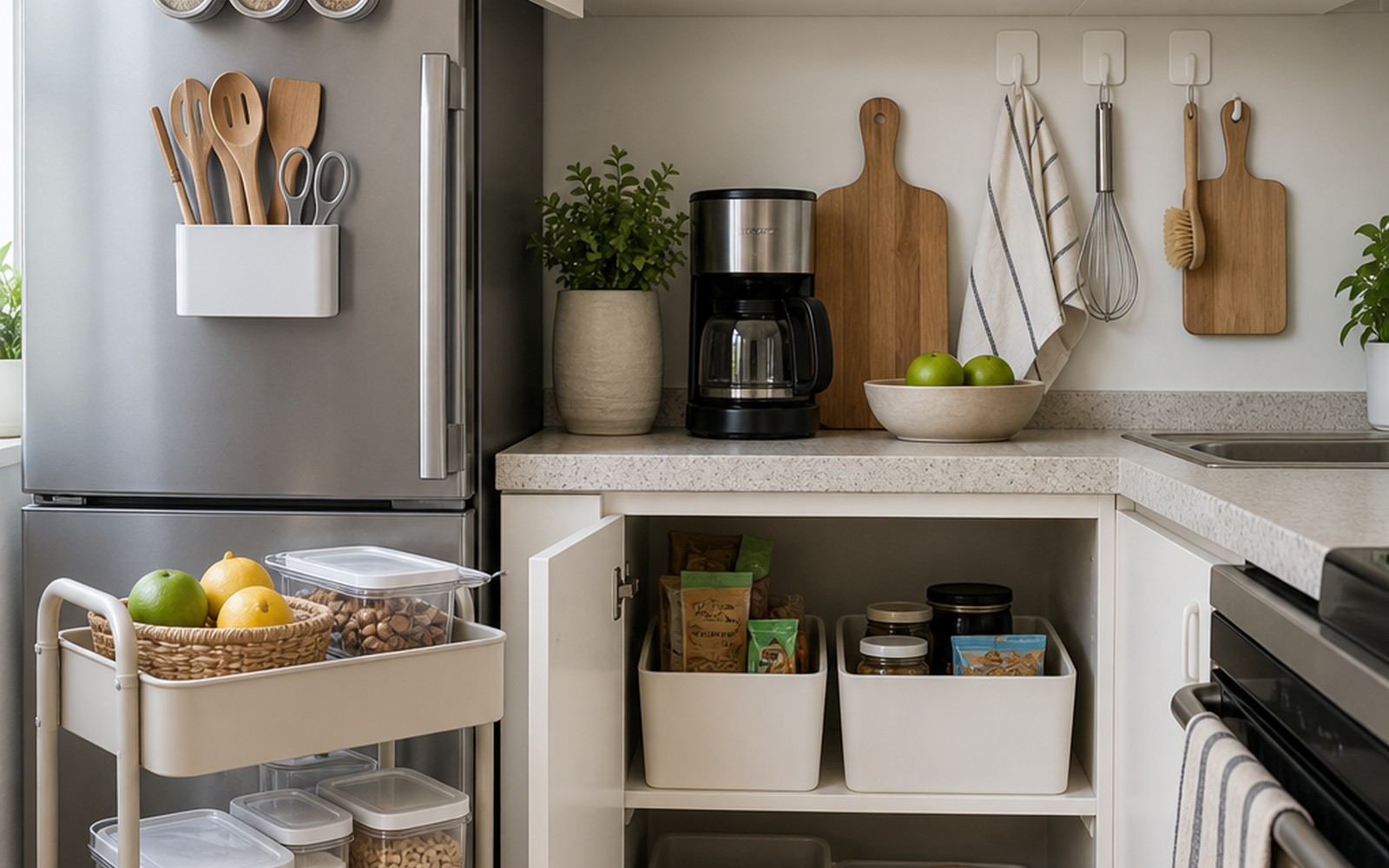
The simple rule for how to organize deep pantry shelves is to store by frequency first and appearance second. The item used every day should be easiest to reach. Backups, seasonal pieces, duplicates, and occasional tools can move one step farther away. This keeps the visible space useful instead of crowded.
Start By Emptying One Shelf, Not The Whole Pantry
Deep shelves become overwhelming when every category is pulled out at once. Start with one shelf and sort it on the counter. Keep breakfast items, baking supplies, snacks, canned goods, and dinner staples in separate piles so you can see what the shelf is actually holding.
This smaller start matters because how to organize deep pantry shelves is mostly a visibility problem. If you empty the whole pantry, you may rush the decisions just to clear the counter. One shelf at a time lets you measure real categories and choose containers that match the food you already buy.
Give The Back Row A Specific Job
The back of a deep shelf should not hold random leftovers from every category. Use it for backstock, duplicates, occasional baking items, or extra paper goods. Daily food belongs in the front row because it needs to be seen without digging.
A deep shelf works best when the back row is intentional. If you cannot name the job of the back row, it will become the place where food expires quietly.
Use Pull-Out Bins For Loose Categories
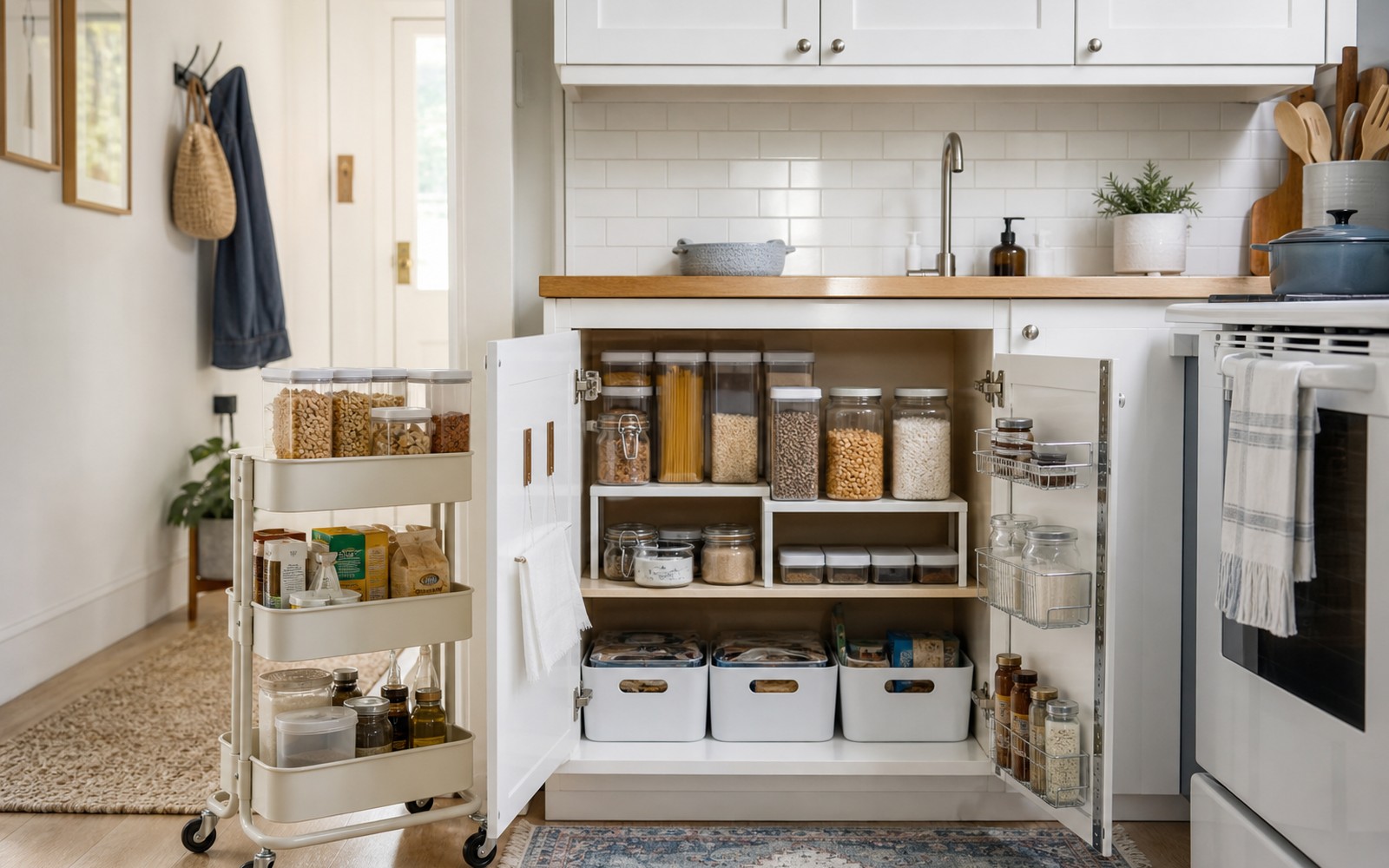
Pull-out bins are the easiest fix for packets, snack bars, small bags, onions, potatoes, and breakfast refills. The handle matters more than the label because the bin has to slide forward without scraping the shelf or catching on a door hinge.
Choose a bin depth that leaves an inch or two behind it. A bin that fills the entire shelf can be hard to remove when it is full. A small empty margin makes how to organize deep pantry shelves easier to maintain during a normal grocery week.
Add Risers Only Where You Need A Second Sightline
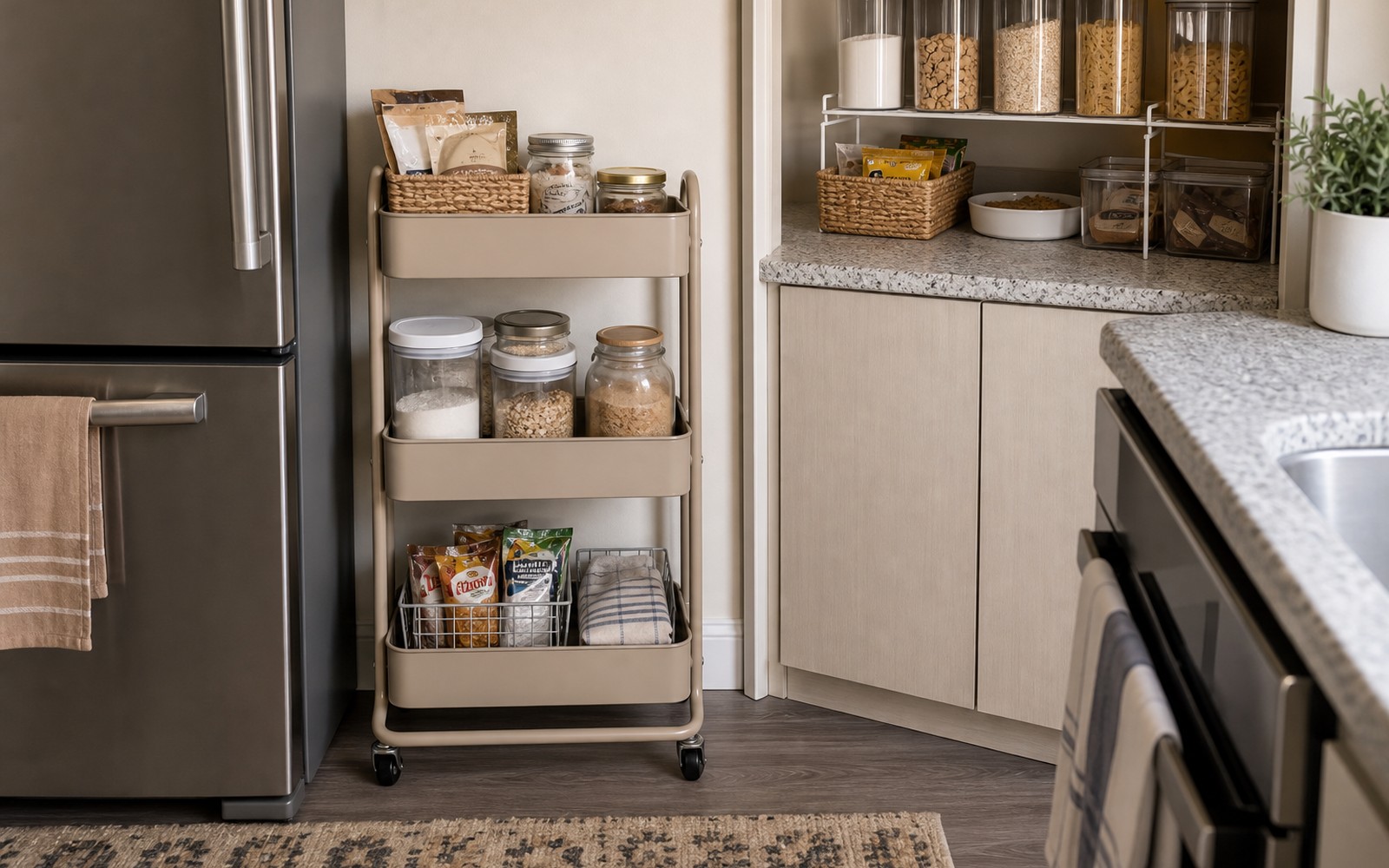
Shelf risers work well for cans, jars, oils, and small boxes because they raise the back row above the front row. They are less useful for flexible bags or heavy appliances. Use risers when the shelf has enough height and the items stay stable.
Do not stack too high just because a riser makes it possible. The goal is to see the category, not build a tower that has to be rebuilt every time you cook.
Put Turntables In Corners And Awkward Depth
A turntable is useful when bottles or jars get trapped in a back corner. It is especially helpful for oils, vinegars, sauces, nut butters, and small baking bottles. Keep the category narrow so the turntable does not become a spinning junk drawer.
If a bottle is too tall or heavy, store it in a bin instead. A turntable should make a category easier to reach with one hand.
Label By Meal Or Use, Not By Vague Container Names
Labels such as snacks, breakfast, baking, dinner, refills, and backstock are easier to use than labels that describe the container. A label should tell you what belongs there after grocery day.
If several people use the pantry, keep labels plain and practical. A beautiful label that no one follows is decoration, not organization.
Build A Grocery Landing Rule
After shopping, new food should enter the pantry through the same path every time. Put duplicates in backstock, bring older items forward, and remove empty packaging before the shelf gets crowded.
This one habit prevents the common deep-shelf problem where new food hides older food. Good how to organize deep pantry shelves advice has to include grocery day, because that is when most pantry systems break.
Check Expiration And Visibility Once A Month
Once a month, pull each bin forward and check the oldest items. You do not need a full pantry makeover. You need a short visibility check so the back of the shelf does not become a storage blind spot.
If a category keeps overflowing, either the bin is too small or the shopping habit is too large for the shelf. Adjust the category before buying another matching container.
Quick Buying Checklist
Before buying anything for how to organize deep pantry shelves, measure the exact space and watch the way the category behaves for two normal days. Notice what lands on the floor, what gets hidden, what is too annoying to put away, and what you reach for most often. Those observations are more useful than a product photo.
- Measure width, depth, height, door swing, and hand clearance before buying.
- Choose shallow containers for daily items and deeper bins only for overflow.
- Keep heavy items low and use freestanding storage when wall damage is a concern.
- Leave one empty margin so the system can accept groceries, laundry, mail, toys, or shoes during a normal week.
- Test the setup for seven days before buying a full matching set.
Three Layout Recipes To Try First
The daily-use recipe: Keep only the items used most often in the easiest zone. This makes how to organize deep pantry shelves feel lighter because the visible area has fewer decisions and fewer half-used categories.
The overflow recipe: Move duplicates, seasonal items, and backups to a labeled secondary home. The overflow spot should be easy enough to reach when needed but not so easy that it steals the best space.
The renter-safe recipe: Put weight on floors, shelves, cabinets, or freestanding furniture. Use removable hooks and adhesive pieces only for light repeat-use items, and follow product instructions carefully.
Common Mistakes To Avoid
The first mistake is buying storage before reducing duplicates. Extra containers cannot fix a category that is too large for the space. The second mistake is hiding daily items too well. If the item is annoying to return, it will migrate back to the counter, floor, sofa, or nearest flat surface.
The third mistake is skipping the reset path. Good how to organize deep pantry shelves should be easy to restore in a few minutes. If the system requires perfect folding, stacking, or sorting every night, it is probably too delicate for real life.
The Seven-Day Test
After the first setup, use the space for seven normal days before buying anything else. Watch which items stay in place, which ones drift out, and which container is too full to use comfortably. A week of ordinary use shows whether how to organize deep pantry shelves is solving the real problem or only making the area look finished for a short time.
At the end of the week, change only one thing: move a bin closer, reduce a category, add a small label, or remove a product that is blocking the daily path. Small corrections are easier to keep than a full rebuild. The goal is a system that still works when the home is busy, not one that depends on a perfect reset every morning.
When To Stop Organizing
Stop when the category is easy to find, easy to put away, and easy to reset. Matching containers can wait. Extra labels can wait. The practical finish line for how to organize deep pantry shelves is a space that no longer creates the same daily friction. If the floor, counter, shelf, or entry stays clear most of the week, the system is already doing its job.
Product Fit Before Product Buying
When a product looks useful, check the measurements against the real zone before adding it to a cart. For how to organize deep pantry shelves, the most important measurements are usually depth, clearance, handle space, and whether the item can be removed with one hand. A beautiful organizer that blocks the door, hides the back row, or makes cleaning harder will not stay useful.
It also helps to buy one test piece before buying a full set. Try one bin, one tray, one shelf riser, or one basket for a week. If it solves the problem without creating a new one, repeat it. If it does not, you have avoided turning a small-space problem into a matching-container problem.
Helpful Sources And Related Guides
Use common sense with food, paper, furniture, and child-related storage. Keep safety, moisture, weight, and access in mind as you choose products and routines.
- FoodSafety.gov cold food storage charts
- No Pantry Storage Ideas For Small Kitchens
- Kitchen Counter Organization For Small Kitchens
- Kitchen
FAQ
What is the best way to use the back of deep pantry shelves?
Use the back for named backstock, duplicates, and occasional items. Keep daily food in front where it can be seen and used first.
Are bins or shelf risers better for deep pantry shelves?
Use bins for loose or mixed categories and risers for cans, jars, or bottles that need a second sightline.
How do I stop food from expiring in a deep pantry?
Bring older items forward after grocery shopping and do a quick monthly pull-forward check on each bin or category.
Final Takeaway
How to organize deep pantry shelves works when the setup is honest about space, frequency, and reset habits. Start with the one category that creates the most friction, give it a clear home, and adjust after a week of normal use.