
Tiny Apartment Storage Ideas For Real Daily Living
Tiny apartment storage ideas deserves a plan that starts with the room’s behavior, not with a shopping list. Tiny apartment storage works when it reduces daily collisions between sleeping, cooking, working, laundry, guests, and the front door.
The useful test is whether the apartment can reset at night without turning every surface into temporary storage. If a choice still works under that pressure, it is more than a pretty idea.
This guide keeps the advice practical: clearance first, storage categories second, styling last. That order prevents a compact room from becoming a series of attractive obstacles.
Each section gives one decision to make, what can go wrong, and how to keep the room easier to reset after a normal day.
tiny apartment storage ideas: Tiny Apartment Storage Ideas Begin At The Door
The front door is where a tiny apartment starts to succeed or fail. Shoes, coats, packages, keys, bags, and recycling appear there before any room plan matters.
Keep the first route legible in the spirit of ADA accessible route guidance. A clear path makes the whole apartment feel less crowded.
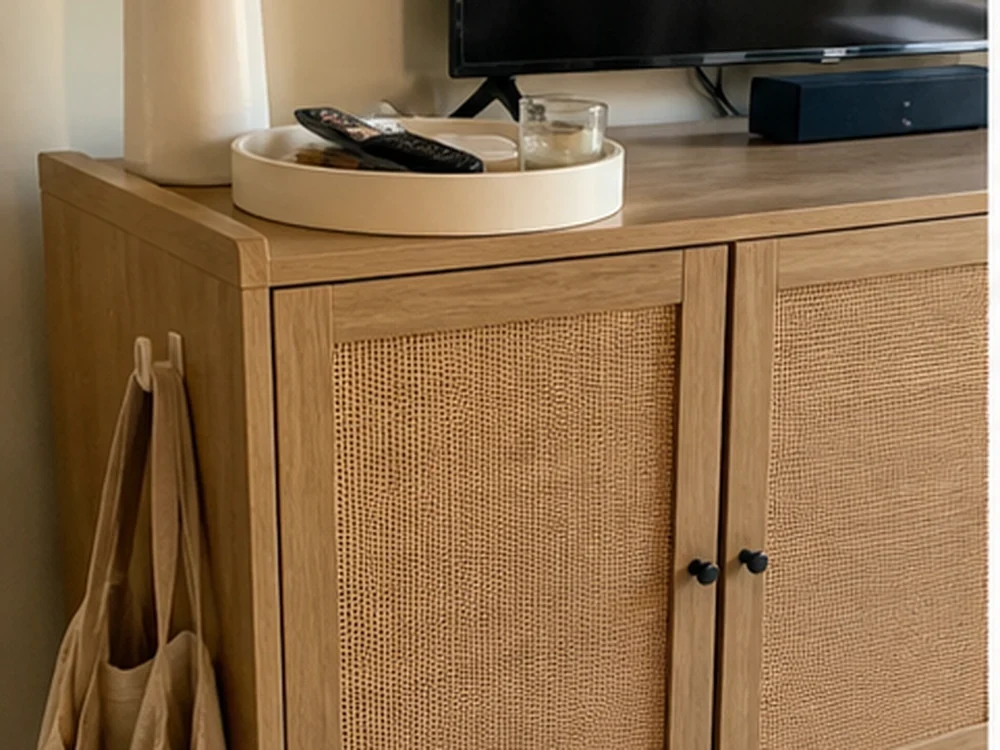
Give Each Zone A Hard Edge
Open-plan apartments blur sleep, work, dining, and storage. Storage improves when each zone has a hard edge, even if that edge is only a rug, shelf, curtain, or cabinet side.
The edge tells objects where to return. Without it, books, chargers, mail, and laundry drift through the room.
Use Vertical Storage Sparingly
Tall storage is powerful in a tiny apartment, but too many tall pieces can make the walls close in. One strong vertical wall usually beats height everywhere.
Use the tallest storage where it replaces several smaller pieces. Keep another wall calmer so the eye has room to rest.
Make Furniture Hold One Secret
Storage furniture can help, but every piece should hide one clear category. A sofa, ottoman, or bed with mixed storage quickly becomes a forgotten box.
Name the category before filling it. Blankets, exercise gear, guest bedding, or office supplies are better than miscellaneous overflow.
Design A Kitchen Overflow Rule
Tiny apartments often lack pantry space. Overflow food should have a rule before it spreads into the living room.
Use one lidded bin, one rolling cart, or one high shelf for overflow. When that space is full, groceries need editing.
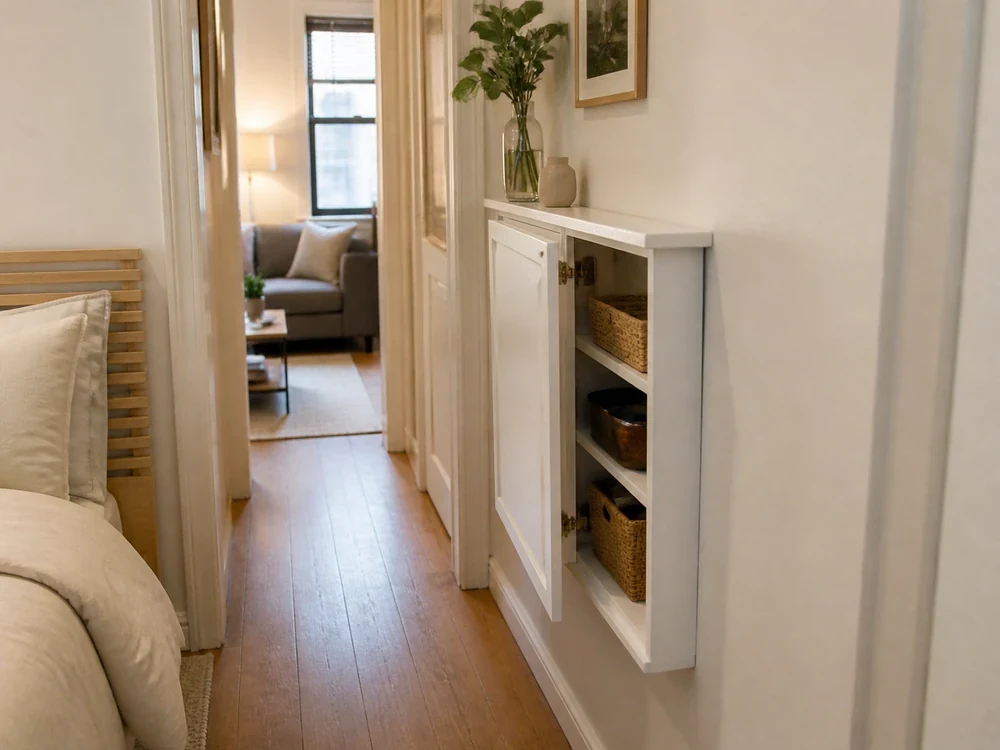
Keep Cleaning Tools Visible Enough
Cleaning tools hidden too well do not get used. A tiny apartment gets dusty quickly because every zone is active.
Use a slim wall mount, narrow closet rail, or cabinet door holder. The tools should be easy to grab without becoming visual clutter.
Protect The Sleep View
In a studio or tiny one-bedroom, the bed often sees the kitchen, desk, or entry. Storage should make the sleep view quieter at night.
Use closed bins, a curtain, a low divider, or a consistent textile to reduce visual noise. Rest needs a boundary.
Use Under-Furniture Storage For Slow Items
The space under a bed, sofa, or bench is useful for slow categories. It is poor storage for anything needed several times a day.
Store seasonal clothes, guest bedding, tools, or paperwork below. Keep daily items at hand height.
Build A Laundry Landing System
Laundry can overwhelm a tiny apartment because there is rarely a separate laundry room. Clothes need places for dirty, worn-once, clean, and repair categories.
Use a hamper, hooks, and one folding surface. Without those destinations, furniture becomes a closet.
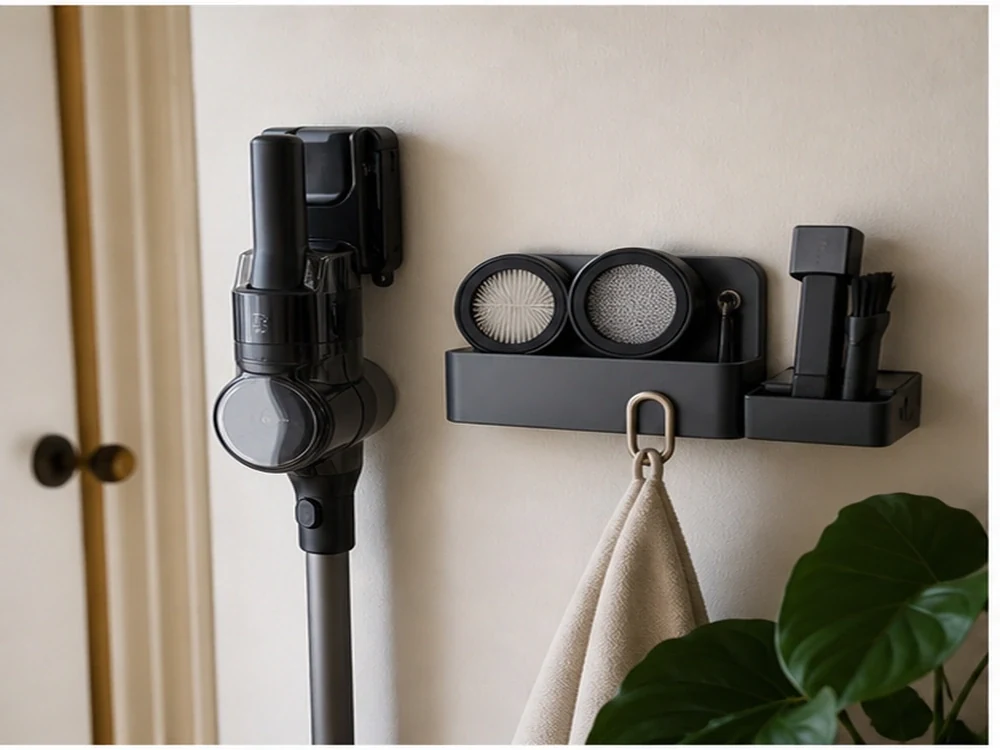
Make Work Disappear After Hours
Remote work can take over a tiny apartment if papers, chargers, and devices stay visible. A shutdown ritual matters as much as storage.
Use a work tray, cable box, or wall pocket that closes the day. The desk should not stare at dinner.
Store Guests In Advance
Guest supplies can be small but disruptive: bedding, towels, folding chairs, and extra cups. If they have no home, guests create a storage scramble.
Keep guest items together even if the location is not glamorous. Retrieval should be calm.
Use Hooks As Temporary Storage
Hooks are excellent for temporary use and weak for long-term storage. A hook wall full of permanent items makes an apartment look busy.
Use hooks for bags, jackets, headphones, or worn-once clothes with a reset rule. Clear them before they become a second closet.
Treat Paper Like A Daily Delivery
Mail, receipts, school forms, and manuals can bury a tiny apartment. Paper needs a landing zone and a decision schedule.
Use one tray and one archive box. The tray gets processed; the archive holds only records worth keeping.
Keep Shared Items Neutral
Objects used by everyone should be easiest to return. Shared chargers, remotes, keys, cleaning wipes, and pet supplies need obvious storage.
Put shared items in open or labeled spots. Personal overflow can be more hidden.
Use Renter-Friendly Hardware Wisely
Renter-friendly hooks, tension rods, and freestanding shelves can solve real problems, but they still need weight limits and clean removal plans.
Keep heavy items low and follow product directions. Temporary hardware should not carry permanent risk.
Run A Sunday Floor Test
The floor reveals whether storage works. If bags, boxes, shoes, and laundry sit on the floor every week, the storage plan is missing a category.
Reset the floor first, then name each remaining pile. The names tell you what storage to improve next.
Inventory The Floor Before The Closet
Tiny apartment storage problems are easiest to read from the floor. Shoes, packages, laundry, work bags, and tools on the floor reveal missing categories.
Name each pile before buying anything. The best storage idea is usually the one that gives a persistent pile a return address.
Use Doors Without Turning Them Heavy
Over-door racks and hooks can help renters, but they can also make doors noisy, heavy, and visually crowded. The door still has to open gracefully.
Use doors for light categories such as scarves, cleaning cloths, bags, or slim supplies. Keep dense storage on the floor or in furniture.
Separate Display From Survival Storage
A tiny apartment needs both beauty and utility, but mixing them on every surface creates visual pressure. Let one shelf display objects and another handle supplies.
That split keeps the home personal without making every necessity visible. Survival storage can be closed, labeled, or tucked low.
Create A Reset Route
A tiny apartment stays livable when the reset follows a route: door, kitchen, sofa, bed, and floor. Random tidying takes longer because every object asks for a decision.
Build storage along that route so the evening reset feels physical and obvious. The apartment should be able to recover before sleep.
Let The Sofa Area Recover Quickly
The sofa often becomes the dining room, office, guest room, and laundry stop in a tiny apartment. It needs nearby storage that can reset those roles.
Use a closed side table, slim basket, or low cabinet for the objects that land there nightly. The sofa should not hold yesterday’s roles.
Make Donation Storage Easy
Tiny apartments improve quickly when exits are easy. A small donation bag or bin keeps unused objects moving out instead of returning to closets.
Place it near the door or closet. When it fills, it leaves the home before becoming another storage category.
Store The Awkward Shape First
Tiny apartments are often undone by awkward shapes: vacuum hoses, folding chairs, luggage, drying racks, and pet supplies. Solve those before buying small bins.
Once awkward objects have homes, ordinary categories become easier. The apartment feels larger when the hardest shapes stop floating around.
Decision Guide
| Problem | Better Move | Watch Point |
|---|---|---|
| Entry piles up | Add shoe, bag, and mail destinations near the door | Arrival decides the mood |
| Studio feels noisy | Give sleep and work zones visual edges | Boundaries reduce clutter |
| Kitchen overflow spreads | Limit overflow to one controlled zone | Food storage needs a cap |
| Laundry migrates | Create dirty, worn-once, clean, and repair spots | Clothes need destinations |
Related Her Neat Nest Guides
- Storage For Small Spaces
- Organization Ideas For Small Spaces
- Tiny Space Storage Solutions
- Storage Solutions For Small Apartments
Final Takeaway
Tiny apartment storage ideas works when every piece has a job, every category has a limit, and the room can recover without a long reset. Choose the moves that reduce friction first; the room will look better because it behaves better.
FAQ
How do you create storage in a tiny apartment?
Start with the entry, give each zone a boundary, use one strong vertical storage wall, choose furniture with named storage, and keep daily reset routines simple.
What should not be stored in a tiny apartment?
Avoid keeping duplicate tools, unused appliances, excess decor, old paperwork, and seasonal items in prime daily zones.
How can renters add storage without damage?
Use freestanding shelves, tension rods, over-door racks, adhesive hooks within weight limits, and furniture with closed storage.