
Small Rack Kitchen Ideas For Counters And Cabinets
Small rack kitchen deserves a plan that starts with the room’s behavior, not with a shopping list. A kitchen rack should earn its space by making cooking faster, drying cleaner, or storage easier to read.
The useful test is whether the rack helps a real cooking step without stealing prep space, cleaning access, or cabinet function. If a choice still works under that pressure, it is more than a pretty idea.
This guide keeps the advice practical: clearance first, storage categories second, styling last. That order prevents a compact room from becoming a series of attractive obstacles.
Each section gives one decision to make, what can go wrong, and how to keep the room easier to reset after a normal day.
small rack kitchen: Small Rack Kitchen Choices Need A Job
The phrase small rack kitchen can mean a counter shelf, wall rail, dish rack, spice rack, cabinet insert, or rolling cart. The right choice starts with the job, not the product style.
Name the friction first: crowded counter, wet dishes, pan access, spice scanning, mug storage, or pantry overflow. One rack should solve one main friction.
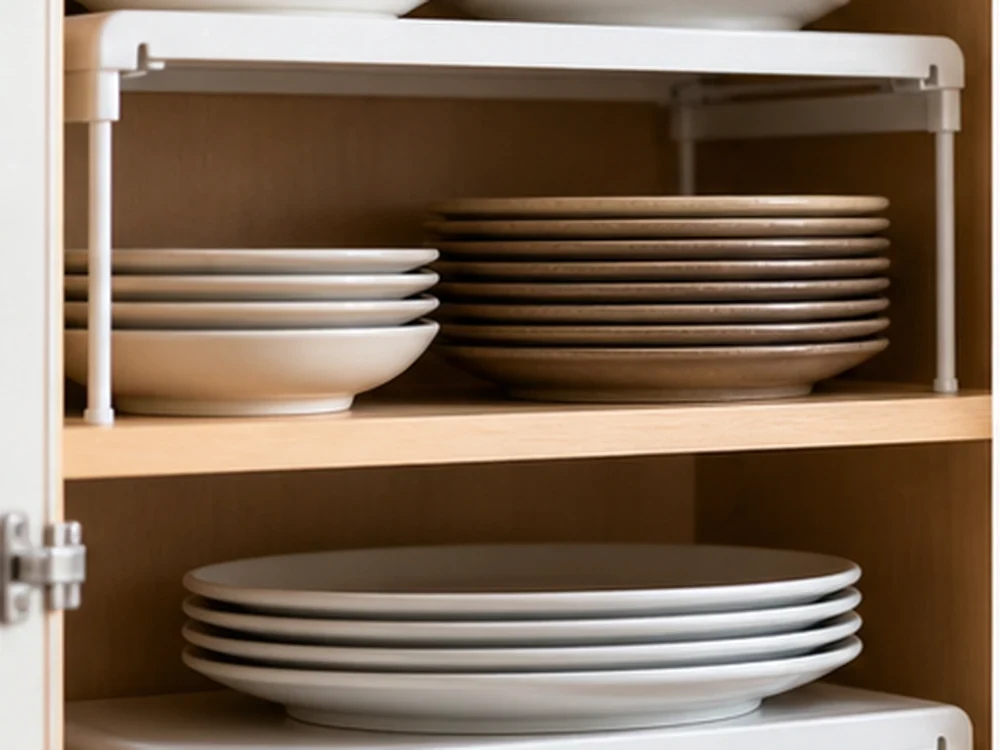
Protect The Prep Rectangle
Counter racks are tempting because they use height, but the counter still needs a clear prep rectangle. A rack that narrows chopping space makes cooking slower.
Keep the active prep area free from rack feet, cords, and bottles. Use counter racks on the edge, not in the center of work.
Use Dish Racks By Drying Behavior
A dish rack is not only storage; it is a drying tool. If water pools under it or dishes sit for days, it becomes clutter.
Choose a rack that drains, wipes clean, and matches the number of dishes washed by hand. Put dry dishes away before the next meal.
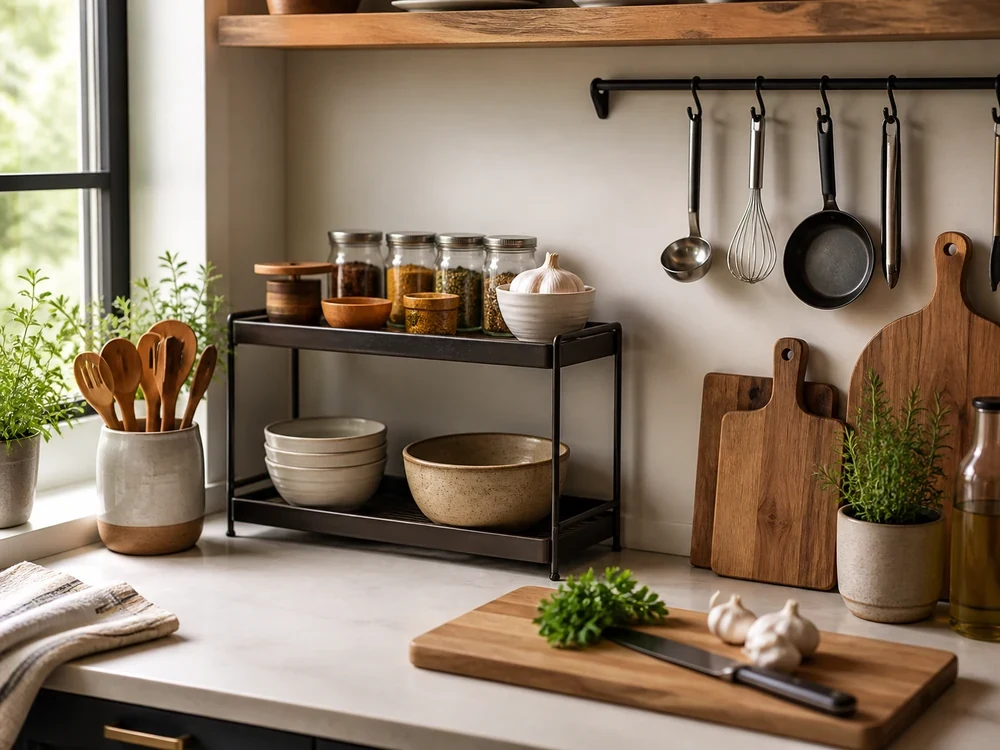
Make Spice Racks Readable
Spices need quick scanning while food is hot. A rack that hides labels or stacks jars behind each other does not help the cook.
Use angled tiers, drawer inserts, or a shallow wall rack. Keep only active spices in the fastest spot.
Use Cabinet Racks For Clear Repeats
Cabinet racks work best for repeated shapes: plates, mugs, pans, lids, cutting boards, and food containers. Mixed items make the rack feel messy.
Choose racks only after editing the cabinet. Hardware cannot make unrelated categories cooperate.
Treat Wall Rails As Active Storage
Wall rails can be excellent for utensils, pans, mugs, or towels, but they show everything. They should hold attractive active tools, not emergency overflow.
Hang the tools used often enough to stay clean. Rare tools get dusty and make the wall look crowded.
Do Not Overload A Small Rolling Rack
A rolling rack can add pantry or appliance storage, but it also becomes furniture. In a tiny kitchen, wheels do not make bulk disappear.
Use rolling racks for light overflow or one routine such as coffee, lunch packing, or baking. Keep heavy appliances stable and low.
Keep Oil And Heat In Mind
Kitchen racks collect grease faster than shelves in other rooms. A rack near the stove must be easy to wash and far enough from heat.
Use metal, sealed wood, or wipeable finishes near cooking zones. Avoid delicate baskets where oil mist settles.
Pair Rack Height With Hand Reach
A high rack saves space only if the items on it are safe to reach. Heavy pans, glass jars, and appliances should not live above shoulder comfort.
Keep heavy pieces low and light repeats higher. Reach matters more than the rack’s advertised capacity.
Light The Rack If It Becomes A Work Zone
Some racks create a coffee bar, prep station, or dish zone that needs visibility. Energy Saver lighting guidance can help choose efficient bulbs for lighting used every day.
A small under-shelf light can make a compact station feel intentional, but avoid lights that glare into the cooking path.
Use Rack Trays For Small Loose Items
Tiny packets, tea bags, clips, and spice jars fall through visual gaps. A shallow tray inside a rack can keep small items from scattering.
The tray should lift out easily for cleaning. If the tray becomes a junk drawer, reduce the category.
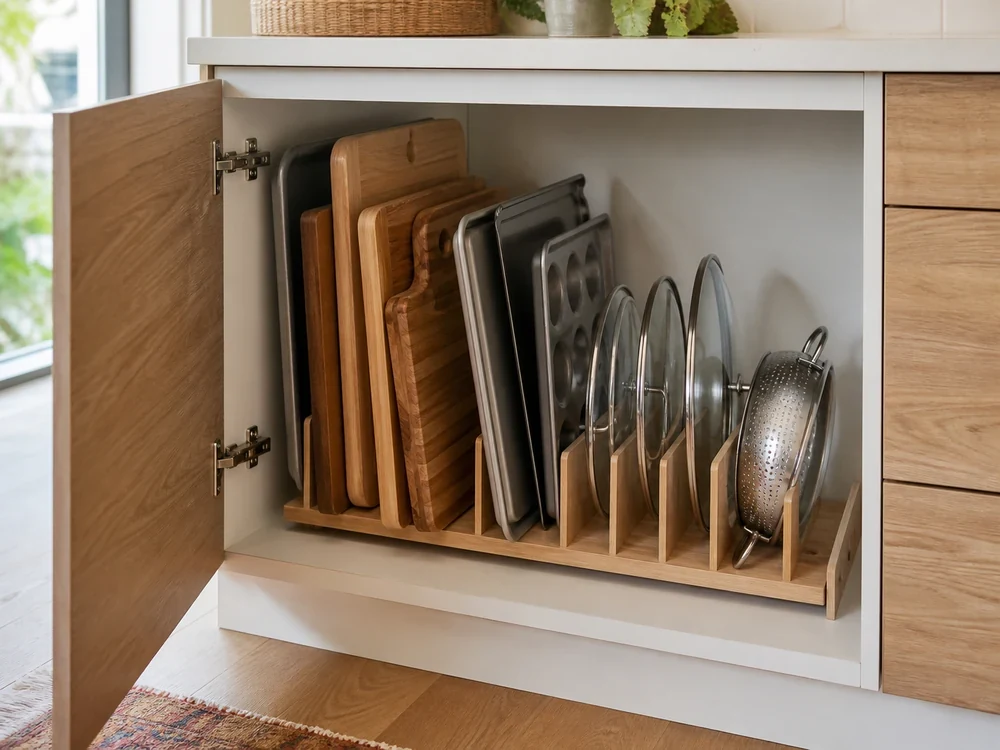
Give Pans A Vertical Option
Pans stacked flat waste time when the daily pan sits near the bottom. A vertical rack can make handles readable and protect surfaces.
Use vertical storage for skillets, cutting boards, trays, and lids when the cabinet height allows it. Keep the heaviest pan easiest to remove.
Avoid Rack Stacks That Block Doors
Over-door and inside-door racks can hit shelves, plumbing, knobs, or wall corners. A rack that technically fits can still make the cabinet annoying.
Close the door slowly with the rack loaded. If it rubs or rattles, the storage will not feel settled.
Use One Material Language
A tiny kitchen can look chaotic when every rack has a different finish. Metal, wood, plastic, chrome, black, and bamboo together may feel accidental.
Choose racks that relate to cabinet hardware, faucet finish, or existing wood tones. Calm materials make open storage easier to live with.
Clean Under The Rack Weekly
Racks lift objects but still create shadows for crumbs, grease, and dust. The area under them must be reachable.
Choose racks that can move or wipe around easily. A compact kitchen needs storage that cleans quickly.
Remove The Rack If It Becomes Storage Theater
Some racks look organized while slowing the kitchen down. If an item is still hard to reach, the rack is not doing enough.
Watch one week of cooking. Keep racks that reduce motions and remove racks that only make clutter taller.
Decide If The Rack Is Working Or Parking
A kitchen rack can support work or simply park extra things. The working rack earns counter space because it helps cooking, drying, or grabbing.
If the rack only stores items that could live in a cabinet, it may be making the kitchen look organized while stealing active space.
Keep Rack Feet Out Of Mess Zones
Counter rack feet collect crumbs, oil, coffee grounds, and water. Place them away from the messiest prep zone unless they can be lifted and cleaned easily.
A rack that makes wiping harder will age fast in a compact kitchen. Clean access is part of the purchase decision.
Use Height For Light Items First
Small racks often advertise vertical capacity, but height is safest for light repeats. Mugs, small jars, towels, and packets work better above shoulder level than heavy cookware.
Keep pans, appliances, and glass storage lower. The rack should not ask anyone to reach overhead with weight.
Remove One Rack During The Trial
If a kitchen already has several racks, adding another may hide the real problem. Remove the least useful rack for a week and see whether the kitchen improves.
That trial exposes whether the kitchen needs more storage or less visual stacking. The best rack plan may include fewer racks than before.
Choose Open Racks For Attractive Repeats
Open racks look best when they hold repeated objects: mugs, plates, jars, pans, or towels. Random kitchen overflow looks messy even on a neat rack.
If the rack must hold mixed items, use closed bins or move it inside a cabinet. Open storage needs visual rhythm.
Check The Rack From Dining Distance
A kitchen rack may look fine up close but busy from the dining table or living room. Small kitchens are often viewed from nearby seats.
Stand where people actually sit and look back. If the rack dominates the view, reduce height, colors, or item variety.
Decision Guide
| Problem | Better Move | Watch Point |
|---|---|---|
| Counter feels smaller | Move rack to edge or cabinet interior | Prep space is sacred |
| Spices are hard to read | Use shallow or angled spice storage | Labels need one glance |
| Dish rack clutters sink | Match rack size to handwashing volume | Drying is a process |
| Wall rail looks busy | Hang only active tools | Visible storage needs limits |
Related Her Neat Nest Guides
- Kitchen Storage Racks
- Kitchen Racks And Shelves
- Organizer Rack Kitchen
- Kitchen Cabinet Storage Solutions
Final Takeaway
Small rack kitchen works when every piece has a job, every category has a limit, and the room can recover without a long reset. Choose the moves that reduce friction first; the room will look better because it behaves better.
FAQ
What kind of rack is best for a small kitchen?
The best rack depends on the friction: use counter shelves for daily items, cabinet racks for repeated shapes, wall rails for active tools, and dish racks for clean drying.
Are kitchen counter racks worth it?
They are worth it when they keep daily items reachable without shrinking the main prep area or making cleaning harder.
How do I keep kitchen racks from looking cluttered?
Limit each rack to one category, repeat materials, keep labels visible, and remove items that are rarely used.