
Entryway Furniture For Small Spaces That Works Daily
Entryway furniture for small spaces deserves a plan that starts with the room’s behavior, not with a shopping list. The entry has to handle arrival before it handles decor: shoes, bags, keys, coats, mail, and the door swing all arrive at once.
The useful test is whether two people can come in, remove shoes, and close the door without stepping around furniture. If a choice still works under that pressure, it is more than a pretty idea.
This guide keeps the advice practical: clearance first, storage categories second, styling last. That order prevents a compact room from becoming a series of attractive obstacles.
Each section gives one decision to make, what can go wrong, and how to keep the room easier to reset after a normal day.
entryway furniture for small spaces: Map The Door Swing First
The door is the largest moving object in the entryway. Furniture that steals its swing makes the whole home feel awkward before anyone is inside.
Use the same common-sense route principle behind ADA accessible route guidance: keep the path predictable before adding storage.
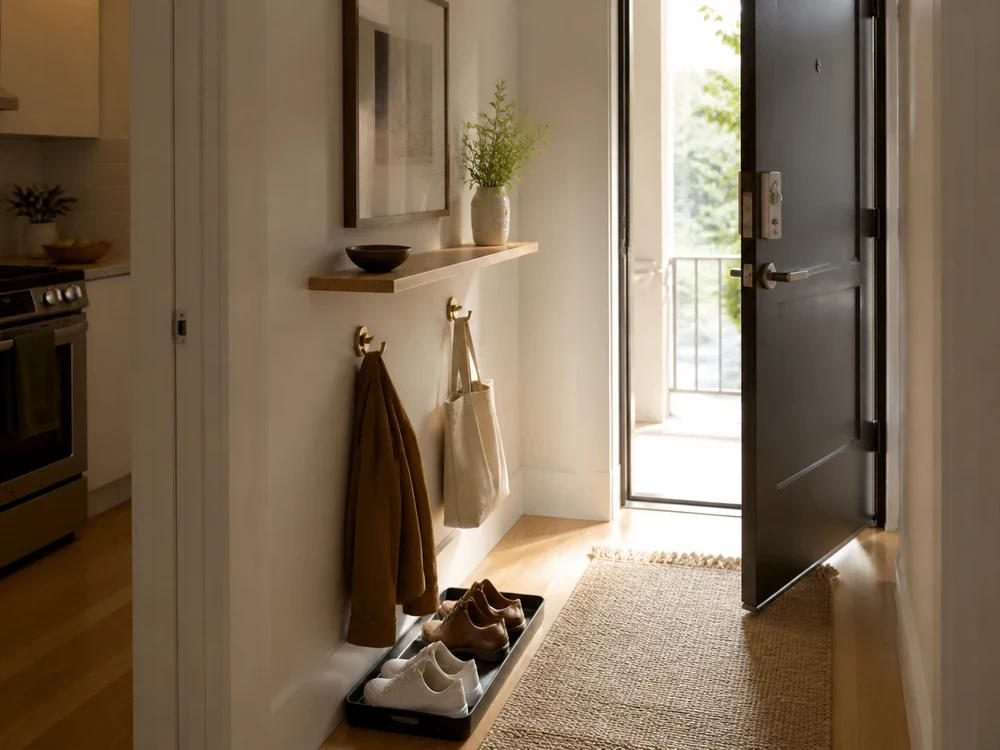
Create A Landing Zone At Hand Height
Keys, mail, sunglasses, and a leash need a small landing place near the door. Without one, they spread to the nearest table or kitchen counter.
A shallow shelf, wall pocket, or narrow console can be enough. The landing zone should be easy to clear, not large enough to store a week of decisions.
Choose Shoe Storage By Rotation
Small spaces cannot hold every shoe by the door. Keep the shoes used this week in the entry and move occasional pairs elsewhere.
A two-tier rack, tilt cabinet, or tray works when it reflects real rotation. Overflow shoes are a category problem, not a furniture failure.
Use Hooks Before A Coat Tree
A standing coat tree often tips visually and physically in a narrow entry. Wall hooks can hold the same daily coats with less floor pressure.
Mount hooks where shoulders can reach without blocking the door. Leave one hook empty so the system has room to breathe.
Let A Bench Earn Its Footprint
A bench is useful only if someone actually sits to put on shoes. If it only collects bags, it may be too generous for the entry.
Choose a short bench with storage below or use a single stool. Seating should not narrow the main arrival path.
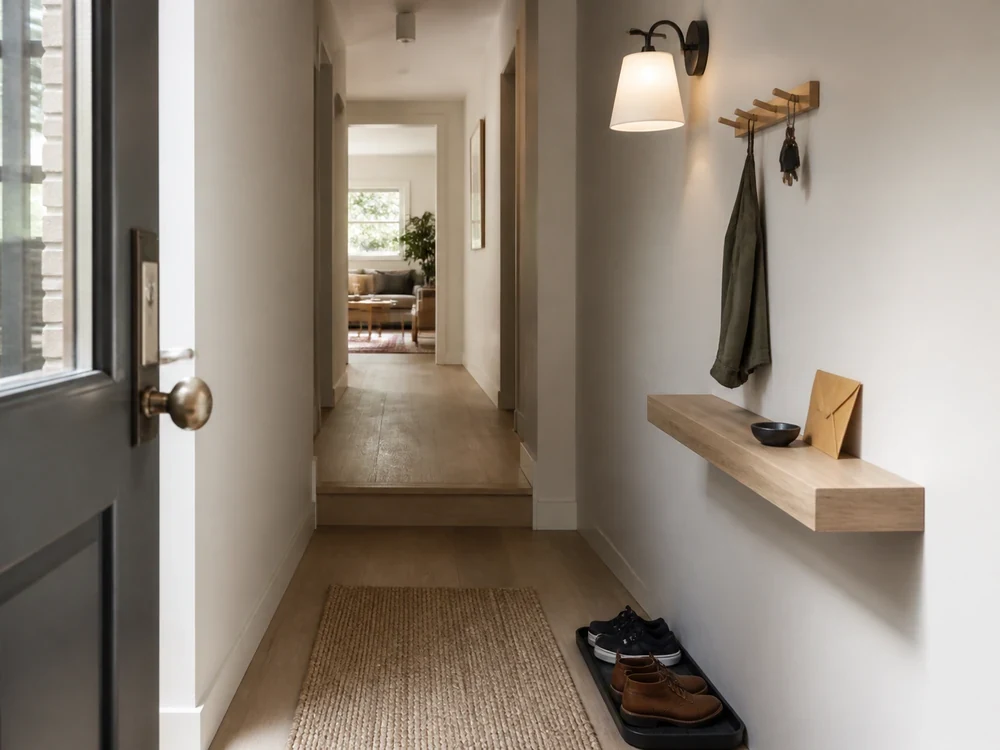
Keep Bags Off The Floor
Bags on the floor make a small entry look busy and create a tripping point. They need a hook, cubby, or closed basket.
Give daily bags the easiest spot and move rarely used totes elsewhere. Entryway furniture should manage today, not the whole closet.
Use A Mirror For Leaving, Not Display
A mirror helps when it supports the final check before leaving. It should not reflect an open shoe pile or crowded hook wall.
Place it where it catches light and keeps the exit routine quick. The mirror is a tool first, then a design element.
Choose Narrow Cabinets With Real Handles
A narrow cabinet can hide shoes and mail, but it still needs handles and door clearance. A push-latch cabinet may look clean and still be annoying with full hands.
Test opening with a bag on your shoulder. If the cabinet asks for careful handling, it will be skipped.
Use Light To Define Arrival
Good light makes a small entry feel intentional and safer at night. Energy Saver lighting guidance is useful when choosing bulbs that stay on often.
A warm sconce or small lamp can separate the entry from the rest of the room without adding another storage piece.
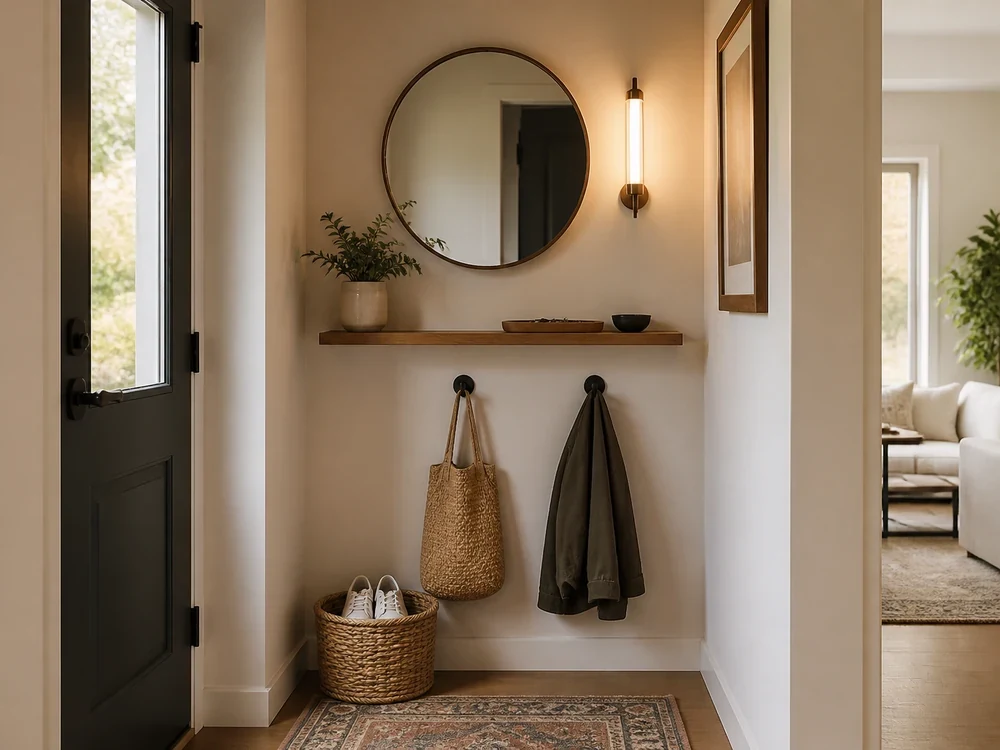
Keep Rugs Flat And Washable
An entry rug has a hard job: dirt, wet shoes, and constant door movement. Thick rugs can catch the door and make the room feel clumsy.
Use a low-profile washable rug or mat that gives shoes a clear stop. A good rug is part of the storage system.
Let One Wall Stay Clear
Not every wall near the door should carry hooks, shelves, art, and baskets. A clear strip makes the entry feel less squeezed.
Keep the most visible wall calmer and put heavier storage where it does not face the first view.
Separate Guest And Daily Use
Guest hooks and daily hooks should not compete. If the hooks are always full, guests have nowhere to place a coat.
Keep one spare hook or a clear rail section. Hospitality in a small entry is often just unused capacity.
Put Mail On A Timer
Mail can destroy a small entry because it arrives every day and rarely leaves on its own. Furniture cannot solve mail without a rule.
Use a tray that gets cleared on a schedule. When the tray fills, it is time to sort, not time to buy a larger tray.
Avoid Deep Console Tables
A console that is too deep can make the entry look furnished and still make movement worse. Depth matters more than width in a passage.
Use a shelf, slim table, or wall-mounted piece where the path is narrow. Leave knee and bag clearance.
Test The Rainy-Day Version
Rainy days reveal whether the entry has a place for wet shoes, coats, umbrellas, and bags. A styled dry entry is not enough.
Add a boot tray, umbrella stand, or wipeable basket only if that wet category actually appears in your home.
Reset Before Bed
The best entryway furniture is judged at night. Shoes return, bags hang, mail leaves the landing zone, and the door path is open.
A two-minute reset prevents the entry from greeting the next morning with yesterday’s clutter.
Design For The Second Person
A small entryway may seem fine when one person comes home alone. It often fails when a second person enters with a bag, coat, wet shoes, or a package.
Stand two people in the space with the door open. Furniture that still lets both people move is worth keeping; furniture that requires choreography should shrink or leave.
Make The Landing Zone Intentionally Small
A generous entry table can become a storage swamp. A small landing zone forces decisions sooner and keeps keys, mail, and sunglasses from becoming a permanent display.
Use a tray, shallow shelf, or wall pocket that can be cleared in one minute. The size should support arrival, not postpone sorting.
Choose Closed Storage By Smell And Speed
Closed shoe cabinets look tidy, but they can trap odor and slow the return habit. Open racks look busier, but they dry faster and are easier to use.
The better choice depends on household shoes, weather, and discipline. If shoes are often damp, give them air before asking a closed cabinet to hide them.
Give Guests A Real Opening
A tiny entry can still be hospitable if it keeps one hook, one shoe spot, or one clear shelf edge available. Full storage tells guests to improvise.
Build that opening into the plan rather than clearing it only before visits. Spare capacity is what makes a small entry feel controlled.
Use Package Days As A Stress Test
A small entry changes when boxes arrive. Packages need a temporary landing place that does not block shoes, hooks, or the door.
If packages always sit in the walking route, add one low basket or change the mail routine. Entry furniture has to handle interruptions.
Keep Seasonal Gear On A Rotation
Umbrellas, winter hats, sunscreen, and dog towels should rotate with the season. Keeping all seasons by the door makes the entry feel crowded year-round.
Store only the current season in the entry. Rotation keeps small furniture from being blamed for carrying too many months at once.
Decision Guide
| Problem | Better Move | Watch Point |
|---|---|---|
| Door hits furniture | Move storage to the latch side or use wall shelves | Door swing decides placement |
| Shoes pile up | Limit entry shoes to current rotation | Overflow belongs elsewhere |
| Hooks look crowded | Leave one hook open | Spare capacity keeps calm |
| Mail spreads | Use a small timed tray | Bigger trays delay sorting |
Related Her Neat Nest Guides
Final Takeaway
Entryway furniture for small spaces works when every piece has a job, every category has a limit, and the room can recover without a long reset. Choose the moves that reduce friction first; the room will look better because it behaves better.
FAQ
What furniture is best for a small entryway?
Use shallow landing storage, wall hooks, a small shoe rack or cabinet, a low-profile rug, and a mirror only if it supports leaving.
Should a small entryway have a bench?
A bench works if people sit to put on shoes and the door path remains clear. Otherwise a stool or wall shelf may be better.
How do you keep a small entryway tidy?
Limit shoes, give bags hooks, use a small mail tray, and reset the landing zone before bed.