
Bed Ideas Small Room Owners Can Measure And Use
Most bed ideas small room owners see online start with size, but the better starting point is behavior. The bed decides how the door opens, where clothes land, whether two people can pass, and how hard the room is to clean.
The right choice is rarely the cleverest bed. It is the bed that supports sleep, allows maintenance, and does not make every morning feel like a furniture puzzle.
Use these ideas as tests rather than trends. A bed that works in a small room should prove itself through clearance, access, and recovery after an ordinary week.
Bed Ideas Small Room Planning Starts With Clearance
Bed ideas small room owners consider should be measured with moving parts included. Drawers, lift mechanisms, closet doors, bedding, and human bodies all need space beyond the mattress rectangle.
Use tape on the floor before buying. If you cannot stand, turn, pull, and make the bed without shifting another item, the idea is not ready for daily life.
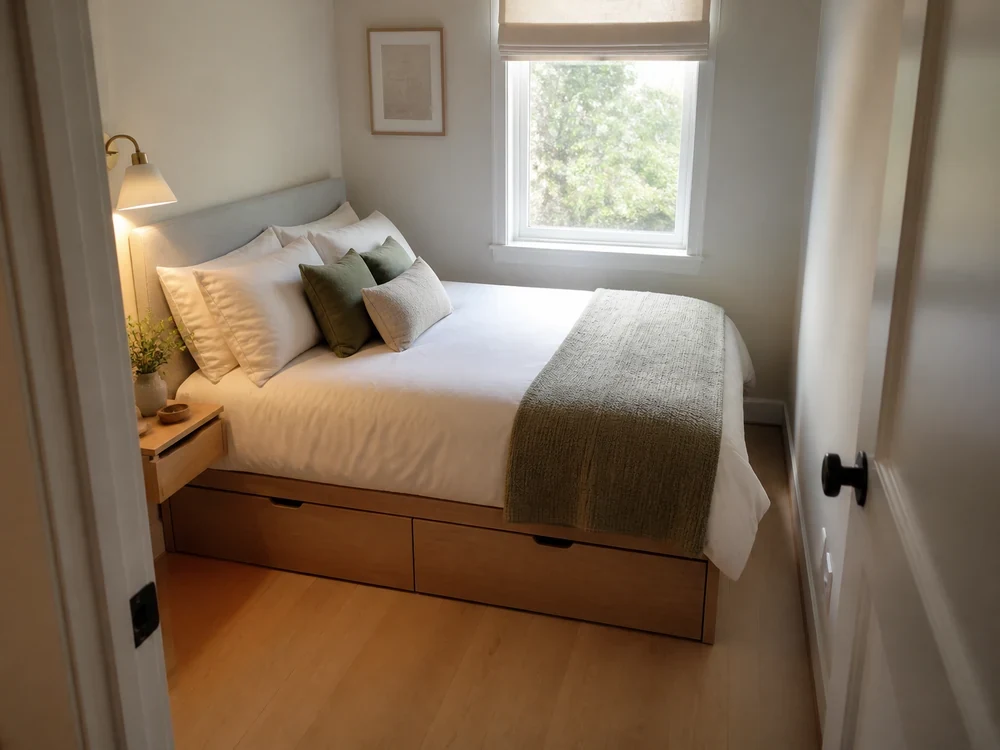
Choose A Storage Bed By Access Direction
Storage beds can be excellent in a small room, but the access direction matters more than the advertised capacity. Side drawers fail in narrow rooms if they open into the only walkway.
Lift-up storage can work where side clearance is poor, although it asks for upper-body effort and a clear mattress top. Match the mechanism to the way the room is used.
Let A Corner Bed Be A Real Decision
Pushing a bed into a corner can free floor space, especially for one sleeper or a guest room. The tradeoff is sheet changing, wall contact, and one-sided access.
Do not treat the corner as a compromise by default. In a small studio, a corner bed with good lighting and a clean outside edge may be calmer than a centered bed with no route left.
Use Low Frames Where The Ceiling Feels Close
A low frame can make a small room feel less squeezed because more wall is visible above the bed. The effect works best when the bedding stays tailored rather than spilling onto the floor.
Low does not mean flimsy. Choose a frame that supports the mattress properly and leaves enough cleaning access so dust does not become the hidden cost.
Try A Daybed Only When Sitting Matters
A daybed is useful when the room needs to behave like a lounge during the day. It is less useful when the owner wants a traditional bed routine and hates rearranging pillows every night.
Be honest about the daily conversion. If the bedding will stay half-dressed all week, a simple bed with a narrow bench or wall cushion may be better.
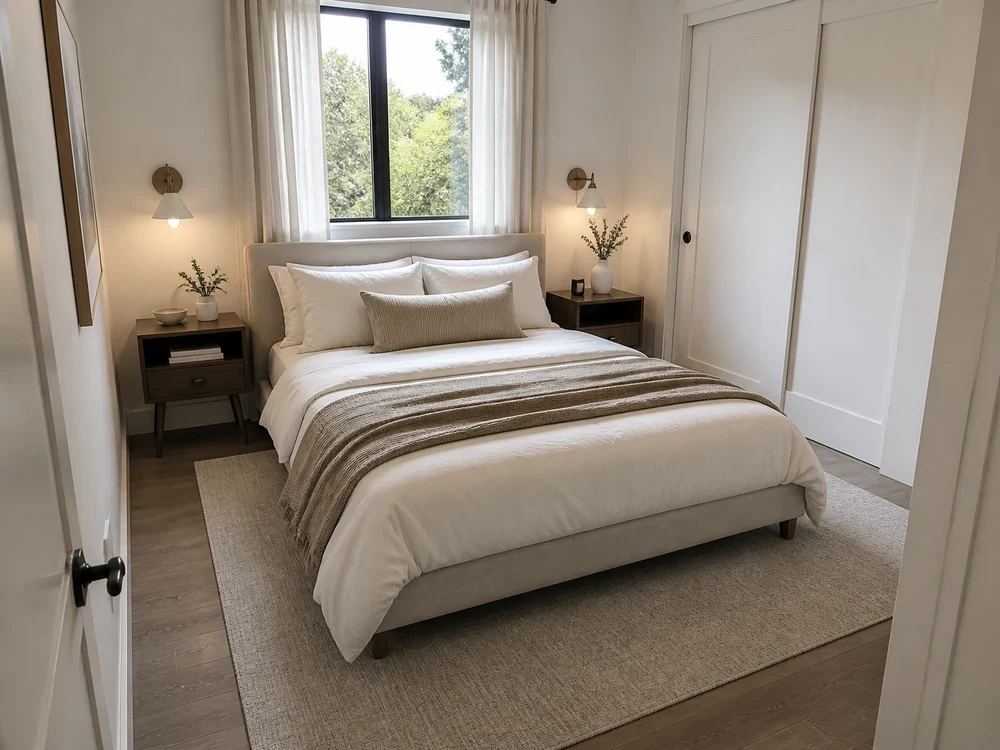
Keep The Headboard Thin But Useful
A thick upholstered headboard can steal several inches that a small room may need for drawer access. A slim headboard, wall cushion, or painted panel gives shape without using much depth.
If the headboard includes shelves, keep them shallow and limited. A shelf directly behind the pillow should not become storage for heavy objects, glasses, or unstable decor.
Use Wall Lighting To Free Bedside Space
Wall lighting gives a bed area structure without demanding a table on both sides. Plug-in sconces are especially useful for renters because they can solve a tight corner without new wiring.
Choose fixtures and bulbs that fit actual evening use. The Energy Saver lighting guidance is a helpful reference for efficient light, but comfort depends on glare control and placement.
Protect The Closet Side First
If one side of the bed faces the closet, that side deserves priority. Clothes storage is touched every day, and blocked closet access will make the bed feel too large even if it technically fits.
Shift the bed slightly, reduce the bedside table, or change the closet door solution before accepting a daily squeeze. Access beats symmetry in a small room.
Consider Separate Beds For Guest Flexibility
In a guest room, two narrow beds can sometimes work better than one larger bed because they allow different sleeping arrangements and leave a central walkway.
This idea only works when each bed has a small landing place and a light. Without those basics, the room feels like storage for mattresses rather than hospitality.
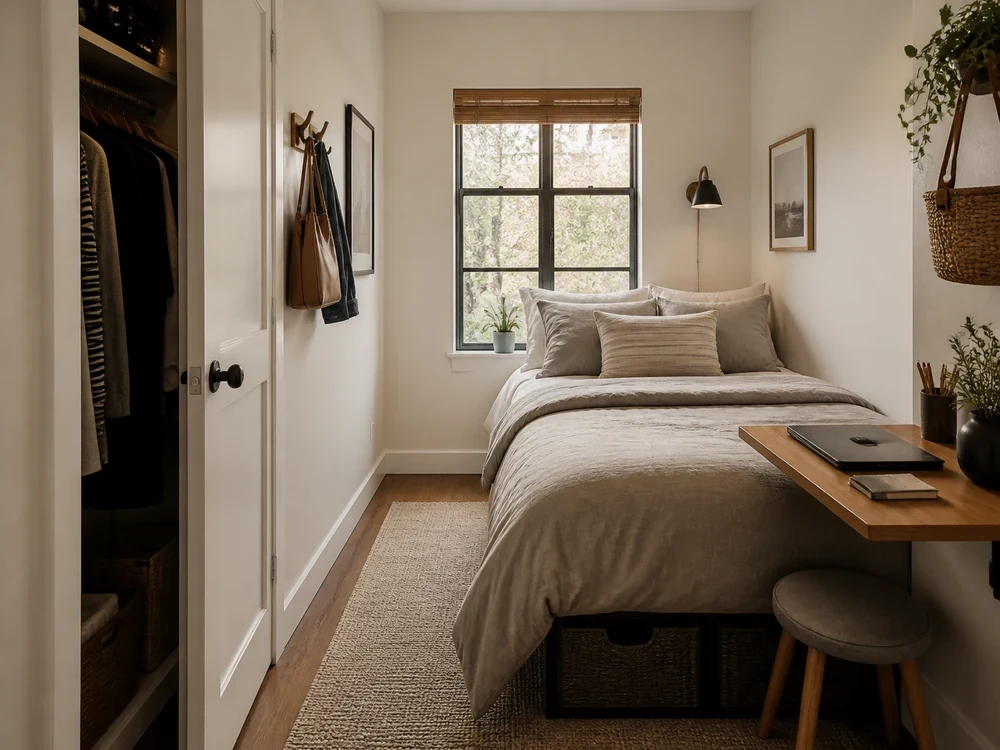
Make The Under-Bed Zone Cleanable
Under-bed storage should not prevent cleaning. A dusty, unreachable zone makes the room feel stale and can turn storage into avoidance.
Choose bins with handles, leave a pull route, and avoid stuffing the full underside. The goal is a controlled category, not a second closet hiding under the mattress.
Anchor Nearby Tall Furniture Before Loading It
The bed often sits close to dressers, shelves, or wardrobes because small rooms have few walls. That proximity makes furniture safety part of bed planning.
Use the manufacturer’s hardware and review CPSC Anchor It furniture safety guidance before placing tall storage near sleeping space. A compact room should not trade convenience for avoidable risk.
Place The Bed For Sheet Changing
A layout that makes the bed impossible to make will not stay neat. Sheet changing needs hand room around corners and enough space to pull bedding straight.
If the bed must touch a wall, simplify the bedding. Fewer layers and a washable cover can keep the routine realistic when access is tight.
Let One Side Be The Quiet Side
Not every side of the bed needs equal furniture. One side can carry the lamp, drawer, and charger, while the other side uses a slim ledge or nothing at all.
This asymmetry can make a small room feel more intentional. Matching pieces are less important than giving the heaviest routine the right support.
Check Bed Height Against Window And Radiator
Bed height affects window access, radiator airflow, and curtain movement. A frame that looks perfect from the doorway may block the one practical place to open a window.
Measure the room vertically as well as horizontally. In small rooms, inches above the floor can decide whether the bed feels integrated or wedged in.
Use A Rug To Mark The Landing Zone
A small rug beside or partly under the bed can mark where feet land and soften the route. It should not bunch under drawers or make closet doors drag.
Choose a size that supports the movement, not a magazine rule. The rug’s job is to make the bed area feel settled while keeping the route honest.
Let The Bed Choice Simplify The Rest Of The Room
The best bed idea reduces other decisions. If the bed has storage, the dresser may shrink; if wall lights work, one nightstand may disappear; if the frame is low, tall shelves may feel less necessary.
Judge the bed by what it allows you to remove. A small room improves when one strong decision makes three weaker pieces unnecessary.
Keep Bedding Storage Close But Not Crowded
Extra bedding can make a small bed setup fail if blankets, pillows, and spare sheets have no clear home. Store only the active layer near the bed, then move guest or seasonal bedding to a slower shelf.
This keeps the bed from becoming a linen closet with a mattress on top. The room feels calmer when the visible bedding is current, washable, and easy to remake.
Check The Bed After One Real Week
A bed idea earns its place after a full week of sleep, laundry, cleaning, and rushed mornings. Watch whether drawers are used, whether the frame blocks vacuuming, and whether the bedside surface stays manageable.
If the bed creates new chores, solve those chores before buying supporting pieces. In a small room, the bed should reduce decisions rather than asking for accessories to rescue it.
Decision Guide
| Problem | Better Move | Watch Point |
|---|---|---|
| Side drawers hit the wall | Use lift-up storage or open bins from the foot | Access direction matters |
| Closet is blocked | Shift bed or shrink bedside furniture | Daily clothes access wins |
| Room feels crowded | Try a lower frame and thinner headboard | Visual weight changes the room |
| Bed is hard to make | Simplify layers or move one side off the wall | Maintenance predicts neatness |
Related Her Neat Nest Guides
- Small Bedroom Bed Ideas
- Small Bedroom Furniture
- Small Space Bedroom Furniture
- How To Furnish A Small Bedroom
Final Takeaway
The best bed for a small room is the one that gives sleep, access, cleaning, and storage a fair chance. Measure real movements, choose the storage mechanism carefully, and let the bed simplify the rest of the furniture plan.
FAQ
What bed is best for a small room?
A bed with the right clearance is best. Storage beds, low frames, corner beds, and daybeds can all work when they match the room's access needs.
Should a bed go against the wall in a small room?
It can, especially for one sleeper or a guest room, but make sure sheet changing, lighting, and wall-side comfort still work.
Are storage beds worth it in small bedrooms?
They are worth it when the drawers or lift mechanism can be used easily and the stored categories do not need daily awkward access.