
Kitchen Racks And Shelves That Keep Counters Clear
Kitchen racks and shelves can make a small kitchen work harder, but only when they serve the cooking route. Add the wrong rack and the counter becomes a display shelf with nowhere left to chop.
The useful question is not how many shelves fit. It is which items deserve open access because they are used often, look orderly, and can return to place without a second thought.
A good rack plan protects the prep zone, keeps heavy things safe, and gives the kitchen a reset path after dinner.
Kitchen Racks And Shelves Start At The Prep Zone
Kitchen racks and shelves should be planned around the prep zone first. The counter where chopping, mixing, and plating happen must stay clear enough to work.
If a rack takes the best prep space, it needs to earn that spot by holding items used during that exact task. Otherwise, move it to a side wall or pantry edge.
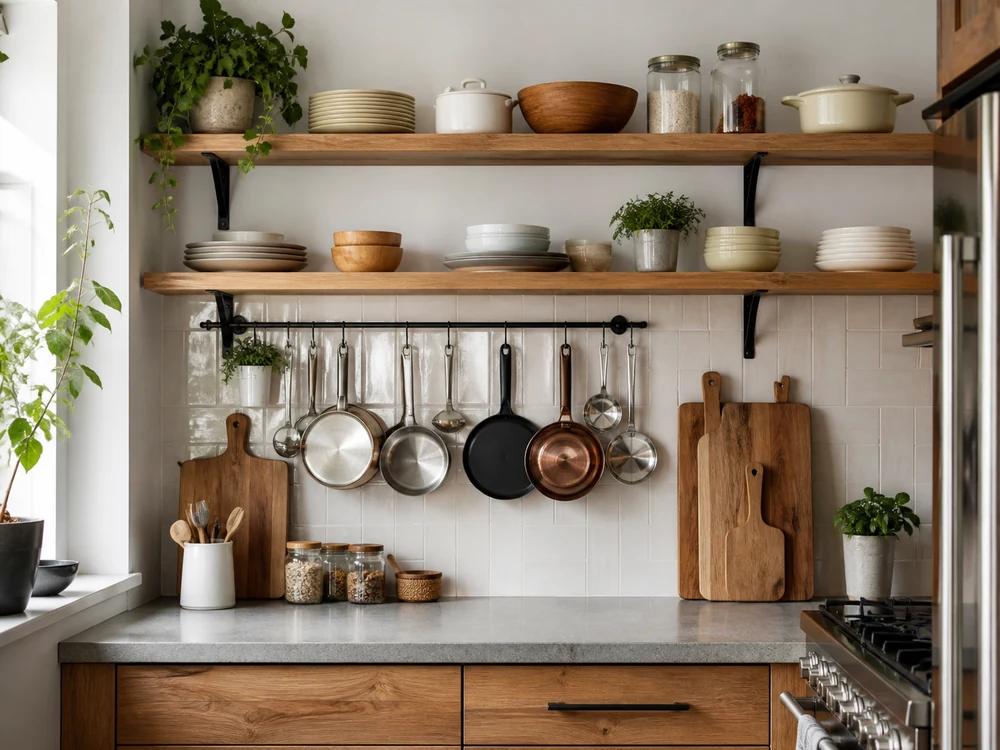
Put Daily Dishes On The Easiest Shelf
Open shelves work best for repeated categories: everyday plates, bowls, mugs, or glasses. These items cycle often, so dust does not settle and the shelf stays active.
Avoid placing rare serving pieces on the easiest shelf. Prime reach should support weekday meals, not occasional hosting.
Use Rails For Tools With Repeated Shapes
A rail can make utensils and pans easier to grab, but it looks calm only when shapes repeat. Too many mismatched tools turn the wall into visual static.
Hang the tools used near that zone. A whisk by the prep counter makes sense; a rarely used gadget belongs in a drawer.
Keep Heavy Items Low Or Firmly Supported
Mixing bowls, cast iron, appliances, and stacked dishes need stable shelves or lower racks. Height is helpful until it makes lifting risky.
Check bracket ratings and wall type before loading open shelves. A beautiful shelf that flexes under weight is not a storage solution.
Use Freestanding Racks Only In Dead Space
A freestanding rack can solve a cabinet shortage when it sits in a true dead corner. If it narrows the route between sink, stove, and refrigerator, it will annoy the cook every day.
Keep main routes predictable. The home version of ADA accessible route guidance is simple: do not borrow walking space for overflow storage.
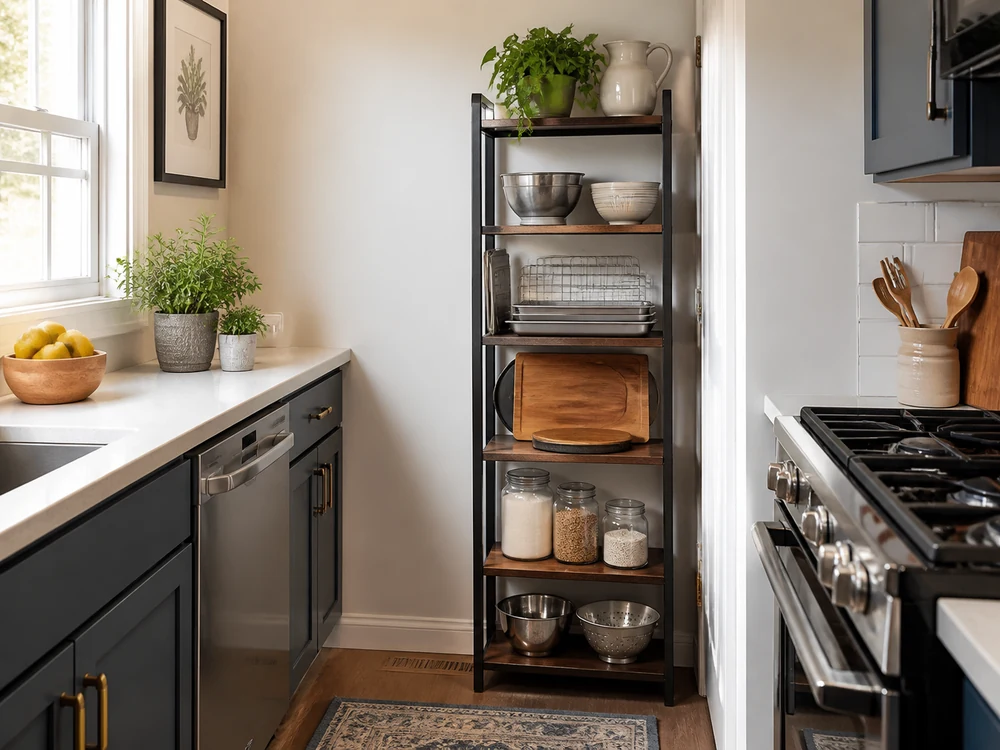
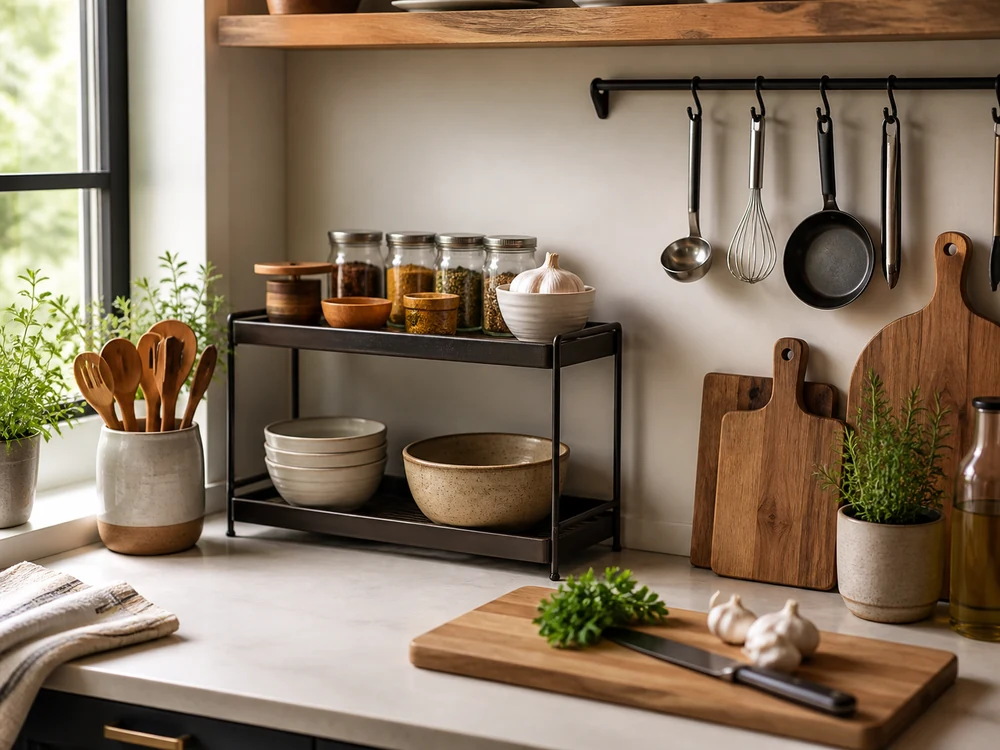
Make Counter Racks Short And Purposeful
A counter rack should be low enough that the wall still feels open and narrow enough that prep space remains useful. It should hold one task group, not all pantry overflow.
Spices, oils, bowls, or tea supplies can work if the group is tight. Mixed categories make a counter rack look like a small store aisle.
Use Open Shelves For Calm Materials
Open shelves show everything, so materials matter. Wood, ceramic, glass, and simple metal usually read quieter than bright packaging and plastic bags.
Transfer only what you will maintain. Clear jars are helpful when they prevent duplicates, not when they create a second labeling project.
Leave Room To Wipe The Wall
Kitchen shelves collect grease and dust faster than living room shelves. Leave enough space to wipe the backsplash, shelf underside, and counter below.
If cleaning requires unloading the entire display, the setup is too delicate for a working kitchen.
Store Pans By Frequency
Pans deserve open access only when they are used often enough to justify the visual weight. A daily skillet can hang near the stove; the holiday roasting pan should not.
Balance reach and calm. The wall should show the kitchen’s rhythm, not every piece of cookware owned.
Keep Pantry Racks From Becoming Backstock
A rack near the pantry can help when it holds visible categories with limits. It fails when it becomes the place for every extra bag and half-used packet.
Assign one shelf per category and stop when the shelf is full. Backstock needs a boundary more than it needs another tier.
Protect The Sink Side
The sink side needs room for dirty dishes, washing, drying, and hand movement. A rack that crowds the sink can make the kitchen feel permanently behind.
Use a drying rack that folds, rolls, or drains cleanly if the sink area is tight. Permanent clutter near water spreads quickly.
Use Shelf Height To Create Visual Order
Open shelves look better when item heights are grouped intentionally. Plates together, bowls together, and jars together create calm because the eye can read the pattern.
Do not scatter tall pieces across every shelf. A few height changes are enough to keep the wall lively without making it restless.
Give Appliances A Review Date
Small appliances often take shelf space because they feel too expensive to question. Give each appliance a review date based on actual use.
If an appliance has not been used in months, it should not hold a prime shelf. Move it high, low, or out of the kitchen until its value is clear.
Plan The Dinner Reset
The rack plan should make dinner cleanup faster. Dishes return to one shelf, tools return to one rail, and pantry items return to visible zones without rearranging.
If cleanup requires restacking every shelf, the system is too fragile. A working kitchen needs generous slots, not perfect styling.
Let One Wall Stay Quiet
Not every kitchen wall needs a shelf. Leaving one wall quiet can make the rack wall feel intentional and keep the room from closing in.
Small kitchens need contrast between active storage and visual rest. The empty wall is part of the organization.
Separate Cooking Tools From Serving Pieces
Cooking tools and serving pieces ask for different access. A pan rail should support weeknight cooking, while serving bowls can sit higher or farther from the stove.
Mixing those categories on one rack makes cleanup slower because every item competes for the same return spot. Sort by use moment, not by material.
Use Shelf Ends For Vertical Pieces
Cutting boards, trays, and sheet pans are easier to manage when they stand at the end of a shelf or rack. Flat stacks look tidy for a day and become frustrating when the bottom piece is needed.
Use a divider, rail, or narrow slot so vertical pieces do not slide. This small control can save more irritation than adding another full shelf.
Keep Spices Near Heat But Not In Heat
Spices are useful near the prep zone, but they should not sit where stove heat and steam punish them. A counter rack beside the stove may be convenient and still be the wrong microclimate.
Place the most-used spices close enough to grab and far enough to stay dry. The exact spot matters more than a matching jar set.
Make One Shelf A Fast Return Zone
After cooking, one shelf or rack tier should accept the items that return most often. If every return requires rearranging, the system will break on the second busy night.
Leave a little slack on that tier. Open storage works better with air around items than with every centimeter claimed.
Use Racks To End Cabinet Avalanches
A rack is worth adding when it stops a cabinet avalanche. Lids, pans, cutting boards, and trays often need separation more than they need more cubic space.
Look for the category that falls forward or hides the item behind it. That category deserves the rack before any decorative shelf does.
Keep Breakfast And Dinner Zones Apart
Breakfast items and dinner tools often collide on open shelves. Mugs, bowls, coffee, pans, and spices may all be useful, but they do not need the same shelf.
Separating morning and evening routines makes the kitchen easier to reset because each time of day has its own return logic.
Decision Guide
| Problem | Better Move | Watch Point |
|---|---|---|
| Counters stay crowded | Move only active task groups to racks | Prep space comes first |
| Shelves look noisy | Group repeated shapes and calm materials | Open storage is visual |
| Rack blocks cooking flow | Move it to dead space or remove it | Routes beat capacity |
| Cleanup takes too long | Create generous return slots | Perfect styling fails at dinner |
Related Her Neat Nest Guides
- Kitchen Storage Racks
- Organizer Rack Kitchen
- Kitchen Organization Kitchen Storage
- Cabinet Organizer Shelf
Final Takeaway
Kitchen racks and shelves work when they protect the counter instead of decorating it into uselessness. Plan by task, keep heavy items safe, limit open categories, and make the dinner reset simple.
FAQ
Are open kitchen shelves practical in a small kitchen?
They are practical for daily dishes and repeated categories that return easily. They are less useful for mixed pantry overflow or rare serving pieces.
Where should I put a kitchen rack?
Use a dead corner, pantry edge, or task zone that does not block the route between sink, stove, refrigerator, and prep counter.
How do I keep kitchen shelves from looking cluttered?
Group similar shapes, limit packaging, leave cleaning space, and keep only frequently used items on the most visible shelves.