
Thin Bathroom Cabinet Ideas That Fit Tight Rooms
A thin bathroom cabinet can rescue a tight room or make it feel even narrower. The difference is not only width; depth, door swing, moisture, cleaning access, and what you store inside all decide whether the cabinet earns its footprint.
Small bathrooms usually fail because supplies spread across the sink while the hidden storage holds forgotten backstock. A narrow cabinet should reverse that pattern by protecting the counter and giving each routine a readable place.
Choose the cabinet as a working tool, not as a tall box for everything that lacks a home.
Thin Bathroom Cabinet Depth Matters More Than Height
A thin bathroom cabinet should be shallow enough that shoulders, towel swings, and sink routines still feel natural. Height can add capacity, but depth steals movement every time someone enters the room.
Before buying, tape the cabinet footprint on the floor and open the bathroom door. If the taped shape makes you step around it, the cabinet will feel larger than its measurements.
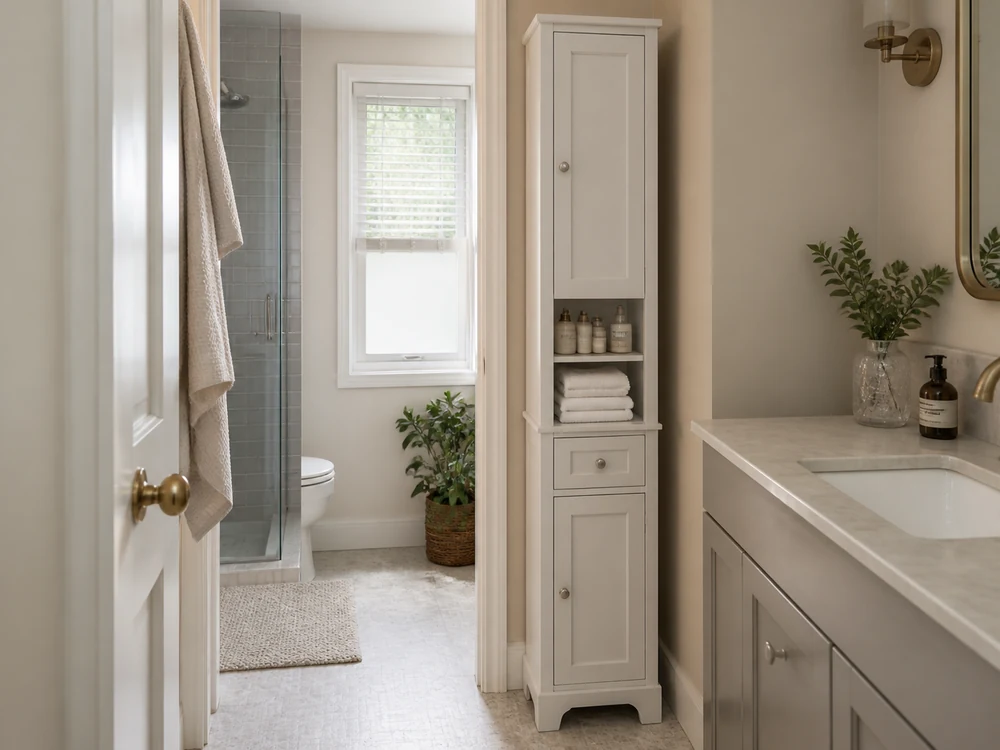
Start With The Dryest Wall
Bathrooms punish storage with steam and splash. Place a cabinet on the driest practical wall, especially if it will hold paper, cotton, medicine, or spare towels.
The EPA indoor moisture guidance is a useful reminder that moisture control shapes indoor comfort. In a small bath, closed storage should reduce dampness, not trap it.
Choose Doors By The Room's Motion
Swing doors need room in front, sliding doors need clean tracks, and open shelves need visual discipline. The best cabinet door is the one that matches how the bathroom is entered and cleaned.
If a door hits the toilet, rug, vanity, or your knee, the cabinet will stay half-used. A slim cabinet with the wrong opening style is not a space saver.
Give The Top A Single Job
The top of a thin cabinet should not become a second vanity. Give it one job: a plant, tray, folded towel, or small bowl for daily jewelry.
A narrow top becomes messy quickly because it has no visual forgiveness. When it holds too many products, the whole bathroom reads as crowded.
Put Heavy Refills Low
Tall thin cabinets can feel unstable when heavy refills sit high. Store large bottles, cleaning supplies, or stacks of paper low, and keep lighter towels or baskets above.
If the cabinet is tall, follow its anchoring hardware guide and review CPSC Anchor It furniture safety guidance. A narrow footprint needs extra respect, especially near a slippery floor.
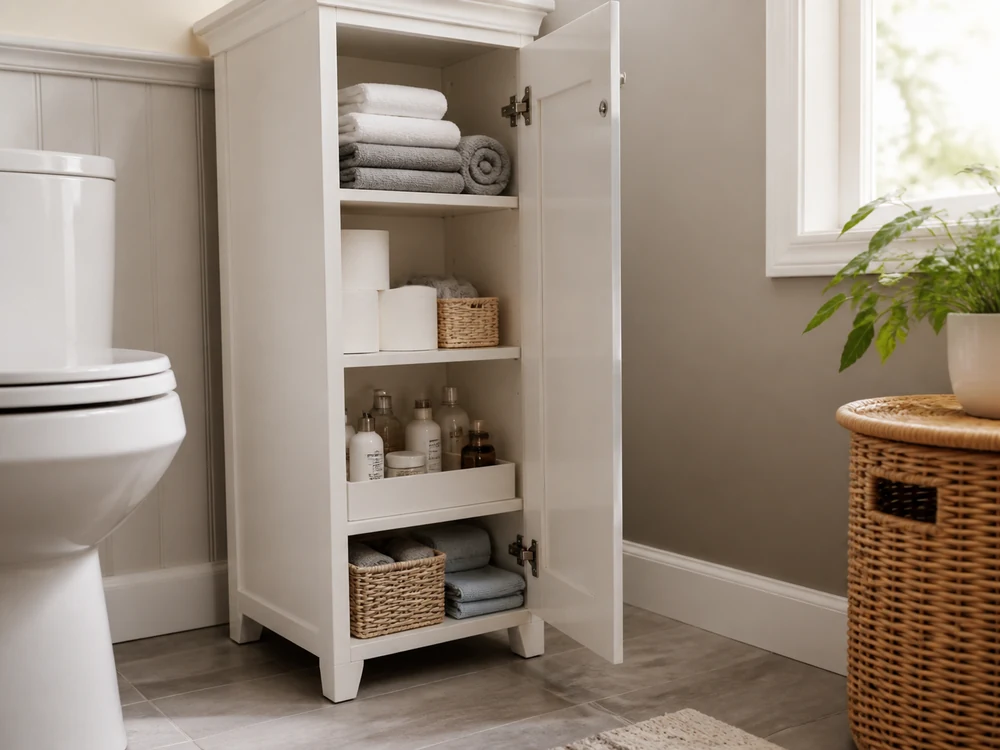
Separate Paper From Damp Textiles
Toilet paper, tissues, and cardboard packaging should not share a crowded shelf with damp washcloths. Moisture moves through small cabinets more easily than people expect.
Use one shelf for dry paper and another for towels in active rotation. If towels never dry fully inside the cabinet, reduce the stack or move extras elsewhere.
Use Baskets Only Where Hands Can Reach
Baskets make narrow cabinets look neat, but deep or high baskets can hide half-used products. Use them for simple categories: extra soap, washcloths, hair tools, or guest items.
Keep the basket shallow enough that you can see the contents from the front. If a label is required for every basket, the categories may be too vague.
Leave Cleaning Clearance Around The Base
The floor around a bathroom cabinet gathers dust, hair, and water spots. A cabinet on legs or with an easy-to-wipe base keeps the room fresher than a block pushed tight against every surface.
Avoid trapping a rug under the cabinet. Small bathrooms look cleaner when the mop can reach the edges without moving half the room.
Make Medicine A Separate Decision
A thin bathroom cabinet is not always the right place for medicine. If the room steams heavily or stays humid, medicine may belong in a drier nearby cabinet.
If medicine stays in the bathroom, give it a closed, clearly separate shelf and check dates regularly. Do not mix it with cosmetics, razors, or guest supplies.
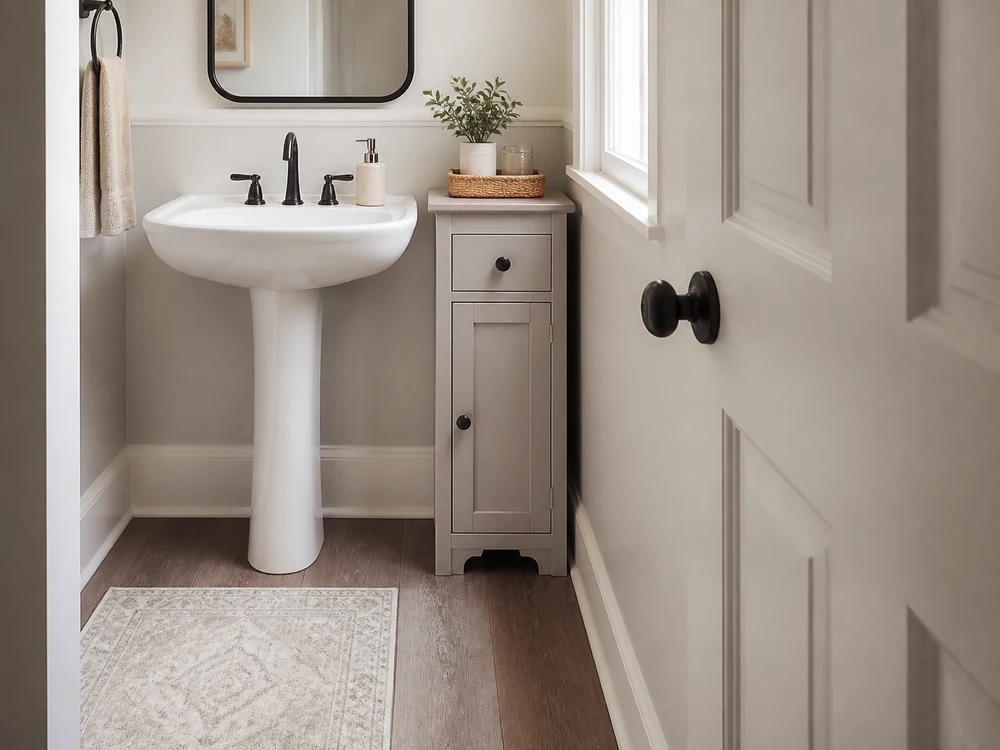
Plan Around The Toilet Zone
A cabinet near the toilet should not make cleaning awkward or make the wall feel packed. Leave enough side space to wipe the floor and enough visual space that the room does not feel like a storage aisle.
This is where a truly thin cabinet helps. It can add vertical storage without making the toilet area feel boxed in.
Use Open Cubbies Sparingly
Open cubbies are useful for attractive, repeated categories such as folded hand towels or a small basket of refills. They are not ideal for mixed bottles, razors, and bright labels.
Limit open sections to one or two calm shelves. Let the closed part of the cabinet handle the items that create visual noise.
Check The Cabinet With Wet Hands
A bathroom cabinet is used when hands are damp, hurried, or full. Handles should be easy to grip, shelves should not require delicate stacking, and daily items should not sit behind several layers.
If the cabinet feels fussy during a normal morning, simplify the contents. Storage should reduce decisions when the room is busiest.
Create A Refill Boundary
A slim cabinet cannot support unlimited backstock. Set a visible limit for each refill category so shopping does not quietly overtake the shelves.
One spare toothpaste, one spare soap, and one extra shampoo may be enough for many homes. The right number is the one you can see without unloading the shelf.
Audit After A Shower Week
Judge the cabinet after a week of real showers, not right after organizing. Look for damp towels, sticky bottles, hard-to-reach baskets, and water marks near the base.
Move categories based on that evidence. A thin cabinet works best when it adapts to the bathroom’s humidity and cleaning rhythm.
Use Ventilation As A Storage Filter
A bathroom with weak ventilation should store fewer absorbent items in the cabinet. Paper, cotton, towels, and cardboard packaging all need more caution when the mirror stays foggy after showers.
If the room dries quickly, the cabinet can handle more soft goods. Let the bathroom’s drying behavior decide what belongs inside, not the shelf count.
Keep Daily Bottles In A Front Row
Daily bottles should sit in one front row or a shallow pull-out tray. When they hide behind refills, morning routines become digging routines.
Reserve the back of the shelf for named extras only. If you cannot say what waits there without looking, the cabinet is carrying uncertainty.
Match Cabinet Color To Visual Weight
A thin cabinet can still look heavy if the color contrasts sharply with a pale bathroom. Matching wall color, vanity tone, or trim can help it recede.
Contrast works when the cabinet is meant to be a feature. In very narrow baths, quieter color often makes the room feel less interrupted.
Keep Guests Out Of Private Storage
A guest should not need to open every cabinet door to find a hand towel or spare roll. Give guest supplies one obvious shelf, cubby, or basket.
That small cue protects privacy and keeps the thin cabinet from becoming a public rummage zone when people visit.
Check Hinges Before You Load Shelves
Thin cabinets often use small hinges, narrow magnetic catches, or lightweight doors. Test how the door feels before loading the shelves with bottles and stacked towels.
If the door flexes or the cabinet rocks when opened, reduce the load and move heavier supplies elsewhere. A cabinet that feels delicate should be treated as light storage, not a linen closet.
Keep Styling Below The Mirror Line
A tall cabinet beside a mirror can compete with the vanity wall. Keep styling simple near eye level so the mirror still feels like the main visual lift.
Use lower shelves for practical storage and let the upper face stay calmer. That balance helps the bathroom feel taller instead of more crowded.
Decision Guide
| Problem | Better Move | Watch Point |
|---|---|---|
| Cabinet narrows the path | Reduce depth before adding height | Tape the footprint first |
| Shelves smell damp | Move paper and extras to the driest wall | Do not crowd towels |
| Top gets cluttered | Give the top one visible job | Avoid a second vanity |
| Cleaning is awkward | Choose legs or clear base access | The mop needs a route |
Related Her Neat Nest Guides
Final Takeaway
A thin bathroom cabinet works when it protects the sink, keeps dry items dry, and stays easy to clean around. Choose the narrowest useful depth, store heavy items low, and let each shelf carry a clear category.
FAQ
How deep should a thin bathroom cabinet be?
Choose the shallowest depth that holds your real categories without blocking the door, sink routine, or cleaning path.
What should go in a thin bathroom cabinet?
Use it for towels in small numbers, paper refills, soap, guest items, hair tools, and dry backstock. Keep damp tools and medicine separate when needed.
Are tall thin bathroom cabinets safe?
They can be safe when placed on a stable floor, loaded with heavier items low, and anchored according to the cabinet maker's hardware guide.