
Small Bedroom Bed Ideas That Fix The Layout First
Small bedroom bed ideas should start with layout, not bedding. The bed is the largest object in the room, and once it is wrong, every other solution has to compensate. A nice nightstand cannot fix a blocked closet. A storage frame cannot fix a bed that makes the door feel trapped.
The goal is not always to center the bed or copy a hotel room. Sometimes the smartest move is one generous side path, wall lighting, a low frame, or under-bed drawers used only for slow categories.
Think of the bed as a decision that creates or destroys the rest of the room. Get that decision right and the bedroom stops feeling like a puzzle.
Core idea: The best small bedroom bed idea is the one that makes the path, closet, and morning routine less awkward.
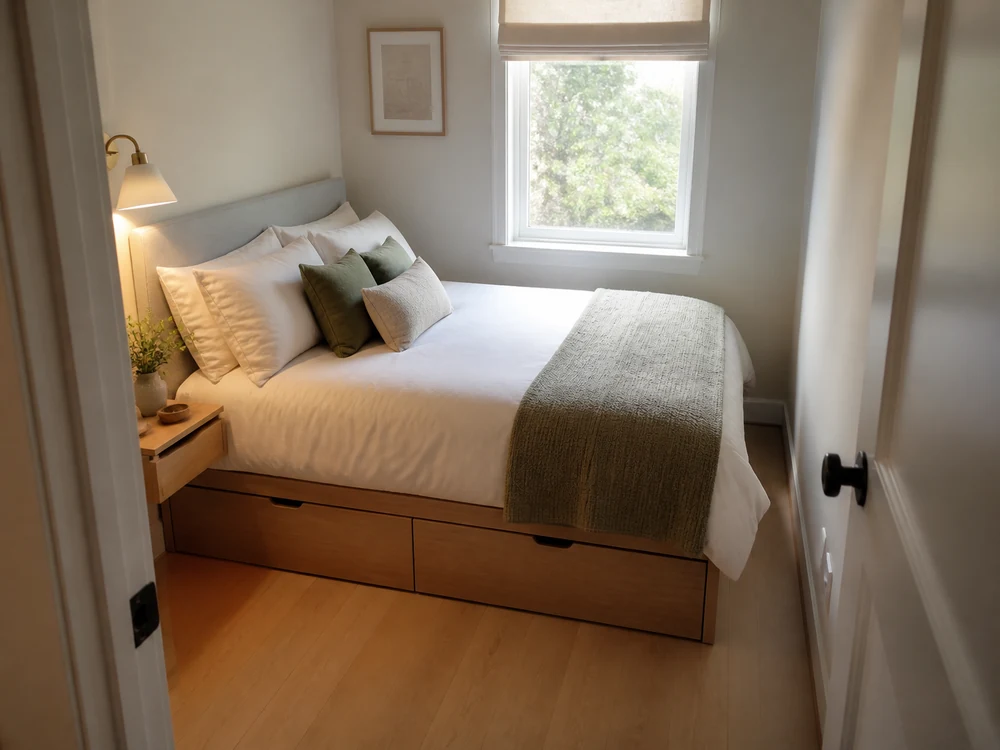
Small Bedroom Bed Ideas: The First Decision
The best small bedroom bed idea is the one that makes the path, closet, and morning routine less awkward. This guide keeps the advice tied to measurable room behavior rather than decorative formulas.
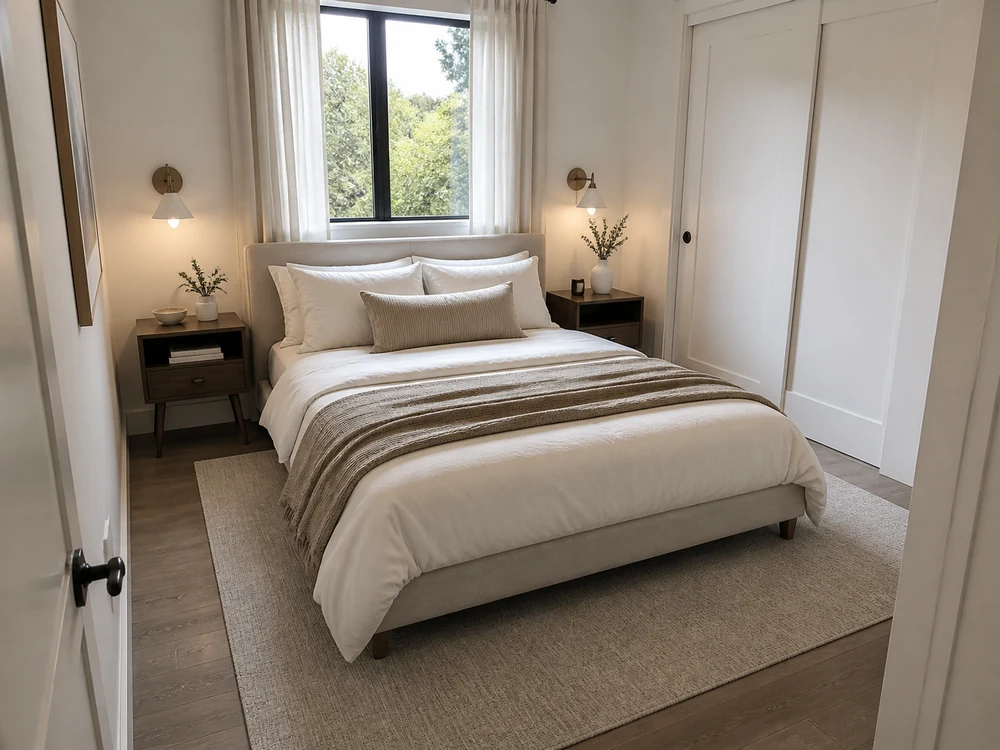
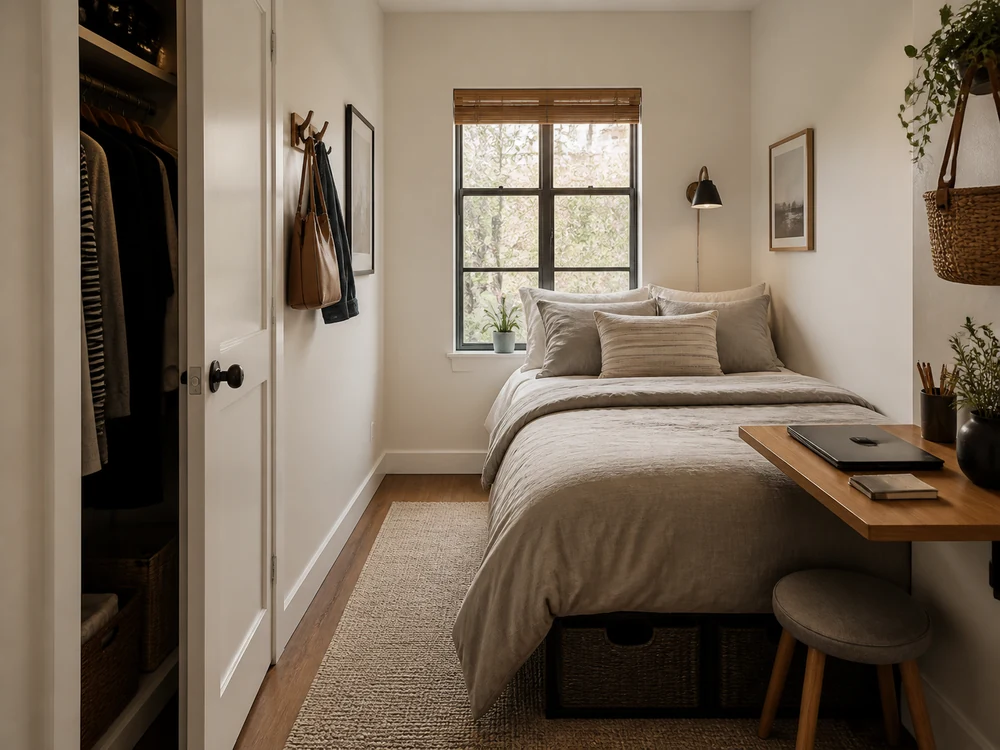
Choose The Bed Size By The Room's Hardest Path
The hardest path may be the door to the closet, the closet to the dresser, or the bed to the bathroom at night. Measure that route before defending a mattress size. A bed can technically fit and still make the room tiring.
If the path narrows too much, consider a smaller mattress, slimmer frame, or different orientation. The best bed size is the one that lets the room function six mornings a week, not the one that wins on a floor plan.
Decide Whether One Side Path Is Better Than Two Bad Ones
A centered bed with two tiny side gaps can look balanced and feel terrible. In a very small bedroom, one comfortable side path may work better than two unusable slivers.
This is especially true for solo sleepers, guest rooms, or rooms where the closet door needs breathing room. Push the bed toward one wall only when bedding can still be changed and the wall side will not become a dusty unreachable strip.
Use Wall Lighting Instead Of Bulky Nightstands
A small bedroom often needs the function of a nightstand without the full furniture footprint. Wall sconces, plug-in lamps, or a narrow floating shelf can hold the bedside routine while keeping the floor clearer.
The shelf should hold only what is used in bed: phone, book, glasses, water, maybe medication. If the bedside area becomes a storage station, the bed zone starts to feel crowded again.
Make Under-Bed Drawers Slow Storage
Under-bed drawers are useful, but they are not always good daily drawers. Pulling storage from under a bed can be awkward when a rug, narrow path, or heavy contents are involved.
Use them for spare sheets, off-season clothes, blankets, or guest items. Keep daily clothes in a dresser or closet if possible. Under-bed storage works best when it behaves like a calm archive, not a morning obstacle.
Watch Rug Placement Around Drawers
A rug can soften a small bedroom, but it can also block drawers, bunch under wheels, or make one side of the bed hard to access. Place the rug so it supports the step out of bed without crossing the drawer path.
If storage drawers open from the side, test them with the rug in place. A beautiful rug that makes storage annoying will eventually be pushed, folded, or ignored.
Use The Window Wall Carefully
Placing a bed under a window can free wall space, but it affects light, curtains, headboard height, and access to the sill. Keep the headboard low enough that the window still works visually and practically.
Avoid blocking radiators, vents, or windows that need to open. If curtains fall behind pillows, choose shades or panels that clear the bedding. A window bed should feel intentional, not trapped.
Protect Closet Door Clearance
Closet doors are easy to forget until the bed arrives. Hinged doors, sliding doors, bifolds, and curtains all need different clearance. The bed should not force the closet into a half-open compromise every morning.
Open the closet fully, pull out clothes, step back, and close it again. That sequence is the real measurement. If the bed interrupts it, the layout will feel tight no matter how pretty the bedding is.
Keep The Foot Of The Bed Light
The foot of the bed is tempting storage territory. A bench, trunk, desk, hamper, or low shelf can be useful, but it can also block the room’s only generous path.
Use a foot-of-bed piece only if it leaves walking space and has one job. If the room already needs that floor for movement, use wall hooks, under-bed storage, or a slim shelf elsewhere instead.
Check Night Movement
A bedroom layout has to work in the dark. Sharp corners, narrow gaps, rug edges, and low stools become more annoying at night. Walk the bed path with the lights low before calling the layout finished.
Clear route principles from ADA accessible route width guidance are useful here too. A private bedroom is not a public corridor, but the body still benefits from a route that is obvious and unobstructed.
Use Headboard Height To Control The Wall
A tall headboard can make a small bedroom feel finished, but it can also crowd a low window or make the ceiling feel lower. A low headboard may leave more visual air and allow art, lighting, or a window treatment to do the styling work.
Match headboard height to the wall’s job. If the bed sits under a window, keep the headboard low and quiet. If the bed wall is blank, a taller upholstered headboard can become the anchor. The bed should make the wall feel resolved, not heavier.
Keep Bedding Practical Around Wall Placement
A bed pushed into a corner needs bedding that can be managed from one side. Thick layered covers, heavy quilts, and many pillows are harder to reset when one edge is against a wall. Lighter layers can make the layout easier to live with.
If two people use the bed, corner placement needs a stronger reason. If one person uses it, the tradeoff may be worth it for a better closet path or desk position. The bedding should support the layout choice instead of making it more annoying.
Treat The Bed Footprint As A Cleaning Zone
Dust gathers under beds, behind headboards, and along tight side paths. A storage bed with drawers should still allow cleaning access. A platform bed that sits flush to the floor can look calm but may hide more dust than expected.
Choose the base by how the room is cleaned. If baskets slide underneath, make sure they can come out fully. If drawers open over a rug, test them. A bed idea is only good if it can be maintained after the first week.
Quick Decision Guide
| Problem | Best Move | Watch Out For |
|---|---|---|
| Two side gaps are too tight | Create one better side path | Keep bedding changeable |
| No room for nightstands | Wall lights plus floating shelf | Limit bedside items |
| Closet door hits bed | Shift bed or change door solution | Test the morning sequence |
| Need extra storage | Under-bed drawers | Use for slow categories |
Related Her Neat Nest Guides
- Small Bedroom Furniture
- Small Bedroom Storage Without A Closet
- Under Bed Storage Ideas
- Bedroom Storage Ideas For Small Rooms
Final Takeaway
Small bedroom bed ideas are layout decisions first. Choose the bed size by the hardest path, protect closet access, use wall lighting when floor space is tight, and make under-bed storage serve slow categories. Once the bed stops blocking the room, the rest of the bedroom becomes easier.
FAQ
Where should a bed go in a small bedroom?
Place the bed where it preserves the main path, closet access, and door movement. A centered bed is not always best if it creates two unusable side gaps.
Is it okay to put a bed against the wall?
Yes, when one clear side path works better for the room. Make sure bedding can still be changed and the wall side does not become impossible to clean.
What bed works best in a small bedroom?
Low frames, storage beds with smooth drawers, slim headboards, and beds that allow wall lighting often work well in small bedrooms.