
Small Bedroom Style Ideas That Still Leave Room To Live
Small bedroom style ideas are easy to collect and hard to live with. A photo can show layered pillows, art, lamps, baskets, throws, trays, and a plant, but a real small bedroom has to make room for a body turning down the bed, opening drawers, charging a phone, dropping tomorrow’s clothes, and reaching the closet before coffee.
The useful version of style is not decoration added after storage. It is the editing system that decides what the room is allowed to show. Color, texture, lighting, and surfaces should make the bedroom feel restful without stealing the few inches that make the room usable.
Start with the daily route, then style only what supports that route. A small bedroom feels more expensive when fewer things compete for attention.
Core idea: Style in a small bedroom should lower visual noise while protecting the movements that happen half-awake.
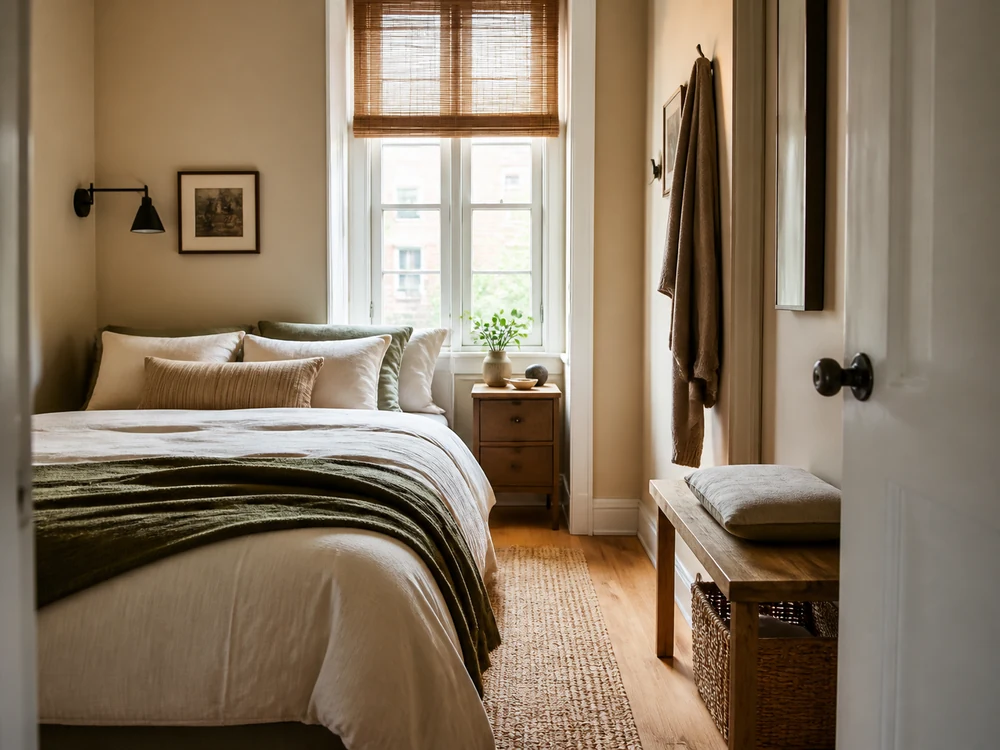
Small Bedroom Style Ideas: The First Decision
Style in a small bedroom should lower visual noise while protecting the movements that happen half-awake. This guide keeps the advice tied to measurable room behavior rather than decorative formulas.
Choose One Visual Anchor Before Buying Anything
A small bedroom needs one visual anchor: the bed wall, the dresser wall, a window, or a single piece of art. When every wall tries to be the feature, the room feels busy even if each object is tasteful. Pick the view that matters most when you enter the room and let the other areas serve it quietly.
The anchor does not have to be dramatic. A calm headboard, a pair of wall lamps, one large framed print, or a well-placed mirror can be enough. The test is whether your eye knows where to land before it starts counting objects.
Use Color As A Boundary, Not A Theme
Small rooms can handle color, but they struggle when color appears everywhere in equal strength. Choose one restrained accent and repeat it with intention: a pillow, a book spine, a throw edge, or a small object on the dresser. Let the larger pieces stay calmer so the room has breathing room.
Avoid building the whole bedroom around a color trend that forces more shopping. The best palette is the one that makes existing furniture look more deliberate. If a new color requires changing the rug, art, bedding, and storage bins at once, it is not a style idea; it is a second renovation.
Let Bedding Carry Texture Instead Of Clutter
Texture is the safest way to make a small bedroom feel styled without adding more objects. A quilt, linen duvet, ribbed throw, or woven pillow gives the bed depth while staying inside the footprint the bed already occupies.
Keep the pillow count realistic. If four decorative pillows end up on the floor every night, they are not styling the room; they are creating a nightly chore. Use fewer pieces with better texture and let the bed look finished without needing a storage basket just for pillows.
Style The Dresser For The Morning Routine
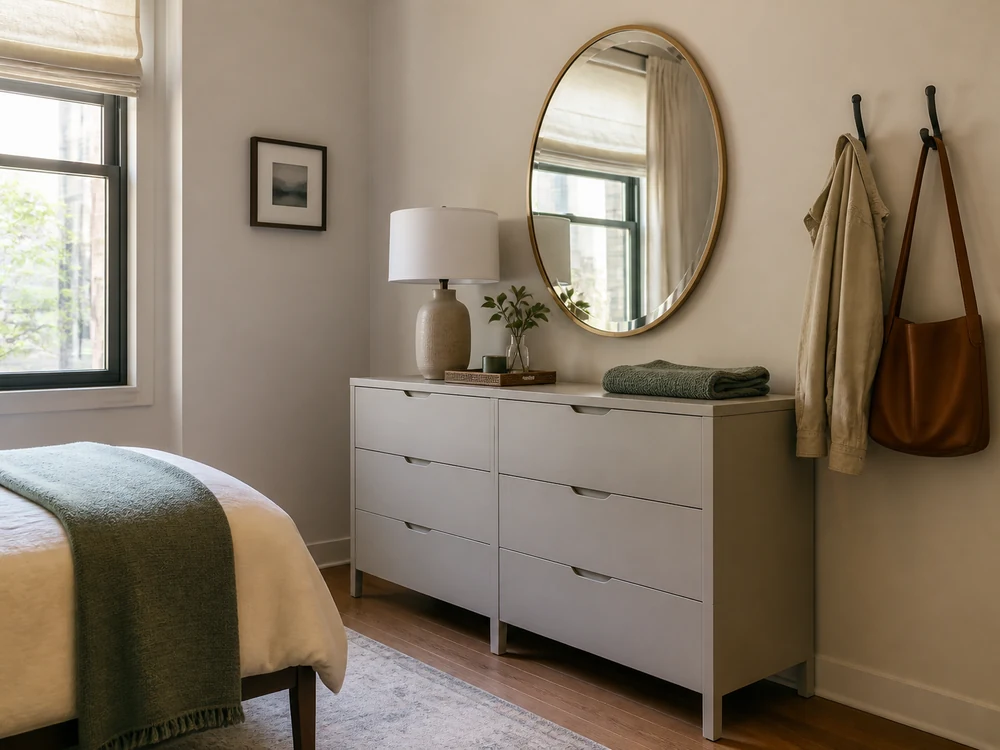
The dresser top is often the first surface to fail. It collects receipts, hair ties, water glasses, folded laundry, and things that are on their way somewhere else. Style it with a small tray only after assigning space for the routine that actually happens there.
A lamp, mirror, and tray can work well if the tray has a job: jewelry, glasses, perfume, or tomorrow’s watch. Keep the rest of the surface mostly empty. The quiet surface becomes part of the style because it gives the room a place to pause.
Use Wall Lighting To Protect Tiny Surfaces
Table lamps are beautiful, but they can swallow a small nightstand. A wall sconce or plug-in lamp frees the surface for a book, phone, water glass, and the small things people actually need beside a bed.
Choose lighting by reach. The switch should be easy from bed, the cord should not drag across a path, and the light should be warm enough for evening. Style is not just how the fixture looks; it is whether the nightstand stays usable after the fixture arrives.
Keep Hooks Intentional And Temporary
Hooks can make a bedroom feel relaxed or messy, depending on their assignment. One hook for tomorrow’s outfit or a robe is useful. A row of hooks holding bags, coats, jeans, scarves, and laundry turns into a vertical pile.
Use hooks as a staging area, not storage. If an item stays on a hook for more than a few days, it needs a real home. This keeps the bedroom from looking styled in one corner and overloaded in another.
Treat Mirrors As Light Management
A mirror is not only a decorative object. In a small bedroom, it can borrow light, open a dark corner, and replace a busier art arrangement. The placement matters more than the size.
Reflect the window, a clean wall, or the bed’s calmest side. Do not reflect the laundry chair, crowded dresser, or open closet unless you want to see twice as much disorder. A mirror should double the room’s best behavior.
Anchor Tall Or Heavy Pieces
A styled bedroom can still have real weight. Dressers, wardrobes, tall mirrors, and shelving need safe placement and appropriate anchoring, especially in homes with children or heavy drawers.
Use the manufacturer’s hardware and review CPSC Anchor It furniture safety guidance when tall furniture is part of the plan. Safety is not separate from style in a small bedroom; it is what lets the room stay calm after the photo moment.
Give The Room A Closing Edit
The final layer of style is what happens at night. Remove one object from the dresser, close one drawer, hang tomorrow’s outfit, clear the floor beside the bed, and fold the throw where it can stay. A five-minute closing edit will do more for the room than another decorative purchase.
This habit also exposes which style ideas are working. The pieces that are easy to reset belong. The pieces that always need managing are not part of the room’s style; they are friction wearing a nice material.
Make Negative Space Feel Deliberate
A small bedroom can look unfinished when every empty spot is treated as a problem. Empty space beside a dresser, above a bench, or on one side of a shelf can be the detail that makes the room feel edited. The trick is to make the empty area align with something intentional: a lamp, a mirror, the bed edge, or the walking path.
Do not fill a blank corner only because it appears in photos. Stand in the doorway and ask whether that empty area helps the room breathe. If it does, leave it. In compact rooms, restraint can read as style because it gives the furniture enough space to look chosen rather than squeezed.
Choose Storage That Matches The Style Language
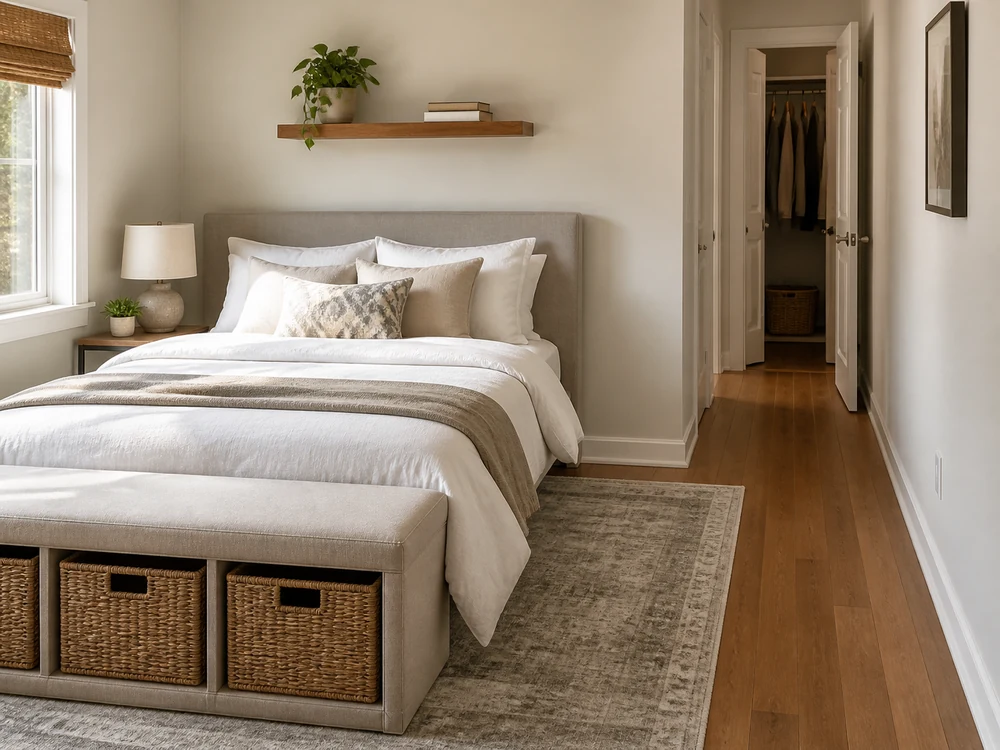
Storage pieces do not have to match perfectly, but they should speak the same visual language. A woven basket, a smooth drawer front, and a fabric bench can work together when their scale and color temperature feel related. A plastic bin, glossy dresser, rustic crate, and ornate mirror may all be useful, but together they can make the room feel accidental.
Use one storage texture as the main note and let the rest stay quiet. If baskets are the warmth, keep drawer fronts simpler. If the headboard is the texture, choose calmer bins. This keeps practical storage from becoming visual static.
Quick Decision Guide
| Problem | Best Move | Watch Out For |
|---|---|---|
| Room feels visually busy | Pick one visual anchor | Do not feature every wall |
| Nightstand is crowded | Use wall lighting | Keep cords out of the path |
| Dresser becomes a pile | Use one small tray | Leave most of the top empty |
| Hooks look messy | Limit them to staging | Move long-term items elsewhere |
Related Her Neat Nest Guides
- Small Bedroom Furniture
- Small Bedroom Storage Without A Closet
- Bedroom Organization Ideas
- Small Apartment Organization Ideas
Final Takeaway
Small bedroom style ideas should make the room easier to enter, use, and reset. Choose one anchor, let textiles carry softness, keep surfaces disciplined, and protect the path around the bed. The room will feel styled because it works, not because it is full.
FAQ
How do I style a very small bedroom?
Start with the bed wall or one visual anchor, then keep color, lighting, and surfaces simple. Use texture on the bed and closed storage for practical items.
What colors work best in a small bedroom?
Soft neutrals, muted greens, warm whites, quiet blues, and restrained earth tones can all work. The key is using one accent intentionally instead of spreading strong color everywhere.
How do I make a small bedroom look less cluttered?
Reduce visible categories, keep the dresser top mostly clear, use wall lighting, and make hooks temporary rather than permanent storage.