
Small Entryway Ideas That Make The First Three Feet Work
small entryway ideas are strongest when the room is judged by movement, not by a staged photo.
Small entryway ideas usually start with pretty hooks or a bench, but the first three feet of a home have a stricter job. They have to absorb the moment when a person arrives with shoes, keys, a bag, mail, weather, and a door that still needs room to move.
That is why the best entry solutions feel almost quiet. They give every fast-moving item a place to pause, then they protect the path so the doorway does not become a narrow obstacle course by the end of the week.
Before buying anything, treat the entry like a tiny piece of choreography. The door swings, the body steps in, one hand reaches for keys, a bag drops, shoes come off, and wet gear needs a safe place. Design around that sequence and the entry starts to reset itself.
Core idea: A small entryway works when it is planned as a short transition route, not a miniature storage room.
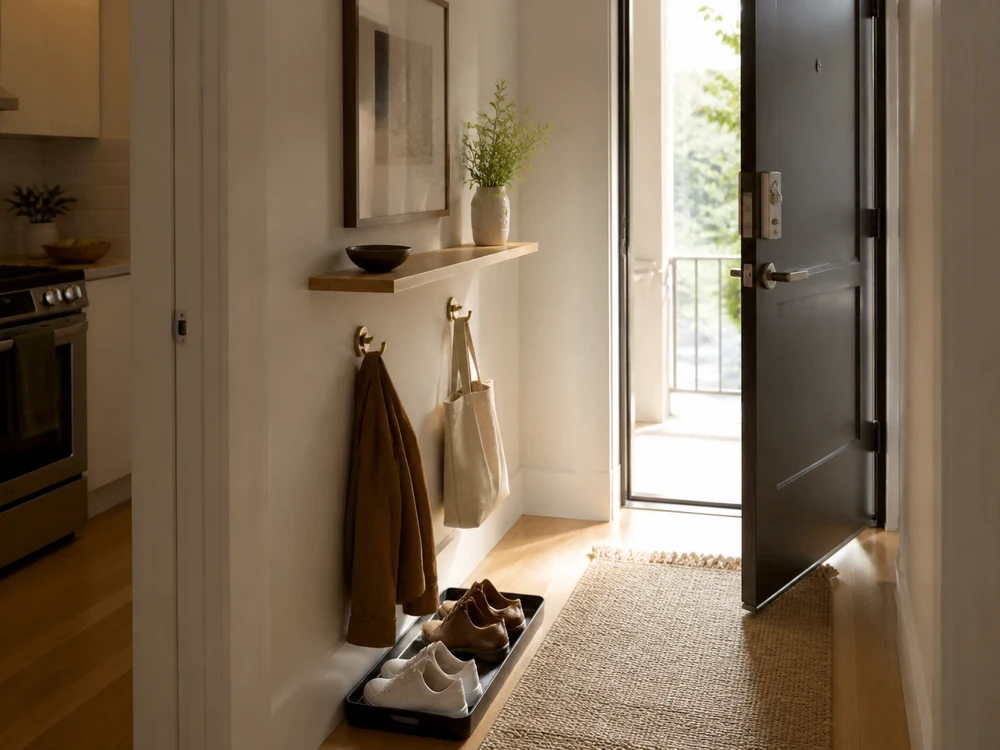
Small Entryway Ideas: The Decision That Changes The Room
A small entryway works when it is planned as a short transition route, not a miniature storage room. The details below are written for lived-in small homes, where a good idea has to survive rushing, cleaning, guests, and the ordinary objects that return every evening.
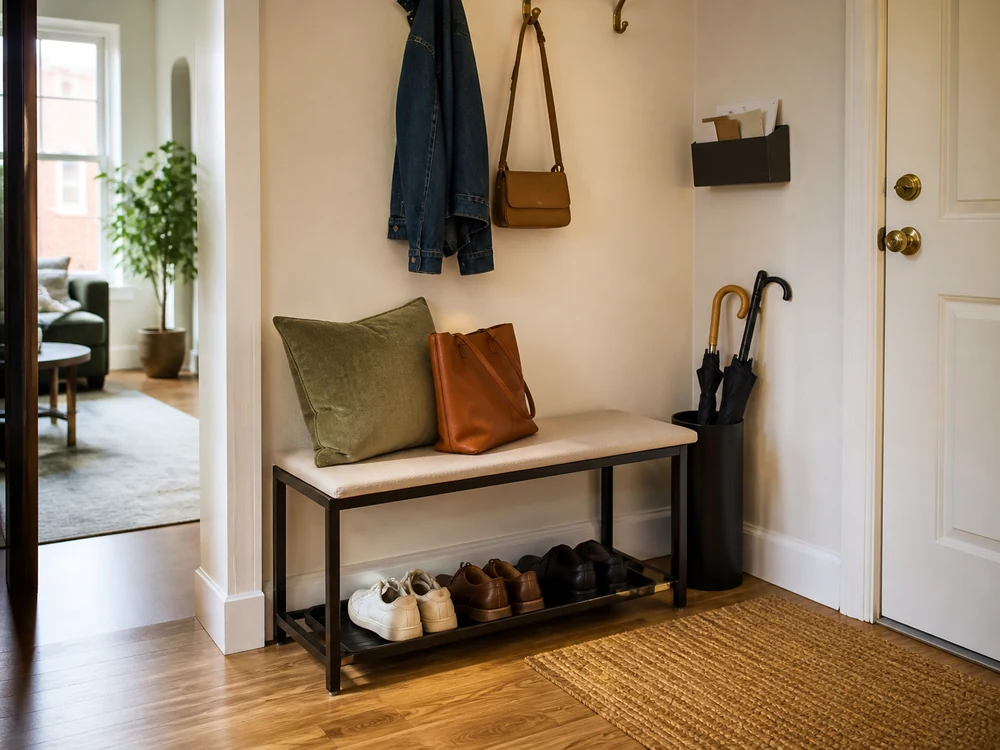
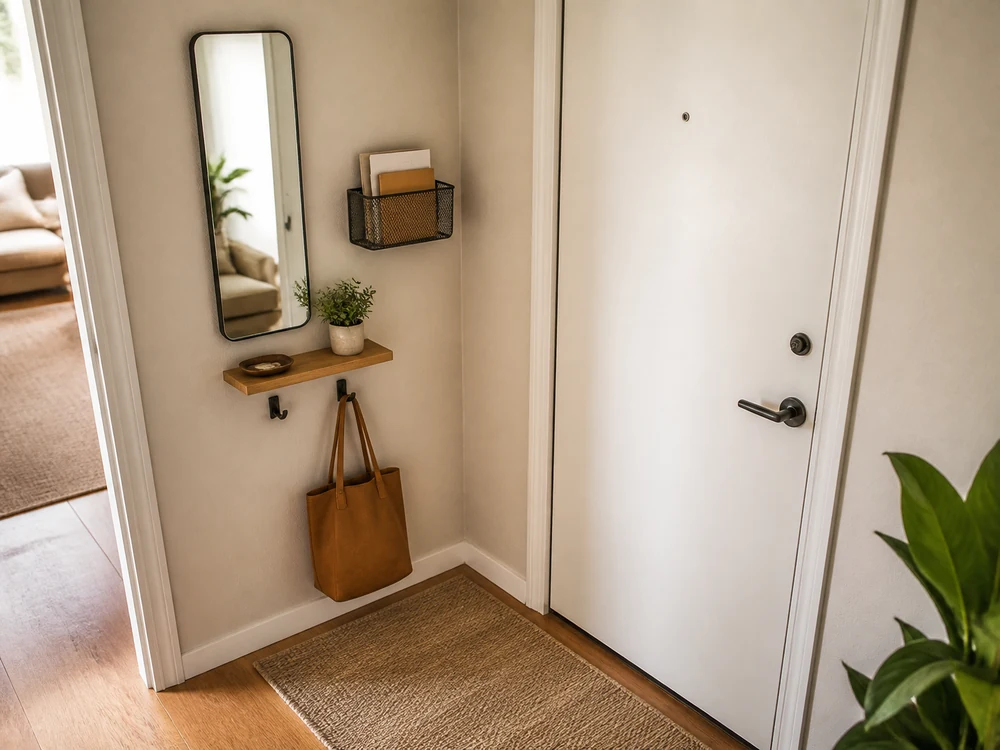
Start With The Door Swing, Not The Wall
Open the door fully, then stop it halfway. The halfway position is where real life happens: someone is carrying groceries, another person is behind them, a dog leash is tangled, or a delivery box is sitting at the threshold. A hook rail that looks fine on an empty wall can still catch a sleeve, bag strap, or door handle during this normal arrival moment.
Use painter’s tape to mark the depth of anything you are considering. Walk through the entry for a day with the tape in place. If your shoulder curves around it or your bag brushes the wall, the proposed piece is already too deep. A shallow ledge, flat hook rail, or narrow mirror usually performs better than a chunky shelf in a true small entry.
Give The Entry Three Jobs And No More
A compact entry should handle current shoes, current outerwear, and current small items. That is enough. When it also tries to hold off-season coats, old mail, every reusable tote, cleaning supplies, dog accessories, and outgoing returns, it turns into a visible storage closet without the door.
Name the three jobs out loud before changing the space. For many homes the list is simple: shoes off, keys down, bag hangs. For others it is wet umbrella, stroller parking, or school backpack. Once the jobs are named, every accessory has to apply for a role instead of joining because it fits the color palette.
Use A Landing Ledge For Decisions, Not Piles
Keys, sunglasses, earbuds, and mail need a landing place near the hand that unlocks the door. The ledge should be small enough to make backlog obvious. A large console looks generous at first, but it often becomes a horizontal invitation for receipts, pharmacy bags, and things that need to go somewhere else.
A narrow shelf with a bowl, a wall pocket, or a tray on a slim cabinet is usually enough. The point is not to store paper forever; it is to hold the day’s unresolved items until they move to a command center, recycling bin, desk, or bag. A small entryway becomes easier when temporary things cannot pretend to be permanent.
Separate Shoes From The Walking Lane
Shoes are the entry item most likely to sprawl because they land low and multiply quietly. A tray, short rack, or bench shelf works only if it defines a maximum count. Two daily pairs per person might be realistic; eight pairs in the doorway usually means the entry is managing a closet problem.
If the floor area is tight, choose containment over height. A shallow tray under hooks can be better than a tall shoe tower that narrows the path. If a bench is useful, keep it narrow enough that someone can sit, tie a shoe, and still let another person pass.
Let Wet Gear Have Its Own Rule
Rain gear needs a different storage rule than a canvas tote or wool coat. Damp umbrellas, muddy shoes, and wet jackets should land on wipeable or washable surfaces. If they share the same hook cluster as dry bags, the entry may look organized while quietly spreading moisture and grit.
Moisture control is also a home-health issue, not just a cleaning preference. The EPA indoor air quality and moisture guidance is a useful reminder that dampness and ventilation matter indoors. In an entry, that can be as humble as a washable mat, a small umbrella stand, and enough air around wet items to dry before they are put away.
Use A Mirror As A Light Tool, Not Just Decor
A mirror can make a small entry feel larger, but its better job is practical. It catches light from the next room, gives a quick check before leaving, and reduces the need for a deep decorative object on the wall. The mirror earns its space when it helps the entry do a job.
Place it where it reflects light or a calm surface, not the busiest shoe pile. A mirror that doubles the clutter visually can make the entry feel worse. If the only available wall faces the mess, clean up the landing zone first and add the mirror second.
Build One Outgoing Spot
A good entry does not only receive things; it also helps them leave. Library books, returns, school papers, dry cleaning, or a friend’s container need one outgoing place that is visible enough to be remembered but small enough not to become storage.
This can be a single basket under the bench, one hook for the outgoing tote, or a labeled folder in the wall pocket. Keep it close to the door because the point is memory at the moment of exit. If the outgoing spot lives in another room, it is probably too late.
Keep Clearance Measurable
You do not need a code-perfect public walkway inside every home, but clearance should still be treated as a measurement, not a mood. After hooks, baskets, and shoes are in place, walk through with a laundry basket or grocery bag. If you rotate your body to pass, the entry is asking for too much patience.
For a useful reference point, review ADA accessible route width guidance and notice how seriously clear routes are treated in accessible design. A small private entry has different requirements, but the principle carries over: movement is part of the design, not what remains after storage is installed.
Make The Reset Visible From The Door
The final test is what you see before you step inside. If the first view is a clear mat, one contained shoe zone, and a small place for keys, the entry communicates order before the rest of the home has to prove anything. If the first view is a stack of undecided objects, the whole home feels behind before the day has even changed rooms.
Stand outside the door and open it slowly. That frame tells you which item is too tall, too deep, too colorful, or too permanent for the entry. Small entry design improves when the doorway view is edited as carefully as the storage itself.
Quick Decision Guide
| Problem | Best Move | Watch Out For |
|---|---|---|
| Door catches coats or bags | Shallow hook rail past the swing arc | Test with the door half open |
| Shoes spread across the path | Tray or low bench shelf | Set a maximum pair count |
| Mail piles on furniture | Wall pocket plus tiny tray | Move paper weekly |
| Entry feels dark | Mirror facing light or calm wall | Do not reflect the shoe pile |
Related Her Neat Nest Guides
- Small Entryway Shoe Storage Ideas
- Entryway Organization For Small Apartments
- Small Doorway Coat Rack
- Renter Friendly Storage Ideas
Final Takeaway
Small entryway ideas work best when they protect the arrival sequence. Give the first three feet a path, a landing point, a shoe boundary, and a moisture rule. Everything else is optional. When the entry stops pretending to be a storage room, it becomes the daily reset point it was meant to be.
FAQ
What should a small entryway include?
A small entryway usually needs a clear walking path, a current-shoe zone, hooks or a rail for current outerwear, and a small landing spot for keys or mail. Add only the items that support your real arrival routine.
How do I make a tiny entryway look less cluttered?
Limit visible categories. Keep only current shoes and outerwear in the entry, use a small tray for loose items, and choose shallow wall storage that does not project into the path.
Is a bench worth it in a small entryway?
A bench is worth it when it helps with shoes without blocking the door swing or walking lane. In very narrow entries, a slim tray and wall hooks may work better than a seat.