
Kitchen Storage Racks That Actually Make A Small Kitchen Easier
Kitchen storage racks are easy to buy because they promise instant vertical space. The harder question is whether that new tier makes cooking calmer or just hides a second layer of things you still cannot reach.
In a small kitchen, a rack earns its place only when it changes a daily motion: plates come out without lifting a stack, oils return without crowding the stove, cleaning supplies slide around the pipe instead of falling behind it.
Think of racks as access tools. When they are chosen for a specific movement, even a modest cabinet feels more generous.
Editorial thesis: Kitchen storage racks should reduce hand movement and cleaning friction, not simply add another tier to a cabinet that already has the wrong categories inside it.
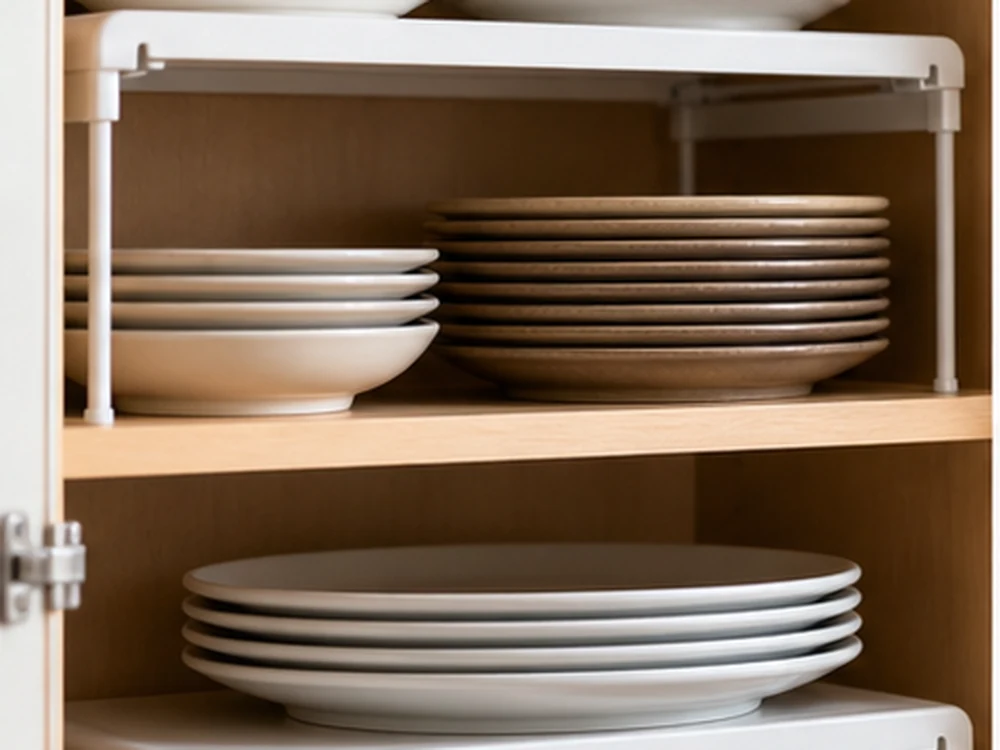
Kitchen Rack Decision Guide
| Situation | Best Fit | What To Check |
|---|---|---|
| Plate stacks | Shelf riser | Check bowl height and hand clearance |
| Daily oils or spices | Short counter rack | Keep away from heat and leave wipe space |
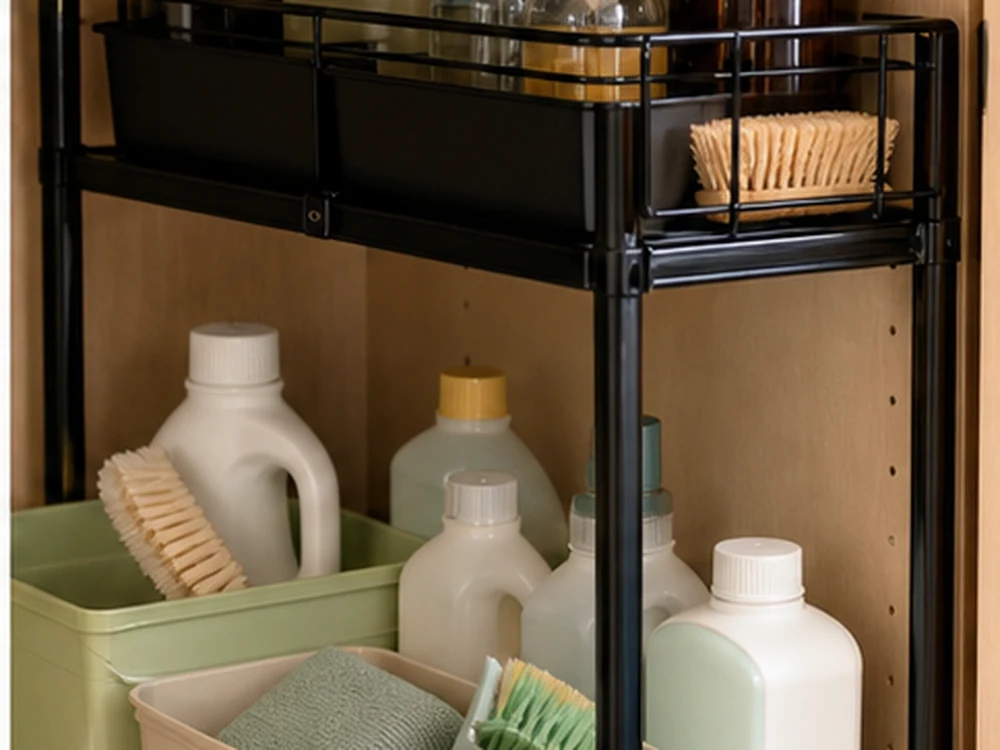
| Cleaning supplies | Under-sink pullout | Do not block pipes or valves |
| Deep pantry shelf | Sliding basket | Use only for light categories |
Start With The Cabinet That Annoys You Most
Do not begin by asking which rack is popular. Begin with the cabinet that makes you sigh. Is the problem height, depth, mixed categories, fragile dishes, heavy pans, or the fact that everything has to come out to reach one item? Each problem asks for a different rack.
Shelf risers solve vertical stacking. Pull-out racks solve deep reach. Counter racks solve daily return points. Door racks solve slim repetitive items. When the rack and the annoyance do not match, the kitchen simply gains more hardware without gaining ease.
Empty only the problem shelf first, not the entire kitchen. That smaller test shows whether the irritation comes from height, weight, or mixed categories. When the cause is visible, the right rack becomes obvious and you avoid buying a matching set that solves the wrong cabinet.
Use Shelf Risers Only For Stable Categories
A shelf riser is excellent for plates, shallow bowls, mugs, and small pantry jars. It is less useful for top-heavy bottles, mismatched cookware, or anything that has to be lifted over a lip while your other hand is full.
Before buying, place the tallest item under the proposed riser height and the widest item on top. If both layers need careful negotiation, the riser is too ambitious for that cabinet. Good kitchen storage racks make the lazy reach possible.
The best riser cabinets have quiet categories. Plates, bowls, and mugs repeat their shape, so the upper and lower layers stay predictable. If every item is a different bottle, gadget, or pan lid, the riser adds a second guessing game instead of a cleaner reach.
Keep Counter Racks Short And Job-Specific
A counter rack should serve one routine: coffee, cooking oils, tea, dish soap, or daily spices. When the rack serves all routines at once, the counter becomes a public shelf and cleaning around it gets worse.
Leave a wipeable gap behind and beneath the rack. Grease, water, crumbs, and spice dust collect exactly where small kitchens are least forgiving. A rack that cannot be lifted or wiped around quickly is not a space-saving tool; it is a cleaning delay.
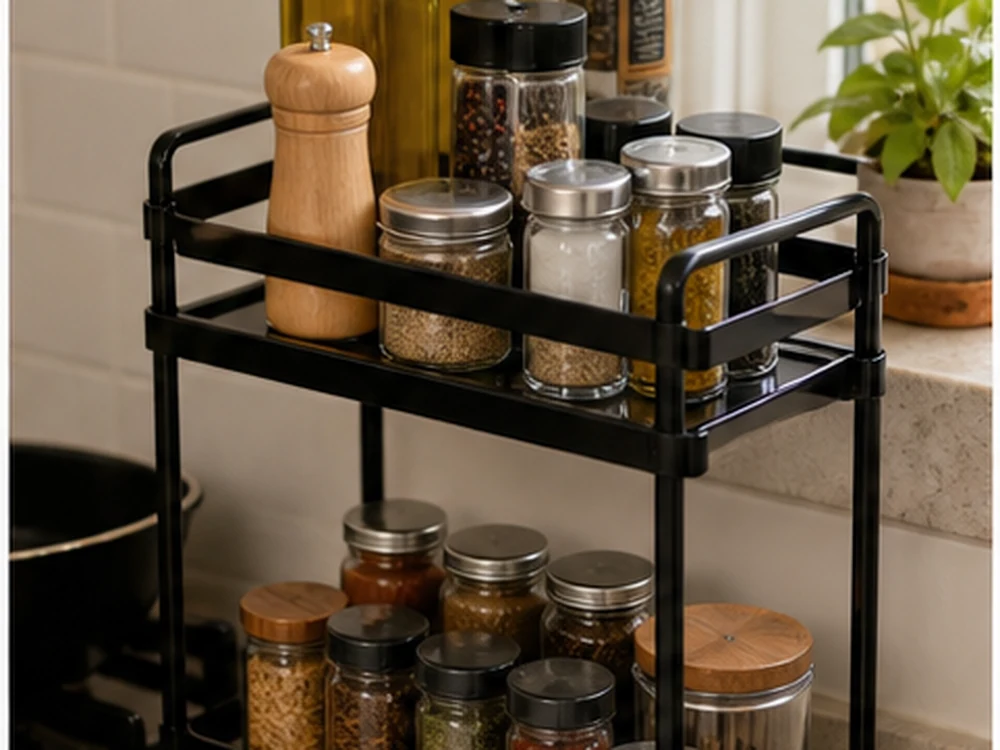
Countertop racks should pass the one-hand test. You should be able to take the item, use it, and return it without sliding three other things aside. If a rack needs two hands or careful styling after every meal, it belongs inside a cabinet or not in the kitchen at all.
Respect Heat, Steam, And Sink Splash
Racks near the stove should not hold oils directly against heat or spices in a steam path. Racks near the sink should not trap wooden tools or paper goods where they stay damp. Location matters as much as size.
For moisture-prone rooms, EPA indoor air quality guide is a useful reminder that home comfort is connected to ventilation, moisture, and cleanable surfaces. Kitchen storage should support those basics rather than bury them behind extra layers.
Treat Under-Sink Racks As Plumbing Furniture
The under-sink cabinet is not a rectangle. It has pipes, hoses, shutoff valves, disposal parts, and sometimes a damp base that needs inspection. A good rack works around those obstacles and still lets you see the back of the cabinet.
Use shorter bins for items that might leak, a pull-out rack for daily cleaners, and open space near valves. If a rack blocks inspection, it is too efficient on paper and too risky in real life.
Leave a deliberate viewing gap around pipes and the cabinet floor. Small leaks, swollen shelf liners, and dusty bottles are easier to catch when the rack is not packed to the back wall. Under-sink storage should make inspection faster, not more hidden.
Do Not Rack Every Cabinet
Some cabinets need editing, not accessories. If a cupboard contains two rarely used sets of dishes, holiday mugs, spare jars, and a waffle maker, a rack may only make the crowding look organized. Remove the inactive category before adding height.
A small kitchen usually benefits from a few precise interventions. One shelf riser in the plate cabinet, one narrow rack for oils, and one under-sink pullout can feel better than racks in every possible gap.
Check The Return Path After Cooking
The test is not whether the rack looks neat after setup. The test is whether items return correctly after dinner when the kitchen is warm, hands are tired, and the sink is busy. If the rack requires careful styling, it will slowly fail.
Give every rack a front-facing category and a maximum count. Six spice jars, three oils, one stack of plates. A rack with a number attached becomes easier to maintain because the overflow is visible immediately.
Choose Materials By Cleaning Habit
Wire racks breathe and show spills quickly, but small feet can mark shelves. Solid plastic wipes easily but can trap water underneath. Bamboo looks warm but needs dryness and regular wiping. Metal pullouts feel sturdy but require enough cabinet width and smooth installation.
The right material is the one you will actually maintain. In a small kitchen, storage that cannot be cleaned easily will eventually smell older than it looks.
Match the material to the mess you actually make. If cooking leaves oil mist on nearby shelves, choose a rack that wipes clean without grooves. If the cabinet holds dry dishes, a breathable riser may be enough. The finish should make your normal cleanup faster, not demand a new maintenance personality.
What I Would Leave Unracked
The fastest way to make kitchen storage racks feel fussy is to use them for categories that already behave badly. Lids without matching containers, souvenir mugs, chipped serving bowls, and gadgets used once a year do not become more useful because they sit on a second tier. They become harder to question.
Leave those categories unracked until they have been edited. A rack should support a category that has earned cabinet space through repeated use. If the item is only there because it feels wasteful to remove, a new shelf level gives guilt a better hiding place.
This matters in small kitchens because every added structure has a cleaning cost. Feet collect crumbs, rails catch grease, and stacked zones make wiping slower. The rack has to pay rent by improving a daily reach, not by making an inactive category look more deliberate.
One practical check is to cook a normal dinner before deciding where the rack belongs. The items you reach for with wet hands or a hot pan nearby deserve the quickest path; the rest can sit farther away.
Build The Kitchen Around Easier Reach
For a fuller small-home system, connect this plan with Small Apartment Kitchen Cabinet Organization, Under Kitchen Sink Organization Ideas, Small Kitchen Counter Organization Ideas, and Pantry Organization For Small Spaces.
The Kitchen Rack Bottom Line
The best kitchen storage racks are specific, almost modest pieces. They make one cabinet easier, one routine faster, or one cleaning path clearer. Choose them by the motion they improve, and a small kitchen gains usable calm without becoming a showroom of stacked accessories.
Kitchen Storage Rack Questions
Are kitchen storage racks worth it in a small kitchen?
Yes, when the rack solves a specific access problem such as tall cabinet space, deep shelves, or under-sink reach. They are less helpful when the real issue is too many mixed categories.
Where should I use kitchen storage racks first?
Start with the cabinet or counter zone that causes the most daily friction. Plates, oils, spices, cleaning supplies, and pantry cans often benefit before rarely used cookware does.
How do I keep kitchen storage racks clean?
Choose racks that can be lifted, wiped under, or pulled out. Avoid placing wood, paper, or unsealed items in splash or steam zones.