
Small Bedroom Furniture: Choose Pieces That Protect The Room
small bedroom furniture are strongest when the room is judged by movement, not by a staged photo.
Small bedroom furniture has to serve two contradictory needs. It must hold clothes, books, bedding, chargers, and private clutter, but it must also leave the room calm enough to sleep in and clear enough to move through without negotiation.
The mistake is buying furniture as if the room were a floor plan instead of a routine. A dresser may technically fit and still make drawers impossible to open. A queen bed may fit and still steal the path to the closet. A storage bench may look useful and still become a laundry platform.
Choose every piece by its daily behavior: how drawers open, how linens return, how a nightstand handles tired hands, how the bed can be made, and how the room feels at 11 p.m. when nobody wants to perform a perfect reset.
Core idea: Small bedroom furniture should be judged by what it lets you do when you are tired, not by how much storage it claims on a product page.
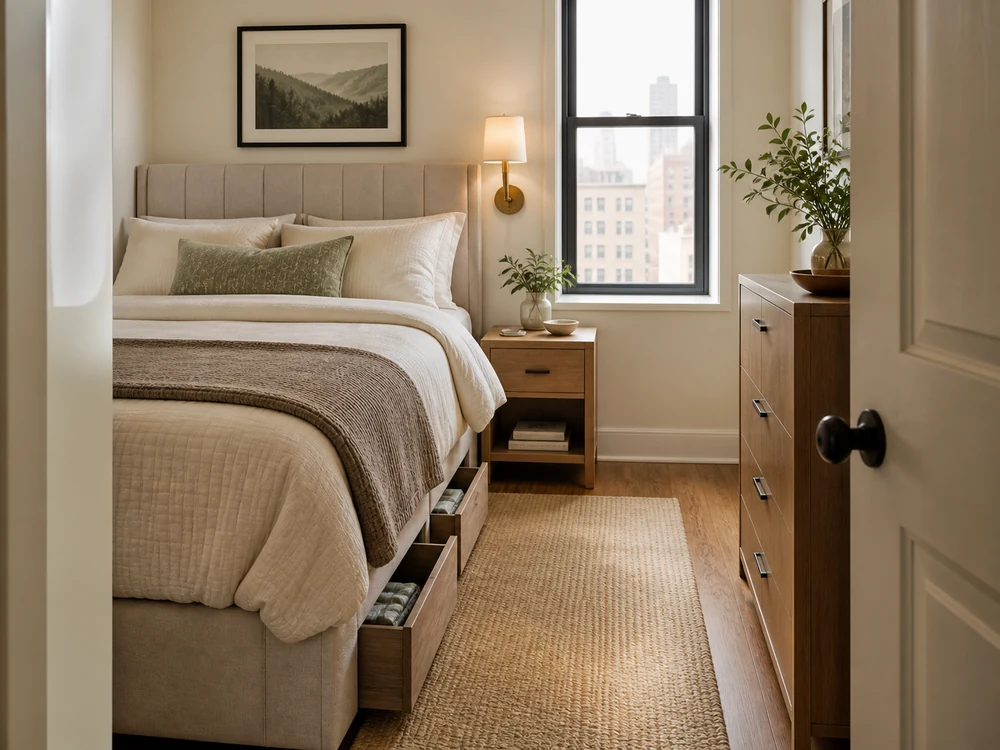
Small Bedroom Furniture: The Decision That Changes The Room
Small bedroom furniture should be judged by what it lets you do when you are tired, not by how much storage it claims on a product page. The details below are written for lived-in small homes, where a good idea has to survive rushing, cleaning, guests, and the ordinary objects that return every evening.
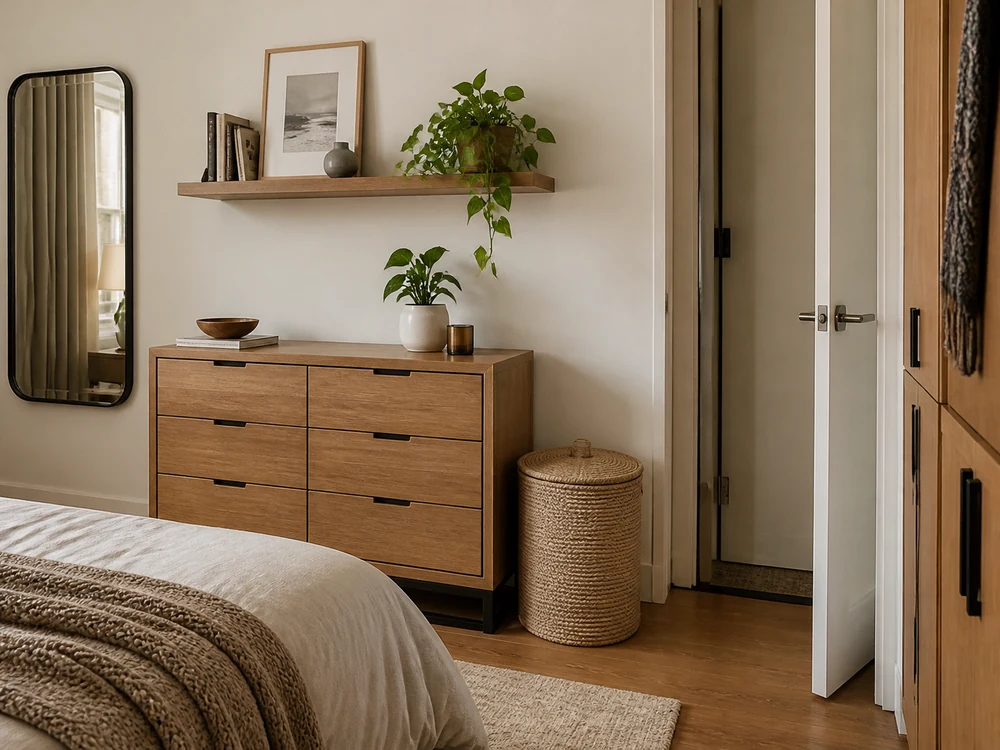
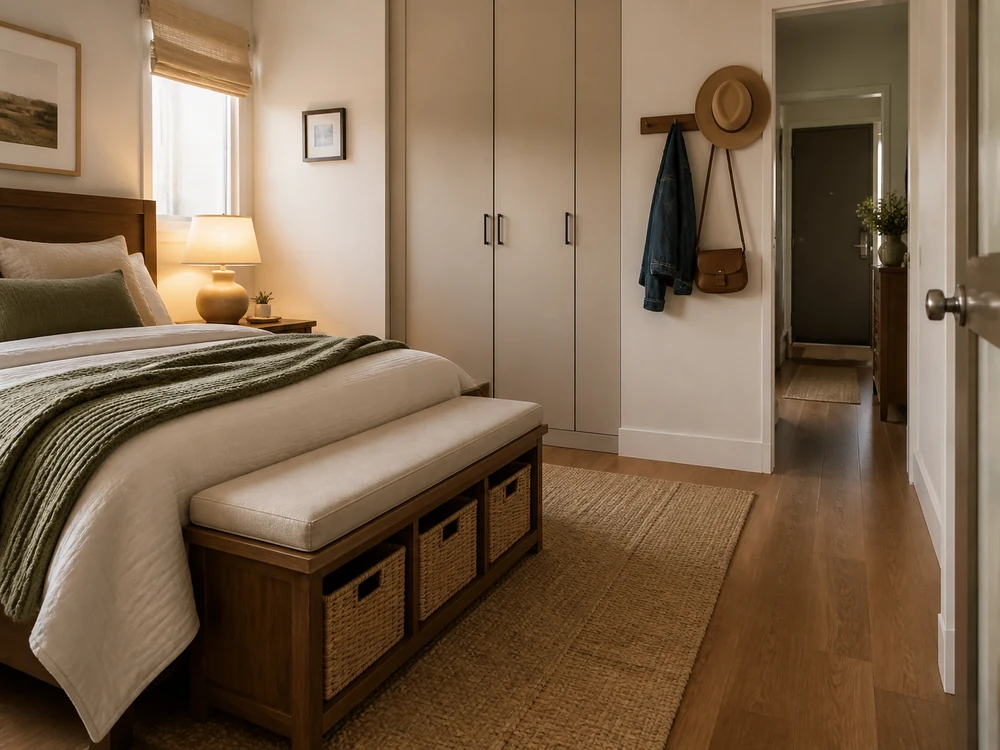
Let The Bed Set The Rules
The bed is not just the largest piece; it is the traffic director. Measure around the mattress with the bedding in place, not just the frame. A soft duvet, open drawer, or slightly angled nightstand can take the clearance that looked available on paper.
If the bed size is fixed, simplify everything around it. Use wall sconces instead of table lamps, a narrow shelf instead of a full nightstand, or drawers under the bed instead of a second dresser. If the bed size is flexible, try the smaller size before assuming storage furniture has to shrink to compensate.
Choose Nightstands By The Hand, Not The Set
Matching nightstands can make a small room look orderly, but they are not always the best use of space. One person may need drawers for medication and glasses while the other only needs a ledge for a book and phone. The room will work better if each side answers the real routine.
A small nightstand should hold the nighttime essentials without becoming a junk drawer. If it has a shelf, use it for one visible category. If it has drawers, reserve the top drawer for sleep-related items only. The closer furniture sits to the bed, the stricter its job should be.
Keep Dressers Shallow Enough To Open
A dresser measurement is incomplete without the open drawer. Many small bedrooms fail because the dresser fits until someone needs socks. Leave room for a person to stand in front, open the drawer, and choose clothing without backing into the bed.
Shallow dressers can outperform tall deep ones when the room is tight. They make folded clothes easier to see and reduce the dark back corners where forgotten items collect. If a deep dresser is already in the room, use drawer dividers so categories do not slide into a compressed stack.
Treat Wardrobe Doors As Moving Parts
Freestanding wardrobes and armoires can be useful in rooms without closets, but their doors change the footprint. Hinged doors need swing room. Sliding doors save clearance but can hide half the wardrobe at a time. Curtains are flexible but can look messy if the interior is overloaded.
Before buying, tape the open-door footprint on the floor. Then rehearse the morning: open, reach, remove clothes, close, and pass the bed. If the sequence feels clumsy, the furniture is asking the room to adapt instead of serving it.
Use Under-Bed Storage For Slow Categories
Under-bed drawers and bins are excellent for seasonal bedding, off-season clothes, spare linens, or sentimental textiles. They are less successful for clothing you need every morning because kneeling, pulling, and pushing become friction when you are late.
Choose storage with real handles and enough clearance to slide without scraping. Label the side that faces outward. If the bin is heavy before it is full, it will not be used well. Under-bed storage should feel like a calm archive, not a daily tug-of-war.
Be Careful With Storage Benches
A bench at the foot of the bed can hold blankets and offer a place to sit, but it can also become the official home of unfolded laundry. It works best when the room still has a walking lane after the bench is in place and the bench has one defined category inside.
If the foot of the bed is already tight, consider a wall hook, slim hamper, or under-bed drawer instead. A bench is furniture, not a moral upgrade. In a small bedroom it must earn the floor space every day.
Anchor Tall Furniture And Respect Weight
Tall dressers, wardrobes, and bookcases bring vertical storage, but vertical storage adds safety decisions. Uneven drawers, children climbing, heavy items placed high, or a wardrobe on a thick rug can all change how stable the piece feels.
Review CPSC Anchor It furniture safety guidance before treating tall storage as harmless background furniture. Use manufacturer hardware, follow wall-type guidance, and keep heavy items low. A calm bedroom is not only uncluttered; it is also physically stable.
Leave One Empty Surface On Purpose
Small bedrooms often fail because every surface is assigned a storage job. The top of the dresser holds baskets, the bench holds blankets, the nightstand holds devices, and the chair holds clothing. There is nowhere for a temporary item to land without starting a pile.
Leave one surface almost empty. It can be the top of a shallow dresser, a wall shelf, or a small tray. This gives the room a place to absorb one active project without contaminating every other piece of furniture.
Choose Fewer Pieces With Better Interior Logic
In a small bedroom, two mediocre storage pieces often feel worse than one well-chosen piece. A narrow dresser with drawers that match your folding style, a bed with smooth drawers, or a wardrobe with a realistic hanging section can reduce the number of surfaces competing for attention.
Look inside furniture before admiring the outside. Wide shallow drawers suit folded knits and sleepwear. Narrow drawers suit socks and small accessories. Tall open sections suit bags or spare bedding only if those items are not used daily. Furniture becomes calming when the interior categories match the way the household actually gets dressed.
If a piece requires buying a second set of bins, dividers, or boxes before it works, include that cost and effort in the decision. Small bedroom furniture should reduce systems, not demand a hidden support system of accessories.
Protect The First And Last Ten Minutes Of The Day
A bedroom is judged most honestly during the first and last ten minutes of the day. Morning furniture should let clothes, laundry, and chargers move without a traffic jam. Evening furniture should make it easy to put down a book, hide the hamper, and get into bed without stepping around yesterday’s outfit.
Walk those two routines slowly before buying anything new. If a proposed piece improves the weekend version of the room but makes those daily minutes harder, it is probably a showroom solution rather than a bedroom solution.
Quick Decision Guide
| Problem | Best Move | Watch Out For |
|---|---|---|
| No room beside bed | Wall shelf or sconces | Keep phone and glasses reachable |
| Drawers hit the bed | Shallow dresser | Measure with drawer fully open |
| No closet | Wardrobe with tested door swing | Anchor tall furniture |
| Extra bedding | Under-bed bins or drawers | Use for slow categories |
Related Her Neat Nest Guides
- Small Bedroom Storage Without A Closet
- Bedroom Storage Ideas For Small Rooms
- Under Bed Storage Ideas
- Small Apartment Organization Ideas
Final Takeaway
Small bedroom furniture should make the room easier at the exact moments when energy is low. Protect the walking lane, test every moving part, keep tall pieces stable, and give daily items the easiest positions. The room will feel larger because the furniture stops arguing with the routine.
FAQ
What furniture is best for a small bedroom?
The best small bedroom furniture is shallow, stable, easy to open, and matched to your daily routine. A bed with under-bed storage, a compact nightstand, and a dresser that opens fully often matter more than a large matching set.
Should small bedrooms use multifunction furniture?
Multifunction furniture helps only when each function is easy to use. A storage bench, bed drawer, or wardrobe should not block the walking lane or require too much effort during daily use.
How do I arrange furniture in a small bedroom?
Start with the bed and preserve a clear path to the door, closet, and dresser. Then choose smaller pieces around the bed rather than forcing full-size furniture into leftover corners.